The Menu — A Recipe for the Abyss
A scathing review of The Menu, the film that’ll make you question the true cost of exclusivity


The Menu: full review


Exclusivity isn’t just a concept—it’s a religion. And like any religion, it has its dogmas, its rituals and, above all, its martyrs. The Menu (2022), directed by Mark Mylod, isn’t a movie about food, though the marketing machine would have you believe it’s a gourmet thriller. It’s an autopsy of the human obsession with belonging to something bigger than oneself, even if that something is a restaurant in the middle of the ocean where the chef charges you to torture you psychologically before serving dessert. Welcome to Hawthorn, the place where haute cuisine becomes a cult and the diners are its most fervent devotees... until they aren’t.
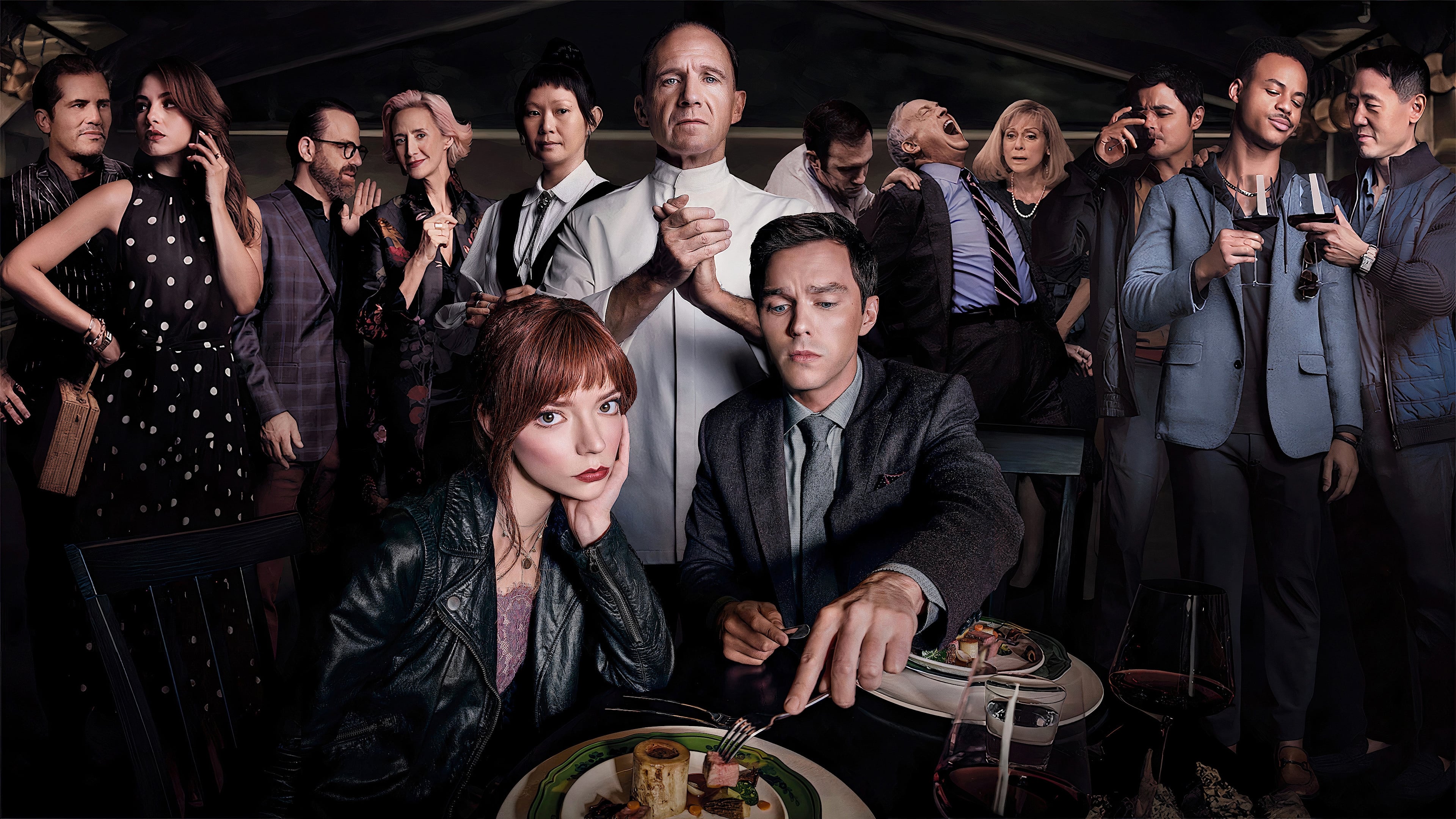
The premise has an almost theatrical simplicity. Twelve diners take a boat to a private island where chef Julian Slowik (Ralph Fiennes) serves a culinary experience costing over a thousand dollars a head. Among them are a food critic and her editor, three tech executives with egos inflated by dividends, a fading movie star, a rich and bored couple, and Tyler (Nicholas Hoult), a food obsessive who idolizes Slowik the way others idolize a football star. Tyler has brought Margot (Anya Taylor-Joy), a last-minute companion who wasn’t on the list. And that detail, which the chef spots with the coldness of someone counting cutlery, is the grain of sand that will end up scratching the whole machine.
Direction and mise-en-scène: the kitchen as a stage
Mark Mylod, seasoned by directing Succession, knows how to film powerful people behaving miserably, and here he brings that talent to a minimalist dining room that looks designed by an architect with sadistic tendencies. Each dish is introduced with an on-screen title card, as if it were a prestige cooking show, and that device turns the film itself into a tasting menu: every “course” raises the tension one notch and lowers the humanity of those present by another. Peter Deming’s cinematography, a regular David Lynch collaborator, goes for cold, precise light, the light of a stainless-steel kitchen, leaving the characters as exposed as a fish on crushed ice.
Mylod’s great achievement is the choreography of the kitchen staff: a brigade that moves in unison, answers with a martial “Yes, chef!” and claps sharply when Slowik commands it. It’s a cult in aprons, and the film shoots it with the same fascination horror cinema once reserved for religious fanatics. Colin Stetson’s score, with its jittery woodwinds, adds just the right dose of unsettling liturgy.
Performances: the chef and the intruder
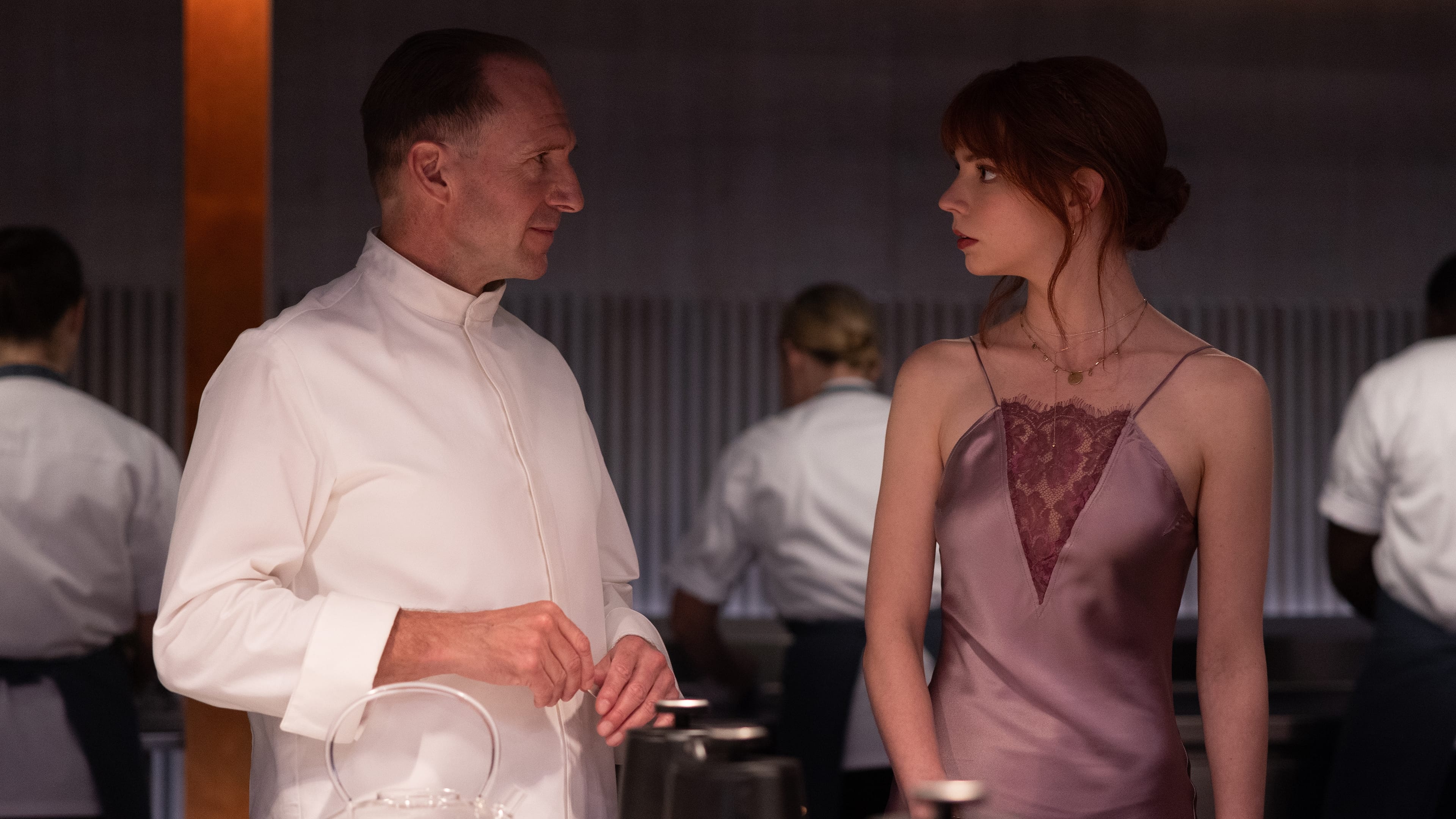
Ralph Fiennes is masterful. His Slowik is an artist who has stopped enjoying his art because it has been turned into a product for rich people who don’t know what they’re eating, and Fiennes plays him with a restraint scarier than any shouting. Every time he claps his hands to announce a dish, the room holds its breath. Opposite him, Anya Taylor-Joy builds Margot as the only person on the island who isn’t pretending: foams and speeches don’t impress her, and that lack of devotion makes her the most serious threat to the ritual. The duel between them is the heart of the film.
Nicholas Hoult is perfect as the insufferable fan, the kind of person who photographs every plate and corrects the waiter, and Hong Chau, as maître d’ Elsa, steals every scene with a politeness as sharp as a sushi knife. Janet McTeer, as the food critic, and John Leguizamo, as the washed-up movie star, round out an ensemble that works as a bestiary of the comfortable classes.
Script: satire with a chef’s knife
Seth Reiss and Will Tracy’s script takes aim at everyone: the millionaires who consume experiences like trophies, the critics who pontificate, the fans who mistake knowledge for taste, and the artist himself, who has let his clientele devour him. It’s a class satire hungry for revenge, and when it hits, it hits hard. The problem is that, from the midpoint on, the film knows exactly where it’s going, and so does the viewer. The third-act revelations are more clever than surprising, and some supporting characters are reduced to their function as a joke.
The best
- Ralph Fiennes: A chef terrifying for what he keeps quiet, not for what he shouts.
- Anya Taylor-Joy: The only diner with her feet on the ground, and the best possible enemy of the ritual.
- The tasting-menu structure: Every dish is a chapter, and every chapter another turn of the screw.
- Hong Chau: Rarely has politeness been this frightening.
The worst
- A predictable third act: The film shows its hand too soon.
- Broad-stroke supporting characters: Some diners are more caricature than character.
The Claqueta Ácida Verdict (7.5/10)
The Menu is an elegant, cruel and very funny satire about the class that pays to feel special and the artist who has come to hate it for that. It doesn’t always surprise, but every course is served with Michelin-kitchen precision. And it leaves a lesson no food critic would dare to sign: sometimes all you need is a good cheeseburger. 💀🎬 Tráiler Oficial
Abrir en YouTube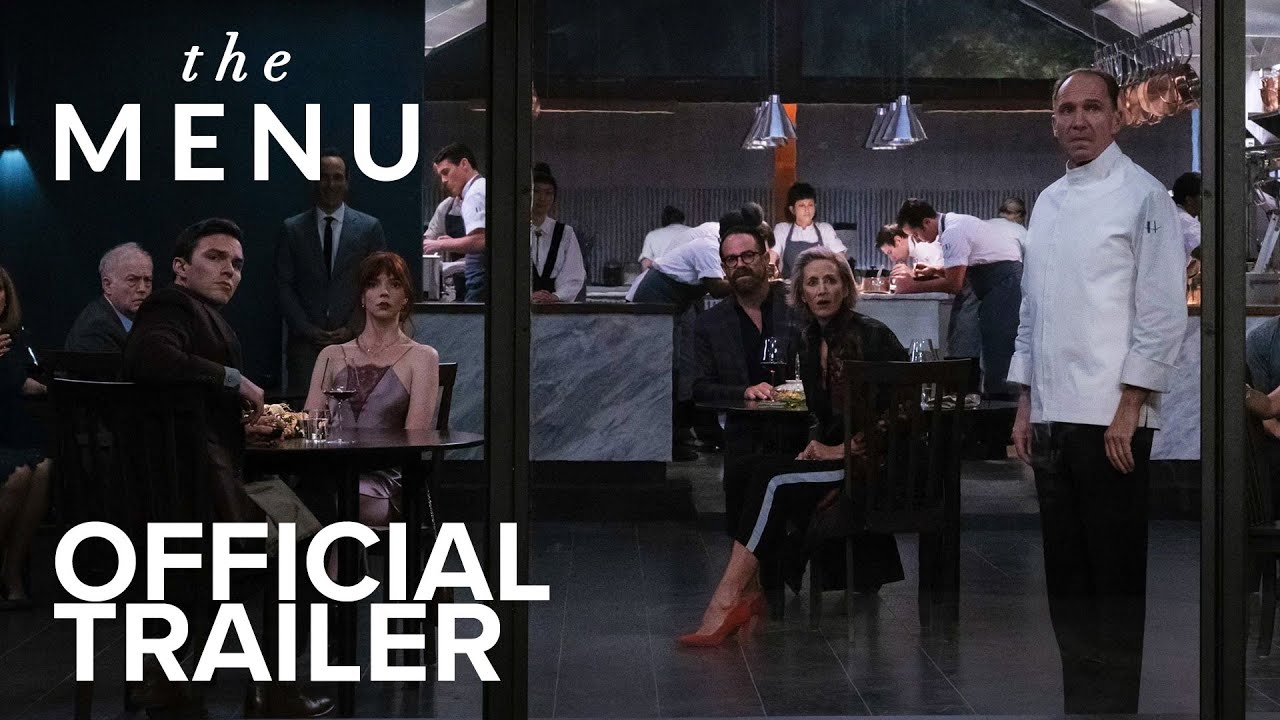
Ending Explained: The Menu
The Menu: frequently asked questions
- What is the rating of "The Menu" on Claqueta Ácida?
- "The Menu" scored 7.5/10 on Claqueta Ácida in the review by Dr. Cinismo.
- Is "The Menu" worth watching?
- With reservations. We gave it 7.5/10 (Citric Acid), our rating for uneven films with something worth saving.
- Who directed "The Menu"?
- "The Menu" was directed by Mark Mylod.
- How does "The Menu" end?
- Spoilers in The Menu ending explained .
Theater Collateral Damage Report
Psychophysical impact certificate issued by Dr. Cinismo
2 amagos en el tramo intermedio; pestañeo pesado en las transiciones más innecesarias.
Alguna consulta furtiva al móvil en el segundo acto. Nada que no se perdone.
2 espresso para no dejarse vencer por la mediocridad cómoda.
"A mitad del segundo acto cuando la subtrama secundaria empezó a pesar más de lo que aportaba."
💬 Community Verdict
What did you think of the film? Rate it from 0 to 10 to compare it with the editorial review.
You haven't voted yet
📢 ¿Te ha gustado el ácido?
Comparte esta crítica con tus amigos cinéfilos o desata la polémica en redes.
⚡ THE CINEMATIC VENOM YOUR INBOX CRAVES
No sugarcoated ratings, no corporate fluff. Subscribe for our uncensored weekly analysis or join the private Telegram for press previews, poll clashes, and instant alerts.
Alertas de estrenos en 1 segundo, encuestas en caliente y audios al salir de pases de prensa.
Recibe la dosis semanal en tu mail + regalo inmediato del PDF con 50 joyas ocultas de culto.
Related Reviews
Recommended autopsies for demanding film buffs.
 🔥 Fusión Nuclear 8.2
 *The Rest Return in Peace (2024): When the Dead Come Back to Remind Us Hell Isn’t Them—It’s Our Inability to Let Go*
⚡ Hermana de saga: otro capítulo diseccionado con rigor forense.
Thea Hvistendahl delivers a stunning, melancholic, and agonizing reimagining of the zombie myth, centered on grief and the existential torment of loss.
 ⚡ Ácido Cítrico 7.5
 *The Divide: A Luxury Cruise Straight to the Sewer of the Human Soul*
⚡ Hermana de saga: otro capítulo diseccionado con rigor forense.
Xavier Gens locks us in a post-apocalyptic bunker to deliver a suffocating, toxic, and painfully nihilistic psychological study.
 🔥 Fusión Nuclear 9.0
 A Poet: The Miracle No One Saw Coming (But We All Deserved)
⚡ Hermana de saga: otro capítulo diseccionado con rigor forense.
Simón Mesa Soto delivers an unsettling masterpiece about poetry, aging, and failure. Painfully beautiful. 9.0/10.
Editorial Ecosystem
Cinephile connections, archive interviews and related analyses.
💬 Debate Cinéfilo & Autopsia de Lectores
0 veredictos¿Discrepas con nuestra nota? ¿Es una obra maestra o veneno puro? Deja tu veredicto abajo sin necesidad de registro.


Aún nadie ha dejado su veredicto para esta película.
Sé el primero en clavarle el colmillo rellenando el formulario de arriba.