

The Monster of St. Pauli — Fatih Akin and Pathological Empathy in the German Basement
Fatih Akin dissects the psyche of killer Fritz Honka in a work of suffocating realism and profound historical discomfort.

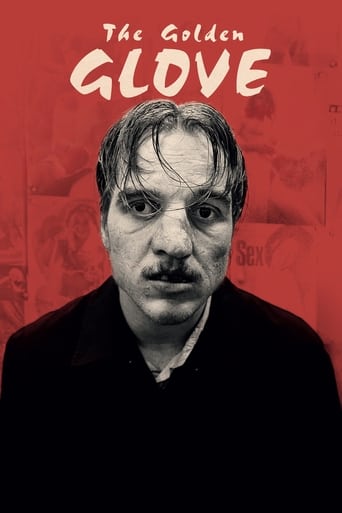
The Monster of St. Pauli: full review
Post-trauma Germany, following the foundational wound of its territorial division, has attempted to purge its collective demons through school didacticism or well-intentioned history lessons. But Fatih Akin decides to skip the pedagogical manual and descend directly into the sewers of Hamburg’s red-light district. The filmmaker, known for his immersions in his country’s identity tensions, takes the real case of serial killer Fritz Honka to perpetrate something far more disturbing than a simple period crime thriller. There is no will here to stylize horror or offer digestible psychological alibis to the bourgeois viewer who enters the theater seeking the controlled shiver of a Monday night. The atmosphere of the early seventies is permeated by a sticky grime where cheap tobacco and jug alcohol form an unbearable patina that saturates every frame from the first minute. It is a film that smells of stagnant dampness and watered-down beer, a sensory experience that refuses to be comfortable, forcing the viewer to inhale the stale air of a society rebuilding itself on foundations of silence and shame.
Akin films human misery with an almost pornographic proximity, refusing to look away when physical degradation brushes against tragic grotesquerie. Far from constructing a charismatic antagonist or a supernatural evil force in the style of franchise villains, the director exposes the pathetic mediocrity of a criminal who stands out not at all among the usual clientele of port slums. The Golden Glove tavern functions as the epicenter of an ecosystem where the wreckage of German social shipwreck takes refuge to drown a historical guilt that is never verbalized but weighs like a lead slab over every customer. The regulars, marked by the ravages of war and economic desolation, wander like specters in search of an affection as twisted as the city’s own architecture, reconstructed with gray concrete and capitalist haste. There is no redemption possible in this environment; there is only survival, and that survival has a taste of bile that sticks to the palate long after the theater lights go out.


The Architecture of the Den and Everyday Suffocation
The staging renounces aesthetic artifice completely to embrace a feist naturalism that suffocates any hint of cinematic escapism. The cinematography by Rainer Klausmann turns moldy wallpapered interiors and damp alleyways into direct extensions of the protagonist’s shattered mind, where artificial light always seems dirty and worn out. There is no space for redemptive beauty in an environment where every frame breathes humidity and organic desolation, forcing one to witness the routine of degradation without the protective filter of pious ellipsis. The camera moves with a deliberate, almost hypnotic slowness that mimics the dragging step of the characters, creating a sensation of suspended time in which misery becomes the only constant. The framing is narrow, claustrophobic, trapping the actors in spaces that seem to close in on them, reflecting the impossibility of escaping their own social condition. The soundtrack composed by FM Einheit reinforces this sensation of perpetual confinement with an industrial hum that seems to scrape directly on the viewer’s eardrums from the back of the room. It is not music that accompanies, but one that invades, a background noise that represents the cold machinery of a society that consumes its weakest members without making a sound, without leaving a trace, only leaving a dull void where a life once was.

The Physical Triumph of Repugnance
The acting work of Jonas Dassler in the skin of Fritz Honka challenges the limits of acting comfort through an absolute bodily metamorphosis that dispenses with any aesthetic-youthful vanity. The actor hunches, disfigures his face with an aberrant denture, and adopts an empty gaze that conveys both terror and a deep, desperate need for pathetic validation. He is not a horror movie monster; he is a broken man who has been ground down by life until he became dust. Opposite him, Margarethe Tiesel brings a tragic, toothless dignity in her role as Gerda Voss, accepting a cohabitation pact as grotesque as it is revealing of the power dynamics among the disinherited of the earth. Their interaction rejects the usual Manichaeism of serial killer cinema to delve into a territory where victim and executioner share the same trench of existential defeat. Their dialogues are scarce, sometimes almost inaudible, but loaded with a tension that does not need words to be understood. It is a communication of survivors, of two souls that recognize each other in the trash because they have nowhere else to look. The chemistry between them is symbiotic, a toxic dependency that relies on the darkest compassion and the elemental need not to be alone in the abyss.
The best
- Jonas Dassler’s physical transformation: An exercise in acting composition so physical and repulsive that it redefines the limits of criminal pathos on screen, managing to make the viewer feel disgust and pity simultaneously.
- The artistic direction of closed spaces: The recreation of the apartment and the tavern captures with suffocating fidelity the claustrophobia of the seventies underworld, turning every corner into another character.
- The refusal to judge morally: The absolute absence of easy psychological alibis to explain the violence, forcing the viewer to confront the banality of evil without excuses.
- Fatih Akin’s tonal pulse: The ability to maintain a constant tone of repugnance without falling into unintentional parody, achieving a brutal and heartbreaking verisimilitude.
The worst
- The deliberately sluggish rhythm: Certain sequences inside the tavern accumulate repetitions that test the patience of the most connoisseur viewer, coming close to monotony.
- The repetition of misery: The visual insistence on close-ups of fluids and decomposition can result in unnecessary redundancy in its central stretch, saturating the sensory experience.
The Verdict of Claqueta Ácida
Fatih Akin signs with this ethylic autopsy one of the most uncomfortable proposals in recent European cinema, demonstrating that true monstrosity dwells in the most abject and unexcused normality. Far from pleasing the audience with the comfort of a solved mystery, the German director forces us to stare fixedly into the bottom of a glass full of bile and stale tobacco, reminding us that empathy towards outcasts can also become a subtle form of aesthetic terrorism. A punch in the stomach that does not seek catharsis but the pure and simple constatation of our own social rot 💀.
🎬 Tráiler Oficial
Abrir en YouTube
The Monster of St. Pauli: frequently asked questions
- What is the rating of "The Monster of St. Pauli" on Claqueta Ácida?
- "The Monster of St. Pauli" scored 7.6/10 on Claqueta Ácida in the review by Odin Lagbert.
- Is "The Monster of St. Pauli" worth watching?
- Yes. We gave it 7.6/10 (Nuclear Fusion), our rating for must-see films.
- Who directed "The Monster of St. Pauli"?
- "The Monster of St. Pauli" was directed by Fatih Akin.
Theater Collateral Damage Report
Psychophysical impact certificate issued by Odin Lagbert
Imposible parpadear cuando la pantalla huele a sudor rancio, desamor tabernario y formol.
El reloj se detiene por completo en el primer plano secuencia dentro de la taberna para no volver a moverse jamás.
Un chupito de alcohol de quemar rebajado con desesperación burguesa para soportar el asfixiante aire del bar.
"El instante en que Fritz Honka decide que Gerda Voss es el premio gordo de su miseria con contrato incluido."

The rebuttal from Lúa Ácida (Queen of the Box Office)
In stark disagreement with the review given by Odin Lagbert.
“Me hundí en la pantalla y sentí la epidermis rasgarse. La luz se arrastra como sangre coagulada, pero la historia se queda en la superficie, una autopsia sin órganos. El lente se vuelve voyeur, pero la composición es plana, sin latido, sin feromona que incite al cuerpo. Los diálogos son ecos secos, la música un zumbido sin pulso, y la tensión se evapora antes de que el corazón pueda latir. El director parece obsesionado con la suciedad visual, pero olvida la pulsión de muerte que debería mover la trama; lo que entrega es un grotesco sagrado de imágenes sin alma, una mutilación lírica que no corta nada. El ritmo se arrastra como un cadáver en el barro, y la falta de contraste deja la experiencia vacía. 2.9/10
💬 Community Verdict
What did you think of the film? Rate it from 0 to 10 to compare it with the editorial review.
You haven't voted yet
📢 ¿Te ha gustado el ácido?
Comparte esta crítica con tus amigos cinéfilos o desata la polémica en redes.
⚡ THE CINEMATIC VENOM YOUR INBOX CRAVES
No sugarcoated ratings, no corporate fluff. Subscribe for our uncensored weekly analysis or join the private Telegram for press previews, poll clashes, and instant alerts.
Alertas de estrenos en 1 segundo, encuestas en caliente y audios al salir de pases de prensa.
Recibe la dosis semanal en tu mail + regalo inmediato del PDF con 50 joyas ocultas de culto.
Related Reviews
Recommended autopsies for demanding film buffs.
 🔥 Fusión Nuclear 8.5
*Alleluia: Love as a Terminal Illness (or How to Turn Crimes of Passion into a Sweaty, Fleshy Spectacle)*
⚡ Afinidad temática directa en atmósfera, estilo y fijaciones visuales.
Fabrice Du Welz reimagines the myth of the lonely hearts killers in a feverish whirlwind of jealousy, submission, and blood, led by Lola Dueñas in a performance that’s equal parts hypnotic and harrowing.
 🔥 Fusión Nuclear 8.5
*High Tension (Haute Tension): The Brutal Birth of the New French Extremism – Or How to Turn Flesh into Poetry with a Machete*
⚡ Afinidad temática directa en atmósfera, estilo y fijaciones visuales.
Alexandre Aja shocked global screens with a relentless rural bloodbath, redefined by breakneck pacing and a divisive twist that splits serious cinephiles right down the middle.
 🔥 Fusión Nuclear 8.5
*Aterrados: The Rebirth of Ghost Stories in the Raw Grit of Buenos Aires*
⚡ Afinidad temática directa en atmósfera, estilo y fijaciones visuales.
Demian Rugna revolutionizes paranormal horror—possessions, poltergeists, and all—by transplanting it to a residential neighborhood in Buenos Aires, armed with a devastating sound design that rattles your bones.
Editorial Ecosystem
Cinephile connections, archive interviews and related analyses.
💬 Debate Cinéfilo & Autopsia de Lectores
0 veredictos¿Discrepas con nuestra nota? ¿Es una obra maestra o veneno puro? Deja tu veredicto abajo sin necesidad de registro.



Aún nadie ha dejado su veredicto para esta película.
Sé el primero en clavarle el colmillo rellenando el formulario de arriba.