Hellbender — The Family Curse You Didn’t Know You Had
A lonely teen uncovers her family’s dark ties to witchcraft in this 2021 indie darling—if ‘darling’ means ‘a hot mess with delusions of grandeur.’


Hellbender: full review


I staggered out of the theater with the bitter aftertaste of someone who’d just witnessed something that promised so much and delivered little more than a half-baked cauldron of ideas. Hellbender, helmed by Zelda Adams—yes, the same woman who acts, writes, and probably mops the set—is one of those films born with the ‘indie cult classic’ label slapped on its forehead before the first frame was even shot. Released in 2021, this literal family affair (the cast is a family tree with more branches than a witch’s coven) premiered at the Brooklyn Horror Film Festival with the aura of the underground, the authentic, the kind of film that spits in the face of mainstream cinema. But as usually happens when the underground reeks a little too much of discount incense, what’s left is a sense of déjà vu disguised as originality.
The premise is tantalizing: a lonely teenager, Izzy (Zelda Adams), lives secluded in a cabin in the woods with her mother (Toby Poser), a woman who seems plucked straight from a survivalist handbook. No school, no friends, no internet. Just forests, strange rituals, and a mother teaching her to play the violin like it’s an exorcism. The girl, of course, is bored out of her skull—like an oyster stranded in the desert—until she discovers her family has a past (or present) far darker than the shadows dancing on her cabin walls. Witchcraft, pacts, secrets that reek of rot. The problem isn’t the idea; it’s the execution. Hellbender limps between family drama and supernatural horror like a zombie with one foot in each genre, never fully committing to either.
The film’s opening shot is telling: Izzy, seen from behind, walking into the woods while her mother watches from the cabin window. The camera lingers, as if unsure what to do with what’s in front of it. And that’s Hellbender’s core issue: Zelda Adams’ direction has flashes of brilliance—a lateral tracking shot through the trees that could’ve been lifted from The Witch, a close-up of Izzy’s hands playing the violin like she’s summoning the devil—but also the stumbles of a novice. Entire sequences feel rushed, as if shot with the urgency of someone racing against a catering budget deadline. The lighting, for instance, oscillates between atmospheric and downright cheap: in one scene, candlelight illuminates the characters’ faces like they’re in an IKEA ad; in another, the darkness is so thick you can’t tell if you’re watching a ritual or just a bunch of shadows moving on their own.
The script, penned by John Adams and Toby Poser (yes, more family), attempts to explore themes like identity, loyalty, and the weight of secrets, but it does so with all the subtlety of a sledgehammer. The dialogue swings between poetic and ridiculous: at one point, the mother tells Izzy that “the violin is the voice of the dead,” and you’re left wondering whether to laugh or grab a witchcraft phrasebook. The supporting characters—like the grandmother (Lulu Adams, who looks like she wandered off an American Horror Story casting call)—pop in and out of the story like ghosts, leaving no trace. And the plot twists? Oh, the twists. If you’ve seen more than three horror films in your life, you’ll predict 90% of what’s coming before the first act wraps. That said, there’s a moment when Izzy discovers a spellbook hidden under the floorboards, and the camera lingers on her hands as she flips through the pages with the slowness of a soft-core film. It’s the kind of shot that works, but it also betrays a lack of confidence in the material: if you have to stretch a scene that much to make it feel important, it probably isn’t.
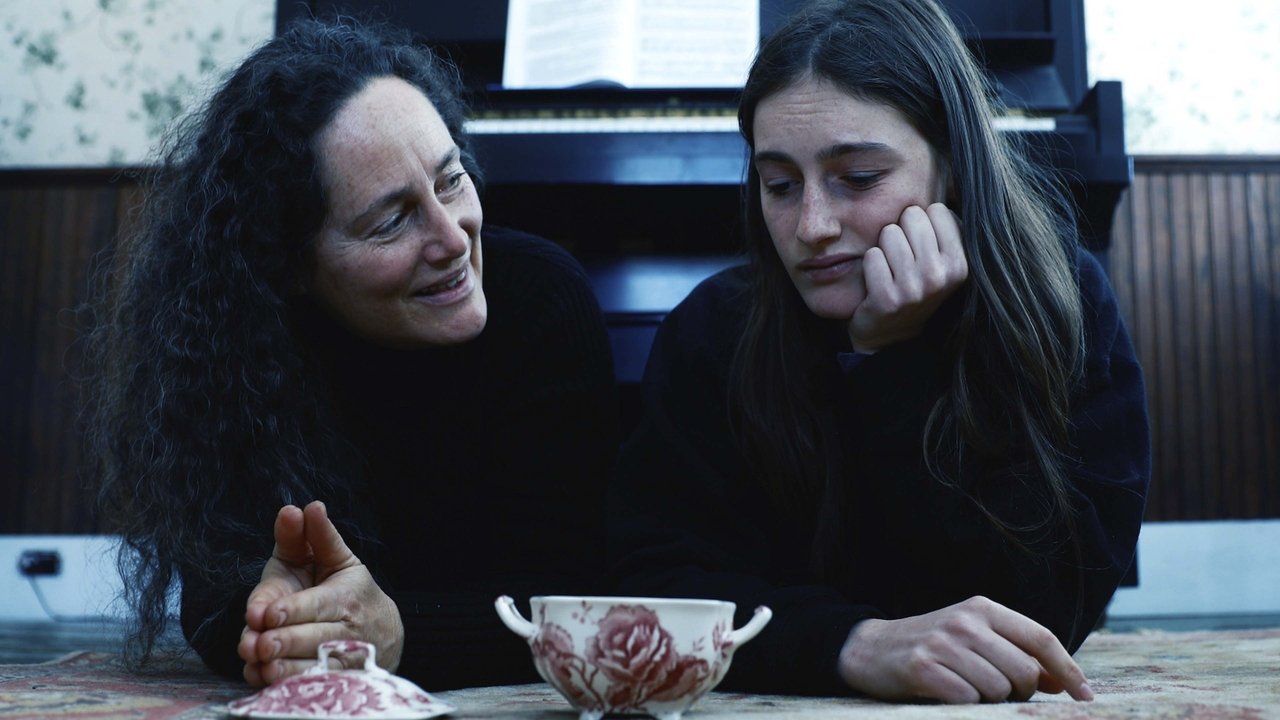
Direction: Between Homage and Pastiche
Zelda Adams has an eye for framing, and that’s something you have to give her. There are shots in Hellbender that look like they were ripped from a 1970s horror textbook: the camera moves with deliberate slowness, as if afraid to wake something, and the color palette—mossy greens, rotten browns, deep blacks—evokes that “found in an attic” aesthetic so beloved by film festivals. But there are also moments where the direction feels lost, as if Adams doesn’t quite know what to do with what she’s got. For example, there’s a scene where Izzy and her mother argue in the kitchen, and the camera just sits there in a medium shot while the actresses deliver their lines like they’re in a college theater rehearsal. No movement, no tension, just two people talking like they were handed the script five minutes ago.The most frustrating part is that Hellbender has flashes of genius that make the whole thing even more disappointing. There’s a sequence where Izzy, drunk on power (and something else), runs through the woods while the camera follows her in a long take reminiscent of Hereditary at its best. The music—a distorted violin that sounds like it’s being played by someone who just discovered they have hands—pulses with every step like a heartbeat. It’s the kind of moment that makes you think, “Wow, this could be something great.” But then the scene ends, and what follows is so conventional it leaves you feeling cheated. Adams has talent, but she lacks follow-through: she knows how to create atmosphere, but she doesn’t know how to sustain it.
The editing, meanwhile, is functional at best and clumsy at worst. There are transitions that look like they were lifted from an iMovie tutorial—fade-to-blacks that linger three seconds too long, abrupt cuts that shatter the rhythm—and entire sequences that could’ve been trimmed without the film losing anything. For example, there’s a scene where Izzy and her mother brew a potion in the kitchen that lasts nearly five minutes. Five minutes of close-ups of herbs, knives, and bubbling liquids that add precisely nothing to the plot. It’s the kind of filler that betrays a film made with love, but also with haste.
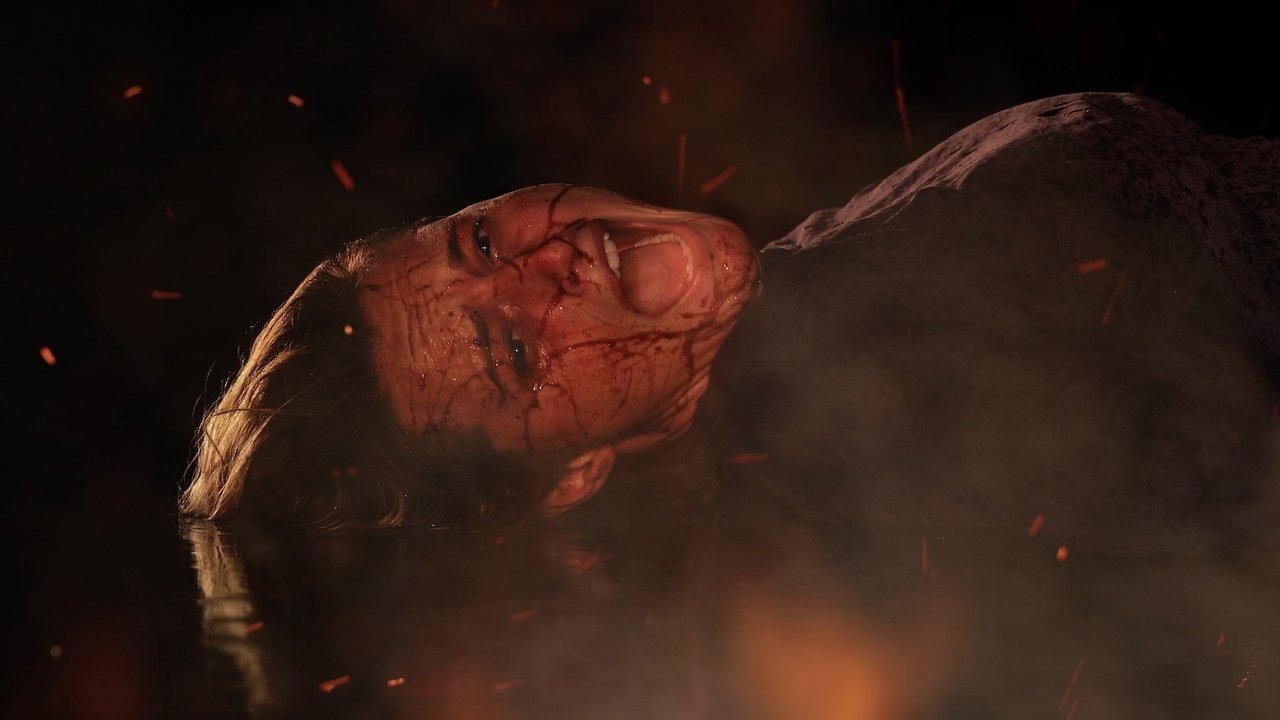
Performances: A Family Affair, for Better and Worse
The cast of Hellbender is, at its core, a family reunion. Zelda Adams, Toby Poser, and Lulu Adams—mother, daughter, and grandmother in real life—play the main characters, and the result is as fascinating as it is uneven. Zelda Adams, as Izzy, fares the best. She has a magnetic presence, the kind that makes it impossible to look away, and her performance swings between adolescent vulnerability and the ferocity of someone discovering a power she doesn’t understand. There’s a moment where, after performing a ritual, she stares at herself in the mirror and smiles with a mix of fear and exhilaration that’s the film’s high point. It’s the kind of detail that elevates a character from archetype to something real.Toby Poser, as the mother, has her moments—especially in scenes where her character reveals her darker side—but she also veers into caricature. Her performance is intense, but sometimes so over-the-top it borders on camp. There’s a scene where she screams at Izzy, “You don’t know what you’ve unleashed!” and you can’t help but think of the grandmother from The Goonies yelling, “It wasn’t my fault!” in the attic. Lulu Adams, as the grandmother, gets the short end of the stick: her character is so flat she might as well be a mannequin with a wig, and her performance consists of little more than glaring at the camera like she’s got a permanent migraine. She’s the kind of character who exists solely to deliver exposition, and her screen time is as necessary as an umbrella in hell.
The problem isn’t that the cast is bad; it’s that it’s unbalanced. Zelda Adams carries the weight of the film, and when she’s not on screen, the whole thing wobbles. The supporting characters—like the boy who suddenly appears to shatter Izzy’s isolation—are so underdeveloped they feel like they were scribbled into the script at the last minute. And the dialogue, while sometimes effective at conveying tension, often sounds so forced you wonder if it was written after a séance.
Technical Aspects: What Shines and What Stinks
The cinematography in Hellbender is, without a doubt, its biggest success. Though uncredited (which is already a red flag that something’s rotten in Denmark), the shots have a texture that evokes the best of indie horror: natural light filters through the trees like a character in its own right, and the cabin interiors are lit with a warmth that contrasts with the darkness lurking beneath the surface. There’s one shot in particular—where Izzy sits by a fire while her mother tells her witch stories—that looks like it was lifted from a Goya painting. The camera holds steady, and the flickering light illuminates their faces like they’re possessed. It’s the kind of image that makes you forget, for a moment, how uneven the rest of the film is.The score, composed by John Adams himself, is another highlight. The violin, which sounds like it’s being played by someone who just discovered they have hands, is omnipresent: it underscores moments of tension, rituals, and even awkward silences. There’s a scene where Izzy plays the violin in the woods, and the music distorts into something resembling a wail. It’s the kind of detail that works because it’s well-integrated into the story, but there are also moments where the score sounds so generic it could’ve been pulled from a horror sound library.
The production design, on the other hand, is functional but forgettable. The cabin where Izzy and her mother live looks like it was plucked from a rural home catalog, and the witchcraft elements—candles, herbs, symbols painted on the walls—are so clichéd you’ll stifle a yawn. There’s a moment where Izzy discovers an altar in the basement, and it’s so predictable it feels like a set from Scooby-Doo. The only thing that saves the design is the attention to detail in the characters’ personal items: Izzy’s violin, the spellbooks, the old photos. These small touches make Hellbender’s world feel real, if only in fleeting moments.
The best
Zelda Adams’ performance: It’s not just that she carries the film; it’s that she makes you feel* the confusion, fear, and exhilaration of a character discovering her life is a lie. There’s a moment where, after performing a ritual, she stares at herself in the mirror and smiles like she’s just unlocked a superpower. It’s the kind of detail that turns an archetype into something real.- The cinematography: Though uncredited, the color palette and lighting create an atmosphere that swings between poetic and unsettling. Some shots look like they were lifted from a painting, especially those where natural light filters through the trees or illuminates the characters’ faces like they’re possessed.
- The score: The distorted violin that underscores the film’s key moments is one of its triumphs. It’s not a generic horror score; it feels like it’s emerging from the story itself. There’s a scene where Izzy plays the violin in the woods, and the music becomes a character in its own right.
- The theme of identity: Though the plot is predictable, the exploration of identity and the weight of family secrets is well-crafted. The film captures the confusion of a teenager discovering her life is a lie, and that’s something that always resonates.
The worst
- The plot’s predictability: If you’ve seen more than three horror films in your life, you’ll guess 90% of what’s coming before the first act ends. The twists are so obvious they might as well have come with a “How to Write a Horror Script in 10 Steps” manual.
- The underdeveloped side characters: The supporting cast is so flat they feel like they were scribbled into the script at the last minute. The grandmother, for example, exists solely to deliver exposition, and the boy who breaks Izzy’s isolation has all the depth of a puddle.
- The uneven pacing: Some sequences drag on unnecessarily—like the five-minute potion-brewing scene in the kitchen—while others fly by so fast you’re left wondering if you missed something. The editing is functional at best and clumsy at worst.
- The inconsistent direction: Zelda Adams has moments of brilliance—like that long take of Izzy running through the woods—but she also has sequences that feel rushed, as if shot with one eye on the catering budget.
The Verdict of Claqueta Ácida
Hellbender is one of those films born with the “indie cult classic” label glued to its forehead, but in the end, it’s little more than a pastiche of half-baked ideas. It has its moments—Zelda Adams’ performance, the cinematography, the score—but it also has stretches where you’ll be checking your watch and wondering how much longer it’s going to drag on. It’s the kind of film that works if you see it at a festival, surrounded by people who’ll clap through the credits, but at home, with a bowl of popcorn and the remote within reach, it’s just… fine. It’s not bad, but it’s not good either. It’s, in short, a film that doesn’t quite know what it wants to be, and that’s the most frustrating thing of all. If you’re into family witchcraft stories with a side of indie horror, give it a shot. But don’t expect it to change your life. 💀🎬 Tráiler Oficial
Abrir en YouTube
Hellbender: frequently asked questions
- What is the rating of "Hellbender" on Claqueta Ácida?
- "Hellbender" scored 6.8/10 on Claqueta Ácida in the review by Dr. Cinismo.
- Is "Hellbender" worth watching?
- With reservations. We gave it 6.8/10 (Citric Acid), our rating for uneven films with something worth saving.
- Who directed "Hellbender"?
- "Hellbender" was directed by Zelda Adams.
Theater Collateral Damage Report
Psychophysical impact certificate issued by Dr. Cinismo
1 amago en el tramo intermedio; pestañeo pesado en las transiciones más innecesarias.
Un par de miradas al reloj en el tramo intermedio, comprobando cuánto quedaba de suplicio.
2 espresso para no dejarse vencer por la mediocridad cómoda.
"A mitad del segundo acto cuando la subtrama secundaria empezó a pesar más de lo que aportaba."
💬 Community Verdict
What did you think of the film? Rate it from 0 to 10 to compare it with the editorial review.
You haven't voted yet
📢 ¿Te ha gustado el ácido?
Comparte esta crítica con tus amigos cinéfilos o desata la polémica en redes.
⚡ THE CINEMATIC VENOM YOUR INBOX CRAVES
No sugarcoated ratings, no corporate fluff. Subscribe for our uncensored weekly analysis or join the private Telegram for press previews, poll clashes, and instant alerts.
Alertas de estrenos en 1 segundo, encuestas en caliente y audios al salir de pases de prensa.
Recibe la dosis semanal en tu mail + regalo inmediato del PDF con 50 joyas ocultas de culto.
Related Reviews
Recommended autopsies for demanding film buffs.
 ⚡ Ácido Cítrico 7.1
 28 Years Later: The Bone Temple: when cult cinema trips over its own shadow
⚡ Afinidad temática directa en atmósfera, estilo y fijaciones visuales.
A sequel that smells rotten from the very first frame. Garland and DaCosta try to revive the genre, but the result is a technical knockout dressed up as a masterpiece.
 ⚡ Ácido Cítrico 5.8
 A Serbian Film: The Snuff That Thought It Was Art (and Ended Up a High-School Nightmare)
⚡ Afinidad temática directa en atmósfera, estilo y fijaciones visuales.
Srđan Spasojević serves up a depravity feast swinging between gratuitous shock and social commentary. Genius or pretentious trash? Claqueta Ácida dissects it with surgical precision.
 ⚡ Ácido Cítrico 6.0
 Adolescence, Sex, and Death at Camp Miasma: The Slasher That Reeks of Teen Sweat and a Recycled Script
⚡ Afinidad temática directa en atmósfera, estilo y fijaciones visuales.
Jane Schoenbrun turns a summer camp into a dumpster fire of hormones and clichés. Art or autopsy of a dying subgenre?
Editorial Ecosystem
Cinephile connections, archive interviews and related analyses.
💬 Debate Cinéfilo & Autopsia de Lectores
0 veredictos¿Discrepas con nuestra nota? ¿Es una obra maestra o veneno puro? Deja tu veredicto abajo sin necesidad de registro.


Aún nadie ha dejado su veredicto para esta película.
Sé el primero en clavarle el colmillo rellenando el formulario de arriba.