Animal Instinct — The Revenge Flick That Didn’t Know It Was a Low-Budget Snuff Film
Martijn Smits turns animal activism into a Dutch slasher so clumsy even the pigs are embarrassed. Blood, bad conscience, and worse dialogue—welcome to the abattoir of cinema.

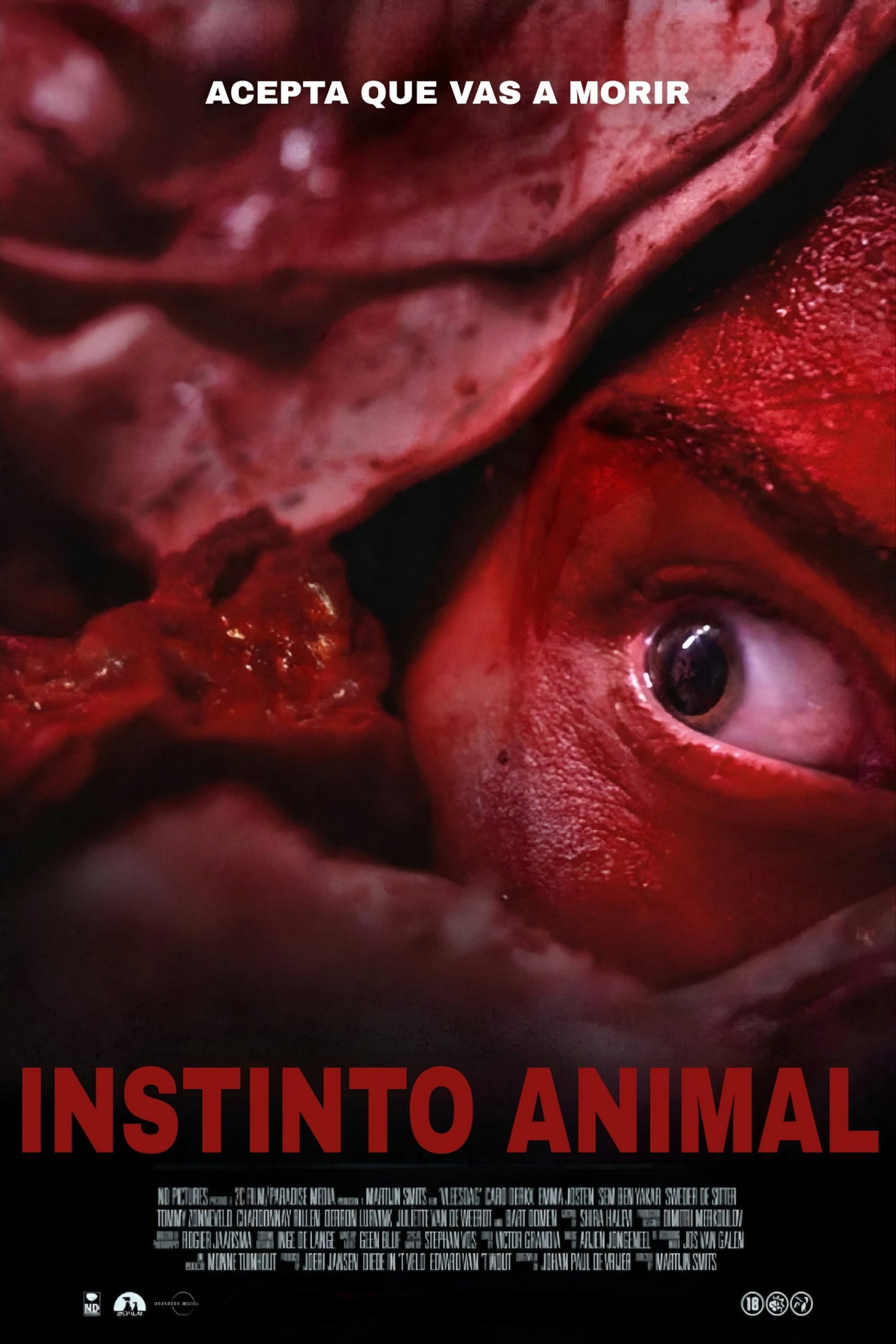

The stench of fake blood and bad conscience hangs thick in the air from the very first frame of Animal Instinct. Martijn Smits, a Dutch director no one had heard of until today—and for good reason—has decided that radical animal activism and low-budget horror are the same thing. Spoiler: they’re not. What begins as a half-hearted attempt at a social thriller with a message devolves into a clumsy, predictable slasher so poorly acted even the pigs in the footage seem to beg for mercy. It’s not that the movie is bad because it’s cheap; it’s bad because it has no clue what it wants to be. A cry for justice? A gore-fest exercise in style? A metaphor about violence begetting violence? Who knows. In the end, all that remains is the hollow echo of dialogue recited like protest chants and the shrill screams of actors who clearly don’t know if they’re in a political drama or an episode of CSI: Bloody Farmhouse.
The context doesn’t help. The Netherlands—land of tulips, bicycles, and model progressivism—here becomes the setting for a rural nightmare that smells more like cardboard than authentic manure. Vleesdag (the original title, which sounds like a budget deli-meat brand) arrives at a time when European genre cinema is experiencing a renaissance thanks to films like The Sadness or Titan. But Smits seems blissfully unaware. His film lacks the rawness of Raw, the political intelligence of Okja, or even the so-bad-it’s-good charm of Troll 2. It’s simply a failed stylistic exercise that confuses excess with intensity and message with sermon. And the worst part? Somewhere in a Dutch public funding office, someone signed a check to make this exist. God help us all.
The premise is promising, at least on paper: Mirthe, a young activist, infiltrates a pig farm to document animal cruelty and earn her place in the «Animal Army,» a radical group led by the charismatic Nasha. So far, so good. The problem? Smits has no idea what to do with this setup. Instead of building tension, he gifts us endless shots of caged pigs—who, by the way, look healthier than the actors—and dialogue that oscillates between pamphleteering («Meat is murder!») and outright absurdity («We’re going to burn this farm to the ground!»). When the moment of vengeance finally arrives, the film collapses like a house of cards. Nasha and her crew decide to torture the farmer’s children, but instead of evoking empathy or even revulsion, the only question that arises is: When did this stop being about animals and turn into a family vendetta?
The farmer, for his part, doesn’t lag far behind in the caricature contest. When he discovers his farm has been raided, his reaction isn’t to call the police or even get angry. No. His instinct is to grab a rifle and hunt activists like rabbits. The problem? The actor playing him—whose name isn’t even worth remembering—seems fresh out of a casting call for Fargo extras. His performance is so over-the-top that every time he opens his mouth, you expect someone to yell, Cut! This is a movie, not an amateur theater monologue! But no. They press on, because in Martijn Smits’ cinema, subtlety is a luxury they can’t afford.
Direction: The Art of Not Knowing What You’re Filming
Martijn Smits directs like a man who’s seen too many horror films but understood none of them. His staging is clumsy, predictable, and at times outright laughable. There’s a moment when Nasha and her group are arguing in a barn, and Smits films them from a bird’s-eye view that looks like it was lifted from a YouTube tutorial titled «How to Shoot a Group Scene.» The problem? The shot adds nothing—no tension, no symbolism, not even useful information. It’s just there, like an ugly ornament in a house that’s already a disaster.
The camera movements are just as erratic. In a key scene, when the farmer discovers the pigs have been «liberated» (spoiler: they’ve been slaughtered), Smits opts for a lateral tracking shot following the character as he walks through the farm. The issue? The movement is so jarring and poorly executed it looks like the camera is being operated by someone who just discovered they have hands. There’s no fluidity, no intention—just a desperate attempt to inject dynamism into a scene that’s already a mess.
Editing doesn’t save anything. Transitions between scenes are abrupt, as if someone cut the footage with garden shears. There’s a moment when Mirthe is talking to Nasha in a car, and suddenly, without warning, the scene jumps to a close-up of a squealing pig. There’s no connection, no rhythm—just a cut that feels more like an editing mistake than an artistic choice. And the worst part? This happens constantly. Animal Instinct doesn’t flow; it lurches like a wounded animal, stumbling between scenes that don’t know how to connect.

Performances: When the Stanislavski Method Meets a Vegan Pamphlet
The cast of Animal Instinct seems to have received two instructions: «scream a lot» and «recite your lines like they’re slogans.» Caro Derkx, playing Mirthe, spends most of the film with a look of permanent shock, as if she’s just discovered the world is a cruel place. It’s not that her acting is bad; it’s that there’s no acting at all. Her dialogue sounds like it was read straight from a script someone wrote in five minutes between a coffee and a panic attack.
Juliëtte van de Weerdt, as Nasha, is the only one who even attempts to give her character depth. Her gaze is intense, almost hypnotic, and in some moments, she manages to convey a chilling coldness reminiscent of classic horror villains. The problem? The script gives her nothing to work with. Nasha goes from being a charismatic leader to a motiveless psychopath, as if Smits decided halfway through filming that what he really needed was a slasher, not a social drama. Van de Weerdt does what she can, but even she seems to realize she’s fighting a losing battle.
The rest of the cast doesn’t even deserve more than a courtesy paragraph. Tommy Zonneveld, playing the farmer, seems to think he’s in an ‘80s action flick. His screams are so exaggerated you half-expect him to be gunning for a Guinness World Record. Sem Ben Yakar and Sweder de Sitter, as Animal Army members, have the chemistry of two people who met five minutes before shooting and haven’t spoken since. And Chardonnay Rillen, as a secondary activist, wears the expression of someone who just found out catering wasn’t included in her contract.
Screenplay: An Instruction Manual for Failure
The script of Animal Instinct is the cinematic equivalent of a PowerPoint presentation made by someone who hates their job. There’s no narrative arc, no character development, and worst of all, no coherence. The film starts as a social drama about animal activism but by the twenty-minute mark decides it’s actually a rural slasher. And no, there’s no transition. It’s as if Smits flipped a coin in every scene to decide which genre he wanted to explore.
The dialogue is another disaster. There’s no naturalness, no nuance—just clichéd phrases that sound like they were lifted from a self-help manual for radicals. «Meat is murder,» «The system is killing us,» «We have to do something.» No matter how many times they repeat it, it never sounds convincing. And the worst part? Instead of using these lines to develop the characters, Smits uses them as filler. It’s as if every time he didn’t know what to do with a scene, he decided someone had to spout a slogan so the audience would know this was about something.
The plot is just as confusing. The initial premise—a young woman infiltrating a farm to expose animal cruelty—is interesting, but Smits doesn’t know how to exploit it. Instead of building tension, he gifts us endless scenes of Mirthe wandering dark hallways with a camera, like a poorly executed found footage film. And when the moment of vengeance finally arrives, the movie turns into a generic slasher where the activists torture the farmer’s children. There’s no logic, no justification—just gratuitous violence that adds nothing to the story.
Technical Aspects: When Low-Budget Is Painfully Obvious
If Animal Instinct proves anything, it’s that low-budget cinema can be interesting—but only if there’s talent behind it. And here, talent is conspicuously absent. The cinematography is flat, lifeless, as if everything was shot on a 2012 smartphone. There’s no color palette, no interesting lighting—just dark shots that look like they were lifted from a CSI episode filmed in a garage. In a key scene, when Nasha and her group are arguing in a barn, the lighting is so poor you can barely make out the actors’ faces. This isn’t atmosphere; it’s a lack of budget.
The production design is another disaster. The pig farm, which should be the film’s main setting, looks more like a cardboard set than a real place. The pigs’ cages are so obviously fake that more than once you expect someone to yell, This is a movie set, not a farm! And the interiors of the farmer’s house aren’t any better. The furniture looks like it was pulled from a flea market, and the decor is so generic you could be in any rural home in Europe. There are no details, no personality—just a desperate attempt to make everything look real without spending a dime.
The soundtrack is nonexistent. There’s no music to accompany the scenes, not even a recurring theme to build atmosphere. All you hear are ambient sounds—the wind, the pigs, the actors’ screams—and occasionally, awkward silence that feels more like a post-production error than an artistic choice. And the sound? So bad that in some scenes, the dialogue gets lost in the background noise. It’s not immersive; it’s inaudible.
The best
- Juliëtte van de Weerdt: The actress manages to give Nasha a shred of depth, a character the script insists on turning into a cliché. Her cold gaze and on-screen presence are the only things saving some scenes from total absurdity.
- The initial premise: The idea of exploring radical animal activism through horror is interesting, even if the execution is disastrous. If someone with talent decided to remake this film, something decent might come of it.
- Some shots of the pigs: Strangely enough, the shots of the caged pigs are the only ones that convey any authenticity. It’s not like the film is a documentary, but at least in those moments, you feel there’s something real behind the images.
The worst
- The screenplay: An absolute disaster. No coherence, no character development, and dialogue that sounds like it was written in a creative writing workshop for beginners.
- Martijn Smits’ direction: Clumsy, predictable, and utterly lacking in style. Smits doesn’t know what he wants to say, and it shows in every frame.
- The performances: With the exception of Juliëtte van de Weerdt, the rest of the cast seems to be in a different movie. The exaggerated screams and dialogue recited like slogans don’t help.
- The technical aspects: Flat cinematography, cheap production design, and a nonexistent soundtrack. Everything reeks of poorly managed low budget.
- The lack of rhythm: The film drags on for 85 minutes that feel like three hours. No tension, no suspense—just poorly connected scenes.
The Verdict of Claqueta Ácida
Animal Instinct is what happens when someone confuses horror cinema with a political pamphlet and activism with a low-budget slasher. Martijn Smits had a golden opportunity to explore an interesting topic from an original angle, but instead, he gifts us a clumsy, predictable film so poorly executed even the pigs in the footage seem to beg for mercy. It’s not bad because it’s cheap; it’s bad because it has no idea what it wants to be. And the worst part? You know someone paid for this. God help us all. 💀
tweets_alternativos:
- "Martijn Smits (@martijnsmits) quería hacer un thriller social, pero terminó dirigiendo un episodio perdido de «Saw» grabado en una granja abandonada. Los cerdos se ríen desde el más allá. #Vleesdag"
- "Juliëtte van de Weerdt (@juliettevdw) merecía un guion que no sonara como un panfleto de Greenpeace escrito por un becario. #InstintoAnimal #CineHolandes"
- "¿Productora no identificada? Normal, nadie quiere que su nombre aparezca en los créditos de esta película. #Vleesdag #SnuffLowCost"
🎬 Tráiler Oficial
Abrir en YouTube
Ficha de Daños Colaterales en Sala
Certificado de impacto psicofísico emitido por Maximiliano Z.
5 bostezos, 3 con quejido audible distribuidos con inquietante regularidad.
Minuto 12, 22, 43, 63 y varios momentos indistinguibles entre sí.
2 espressos triples o aceptar la derrota con dignidad.
"Desde el primer acto, cuando quedó claro que nadie en la sala de montaje había visto la película completa."
💬 El Veredicto de la Comunidad
¿Qué te ha parecido la película? Deja tu nota de 0 a 10 para contrastarla con el análisis de la redacción.
Aún no has votado
📢 ¿Te ha gustado el ácido?
Comparte esta crítica con tus amigos cinéfilos o desata la polémica en redes.
⚡ THE CINEMATIC VENOM YOUR INBOX CRAVES
No sugarcoated ratings, no corporate fluff. Subscribe for our uncensored weekly analysis or join the private Telegram for press previews, poll clashes, and instant alerts.
Alertas de estrenos en 1 segundo, encuestas en caliente y audios al salir de pases de prensa.
Recibe la dosis semanal en tu mail + regalo inmediato del PDF con 50 joyas ocultas de culto.
Related Reviews
Recommended autopsies for demanding film buffs.
 🔥 Fusión Nuclear8.5
Protective Instinct: Milla Jovovich Against the World (and Against the Script)
⚡Hermana de saga: otro capítulo diseccionado con rigor forense.
Milla Jovovich returns to what she does best: kicking asses with a poker face. Adrian Grünberg keeps the pace, but the script limps along. Minor work? Absolutely. Necessary? Also.
 ⚠️ Ácido Sulfúrico4.2
The Priest: Thanksgiving Massacre – When the Turkey’s a Cannibal and the Sermon Smells Like Blood
⚡Afinidad temática directa en atmósfera, estilo y fijaciones visuales.
Steve Lawson serves up a low-budget terror feast with more salt than scares. Folk horror for microwave fans: fast, cheap, and leaves the same aftertaste.
 ⚠️ Ácido Sulfúrico4.2
**Good Boy: The Dog That Saved No One (Not Even Itself)**
⚡Afinidad temática directa en atmósfera, estilo y fijaciones visuales.
A supernatural canine stars in a film that barks up the wrong tree. *Claqueta Ácida* dissects this rural dud with the precision of a scalpel in a slaughterhouse.
Editorial Ecosystem
Cinephile connections, archive interviews and related analyses.
💬 Debate Cinéfilo & Autopsia de Lectores
0 veredictos¿Discrepas con nuestra nota? ¿Es una obra maestra o veneno puro? Deja tu veredicto abajo sin necesidad de registro.


Aún nadie ha dejado su veredicto para esta película.
Sé el primero en clavarle el colmillo rellenando el formulario de arriba.