A Nightmare on Elm Street — The Night Cinema Learned to Dream in Blades
Wes Craven unleashes terror’s most stylish monster: Freddy Krueger, the wet dream of the American nightmare. 91 minutes of fresh meat and razor-sharp metaphors.

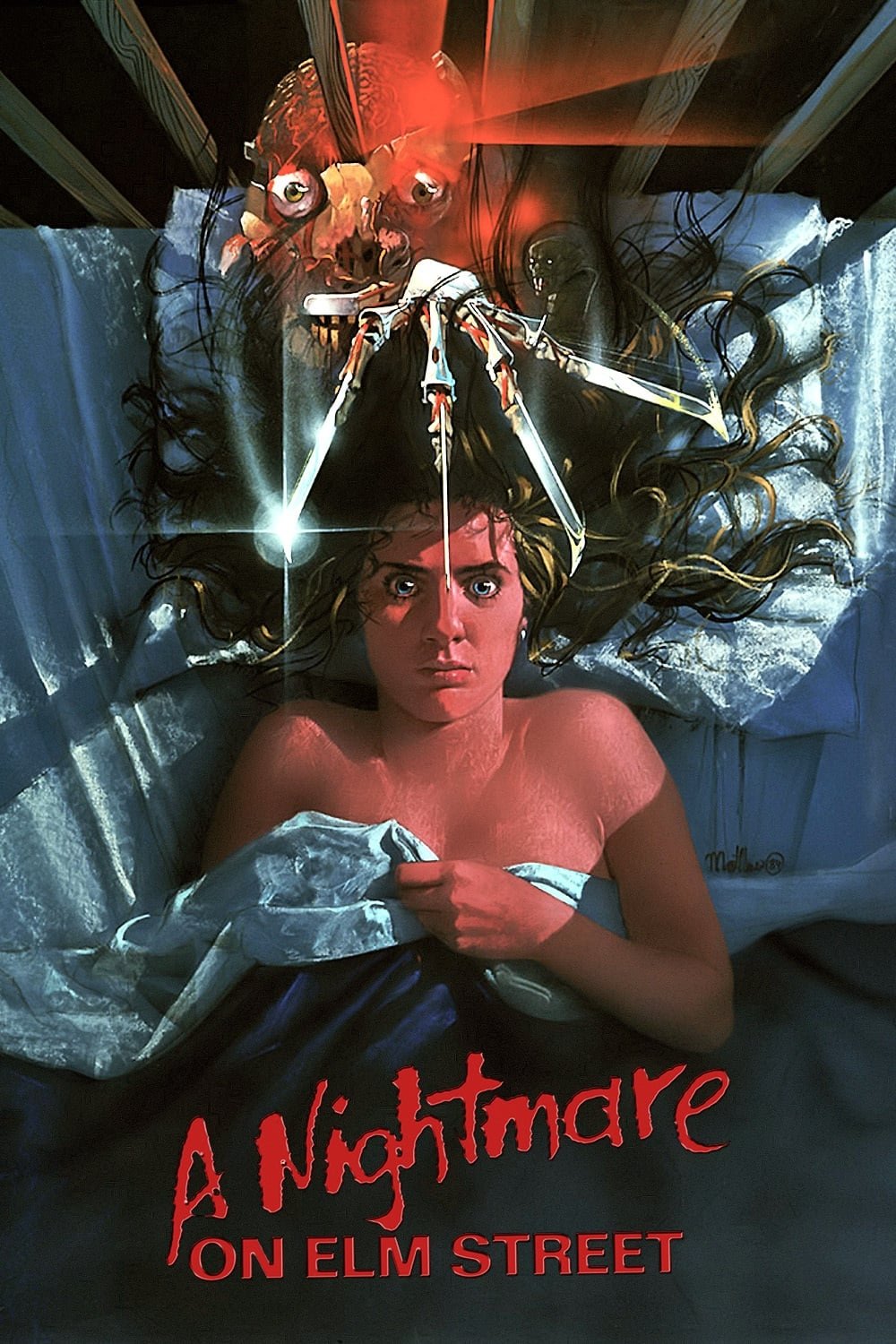


Celluloid writhes like a body in the pyre when Wes Craven decides it’s time to torch the rules of horror. It was 1984, and the slasher genre already stank of rot: Halloween had aged like cheap wine, Friday the 13th repeated itself like a scratched record, and the stock teens died with all the grace of a mannequin tumbling out of a shop window. But Craven, that literature-professor-looking guy with a brain packed with nightmares, had an ace up his sleeve: what if the monster didn’t lurk in the woods or summer camps, but in the one place no one could escape? Sleep. Or, better yet, the nightmare. Thus, A Nightmare on Elm Street was born—a film that didn’t just redefine the genre but plunged a bladed glove into its heart and let it bleed metaphors about guilt, repression, and the rot of suburban America.
New Line Cinema, back then a studio more lost than a kid in a mall, bet on Craven like a man playing Russian roulette with a squirt gun. The budget was so tight Freddy Krueger’s glove had to be cobbled together-la-cueva-de-los-espejos-rotos" class="text-amber-400 font-black hover:text-amber-300 transition underline decoration-amber-500/40 hover:decoration-amber-300" title="[6.5/10 ⚡ Ácido Cítrico] Lee nuestra autopsia de «Together»" data-acid-interlink="together-la-cueva-de-los-espejos-rotos">together from kitchen knives bought at a thrift store, and his burn makeup was a mix of latex and paint that smelled like bargain-bin hell. But, as the gods of cult cinema know, limitations are the best fertilizer for genius. Craven, who had already proven his mastery of visceral terror with The Last House on the Left and The Hills Have Eyes, understood something studios still hadn’t digested: the real terror isn’t in what you see, but in what you can’t control. And what’s more uncontrollable than the subconscious, that landfill of childhood traumas, repressed desires, and fears parents think they’ve buried under layers of pious lies?
The social context of the era couldn’t have been juicier. America lived under Reagan’s yoke, a second-rate actor selling the illusion of prosperity while AIDS ravaged the gay community, the Cold War kept the world on the brink of nuclear apocalypse, and the suburbs—those perfect gardens with identical houses—hid secrets darker than a closet full of skeletons. A Nightmare on Elm Street wasn’t just a horror movie: it was a funhouse mirror reflecting the hypocrisy of a society that preferred to burn its monsters rather than face them. The parents of Elm Street, those adults who smoke in silence while their kids die in their dreams, are the real villains of the story. Freddy Krueger, with his striped sweater and fedora, is nothing more than the executioner of collective guilt, a ghost who returns to collect with interest the sins of a generation that looked the other way.
And then there’s Robert Englund, that theater actor who looked like he’d wandered out of a lost episode of The Twilight Zone, transforming a role that could’ve been ridiculous into one of cinema’s most iconic performances. Freddy isn’t a monster: he’s a showman, a macabre comedian who savors every second of his reign in the dream world. With every bad joke, every wink at the audience, and every slash, Englund turns Krueger into a villain so charismatic you almost feel bad when they kill him. Almost. Because, let’s be honest, no sane person would want to share a beer with a guy who smells like burnt flesh and has a sense of humor darker than tar.
The Direction: Craven, the Surgeon of Nightmares
Wes Craven doesn’t direct A Nightmare on Elm Street—he conducts it. Every shot is a precise incision into the fabric of reality, a clean cut separating the dreamlike from the tangible with the same ease Freddy tears through his victims’ throats. The director understands that psychological terror isn’t built on cheap scares but on oppressive atmospheres, on spaces that breathe and sweat fear. Nancy’s house (Heather Langenkamp), that suburban home with walls that seem to inhale and hallways that stretch like intestines, is a character in its own right. Craven films it with a claustrophobic cinematography, packed with elongated shadows and overhead lighting that turns every room into a death trap. Jacques Haitkin, the cinematographer, lights the dreams as if they were Francis Bacon paintings: distorted, bloody, and brimming with grotesque beauty.
The editing is another of the film’s strengths. Craven plays with the subjectivity of dreams, blending reality and fiction so seamlessly that the viewer questions what they’re seeing. The transitions between the real world and the dream realm are so fluid that, more than once, you’ll find yourself wondering if what you just saw was real or a figment of your imagination. That’s terror in its purest form: the uncertainty, the inability to distinguish between safety and danger. And when Craven decides to drop a scare, he does it with surgical precision. There are no gratuitous jump scares, just moments of tension so well-crafted they leave you breathless, like when Tina (Amanda Wyss) is dragged across her bedroom ceiling while her boyfriend, helpless, screams her name.
But where Craven truly shines is in the construction of the dream space. The nightmares in A Nightmare on Elm Street aren’t ethereal, hazy places—they’re physical labyrinths, tangible, twisting and warping as if alive. The sequence where Nancy is chased by Freddy down an infinitely stretching hallway, with doors slamming shut on their own and bleeding walls, is one of the most influential scenes in horror cinema. Craven doesn’t just create a nightmare space: he makes it real, makes it present, makes it breathe. And when the audience leaves the theater, they can’t help but eye their own bedroom warily, wondering if their walls hide a blade-gloved monster too.
The Performances: When Terror Takes Flesh
The cast of A Nightmare on Elm Street is a reminder that sometimes talent shines brighter in small roles than in the leads. Heather Langenkamp, as Nancy Thompson, is the slasher heroine the genre needed: a smart, brave girl with more guts than all the male protagonists of Friday the 13th combined. Langenkamp doesn’t play a victim—she plays a survivor, a girl who refuses to give up even when the world (and her own dreams) conspire to destroy her. Her chemistry with Johnny Depp, in his film debut, is one of those rare moments where cinema captures the essence of youth: awkward, innocent, and doomed to vanish.
But let’s be real—this is Robert Englund’s movie. The actor takes Freddy Krueger and turns him into an instant icon, a villain who transcends the genre to lodge himself in the collective unconscious. Englund doesn’t just play a monster: he humanizes him, makes him fun, makes him terrifying. With every line, every exaggerated gesture, and every lecherous glance, Krueger becomes a character so complex you almost feel sorry for him. Almost. Because, at the end of the day, Freddy is still a serial killer with a bladed glove and a sense of humor blacker than coal. Englund achieves something few actors have: making the audience fear and enjoy him at the same time. And that, dear readers, is the holy grail of horror.
The rest of the cast delivers, especially John Saxon as Lieutenant Thompson, Nancy’s father, whose performance oozes a mix of authority and vulnerability that makes him one of the film’s most interesting characters. Saxon doesn’t play a generic cop—he plays a broken man, a father who knows he’s failed his daughter and is willing to do anything to make it right. Even face a monster from his own nightmares.
The Technical Department: When the Budget is Tight but the Imagination Isn’t
The production design of A Nightmare on Elm Street is a perfect example of how ingenuity can trump millions. Freddy Krueger’s glove, that object which became one of horror cinema’s most recognizable symbols, was made from kitchen knives and a gardening glove for under $100. But its visual impact is so powerful it looks plucked straight from an industrial nightmare. Freddy’s makeup, designed by David B. Miller, is another of the film’s strengths. The burns aren’t realistic (something nearly impossible to achieve with 1984’s effects), but they have an expressionist, almost painterly quality that makes them more terrifying than any modern prosthetic. Miller understood that sometimes terror isn’t in what’s real, but in what’s suggested.
The score by Charles Bernstein is another of the film’s triumphs. Bernstein composes a main theme that’s as catchy as it is unsettling, a tune that burrows into your brain like a worm and remains instantly recognizable decades later. But where Bernstein truly shines is in the sound design. The dreams in A Nightmare on Elm Street don’t sound like the real world—they sound distorted, amplified, as if filtered through a nightmare. The victims’ screams, the creaking walls, the sound of blades slicing the air... Everything is designed to put the viewer in a state of constant tension, as if they’re trapped in Freddy’s world themselves.
Craven’s script, meanwhile, is a masterclass in narrative economy. In just 91 minutes, the director builds a coherent universe, develops his characters, and delivers a social message that remains relevant today. Freddy Krueger’s lines, packed with double entendres and macabre jokes, are so memorable they’ve been quoted and parodied ad nauseam. But the script’s real genius is how Craven balances terror with drama. A Nightmare on Elm Street isn’t just a scare flick—it’s a suburban tragedy, a story about guilt, repression, and the cost of denial. The parents of Elm Street aren’t one-dimensional villains—they’re victims of their own mistakes, of a society that taught them silence is the best way to deal with pain.
The best
- Wes Craven’s direction: A master of horror who turns every frame into a macabre work of art, balancing the dreamlike and the real with surgical precision.
- Robert Englund as Freddy Krueger: A performance so iconic it redefines what it means to be a villain in cinema. Charismatic, terrifying, and hilarious in equal measure.
- Production design and practical effects: With a limited budget, Craven and his team create images that remain shocking decades later, like Freddy’s glove or the burns on his face.
- Charles Bernstein’s score: A main theme that burrows into your brain like a worm, and a sound design that turns every scene into a sensory experience.
The worst
- Some teenage dialogue: While the script is brilliant overall, there are moments when the characters sound more like slasher stereotypes than real teens.
- Pacing in the first half: The film takes a while to get going, and some of Nancy’s early dreams don’t pack the same punch as later sequences.
- Lack of development for some side characters: Characters like Glen (Johnny Depp) or Tina (Amanda Wyss) could’ve had more depth, especially in a film exploring themes like guilt and repression.
- Some obvious special effects: While ingenuity saves most budget limitations, there are moments where the practical effects are too noticeable, like in the blood geyser scene.
The Verdict of Claqueta Ácida
A Nightmare on Elm Street isn’t just one of the best horror films in history—it’s a cinematic masterpiece, full stop. Wes Craven didn’t just reinvent the slasher—he gave it depth, style, and a villain who remains more relevant than most of Hollywood’s protagonists. Freddy Krueger isn’t a monster: he’s a mirror, a reminder that the real horrors don’t lurk in the woods but in our own minds. The film is a perfect blend of terror, drama, and social satire, with a cast that shines even in the smallest roles. If horror cinema had a hall of fame, A Nightmare on Elm Street would sit on the altar, right next to The Exorcist and Psycho. And if you ever find yourself dreaming of a striped-sweatered guy with bladed gloves, remember: it’s not a dream. It’s a nightmare. And nightmares, dear readers, always end in blood. 💀
🎬 Tráiler Oficial
Abrir en YouTube
Ending Explained: A Nightmare on Elm Street
Ficha de Daños Colaterales en Sala
Certificado de impacto psicofísico emitido por Silvia Mordaz
Ni un solo parpadeo voluntario. El asiento, inusualmente cómodo.
El móvil permaneció en el bolsillo donde debía estar.
Ninguna: la adrenalina cinematográfica es suficiente.
"No aplica. La obra se sostiene sola."
💬 El Veredicto de la Comunidad
¿Qué te ha parecido la película? Deja tu nota de 0 a 10 para contrastarla con el análisis de la redacción.
Aún no has votado
📢 ¿Te ha gustado el ácido?
Comparte esta crítica con tus amigos cinéfilos o desata la polémica en redes.
⚡ THE CINEMATIC VENOM YOUR INBOX CRAVES
No sugarcoated ratings, no corporate fluff. Subscribe for our uncensored weekly analysis or join the private Telegram for press previews, poll clashes, and instant alerts.
Alertas de estrenos en 1 segundo, encuestas en caliente y audios al salir de pases de prensa.
Recibe la dosis semanal en tu mail + regalo inmediato del PDF con 50 joyas ocultas de culto.
Related Reviews
Recommended autopsies for demanding film buffs.
 🔥 Fusión Nuclear9.2
The Fly: Cronenberg and the Art of Turning Love into Pus
⚡Afinidad temática directa en atmósfera, estilo y fijaciones visuales.
David Cronenberg delivers a masterpiece of body horror that transforms Jeff Goldblum into an insect with a human soul. Revolting, poetic, and profoundly heartbreaking.
 🔥 Fusión Nuclear9.2
Possession: When Love Rots and Celluloid Bleeds
⚡Afinidad temática directa en atmósfera, estilo y fijaciones visuales.
Żuławski turns a divorce into a flesh-and-psychosis black mass. Isabelle Adjani screams so hard the Berlin Wall shudders. Horror cinema for masochists with impeccable taste.
 🔥 Fusión Nuclear10.0
*The Thing (1982): John Carpenter’s Frozen Masterpiece of Paranoia and Mutant Flesh*
⚡Afinidad temática directa en atmósfera, estilo y fijaciones visuales.
John Carpenter delivers his artistic magnum opus in Antarctica, blending Cold War nihilistic distrust with the most unhinged practical effects in cinema history.
Editorial Ecosystem
Cinephile connections, archive interviews and related analyses.
💬 Debate Cinéfilo & Autopsia de Lectores
0 veredictos¿Discrepas con nuestra nota? ¿Es una obra maestra o veneno puro? Deja tu veredicto abajo sin necesidad de registro.


Aún nadie ha dejado su veredicto para esta película.
Sé el primero en clavarle el colmillo rellenando el formulario de arriba.