Princess Mononoke — Ghibli’s Masterpiece or a Pagan Ritual in Celluloid?
Silvia Mordaz’s scathing review of Princess Mononoke—Hayao Miyazaki’s epic that’s less a film and more a full-contact spiritual exorcism.

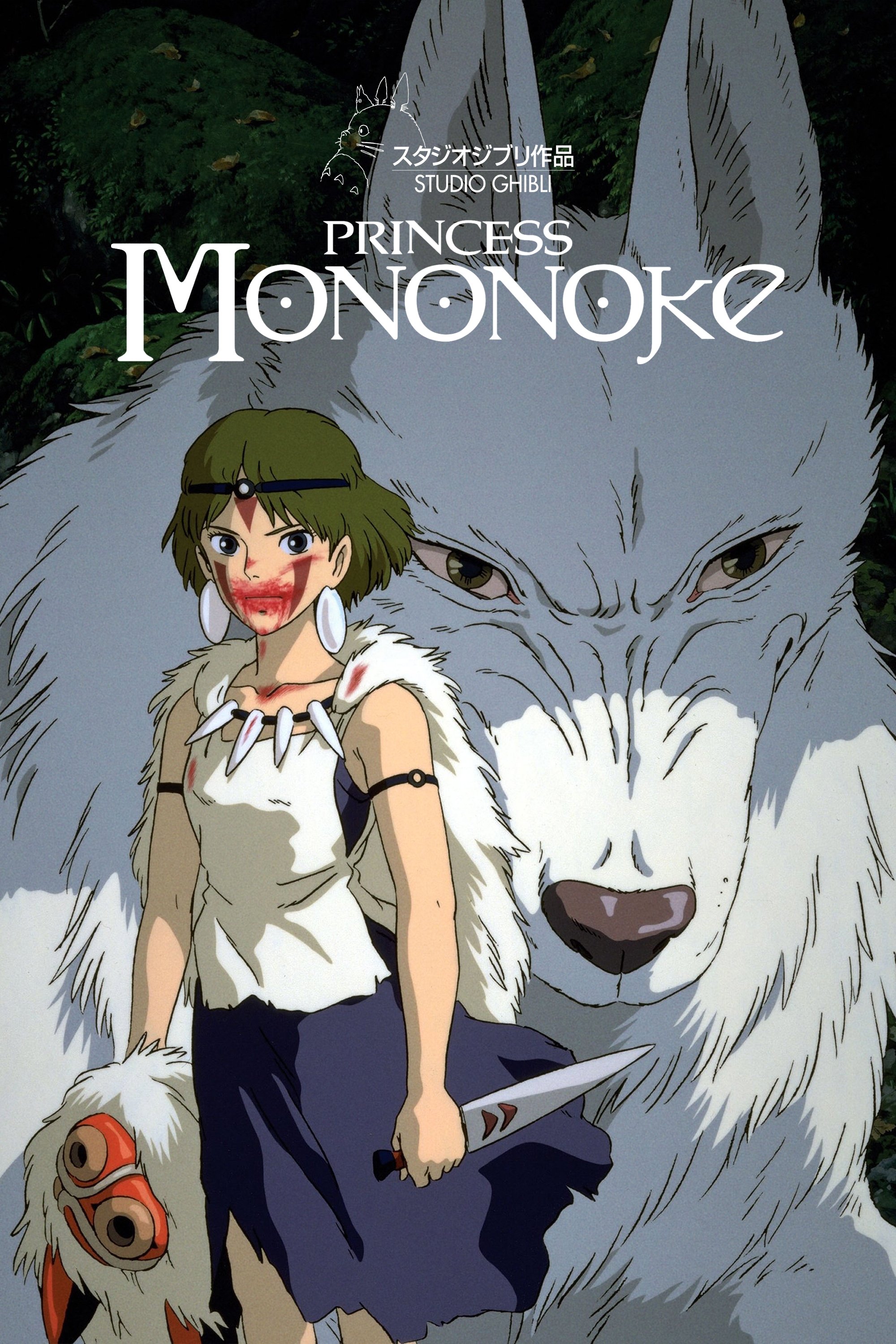

Some films aren’t watched—they’re endured. Or worshipped. Princess Mononoke (1997) is one of those rare beasts that nails you to your seat like a kodama just hexed you with sap and roots. It’s not a movie; it’s a pagan ritual on celluloid. And when you stumble out of the theater—or your couch, or the cave where you screened it—you know something inside you has shifted. Not because of the eco-message (though that’s there, too), but because Miyazaki has shoved a world so alive into your skull that even the cinema’s AC smells like rotting forest and rusted iron. Welcome to the masterpiece Disney tried to neuter—and spectacularly failed.
The opening shot warns you: this isn’t Totoro with swords. A giant boar, its body writhing with black worms that look like living veins, charges the camera like a locomotive of flesh and fury. Joe Hisaishi’s score doesn’t accompany—it assaults, with horns that sound like hell decided to cover Enter Sandman in symphonic metal. Then Ashitaka, the cursed prince, gallops in on Yakul like the last rider of an apocalypse that hasn’t even begun yet. Miyazaki doesn’t give you time to breathe. He doesn’t want you to breathe. He wants you to feel the weight of the curse in your own skin, to feel the boar’s rage carving into your guts like an obsidian blade. This isn’t horror cinema. The monsters here aren’t ghosts—they’re human greed and stupidity.
The film premiered in Japan in 1997 and was a juggernaut: it grossed over $160 million, becoming the highest-grossing Japanese film of all time—until Titanic dethroned it. In the West, things got messy. Disney, which had bought the distribution rights, hit a snag: Mononoke wasn’t The Lion King. There were no catchy songs, no wisecracking animals with dick-joke punchlines. There was explicit violence, green blood that looked like demon puke, and a message so uncomfortable it reads like Greta Thunberg after three cups of fair-trade espresso. The result was an English dub supervised by Neil Gaiman that sounded like Shakespeare wrote an episode of Dragon Ball Z. And yet, the film survived. Because when something’s this good, not even Disney can fuck it up entirely.
Miyazaki doesn’t direct—he hacks at the screen with a machete. Every scene is constructed like a Hieronymus Bosch painting run through a ‘90s anime filter. The forest gods aren’t ethereal beauties: they’re monsters with glowing eyes and mouths full of shark teeth, like someone spliced a deer with a great white. The moment Moro, the wolf goddess, drags herself toward Lady Eboshi with her hind legs shattered is so poetically cruel it leaves you breathless. There are no heroes or villains here—just people (and non-people) doing whatever it takes to survive in a world collapsing around them. And then there’s San, the Princess Mononoke, spitting blood and screaming like the world owes her something. And it does.
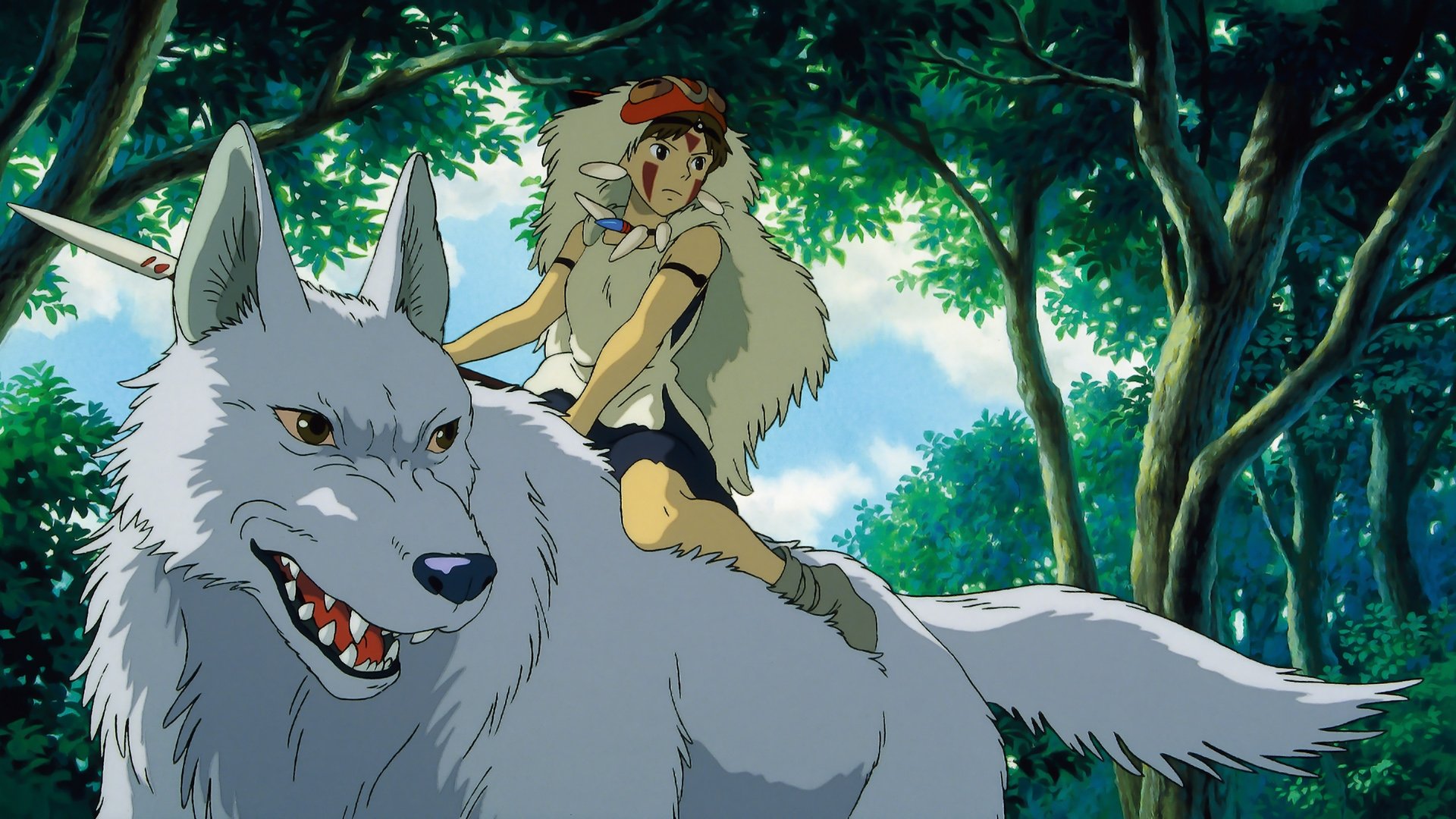
Direction and Mise-en-scène: Miyazaki as a Minor Deity
Hayao Miyazaki doesn’t film scenes—he sculpts them in motion. Every frame of Princess Mononoke looks like an ancient scroll animated with fire and the patience of a monk. The opening sequence, with the cursed boar charging through the trees, is a masterclass: the camera doesn’t just follow the beast—it crawls with it, as if infected by the same rage. The black worms covering its body aren’t just animation effects—they’re living visual metaphors, writhing like the world’s corruption made flesh. And then the boar dies, dissolving into a puddle of blood and mud. It’s not a pretty shot. It’s not a shot that makes you feel good. It’s a shot that reminds you death isn’t clean, poetic, or even tragic. It’s dirty, ugly, and sometimes necessary.
But where Miyazaki truly shines is in his ability to balance the epic with the intimate. The final battle between humans and forest gods is a spectacle of mutual destruction—trees uprooted, arrows swarming like locusts, a deer god disintegrating into a vortex of light and shadow. And yet, in the middle of the chaos, there’s a moment of silence. Ashitaka and San, covered in blood and sweat, lock eyes as the world crumbles around them. No music. No dialogue. Just the sound of ragged breathing and wind howling through the wreckage. That shot lasts five seconds, but it weighs like a tombstone. Miyazaki doesn’t need words to tell you that sometimes, love is all that’s left when everything else has gone to hell.
And then there’s the ending. The fucking ending. After two and a half hours of violence, betrayal, and destruction, Miyazaki gifts you a shot of a tiny green sprout growing from the ruins. It’s not a happy ending. It’s not a sad ending. It’s a human ending, in the best and worst sense of the word. Because life goes on, even when everything else has gone to shit. And that, dear readers, is more revolutionary than any eco-manifesto.
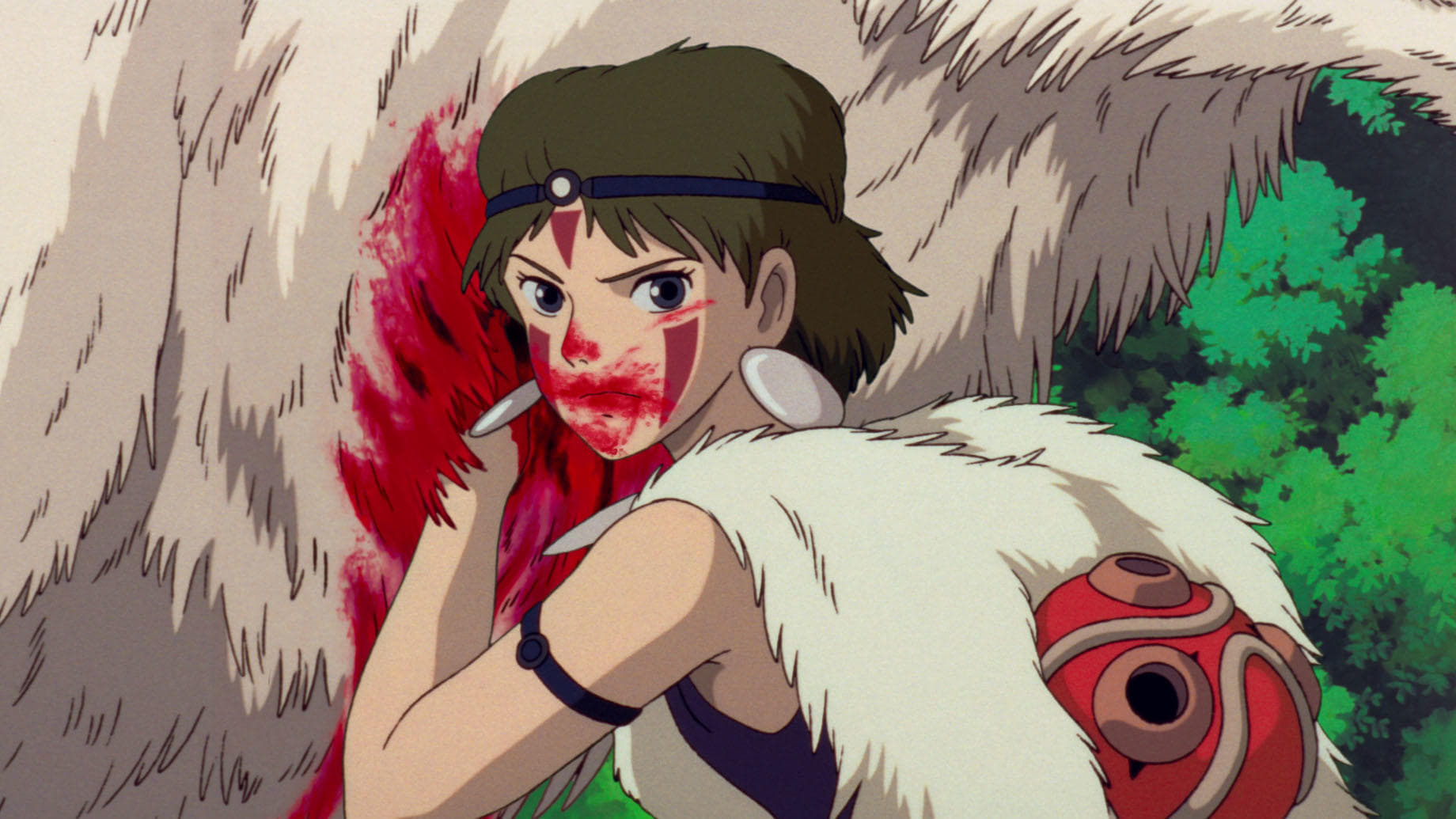
Performances: Voices That Slice Like Obsidian Blades
In Japan, the voices of Mononoke are legendary. Yutaka Matsushige (Ashitaka) doesn’t play a prince—he plays a young man who’s seen too much and still hasn’t lost hope. His voice is calm, but there’s an edge to it, like it could shatter at any moment and unleash all the rage simmering beneath. And then there’s Yuriko Ishida as San. God, San. She’s not a princess—she’s a force of nature shaped like a 15-year-old girl. Ishida gives her a ferocity that makes you believe this kid could actually tear your throat out with her teeth if you get too close to her forest. She’s not a hero. She’s a survivor. And that makes her infinitely more compelling.
But if one performance steals the show, it’s Akihiro Miwa as Moro. Miwa, a transgender singer and actor who’d previously worked with Miyazaki on Nausicaä, gives the wolf goddess a presence that’s both maternal and terrifying. Moro isn’t some noble, wise animal. She’s a furious mother who’d protect her cubs even if she had to crawl on her own entrails. The scene where Moro speaks to San, her voice raspy with pain, is one of those moments where cinema transcends entertainment. It becomes art.
The English dub, however, is… a different beast. Billy Crudup does his best with Ashitaka, but he sounds like he’s reading the script aloud rather than living it. Claire Danes, though, saves face as San. She brings an intensity that almost makes up for the fact that the dub sounds like it was recorded in a Los Angeles studio instead of hell. But the real crime is Minnie Driver as Lady Eboshi. Driver tries to give the character depth, but she ends up sounding like she’s in an episode of Grey’s Anatomy instead of a film about samurai and furious gods. It’s like someone took Cersei Lannister and dropped her into an anime without warning her that here, women don’t whine—they sever heads.
Technical Craft: When Craftsmanship Becomes Witchcraft
The cinematography in Princess Mononoke isn’t just good—it’s supernatural. Atsushi Okui, the director of photography, doesn’t light scenes—he lights nightmares. The forests are dark, damp, and teeming with shadows that seem to move when you’re not looking. The interiors of Iron Town are an industrial hellscape, with furnaces spewing fire and smoke coiling through the air like serpents. And then there’s the color. Miyazaki doesn’t use the palette of a fairy tale—he uses the palette of a fever dream. The forest greens are so intense they look toxic. The reds of blood and fire burn the screen. Even the browns of mud and grime have a texture you can almost smell.
But what truly elevates Mononoke above any other anime is its character and creature design. The forest gods aren’t anthropomorphized cute animals. They’re monsters. Beautiful monsters, yes, but monsters nonetheless. The deer god, with its body made of branches and a face carved from bark, is one of the most stunning creatures ever put to film. It’s not a god—it’s a walking ecosystem. And the kodamas—those tiny forest spirits with heads that spin like broken dolls—are equal parts adorable and deeply unsettling. Miyazaki doesn’t give you what you expect. He gives you what you need. And what you need, whether you know it or not, is to have nightmares about these things.
Joe Hisaishi’s score is another level. It’s not a soundtrack—it’s a religious experience. The horns blaring during the opening sequence aren’t music—they’re warnings. The violins accompanying San as she rides Moro aren’t melodies—they’re war cries. And the main theme, that haunting chorus that sounds like angels covering a traditional Japanese folk song, is so beautiful it hurts. It hurts because you know you’ll never hear anything like it again.
The editing, meanwhile, is relentless. Hayao Miyazaki and Takeshi Seyama don’t give you a second to breathe. The transitions between scenes are fluid, almost hypnotic, but you’re never at ease. Because in Mononoke’s world, relaxing is dying. The sequence where Ashitaka and San try to stop the deer god as it transforms into a being of pure darkness is a perfect example: the editing accelerates, the shots get shorter, the music intensifies, and suddenly you realize you’ve been holding your breath for three minutes. This isn’t a film. It’s an exorcism.
The best
Hayao Miyazaki’s direction: This isn’t cinema—it’s witchcraft. Every frame is designed to hit you, not entertain you. Miyazaki doesn’t give you what you want; he gives you what you need*, even if it hurts.- Creature design: The forest gods aren’t cute animals—they’re monsters. Beautiful, terrifying, and utterly original. The deer god is one of the most stunning creatures in film history.
- The ending: It’s not happy. It’s not sad. It’s human. A tiny green sprout growing from the ruins. It’s perfect.
The worst
The English dub: Billy Crudup sounds like he’s reading the script aloud, and Minnie Driver as Lady Eboshi sounds like she wandered in from Grey’s Anatomy*. They almost ruin the film.- The runtime: Two and a half hours can feel long, especially in the middle where the plot gets a bit tangled. But it’s a minor sin.
- Some secondary characters: Jigo and his monks are interesting, but their arc feels a bit forced, like Miyazaki wasn’t sure what to do with them.
- The plot’s complexity: There are moments when it’s easy to get lost among all the characters, gods, and factions. But let’s be honest—that’s also part of its charm.
The Verdict of Claqueta Ácida
Princess Mononoke isn’t a film—it’s an experience. One that leaves you breathless, knuckles white from gripping your seat, heart pounding like you’ve just run a marathon. Miyazaki doesn’t give you heroes or villains—he gives you broken people in a broken world, fighting for something they’re not even sure exists. The animation is a work of art, the music splits your soul, and the characters are so real they hurt. It’s a film that changes you, marks you, and makes you feel small. And that, in a world full of disposable blockbusters, is a miracle. Don’t watch it. Suffer through it. And then, when you stumble out of the theater, look around and ask yourself: how many green sprouts are left in this world? 💀
tweets_alternativos:
🎬 Tráiler Oficial
Abrir en YouTube
Theater Collateral Damage Report
Psychophysical impact certificate issued by Silvia Mordaz
Cero. La pantalla absorbió cada segundo de atención disponible.
Ni una sola mirada al móvil.
Ninguna: la adrenalina cinematográfica es suficiente.
"Inexistente: pulso de hierro hasta los créditos finales."
💬 Community Verdict
What did you think of the film? Rate it from 0 to 10 to compare it with the editorial review.
You haven't voted yet
📢 ¿Te ha gustado el ácido?
Comparte esta crítica con tus amigos cinéfilos o desata la polémica en redes.
⚡ THE CINEMATIC VENOM YOUR INBOX CRAVES
No sugarcoated ratings, no corporate fluff. Subscribe for our uncensored weekly analysis or join the private Telegram for press previews, poll clashes, and instant alerts.
Alertas de estrenos en 1 segundo, encuestas en caliente y audios al salir de pases de prensa.
Recibe la dosis semanal en tu mail + regalo inmediato del PDF con 50 joyas ocultas de culto.
Related Reviews
Recommended autopsies for demanding film buffs.
 🔥 Fusión Nuclear9.5
*2001: A Space Odyssey – A Monkey, a Monolith, and Two Hours of Cosmic Pretentiousness*
⚡Afinidad temática directa en atmósfera, estilo y fijaciones visuales.
We dissect Stanley Kubrick’s magnum opus. A visual feast of minimalism and space hypnosis that cemented "serious" sci-fi—and bored half of humanity to tears.
 🔥 Fusión Nuclear9.3
2001: A Space Odyssey — The Day Kubrick Left Us Speechless (and Oxygenless)
⚡Afinidad temática directa en atmósfera, estilo y fijaciones visuales.
Kubrick turned science fiction into pure art: 149 minutes of eloquent silence, bone-wielding apes, and a psychopathic computer. Masterpiece or pretentious fraud? Here’s the verdict.
 🔥 Fusión Nuclear8.5
*A Clockwork Orange: The Sweet, Rusty Aftertaste of Violent Haute Couture*
⚡Afinidad temática directa en atmósfera, estilo y fijaciones visuales.
A scathing review of Kubrick’s masterpiece, where ultraviolence meets 60s fashion in a twisted pas de deux.
Editorial Ecosystem
Cinephile connections, archive interviews and related analyses.
💬 Debate Cinéfilo & Autopsia de Lectores
0 veredictos¿Discrepas con nuestra nota? ¿Es una obra maestra o veneno puro? Deja tu veredicto abajo sin necesidad de registro.

Aún nadie ha dejado su veredicto para esta película.
Sé el primero en clavarle el colmillo rellenando el formulario de arriba.