Bosch — The Noir Amazon Sold as "Premium" (And, Shockingly, Isn’t Corporate Trash)
A scorching review of Bosch, the series that leaves you craving more—because, against all odds, it actually delivers.

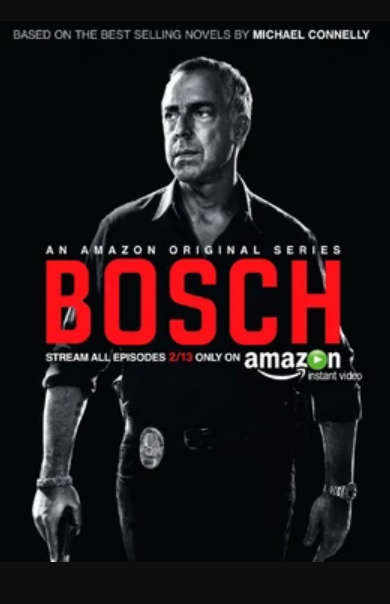

Bosch: The Noir Amazon Sold as "Premium" (And, Shockingly, Isn’t Corporate Trash)
Ever since Amazon decided its future wasn’t in selling books but drowning us in an ocean of algorithmic content, we’ve been subjected to gems like The Lord of the Rings: The Rings of Power (an insult to Tolkien’s memory) or Reacher (where the only mystery is how a guy built like a walk-in closet solves crimes without tearing his shirt). But amid all this corporate mediocrity, Bosch emerges like that stubborn detective who refuses to close a case, even when everyone tells him, "There’s nothing left to do." And against all odds, the series works. It’s not perfect, but it’s real—something so rare in the streaming era it might as well be a vinyl record in an Apple Store.
finalExplicado: "En el clímax de la serie, Bosch, tras desenterrar la verdad sobre la corrupción que pudre su departamento y la muerte de su madre, confronta directamente al verdadero responsable en un tenso y austero encuentro. No hay tiroteo espectacular ni persecución: solo una confesión fría, un disparo preciso y la decisión de Bosch de quemar las pruebas que lo limpiarían públicamente. Simbólicamente, el desenlace significa que la justicia verdadera no existe dentro del sistema. Bosch elige seguir siendo el hombre sucio, el paria que arrasa con todo, porque solo manteniéndose fuera de la redención institucional puede seguir cazando monstruos. El fuego final no purifica: condena. Es un noir puro: el héroe gana, pero se condena eternamente."
Jim McKay: The Director Who Understood Noir Isn’t Made with Instagram Filters
Jim McKay isn’t David Fincher, nor is he Denis Villeneuve. He doesn’t have Mindhunter’s budget or True Detective’s obsession with slow cinema. But what he does have is something far more valuable: narrative and visual coherence. McKay, a guy who cut his teeth in indie film (Our Song, Everyday People), understood that Bosch didn’t need endless tracking shots or John Wick-style action choreography to be effective. What it needed was atmosphere, and boy, did he deliver.
The series drinks straight from the well of classic noir—a genre Hollywood buried under mountains of CGI and Fast & Furious reboots—but updates it without betraying its soul. Los Angeles isn’t the neon-and-smoke city of Chinatown anymore; it’s a maze of freeways, decaying precincts, and neighborhoods that reek of stale coffee and corruption. McKay and cinematographer Boris Mojsovski use light like a character: it’s not pretty, it’s functional. Interiors are bathed in cold grays and blues, as if the city itself is under interrogation. Exteriors, meanwhile, exploit the contrast between California’s blinding sun and the long shadows of alleyways, a constant reminder that in L.A., even in daylight, there are places where the truth hides.
The editing is another win. No unnecessary jump cuts or frenetic pacing to keep us "hooked." Bosch trusts its script and its actors, so its scenes breathe. Dialogue flows naturally, silences carry weight, and when action happens (which isn’t often), it matters. It’s not the bullet ballet of The Raid, but it doesn’t need to be. Here, a shootout is messy, chaotic, and leaves scars. Just like real life.
Titus Welliver: The Bosch Michael Connelly Deserved (And Hollywood Had No Clue It Had)
If there’s an actor who’s turned "the brooding hardass with a dark past" into an art form, it’s Titus Welliver. He’s no leading man—no Tom Cruise grin or Denzel Washington charm. What he has is presence. A presence that makes you believe this man has seen things he shouldn’t have, which is why he carries that beaten-dog look, only lighting up when he smells blood in the water.
Welliver is Harry Bosch. He doesn’t play him; he inhabits him. Every scowl, every grunt, every gallon of coffee he chugs is calibrated to convey the character’s essence: a guy who follows the rules, but only the ones he deems just; a loner who doesn’t need friends but protects his own like a wounded wolf; a cop who hates corruption but won’t hesitate to break a few bones if the case demands it. Welliver achieves something few actors in the genre manage: he makes you forget you’re watching a TV show. When Bosch is on screen, the rest of the world fades away.
Then there’s his dynamic with Eleanor Wish (Sarah Clarke), an ex-FBI agent turned professional poker player. Their chemistry is one of the series’ highlights: no saccharine romance, no forced friendship. It’s unresolved sexual tension mixed with professional respect and a shared past that never quite heals. Clarke, by the way, is excellent—though the show sometimes sidelines her. A waste, because when they’re on screen together, the sparks fly.
The Cast: When the Supporting Players Steal the Show (And When They Don’t)
Bosch has an ensemble that, for the most part, works like a Swiss watch. Jamie Hector (the unforgettable Marlo Stanfield from The Wire) shines as Jerry Edgar, Bosch’s partner. Hector has a knack for making even precinct paperwork sound compelling. His relationship with Bosch is another pillar of the series: they’re not friends, but they’ve got each other’s backs. There’s respect, but also tension, because Edgar knows Bosch is a magnet for trouble.
Amy Aquino, as Lieutenant Grace Billets, is another standout. She’s not the typical screaming boss. Billets is a woman in a man’s world, but she doesn’t need to prove anything. She’s sharp, cold when necessary, and carries that mix of weariness and determination that only comes with experience. Her dynamic with Bosch is fascinating: she protects him but reins him in when he crosses the line. Best of all, she never falls into the "tough woman with a heart of gold" cliché. Billets is tough, period.
But not everything’s perfect. Lance Reddick (the iconic Cedric Daniels from The Wire) shows up as Irvin Irving, the corrupt, manipulative police chief. Reddick is a phenomenal actor, but his character is written so one-dimensionally he looks bored. Irving is the quintessential mustache-twirling villain: always with a cigar, always with a smug grin, always one step ahead of Bosch. He’s the Disney villain in a series that otherwise avoids archetypes. A waste of talent.
Then there are the characters who promise but don’t deliver. Maddie Bosch (Harry’s daughter, played by Madison Lintz) is a prime example. At first, her relationship with Bosch seems intriguing: a rebellious teen discovering her dad isn’t the boring guy she thought but a detective with a dark past. But the show never dives deeper. Maddie goes from a character with potential to little more than a plot device so Bosch has a life outside work. A shame.
The Script: When Faithful Adaptation Doesn’t Mean Boring
Eric Overmyer and the writing team did something that should be obvious but feels revolutionary in Hollywood: they respected the source material. Bosch is based on Michael Connelly’s novels, and instead of trying to "modernize" or "make them more commercial," the writers adapted them faithfully—but intelligently.
The series follows the classic procedural structure: one case per episode, with an overarching arc across the season. But unlike CSI or NCIS, here the cases matter. They’re not excuses for characters to repeat the same jokes. Each investigation is packed with twists, red herrings, and moments where Bosch (and the viewer) wonders if he’s chasing the right guy. And here’s the kicker: he doesn’t always win. Sometimes, justice doesn’t prevail. Sometimes, the bad guy gets away with it. And in TV land, that’s revolutionary.
That said, the pacing can be uneven. Some episodes crawl, especially when diving into police bureaucracy or legal minutiae. But even then, the show knows how to keep the tension alive. Because Bosch isn’t about car chases or shootouts (though they happen); it’s about obsession. The obsession of a man trying to do the right thing in a broken system. And that, dear readers, is noir in its purest form.
The Soundtrack: When Less Is More (And That’s a Good Thing)
Jesse Voccia isn’t Hans Zimmer, nor does he pretend to be. His score for Bosch is subtle but effective. No epic themes or catchy hooks. What you get are distorted electric guitars, pulsing basslines, and minimalist percussion that sound like the heartbeat of a city that never sleeps. Voccia’s music doesn’t tell you how to feel; it whispers that something’s wrong. It’s the sonic equivalent of that gut feeling that, even if you can’t see the killer, you know he’s there, lurking in the shadows.
The main theme, by the way, is a masterclass in restraint. It’s not the unforgettable riff of The X-Files or the fanfare of Law & Order. It’s a couple of guitar notes, repeated over and over, like a clock ticking down to Bosch solving the case. Simple. Effective. Perfect.
The best
Boris Mojsovski’s cinematography: Because in an era where even superhero shows have more filters than an Instagram influencer, Bosch* proves light and shadow can still tell a story.- Titus Welliver as Harry Bosch: An actor who makes "staring at a wall with a scowl" more compelling than 90% of Hollywood’s action scenes.
The worst
Irvin Irving (Lance Reddick): A villain so generic he feels like he was recycled from a rejected 24* pilot. Reddick deserves better.- Maddie Bosch’s development: A teen with potential to be Batman’s Robin, reduced to little more than a plot device so her dad has a personal life.
The Verdict of Claqueta Ácida (8.5/10)
Bosch is that rare bird in today’s TV landscape: a show that doesn’t insult its audience’s intelligence, respects its source material, and doesn’t need CGI or absurd twists to keep you hooked. It’s not perfect—it has its slow moments and some wasted characters—but it’s honest. And in a streaming world where "premium" usually means "churned out by an algorithm," that’s nothing short of a miracle. If you like detective stories with more brains than brawn, Bosch is your show. If not, well, you can always go back to Cobra Kai and pretend cinema still exists. 💀🎬 Tráiler Oficial
Abrir en YouTube
Ending Explained: Bosch
Ficha de Daños Colaterales en Sala
Certificado de impacto psicofísico emitido por Camilo K.O.
Cero. La pantalla absorbió cada segundo de atención disponible.
Ninguna comprobación del tiempo. Se agradece la rareza.
Ninguna: la adrenalina cinematográfica es suficiente.
"Inexistente: pulso de hierro hasta los créditos finales."
💬 El Veredicto de la Comunidad
¿Qué te ha parecido la película? Deja tu nota de 0 a 10 para contrastarla con el análisis de la redacción.
Aún no has votado
📢 ¿Te ha gustado el ácido?
Comparte esta crítica con tus amigos cinéfilos o desata la polémica en redes.
⚡ THE CINEMATIC VENOM YOUR INBOX CRAVES
No sugarcoated ratings, no corporate fluff. Subscribe for our uncensored weekly analysis or join the private Telegram for press previews, poll clashes, and instant alerts.
Alertas de estrenos en 1 segundo, encuestas en caliente y audios al salir de pases de prensa.
Recibe la dosis semanal en tu mail + regalo inmediato del PDF con 50 joyas ocultas de culto.
Related Reviews
Recommended autopsies for demanding film buffs.
 🔥 Fusión Nuclear9.3
2001: A Space Odyssey — The Day Kubrick Left Us Speechless (and Oxygenless)
⚡Afinidad temática directa en atmósfera, estilo y fijaciones visuales.
Kubrick turned science fiction into pure art: 149 minutes of eloquent silence, bone-wielding apes, and a psychopathic computer. Masterpiece or pretentious fraud? Here’s the verdict.
 ⚡ Ácido Cítrico7.5
**Baghead: A Nightmare in the Dark (And We Mean *Literal* Darkness)**
⚡Afinidad temática directa en atmósfera, estilo y fijaciones visuales.
A scathing, gut-punch review of *Baghead*, the psychological thriller that drags you into the abyss—kicking, screaming, and probably tripping over your own feet.
 🔥 Fusión Nuclear8.7
*Blow Out* (1981): When Brian De Palma Stopped Imitating Hitchcock to Piss on His Grave—With Style
⚡Afinidad temática directa en atmósfera, estilo y fijaciones visuales.
An in-depth review of Brian De Palma’s definitive paranoid thriller. We dissect his obsession with sound, his visual suspense tricks, and a devastating finale that still packs a punch.
Editorial Ecosystem
Cinephile connections, archive interviews and related analyses.
💬 Debate Cinéfilo & Autopsia de Lectores
0 veredictos¿Discrepas con nuestra nota? ¿Es una obra maestra o veneno puro? Deja tu veredicto abajo sin necesidad de registro.

Aún nadie ha dejado su veredicto para esta película.
Sé el primero en clavarle el colmillo rellenando el formulario de arriba.