Leatherface (2017) — When New French Extremism Laces Up Its Texas Boots (And Fills Them with Blood)
Bustillo and Maury cross the pond to deliver a grimy, violent, and unpredictable prequel that blows up the chainsaw myth from the ground up.

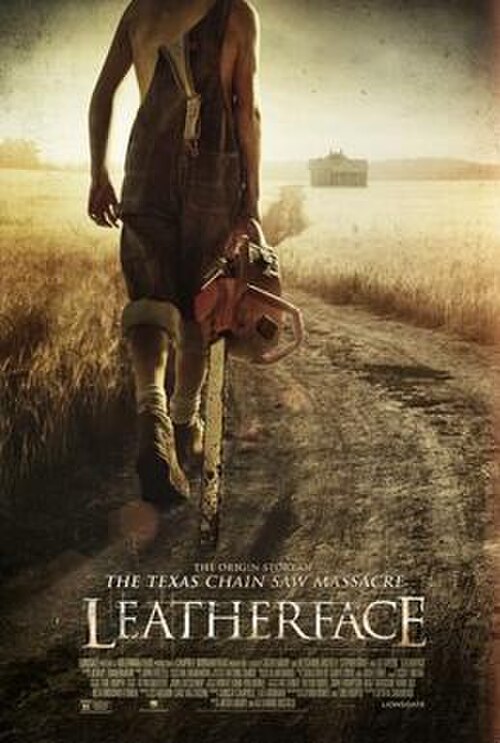
Leatherface (2017): When New French Extremism Laces Up Its Texas Boots (And Fills Them with Blood)
In a horror genre as saturated with prequels as a fast-food menu—where every studio seems obsessed with filling in franchise backstories with the cinematic equivalent of a fill-in-the-blank childhood trauma—Leatherface (2017) emerges as an oddity. Not because it’s good (though it is, in its own grimy, sweaty way), but because, against all odds, Alexandre Bustillo and Julien Maury, the French directors who turned gore into art with Inside (2007), decided their foray into American chainsaw cinema wouldn’t be a cheap nostalgia trip but a kick in the teeth to the canon. And damn, does it hurt.
The film, which in theory should be just another Texas Chain Saw Massacre prequel, ends up being a bloody road movie, a rural psychopath coming-of-age drama, and, above all, a failed experiment with pretensions of greatness. Failed, yes, but fascinating. Like a corpse that, despite being in an advanced state of decay, still has more personality than 90% of modern slashers. Because in the hands of these two pissed-off Frenchmen, the Leatherface mythology isn’t exploited—it’s dismantled, spat on, and reassembled with duct tape and bile.
finalExplicado: "Jedidiah, convertido ya en Leatherface, degüella sin piedad a la enfermera que lo había tratado con humanidad durante la fuga. En el clímax, el sheriff Hartman llega al lugar, reconoce al chico que torturó durante años y, en un último gesto de odio, le dispara. Leatherface sobrevive, se pone la máscara de piel por primera vez y, con un rugido animal, destroza al sheriff con la motosierra. Simbólicamente, el final significa el nacimiento irreversible del monstruo: la “reeducación” sádica del sistema (familia, ley, psiquiátrico) no solo fracasa, sino que fabrica al depredador. La máscara de piel es el punto de no retorno: el chico ya no existe, solo queda la criatura que Texas y su propia crueldad han parido. El ciclo de violencia se cierra y comienza al mismo tiempo."
Texas, 1955: Where the Dust Tastes Like Dried Blood
The plot takes us to 1950s and 60s Texas, a setting that, in theory, should smell like cotton and gasoline but, in Bustillo and Maury’s hands, reeks of stale sweat, spilled beer, and rotting flesh. It all begins with a crime: the sheriff’s daughter, Hal Hartman (Stephen Dorff, in a role that feels like it was ripped from a spaghetti western directed by David Lynch), is murdered by the Sawyer clan. In a fit of biblical vengeance—of the kind only seen in movies where white men believe themselves divine avengers—Hartman kidnaps the family’s youngest son, Jedidiah, and locks him away in an asylum under a false identity. Because, of course, what better way to "rehabilitate" a traumatized child than to throw him in with psychopaths and sadists?
Years later, during a riot at the asylum (which feels like One Flew Over the Cuckoo’s Nest if the director were a Cannibal Holocaust fanatic), four inmates—including young Jedidiah—escape, taking a nurse hostage (Vanessa Grasse, whose character has the misfortune of being the only sane person in a vehicle full of lunatics). What follows is a road odyssey where the Texas landscape isn’t just a backdrop but a full-blown character: dusty, oppressive, packed with dive bars, abandoned gas stations, and trailers where depravity knows no bounds.
The film’s greatest strength is its false-mystery structure. Instead of following the classic prequel formula—"Look, here’s young Leatherface, now watch him become a monster"—the directors toy with the audience. There are three misfit young men (played by Sam Strike, James Bloor, and Finn Jones), each with their own brand of madness, and for the first half of the movie, we haven’t a clue which one will end up wielding the chainsaw. This narrative choice doesn’t just avoid predictable boredom; it turns Leatherface into something more than a slasher: it’s a study of how environment, violence, and dysfunctional family mold a killer.
Sweat, Necrophilia, and the Art of Subverting a Myth
What really works in Leatherface is its atmosphere. Bustillo and Maury, veterans of New French Extremism (the movement that turned horror into a spectacle of flesh and despair), have zero interest in Hollywood’s digital sheen. Here, everything is tactile, filthy, uncomfortable. The cinematography by Antoine Sanier—shot in Bulgaria, ironically—captures that oppressive Texas, where the heat isn’t just set dressing but a suffocating character in its own right. The frames are packed with textures: the rust on chainsaws, sweat on actors’ skin, flies buzzing over sun-baked corpses. This is a movie that smells bad, and that’s a compliment.
The violence, as expected, is brutal, physical, and unglamorous. There are no elegant choreographies or creative kills with comic relief. Here, a gunshot to the jaw is exactly that: a bloody hole that leaves you speechless. But the most memorable moment—and the one that confirms these directors have no filter—is the necrophilia scene in an abandoned trailer. Yes, you read that right. One of the characters, in a fit of madness, decides a woman’s corpse is the best comfort for his loneliness. It’s not gratuitous; it’s desperate. And that desperation is what elevates the scene above mere shock value: it’s not a trick to impress but a glimpse into how the film understands depravity as inherent to its world.
But where Leatherface truly shines is in its subversion of the myth. Instead of giving us a simplistic explanation ("Leatherface is this way because he was forced to eat human flesh as a child"), the film shows us a gradual process of dehumanization. He’s not a monster from the start but a product of his environment: a sadistic prison system, a psychopathic mother (Lili Taylor, in a scene-stealing role), and a sheriff obsessed with vengeance who doesn’t hesitate to torture a child to "save" him. The irony is delicious: the real monster isn’t the one wearing the human-skin mask but the one wearing the badge.
The Third Act: When the Prequel Trips Over Its Own Legacy
So far, so good. Leatherface is an uncomfortable, intelligent film with a forceful personality. The problem comes in the third act, when the film suddenly remembers it’s a prequel and has to fit into the canon. And then, everything speeds up.
The mystery of the future Leatherface’s identity is resolved abruptly, and what follows is a rushed physical transformation that clashes with the earlier subtlety. Suddenly, we get a montage of Jedidiah putting on the skin mask, chopping off heads, and embracing his destiny like a Rocky training sequence, but with more blood. It’s not bad; it’s just jarring. The film shifts from a rural drama about the making of a monster to a conventional slasher in minutes, and though the end result is still interesting, the effort to fit into the franchise is painfully obvious.
Another weak point is the secondary characters. Sheriff Hartman (Stephen Dorff) skirts caricature in his vengeance obsession. There are moments when he feels lifted from a 90s comic, with monologues about "evil" and torture scenes that, while well-executed, lose credibility due to excess. It’s not that Dorff does a bad job—his performance is actually one of the highlights—but the script sometimes pushes him into one-note villainy.
Lili Taylor: The Matriarch Who Devours the Film (Literally)
If there’s one character that justifies watching Leatherface on its own, it’s Verna Sawyer, played by Lili Taylor. The Sawyer clan matriarch isn’t just another villain: she’s a force of nature, a mix of maternal fragility and carnivorous madness that recalls the best rural horror matriarchs (like those in The Descent or The Witch).
Taylor steals every scene she’s in, whether she’s cradling her son like a baby or threatening someone with a butcher knife. Her performance is so visceral you can almost smell the alcohol on her breath and the blood under her fingernails. She’s the kind of character that makes you wonder why she wasn’t in the franchise sooner. If Leatherface is the monster, Verna is the real demon.
Cinematic Comparisons: Where Does Leatherface Fit?
Leatherface isn’t an easy film to classify. It’s not a conventional slasher, though it has chainsaws and murders. It’s not a rural drama, though it explores its characters’ psychology. It’s not pure exploitation, though it has scenes that would make an I Spit on Your Grave fan blush.
If we’re looking for comparisons, we could say it’s:
- A mix of The Texas Chain Saw Massacre (1974) and Natural Born Killers (1994), but with the grimy realism of Inside (2007).
- A road movie in the vein of Kalifornia (1993), but where the psychopaths aren’t the protagonists—they are the landscape.
- A character study like Henry: Portrait of a Serial Killer (1986), but with the pacing of an action film.
The most interesting thing is that it doesn’t resemble anything else in the franchise. While other prequels (Texas Chainsaw 3D, The Texas Chainsaw Massacre: The Beginning) just rehash the formula, Leatherface takes risks, subverts expectations, and sometimes stumbles over its own ambition. But, as any good cinephile would say: I’d rather watch a film that stumbles while trying to run than one that crawls out of fear of falling.
The best
- The bold subversion of the myth: Keeping the audience guessing about the killer’s identity for the first half is a breath of fresh air in a genre drowning in tired formulas. For once, we didn’t know who was going to die, but we did know we’d suffer.
- Antoine Sanier’s cinematography: He makes Bulgaria look like Texas, and Texas look like hell. The dust, the sweat, the blood—they’re not decoration; they’re supporting characters.
- Lili Taylor as Verna Sawyer: A performance that swings between pathetic and terrifying with the ease of someone who’s watched too many horror films and decided real life should imitate them. If the Oscars had a category for "Best Villain Who Makes You Laugh and Puke at the Same Time," Taylor would win in a landslide.
The worst
The rushed third act: When the film remembers it’s a prequel and has to fit into the canon, it loses subtlety and gains a transformation montage that feels like a YouTube tutorial* on "How to Become Leatherface in 5 Minutes." Caricatured secondary characters: Sheriff Hartman (Stephen Dorff) sometimes feels like he was lifted from a Death Wish* fanfic written by a teenager with Ed Gein syndrome. His vengeance obsession is so over-the-top it edges into unintentional comedy.The Verdict of Claqueta Ácida (6.8/10)
Leatherface (2017) is the prequel the franchise didn’t deserve but horror needed: an uncomfortable, filthy film with more personality than a TikTok influencer in a slaughterhouse. Bustillo and Maury proved that, even in commercial cinema, you can do something different if you’re willing to get your hands (and the screen) dirty with blood, sweat, and bile. It’s not a masterpiece, but it’s the kind of film that makes you hate the genre and love it at the same time, like an ex who left you scarred but you can’t help missing. If you’re looking for a conventional slasher, keep moving. If you want a road movie where the final destination isn’t a motel but madness, welcome to Texas. Here, the only useful map is one written in gasoline, tears, and the occasional scream choked on dust. 🔪💀🎬 Tráiler Oficial
Abrir en YouTube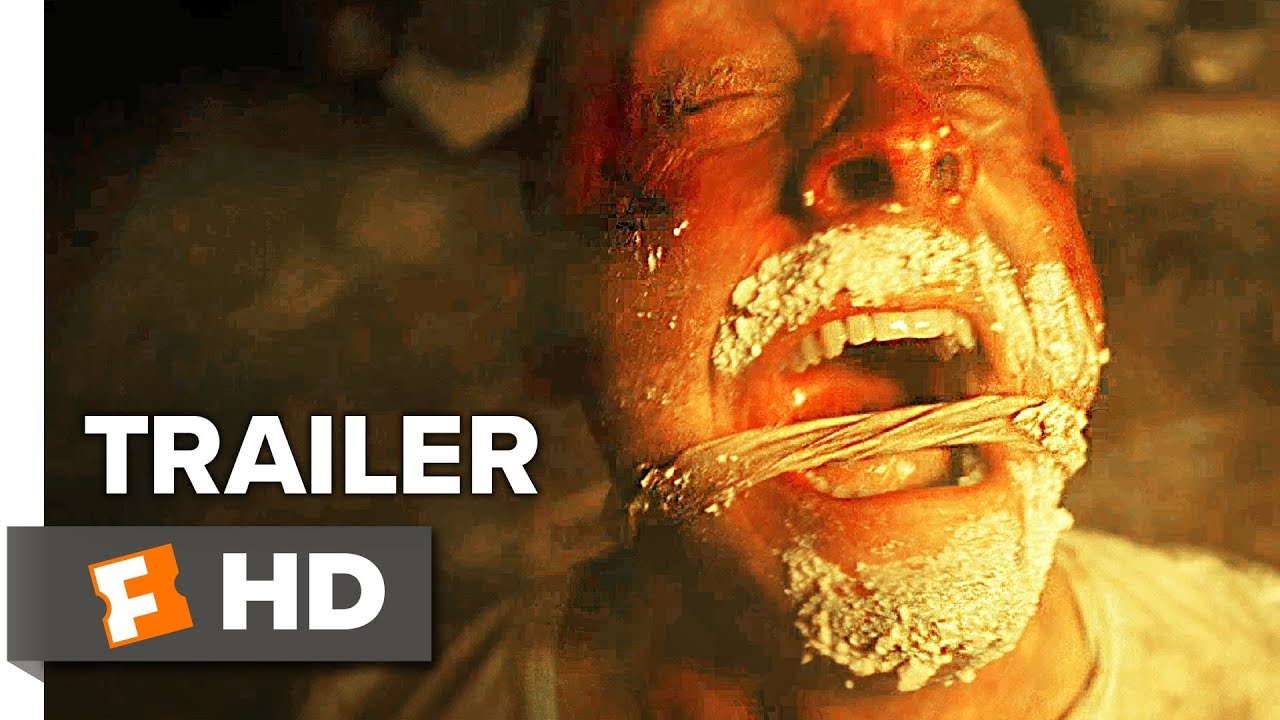
Ending Explained: Leatherface (2017)
Ficha de Daños Colaterales en Sala
Certificado de impacto psicofísico emitido por Héctor Veneno
1 amago en el tramo intermedio; pestañeo pesado en las transiciones más innecesarias.
Minuto 43 y minuto 81 (comprobando cuánto quedaba de suplicio).
1 espresso para no dejarse vencer por la mediocridad cómoda.
"A mitad del segundo acto cuando la subtrama secundaria empezó a pesar más de lo que aportaba."
💬 El Veredicto de la Comunidad
¿Qué te ha parecido la película? Deja tu nota de 0 a 10 para contrastarla con el análisis de la redacción.
Aún no has votado
📢 ¿Te ha gustado el ácido?
Comparte esta crítica con tus amigos cinéfilos o desata la polémica en redes.
⚡ THE CINEMATIC VENOM YOUR INBOX CRAVES
No sugarcoated ratings, no corporate fluff. Subscribe for our uncensored weekly analysis or join the private Telegram for press previews, poll clashes, and instant alerts.
Alertas de estrenos en 1 segundo, encuestas en caliente y audios al salir de pases de prensa.
Recibe la dosis semanal en tu mail + regalo inmediato del PDF con 50 joyas ocultas de culto.
Related Reviews
Recommended autopsies for demanding film buffs.
 ⚡ Ácido Cítrico7.5
*Among the Living: Lost Childhood, the Deep America Slasher Transplanted to the French Countryside*
⚡Del mismo director (Alexandre Bustillo, Julien Maury): analiza la evolución o degradación de su estilo.
Bustillo and Maury fuse the spirit of *Stand by Me* with the ultra-violent rural slasher vibe of *The Texas Chain Saw Massacre* in a raw, physical film that hits like a sucker punch.
 🔥 Fusión Nuclear8.0
*Livid*: A Gothic Nightmare of Blood Ballet, Dead Dolls, and the French Extreme’s Most Posh Descent into Madness
⚡Del mismo director (Alexandre Bustillo, Julien Maury): analiza la evolución o degradación de su estilo.
Bustillo and Maury ditch the grimy brutality of *Inside* to birth a stunningly perverse Gothic fairy tale of vampirism and decay.
 ⚡ Ácido Cítrico6.0
*The Deep House: Haunted Mansions Underwater and Oxygen-Deprived YouTubers*
⚡Del mismo director (Alexandre Bustillo, Julien Maury): analiza la evolución o degradación de su estilo.
Bustillo & Maury dive into a secluded French lake to film one of the most visually complex and intriguing horror propositions in recent memory.
Editorial Ecosystem
Cinephile connections, archive interviews and related analyses.
🎞️ In Claqueta Cinematheque1
💬 Debate Cinéfilo & Autopsia de Lectores
0 veredictos¿Discrepas con nuestra nota? ¿Es una obra maestra o veneno puro? Deja tu veredicto abajo sin necesidad de registro.


Aún nadie ha dejado su veredicto para esta película.
Sé el primero en clavarle el colmillo rellenando el formulario de arriba.