Among the Living — Lost Childhood, the Deep America Slasher Transplanted to the French Countryside
Bustillo and Maury fuse the spirit of Stand by Me with the ultra-violent rural slasher vibe of The Texas Chain Saw Massacre in a raw, physical film that hits like a sucker punch.

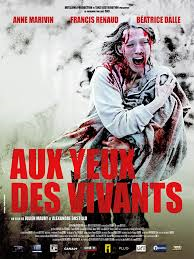
Among the Living (Aux yeux des vivants) is the kind of movie that sneaks up on you like a cheap shot in a dark alley, leaving you with the distinct impression that French horror cinema has once again pissed outside the pot with all the grace of a drunk at a wedding. Alexandre Bustillo and Julien Maury, the dynamic duo behind Inside (2007)—that festival of domestic stabbings that turned childbirth into an extreme sport—have now decided it’s the perfect time to gut childhood nostalgia with the same delicacy a butcher uses to carve up a pig. And, against all odds, it works. Or at least, it works well enough to keep you from looking away from the carnage.
finalExplicado: "Los tres niños, tras descubrir que un asesino enmascarado ha masacrado a una familia en la zona, son perseguidos sin piedad por el monstruo a través de los estudios abandonados. En el clímax, el asesino atrapa y tortura brutalmente a los chicos; Victor, el más vulnerable, es asesinado de forma salvaje, mientras Tom y Dan logran escapar tras un enfrentamiento visceral y sangriento. Simbólicamente, el desenlace significa la muerte irreversible de la infancia: el verano de libertad se pudre en trauma y culpa. El slasher no es solo un monstruo externo, sino la violencia adulta que devora la inocencia; los que sobreviven ya no son niños, sino huérfanos de su propia niñez, condenados a cargar con la sangre seca del bosque."
Childhood as a Battleground: When Summer Smells Like Dried Blood
The premise of Among the Living is as simple as it is effective: three kids—Victor (Théo Fernandez), Tom (Zacharie Chasseriaud), and Dan (Damien Ferdel)—decide to skip the last day of school before summer vacation for an adventure that, in theory, should be harmless. But of course, when the adventure involves breaking into the ruins of an abandoned film studio deep in the Breton woods, you just know this isn’t going to end with ice cream and a group hug. The Blackwood Studios, that labyrinth of rotting wood and overgrown sets, is the perfect playground for Bustillo and Maury to unleash their particular brand of terror: a place where childhood literally rots, just like the cardboard sets that once pretended to be fantastical worlds.
The contrast between the first half of the film—bright, playful, almost Stand by Me-esque—and the second—dark, claustrophobic, pure home invasion—is so brutal it feels like the work of two different directors. And in a way, it is: Bustillo and Maury play Dr. Jekyll and Mr. Hyde, minus the Victorian elegance. Antoine Sanier’s cinematography is key to this dichotomy. During the day, the wide shots of the Breton countryside, bathed in warm yellow light, evoke that sense of absolute freedom only kids know in summer. But when night falls, Sanier becomes an expressionist painter: elongated shadows, red lights that stain everything a bloody hue, and those grimy grays straight out of a Zdzisław Beksiński painting. It’s as if the sun and the moon were two different cinematographers, and neither has any mercy.
Isaac: The Monster Hollywood Would Never Dare Create
If anything defines Among the Living, it’s its villain: Isaac (Francis Renaud), the deformed son of a sadistic clown (played by an unrecognizable Francis Renaud in a dual role). Isaac isn’t your run-of-the-mill serial killer, ghost, or demon. He’s simply a mistake of nature: a bald kid with the body of an eight-year-old trapped in the frame of an adult, the voice of a child, and the strength of a bull. His design is so disturbing it looks like it was plucked from a 1930s freak show, but with the rawness of 1970s practical effects. There’s no CGI here, no digital touch-ups to soften his presence. Isaac is real, tangible, and every time he appears on screen, you feel like you could reach out and touch his sweaty, scab-covered skin.
What’s most interesting about Isaac is that he’s not a monster by choice, but by inheritance. His father, the clown, has shaped him through beatings, humiliation, and presumably, something even worse. The relationship between them is one of the most twisted things recent horror cinema has given us: a mix of sick love and visceral hatred, where the father sees his son as an extension of himself, a broken toy that might still be useful. When Isaac and his progenitor decide to go hunting to silence witnesses, they do so with almost military precision, as if they’ve been practicing this macabre dance for years. And the worst part? At some point, you feel sorry for Isaac. Not because he’s a poor soul—which he is—but because his existence is so miserable that even his sadism feels like a cry for help.
Home Invasion as Shock Therapy
The second half of Among the Living is a domestic terror festival that would make Michael Haneke blush. Bustillo and Maury show no mercy: they turn the protagonists’ homes into battlefields with no escape. The phone stalking sequences, with Isaac’s distorted childlike voice whispering threats on the other end of the line, are some of the most unsettling things the genre has seen in years. But what’s truly brilliant is how the directors play with the characters’ vulnerability: they’re not action heroes, not even adults capable of defending themselves. They’re kids, and their only weapon is their wits… which, of course, don’t always work.
The problem is that, in their eagerness to maintain tension, the film falls into some genre clichés. There are character decisions that border on the idiotic—like hiding in the most obvious place possible or not calling the police when they clearly should—but it’s a minor sin compared to the intensity of the violence. Because here, there are no cheap jump scares or clean deaths: every murder is slow, painful, and physically repulsive. The practical makeup effects, handled by a team clearly inspired by Tom Savini, are so real you can almost smell the blood and sweat. It’s old-school gore, the kind that makes you look away but keeps drawing you back because, damn it, it’s hypnotic.
Sound as a Weapon: When Silence Is as Terrifying as a Scream
One of the most underrated aspects of Among the Living is its score—or rather, its lack of a score. The tense moments aren’t underscored with screeching violins or demonic choirs, but with oppressive silence broken only by diegetic sounds: the snap of a twig, the buzz of a fly, Isaac’s whisper over the phone. When music does appear—composed by Raphaël Gesqua—it’s sporadic and minimalist, almost like a distant echo of something that no longer exists.
But where the sound truly shines is in the dialogue. The three teenage protagonists have a natural chemistry, with conversations that swing between the naive and the crude, as befits kids their age. However, when Isaac opens his mouth, the contrast is overwhelming: his childlike, almost angelic voice clashes with the horrible things he says, creating a deeply unsettling effect. It’s like a little kid whispering in your ear that he’s going to gouge out your eyes. And the worst part? You believe him.
Blackwood Studios: The Set That Eats the Movie
If there’s one character in Among the Living that deserves an award, it’s Blackwood Studios. This abandoned film lot, overrun by weeds and filled with crumbling sets, is more than just a location: it’s a perfect metaphor for lost childhood, broken dreams, and the illusion that cinema can be a refuge. Bustillo and Maury use it as a physical and emotional labyrinth, a place where the kids get lost both literally and figuratively.
What’s fascinating about Blackwood is how the directors play with its duality. By day, it’s a playground, an abandoned theme park where kids can let their imaginations run wild. But by night, it becomes a claustrophobic nightmare, a place where shadows come to life and every corner hides a threat. The sequence where the kids explore the studio for the first time is a masterclass in tension: the camera moves through the sets like another character, slowly revealing that this place isn’t as harmless as it seems.
And then there’s the most macabre detail: the fact that Blackwood was a real studio, a place where horror movies were once filmed. It’s as if Bustillo and Maury wanted to pay homage to the genre’s origins while reminding us that horror cinema, at its core, has always been a reflection of our deepest fears. And what better place to hide those fears than in an abandoned studio, where the cameras no longer roll and the monsters can roam free?
The Ending: When the Epic Falls Short
By the climax, Among the Living makes its one major misstep: rushing the ending. After an hour and a half of mounting tension, the resolution in the villains’ underground bunker feels hurried, as if the directors decided it was time to wrap things up and didn’t much care how. There’s a final confrontation that promises to be epic, but it’s over in minutes, leaving you with a “Is that all?” feeling.
It’s not that the ending is bad—in fact, it has memorable moments, like the use of an everyday object as an improvised weapon—but it’s so quick you don’t have time to savor it. It’s as if Bustillo and Maury spent all their ammunition in the first half of the film and, by the end, were left with nothing but blanks. That said, the final shot, with its mix of relief and tragedy, is powerful enough to linger long after the credits roll.
The Best
The bold fusion of subgenres: Stand by Me meets The Texas Chain Saw Massacre* in an abandoned backlot, and the result is as uncomfortable as it is brilliant. Few films manage to balance childhood nostalgia with extreme gore without tipping into absurdity.- Isaac, the monster who needs no mask: A villain so disturbing he makes Pennywise look like a birthday party clown. His physical design and childlike voice are a cocktail of pure terror.
The Worst
- Stupid decisions mid-movie: There’s a point where the characters make such idiotic choices you’ll want to scream at the screen. “Don’t go in there, you moron!” But of course, if they didn’t, there’d be no movie.
- A climax that falls flat: After an impeccable buildup of tension, the ending wraps up so quickly it feels like the directors had dinner plans. A little more epicness wouldn’t have hurt.
The Verdict of Claqueta Ácida (7.5/10)
Among the Living is the kind of movie that sneaks up on you, grabs you by the throat, and doesn’t let go until it leaves you breathless. Bustillo and Maury prove, once again, that French horror doesn’t need CGI or cheap jump scares to be effective: all it takes is a handful of kids, a flesh-and-blood monster, and a rural meat grinder to create a nightmare that reeks of sweat, blood, and rotting wood. It’s not perfect—it has its share of clichés and could use a bit more epicness in the ending—but it’s so brutally honest that it’s impossible not to admire. Just don’t go skipping school after watching it. And if you ever stumble upon an abandoned film studio, run. Run like the devil himself—or a deformed child monster—is chasing you. 🔪💀🎬 Tráiler Oficial
Abrir en YouTube
Ending Explained: Among the Living
Ficha de Daños Colaterales en Sala
Certificado de impacto psicofísico emitido por Héctor Veneno
1 amago en el tramo intermedio; pestañeo pesado en las transiciones más innecesarias.
Minuto 53 y minuto 87 (comprobando cuánto quedaba de suplicio).
1 espressos para no dejarse vencer por la mediocridad cómoda.
"A mitad del segundo acto cuando la subtrama secundaria empezó a pesar más de lo que aportaba."
💬 El Veredicto de la Comunidad
¿Qué te ha parecido la película? Deja tu nota de 0 a 10 para contrastarla con el análisis de la redacción.
Aún no has votado
📢 ¿Te ha gustado el ácido?
Comparte esta crítica con tus amigos cinéfilos o desata la polémica en redes.
⚡ THE CINEMATIC VENOM YOUR INBOX CRAVES
No sugarcoated ratings, no corporate fluff. Subscribe for our uncensored weekly analysis or join the private Telegram for press previews, poll clashes, and instant alerts.
Alertas de estrenos en 1 segundo, encuestas en caliente y audios al salir de pases de prensa.
Recibe la dosis semanal en tu mail + regalo inmediato del PDF con 50 joyas ocultas de culto.
Related Reviews
Recommended autopsies for demanding film buffs.
 🔥 Fusión Nuclear8.0
*Livid*: A Gothic Nightmare of Blood Ballet, Dead Dolls, and the French Extreme’s Most Posh Descent into Madness
⚡Del mismo director (Alexandre Bustillo, Julien Maury): analiza la evolución o degradación de su estilo.
Bustillo and Maury ditch the grimy brutality of *Inside* to birth a stunningly perverse Gothic fairy tale of vampirism and decay.
 🔥 Fusión Nuclear7.7
*The Soul Eater: Mountain Legends, Lost Kids, and Rural Offal – A Feast for the Damned*
⚡Del mismo director (Alexandre Bustillo, Julien Maury): analiza la evolución o degradación de su estilo.
Bustillo and Maury return in 2024 with a dark, filthy, and suffocating police-gothic thriller set deep in the forests of France—where the trees whisper and the locals *really* don’t like outsiders.
 🔥 Fusión Nuclear8.0
Abigail: Ballet, Rivers of Hemoglobin, and the Worst Nightmare of a Discount Kidnapping Gang
⚡Afinidad temática directa en atmósfera, estilo y fijaciones visuales.
Radio Silence signs a delightfully entertaining, bloody, and hyperbolic vampire slasher within a mansion where a twelve-year-old ballerina is the monster.
Editorial Ecosystem
Cinephile connections, archive interviews and related analyses.
💬 Debate Cinéfilo & Autopsia de Lectores
0 veredictos¿Discrepas con nuestra nota? ¿Es una obra maestra o veneno puro? Deja tu veredicto abajo sin necesidad de registro.

Aún nadie ha dejado su veredicto para esta película.
Sé el primero en clavarle el colmillo rellenando el formulario de arriba.