The Hills Have Eyes — The Miracle of a Remake That Outshone the Classic with Radioactive Rage
Alexandre Aja takes Wes Craven’s classic and transforms it into a savage, blood-soaked, and unbearable nightmare of desert survival and mutant cannibalism.

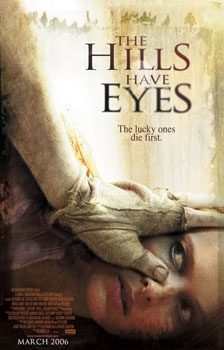

The Radioactive Miracle of Alexandre Aja: When the Remake Beats the Original with the Grace of a Hatchet to the Temple
Here at the esteemed offices of Claqueta Ácida, where Hollywood remakes are greeted with the same enthusiasm as a hemorrhoid diagnosis in the middle of summer, Alexandre Aja’s The Hills Have Eyes (2006) emerges as a statistical anomaly—a bloody unicorn that doesn’t just justify its existence but spits in the face of Wes Craven’s original (1977) with the elegance of a mutant hocking up rotten teeth. Aja and his accomplice Grégory Levasseur didn’t just inflate the budget and add more blood—though, let’s be honest, the blood here flows like oil from a Saudi well. No, these Frenchmen with a cowboy complex dug up Craven’s corpse, pumped it full of nuclear steroids, and unleashed it in the New Mexico desert to feast on the Carter family. The result is a film that hurts, that offends, that exists on a higher plane of human misery, where horror isn’t just a genre but a physical experience on par with having your fingernails ripped off with rusty pliers.
finalExplicado: "La familia Carter es masacrada sistemáticamente por los mutantes caníbales. Doug, el yerno, sobrevive a la carnicería, rescata a su bebé y, en un clímax de furia primitiva, caza y extermina a los agresores uno a uno. El final muestra a Doug, cubierto de sangre y convertido en un animal, caminando hacia el horizonte con su hija en brazos mientras el desierto permanece impasible. Simbólicamente, el desenlace invierte la jerarquía: el civilizado estadounidense se transforma en el monstruo que siempre fue. La rabia radiactiva no crea a los mutantes; solo los revela como espejo deformado de la propia violencia americana. El desierto no premia ni castiga: simplemente obliga a quitarse la máscara."
The Desert as a Character: When Geography Becomes the Executioner
The premise is as simple as a hammer to the temple: the Carter family, that microcosm of white, conservative, gun-toting America, decides to embark on an RV trip to California. Dad Bob (Ted Levine, a guy who looks like he walked out of an NRA ad but with even less empathy), a former cop with more testosterone than brain cells, drags his brood—including his son-in-law Doug (Aaron Stanford), a city intellectual with more morals than muscles—down a backroad after a gas station attendant with the face of someone who’s seen too many X-Files episodes assures them it’s a shortcut. Spoiler: it’s not. What it is, however, is a former U.S. government nuclear testing site, a place where the ground isn’t just contaminated—it breathes resentment.
Aja and his cinematographer, Maxime Alexandre, turn the desert into a character in its own right, a hostile entity that watches, waits, and ultimately devours. The aerial shots of the rocky hills, bathed in sunlight that burns like a dragon’s breath, aren’t just postcards—they’re warnings. The desert here isn’t a setting; it’s a judge, a jury, and an executioner. Every frame is drenched in a suffocating physicality, as if the camera itself is sweating under the relentless sun. There are no shadows to hide in, no trees for refuge, just rocks that seem to whisper and a horizon that swallows the characters whole, like ants on an anthill about to be stomped.
And then there’s the sound. Oh, the sound. The score by Tomandandy (that duo who seem to specialize in composing the soundtrack to your nightmares) doesn’t just accompany the action—it strangles it. The whistling wind isn’t ambient; it’s voices. The crunching rocks aren’t incidental; they’re footsteps. When night falls, the desert stops being a landscape and becomes a living, hungry, fucking patient organism. It’s in this context that Aja unleashes his genius: the nighttime assault on the RV isn’t just a horror scene—it’s an autopsy of human morality. The camera moves like a wounded animal, the cuts are as precise as a scalpel, and every scream from the Carter family echoes like a death rattle in a slaughterhouse. There’s no heroism here, just survival, and survival, as Aja knows all too well, is the most fertile ground for monstrosity.
The Mutants: When Capitalism Turns You Into Cannon Fodder (Literally)
If there’s one thing that elevates The Hills Have Eyes above the average industrial horror flick, it’s its political subtext—as subtle as a jackhammer to the kneecap. The mutants aren’t just monsters plucked from a bargain-bin Lovecraft story: they’re the product of decades of U.S. government nuclear experimentation, physically and mentally deformed by radiation, condemned to live like vermin in the bowels of the land that was once theirs. Their leader, Papa Jupiter (Robert Joy, in a performance that oscillates between tragicomic and downright terrifying), isn’t a one-dimensional villain—he’s a distorted mirror of Bob Carter, another patriarch obsessed with control, but without the comforts of civilization.
Aja and Levasseur don’t beat around the bush: the mutants are victims of a system that used them as guinea pigs and then abandoned them. Their cannibalism isn’t a mark of innate evil but the result of generations of hunger, pain, and betrayal. When Papa Jupiter tells Bob Carter that "the government lied to you too," the film isn’t just making a political statement—it’s spitting acid on the hypocrisy of a nation that sacrifices its citizens on the altar of progress. The Carters aren’t innocent; they’re passive accomplices in a system that protects them while destroying others. And when that system collapses, when civilization is reduced to a broken-down vehicle in the middle of nowhere, all that’s left is the law of the jungle. Or, in this case, the law of the hungriest.
The mutant designs, courtesy of KNB EFX Group (the same geniuses behind The Walking Dead and Planet Terror), are a masterclass in the grotesque. They’re not zombies, vampires, or CGI abominations—they’re human, but humans stripped of their humanity by radiation, leaving only the essentials: sharpened teeth, burned skin, and a thirst for vengeance that reeks of rotting flesh. Every deformity tells a story, every scar is a reminder of what the government did to them. And when they attack, they do so with a ferocity that’s not just physical but existential. They don’t just want to kill the Carters—they want to consume everything they represent.
Doug Carter: The Intellectual Who Discovers His Inner Beast (And Likes It)
If there’s one character who encapsulates the essence of The Hills Have Eyes, it’s Doug Carter, played by Aaron Stanford with a mix of vulnerability and simmering rage that makes him the film’s bleeding, beating heart. Doug is the intellectual son-in-law, the guy who reads books, questions authority, and—most unforgivably of all—doesn’t carry a gun. His father-in-law, Bob, openly despises him, seeing him as a weakling, a "city fag" incapable of protecting his family. But Doug isn’t a coward—he’s a civilized man in a world that’s stopped being civilized. And when that world collapses, when his baby is kidnapped by mutants and his wife is raped in front of him, Doug discovers that civilization is just a veneer, and beneath it lurks something far more primitive, far more hungry.
Doug’s arc is one of the most fascinating transformations in modern horror. He’s not a hero who becomes stronger; he’s a man who sheds everything that makes him human. His descent into the mutants’ caves isn’t a rescue mission—it’s a journey into hell, where every step brings him closer to becoming the monster he’s chasing. When he finally finds his baby, he doesn’t rescue it with tears and hugs—he does it with his teeth. The scene where Doug, covered in blood and filth, emerges from the caves with the baby in his arms while the family dog, Beauty, attacks the mutants with almost supernatural ferocity isn’t just a climax—it’s a revelation. Civilization is dead. All that’s left is vengeance.
Stanford carries this arc with an intensity that borders on disturbing. There’s no grandstanding in his performance, just a brutal physicality, as if every movement costs him a piece of his soul. When Doug grabs a knife and steps into the darkness, he’s not doing it like a hero—he’s doing it like a man who’s already crossed the point of no return. And the audience, instead of cheering, feels something far more uncomfortable: relief. Because deep down, we all know that in his shoes, we’d do the same.
The Dog Beauty: The True Hero Hollywood Didn’t Deserve
Amid this festival of human misery, there’s one character who steals the show without uttering a single word: Beauty, the Carter family’s sheepdog. Beauty isn’t just a pet—he’s a symbol, a reminder that even in hell, there’s loyalty. And when the mutants attack, Beauty doesn’t run—he fights back. The scene where the dog leaps onto one of the deformed freaks and tears him apart with almost supernatural ferocity is one of those moments of pure catharsis that only horror cinema can deliver. No dialogue, no epic score, just the sound of teeth ripping flesh and a howl of pain that resonates like a symphony.
Aja doesn’t humanize Beauty—he deifies him. In a world where humans have failed, where morality has evaporated and violence is the only currency, the dog becomes the last bastion of something resembling nobility. And when Doug and Beauty team up in the climax to rescue the baby, the film reaches its peak of bloody poetry. It’s not an action scene—it’s a rite, a communion between man and beast where both have shed their humanity to become something more primitive, more pure, more real.
The best
- The savage direction: Aja shoots horror like every frame owes him money. The RV assault sequence is so uncomfortable it’ll make you reconsider family vacations.
- The sociopolitical subtext: The mutants aren’t monsters—they’re what’s left when the government uses you as a guinea pig and then abandons you. A distorted mirror of Middle America, with sharpened teeth and a hunger for vengeance.
The worst
Unrelenting brutality for weak stomachs: If you think Hostel* is tough, wait until you see what happens to a pregnant woman in this movie. The desert doesn’t forgive, and neither does Aja.- Some filler dialogue: No matter how hard Ted Levine sells it, lines like "This is America, goddammit!" sound like a bad joke amid all the carnage. Less cheap patriotism, more broken teeth, please.
The Verdict of Claqueta Ácida (8.8/10)
The Hills Have Eyes isn’t just a movie—it’s an experience, a journey into the heart of darkness with a mandatory stop at the all-you-can-eat human misery buffet. Alexandre Aja delivers a remake that doesn’t just surpass the original—it buries it under a mountain of guts, sweat, and political subtext as sharp as a rusty knife. It’s filthy, it’s brutal, it’s necessary. A masterpiece of industrial horror that’ll leave you feeling like you’ve survived a car crash… and weirdly eager to get back behind the wheel. If horror cinema had a Hall of Fame, this film would have its own wing, decorated with human bones and "Do Not Feed the Mutants" signs. Welcome to the desert. There’s no way out. 💀🎬 Tráiler Oficial
Abrir en YouTube
Ending Explained: The Hills Have Eyes
Ficha de Daños Colaterales en Sala
Certificado de impacto psicofísico emitido por Lúa Ácida
Cero bostezos. Pupilas dilatadas y tensión mandibular constante.
El móvil permaneció en el bolsillo donde debía estar.
Ninguna: la adrenalina cinematográfica es suficiente.
"No hubo. La coherencia se mantuvo hasta el último fotograma."
💬 El Veredicto de la Comunidad
¿Qué te ha parecido la película? Deja tu nota de 0 a 10 para contrastarla con el análisis de la redacción.
Aún no has votado
📢 ¿Te ha gustado el ácido?
Comparte esta crítica con tus amigos cinéfilos o desata la polémica en redes.
⚡ THE CINEMATIC VENOM YOUR INBOX CRAVES
No sugarcoated ratings, no corporate fluff. Subscribe for our uncensored weekly analysis or join the private Telegram for press previews, poll clashes, and instant alerts.
Alertas de estrenos en 1 segundo, encuestas en caliente y audios al salir de pases de prensa.
Recibe la dosis semanal en tu mail + regalo inmediato del PDF con 50 joyas ocultas de culto.
Related Reviews
Recommended autopsies for demanding film buffs.
 🔥 Fusión Nuclear8.5
*High Tension (Haute Tension): The Brutal Birth of the New French Extremism – Or How to Turn Flesh into Poetry with a Machete*
⚡Del mismo director (Alexandre Aja): analiza la evolución o degradación de su estilo.
Alexandre Aja shocked global screens with a relentless rural bloodbath, redefined by breakneck pacing and a divisive twist that splits serious cinephiles right down the middle.
 🔥 Fusión Nuclear8.0
*Crawl (2019): Giant Gators, Claustrophobic Floods, and a Lean, Mean Survival Machine*
⚡Del mismo director (Alexandre Aja): analiza la evolución o degradación de su estilo.
Alexandre Aja delivers a flawless B-movie rollercoaster about a swimmer trapped in a flooded basement during a Category 5 hurricane—with Florida’s oversized gators as the cherry on top.
 🔥 Fusión Nuclear8.5
*Alleluia: Love as a Terminal Illness (or How to Turn Crimes of Passion into a Sweaty, Fleshy Spectacle)*
⚡Afinidad temática directa en atmósfera, estilo y fijaciones visuales.
Fabrice Du Welz reimagines the myth of the lonely hearts killers in a feverish whirlwind of jealousy, submission, and blood, led by Lola Dueñas in a performance that’s equal parts hypnotic and harrowing.
Editorial Ecosystem
Cinephile connections, archive interviews and related analyses.
💬 Debate Cinéfilo & Autopsia de Lectores
0 veredictos¿Discrepas con nuestra nota? ¿Es una obra maestra o veneno puro? Deja tu veredicto abajo sin necesidad de registro.

Aún nadie ha dejado su veredicto para esta película.
Sé el primero en clavarle el colmillo rellenando el formulario de arriba.