

Lupin — The Parlor Illusionist Who Preferred the Trick to the Truth
A cynical analysis of the Netflix series. A tangled comedy where social oppression is merely an aesthetic obstacle meant to showcase Omar Sy's charm.

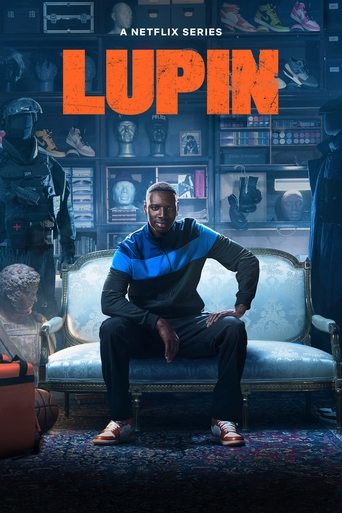
Lupin: full review

As an Amazon Associate, Claqueta Ácida earns from qualifying purchases.
Streaming television has perfected the art of visual bourgeoisie, that mechanism whereby class conflict is sterilized until it turns into a chic backdrop where the rich are made of cardboard-cutout evil and the oppressed enjoy unlimited access to haute couture disguises. When the red streaming platform decided to import the myth of the French gentleman thief, it chose to abandon any trace of genuine political subversion in order to embrace the cozy comfort of a fast-consumption product—a carousel of heists where the protagonist's family trauma serves solely as an excuse to showcase his charismatic face. There is neither true blood nor sweat on the streets of Paris, but rather an aesthetic cleanliness so immaculate that even the police holding cells look as though they were designed by a Swedish interior decorator. It is a postcard France, polished to the point of asepsis, where misery smells neither of garbage nor desperation, but of expensive perfume and varnished oak wood.
The contemporary spectator, accustomed to devouring entire seasons in a single night of digital insomnia, docilely accepts this pact where implausibility is not a flaw, but the raw material of entertainment. Assane Diop is not some marginalized vigilante defying the structures of established power through a painful working-class memory, but rather a parlor illusionist who uses systemic oppression as just another narrative hurdle to be cleared with a mocking smile and a perfectly tailored trench coat. The episodic structure chops the narrative up into small, digestible doses, fragmenting the intrigue into self-contained sleight-of-hand tricks that prioritize the rhythm of deception over the psychological density of a man supposedly consumed by rage and the grief of loss. Every chapter is a dopamine pill, designed so you never have time to dwell on logic, focusing entirely on the next narrative sleight of hand.

The architecture of serialized deception

The true engine of the series lies in its episodic nature, a clockwork mechanism that functions with the precision of a frictionless yet soulless gear. Each chapter poses an impossible challenge resolved through the oldest trick in the magician's playbook: looking at the right hand while the left steals the loot—a device the creators exploit to the point of formal exhaustion. This fragmentary arrangement prevents the trauma of the father who died in prison from acquiring any real dramatic weight, reducing it to a mere nostalgic bait that reappears whenever the pacing dips and the production needs to justify yet another sprint through the immediate vicinities of the Louvre. The tension dissolves in favor of visual sensationalism, relegating the police investigation to a background role where the agents seem far more interested in pushing paperwork than actually solving the mystery. It is a game of cat and mouse where the cat wears sunglasses and the mouse has a plan B, C, and D, and occasionally even an E.
Direction opts for an agile, almost dizzying editing style that eliminates any pause for reflection. Cuts are rapid, transitions clean, and the result is an experience of immediate consumption that leaves zero room for doubt. If you stop to ponder how on earth no one ever spots the thief in broad daylight, the series shoves you straight forward into the next action sequence. It is pure genre cinema, stripped of artistic pretensions, yet executed with a technical competence that cannot be denied. It does not aim for profundity; it aims to be addictive, and in that arena, it fulfills its function with an almost surgical efficiency.
The weight of a smile and the vacancy of the surroundings

Standing in stark contrast to the generalized mediocrity of the supporting cast—who oscillate between corporate puppet and routinely baffled inspector—emerges the central figure with an overwhelming force that shores up the entire farce. Omar Sy's performance seeks neither complexity nor moral chiaroscuro, but rather the immediate buy-in of the audience through an outsized personal magnetism that disarms any critical resistance. His charisma is so dense it renders the implausible utterly plausible, making the viewer forget they are watching a man steal diamonds in broad daylight and focus entirely on his smile. Alongside him, the production design rolls out a tourist postcard of France where social contrasts are blurred beneath bright, commercial cinematography, stripping away the grime of marginality to replace it with the anodized glitter of a Parisian storefront. The photography is clean, saturated, almost advertorial—an Instagram filter slapped onto criminal reality.
Meanwhile, the soundtrack accompanies this frantic pace with melodies hovering between smooth jazz and orchestral tension, always at the service of the editing and never the character. There are no themes exploring Assane's solitude, only rhythms marking the beat of his getaways. It is functional background music that vanishes the moment a scene ends. The sound design, however, does shine during action beats, where the echo of footsteps in cathedrals or the tense silence of an empty room build an atmosphere of suspense that, while artificial, proves effective. It is solid technical craftsmanship wrapping the viewer in a bubble of pure entertainment where outside reality simply cannot enter.
The best
- Omar Sy: his stage presence and overflowing charisma solidly prop up a narrative scaffolding that would instantly collapse under any other lead actor.
- The pacing of the heists: the agility with which the main alibis are conceived and executed, remaining entirely faithful to the spirit of light, daytime-television entertainment.
- The art direction: the clever deployment of iconic Parisian locations to grant the scams an unquestionable patina of visual sophistication.
The worst
- Police naivety: investigators who systematically stumble over the exact same narrative stone just to prevent the protagonist from getting caught prematurely.
- The superficiality of the trauma: family tragedy reduced to a cheap emotional bait that fizzles out in the opening beats of the tale.
- The predictability of the twists: an accumulation of convenient coincidences that completely nullify any sense of genuine danger for the hero.
The Verdict of Claqueta Ácida
Lupin is an artifact of consumption as harmless as it is glossy on the surface, a magic trick repeated so many times that any sharp-witted viewer ends up spotting the strings dangling right up the sleeves. It does not seek to transform the world or stir consciences, but rather to entertain you through a couple of rainy afternoons in exchange for completely suspending your critical judgment. Approved with reservations because it at least understands the modesty of its digital-storefront ambitions, though one cannot help but feel a pang of nostalgia for the days when thief movies demanded a bit more than just a pretty smile and a good tailor. It is watchable with the exact same listless apathy one applies to eating a stale gas-station croissant 💀.
🎬 Tráiler Oficial
Abrir en YouTube
Ending Explained: Lupin
Lupin: frequently asked questions
- What is the rating of "Lupin" on Claqueta Ácida?
- "Lupin" scored 7.2/10 on Claqueta Ácida in the review by Odin Lagbert.
- Is "Lupin" worth watching?
- With reservations. We gave it 7.2/10 (Citric Acid), our rating for uneven films with something worth saving.
- Who directed "Lupin"?
- "Lupin" was directed by George Kay, François Uzan, Marie Roussin, Florent Meyer, Tigran Rosine.
- How does "Lupin" end?
- Spoilers in Lupin ending explained .
Theater Collateral Damage Report
Psychophysical impact certificate issued by Odin Lagbert
El nivel de atención oscila entre la fascinación por el carisma de su protagonista y el hastío ante la insultante ingenuidad de cada plan de huida.
Dan ganas de consultar la hora cada vez que un policía decide ignorar la pista más evidente para no estropear el cliffhanger.
Un café con leche bien cargado para soportar los agujeros de guion sin caer en un coma glicémico por exceso de azúcar narrativo.
"Ese preciso instante en que el protagonista logra colarse en el museo más vigilado del mundo con una gorra y una sonrisa de circunstancias."

The rebuttal from Lúa Ácida (Queen of the Box Office)
In stark disagreement with the review given by Odin Lagbert.
“Me quedé sin aliento cuando la cámara siguió a Assane por los callejones de París como una aguja que rasga la epidermis de la ciudad. Cada corte es una autopsia del ritmo, la música golpea como feromona que despierta la pulsión de muerte bajo la piel. No es un escenario pulido; el reflejo de la luz en los cristales se vuelve sangre líquida, la sombra de una puerta se vuelve un latido grotesco sagrado. La actuación de Omar Sy no es una sonrisa de salón, es una masticación de dolor que deja sabor a metal. El montaje, con sus saltos de tiempo, corta la respiración y obliga a sentir la mutilación lírica del tiempo. El guion, aunque juguetea con la venganza, mantiene una tensión de visceralidad que me hizo temblar la columna. No es consumo rápido, es un atracón de sensaciones.
💬 Community Verdict
What did you think of the film? Rate it from 0 to 10 to compare it with the editorial review.
You haven't voted yet
📢 ¿Te ha gustado el ácido?
Comparte esta crítica con tus amigos cinéfilos o desata la polémica en redes.
⚡ THE CINEMATIC VENOM YOUR INBOX CRAVES
No sugarcoated ratings, no corporate fluff. Subscribe for our uncensored weekly analysis or join the private Telegram for press previews, poll clashes, and instant alerts.
Alertas de estrenos en 1 segundo, encuestas en caliente y audios al salir de pases de prensa.
Recibe la dosis semanal en tu mail + regalo inmediato del PDF con 50 joyas ocultas de culto.
Related Reviews
Recommended autopsies for demanding film buffs.
 🔥 Fusión Nuclear 9.0
*Six Feet Under: When Family Drama Smells Like a Decadent Corpse*
⚡ Afinidad temática directa en atmósfera, estilo y fijaciones visuales.
HBO served us a feast of family dysfunction, pitch-black sarcasm, and metaphorical corpses. Alan Ball dug a grave so deep we still haven’t climbed out.
 🔥 Fusión Nuclear 7.6
American Horror Story: Anthology of Fame and Panic
⚡ Afinidad temática directa en atmósfera, estilo y fijaciones visuales.
A series that uses terror as a mirror of the entertainment industry, revealing the emptiness of fame with style and sarcasm.
 🔥 Fusión Nuclear 8.5
*Animal Kingdom: A Descent into Hell (Where Family is the Devil’s Playground)*
⚡ Afinidad temática directa en atmósfera, estilo y fijaciones visuales.
A visceral takedown of *Animal Kingdom*, where "family values" take on a whole new (and deeply criminal) meaning.
Editorial Ecosystem
Cinephile connections, archive interviews and related analyses.
💬 Debate Cinéfilo & Autopsia de Lectores
0 veredictos¿Discrepas con nuestra nota? ¿Es una obra maestra o veneno puro? Deja tu veredicto abajo sin necesidad de registro.


Aún nadie ha dejado su veredicto para esta película.
Sé el primero en clavarle el colmillo rellenando el formulario de arriba.