The Lighthouse — Monotony, Madness, and the Stench of Kerosene-Drenched Maritime Mythology
Robert Eggers locks Willem Dafoe and Robert Pattinson in a godforsaken rock to gift us a hypnotic, black-and-white maritime fever dream.

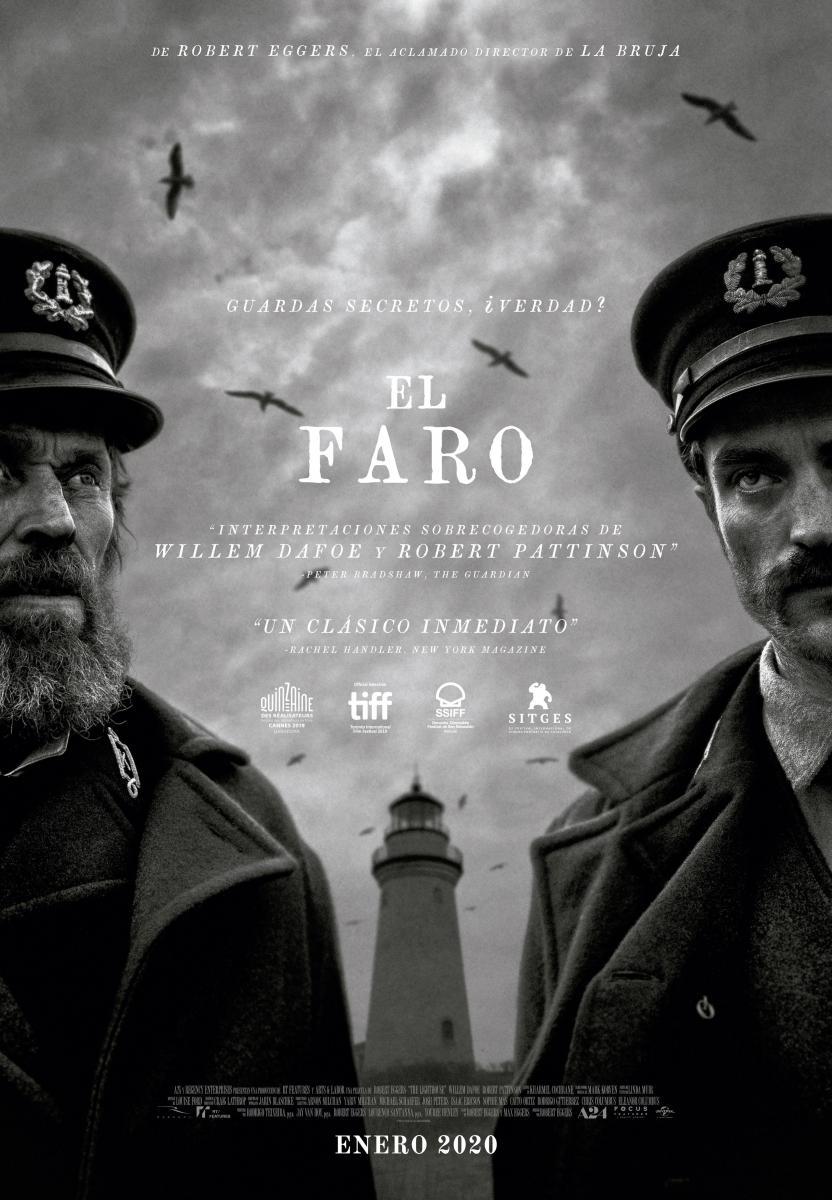

Robert Eggers, that cinematic alchemist who turns historical boredom into pure nightmare gold, decided in 2019 that what the world truly needed was yet another film about white men in existential crisis—this time with a twist: he’d trap them on a storm-lashed rock, ply them with bootleg liquor of questionable origin, and force them to recite Shakespearean monologues between flatulence and visions of sirens with wooden tits. The result, The Lighthouse, is a masterpiece of cinematic sadism, a claustrophobic descent that oscillates between refined psychological drama and grotesque physical comedy, as if Samuel Beckett and the Farrelly brothers had conceived a bastard child in an abandoned Nova Scotian lighthouse.
Eggers’ Direction: When Perfectionism Becomes a Contagious Disease
Robert Eggers isn’t a director; he’s an obsessive archaeologist with a pneumatic drill. His fixation on historical authenticity doesn’t stop at archaic dialogue or wool costumes that reek of wet sheep—oh no, he needs every rusted nail in the lighthouse door to be a perfect 19th-century replica. And, of course, he insists the actors endure real conditions: storms, cold, damp, and each other’s company for weeks in a cramped space where the only escape is madness or booze. The Lighthouse wasn’t filmed; it was lived. And it shows in every frame, in every weary glance from Robert Pattinson, in every guttural growl from Willem Dafoe, who looks like he’s about to cough up a lung at any moment.
Eggers shoots this nightmare in an almost square format (1.19:1), a choice that isn’t just retro aesthetics but a visual cage mirroring the characters’ physical and mental imprisonment. The compositions are so precise they seem painted, with chiaroscuro that evokes Rembrandt if he’d had nightmares about cephalopods. Jarin Blaschke’s cinematography—a frequent Eggers collaborator—is a technical marvel: the black-and-white isn’t mere homage to classic cinema but a tool to distort reality, plunging the viewer into a world where the lighthouse’s light doesn’t illuminate but blinds and maddens. The close-ups of Pattinson’s calloused hands, the cracks in the lighthouse walls, Dafoe’s bloodshot eyes—these are as hypnotic as they are repulsive. Eggers won’t let you look away, because in the lighthouse’s monotony, even the smallest detail becomes an omen of insanity.
And then there’s the sound. Oh, the sound. Eggers and his team crafted a score that’s a character in itself. The constant drone of the foghorn—that mechanical, nerve-shredding bwoooooom—acts like a pneumatic drill to the viewer’s skull. There’s no respite, no silence. Even when the characters fall quiet, the wind howls, waves crash against rocks, and the lighthouse machinery groans like a wounded beast. It’s a symphony of discomfort, a masterclass in sound design that forces you to feel the protagonists’ claustrophobia. If you leave the theater with a headache, it’s not from lack of sleep—it’s because Eggers achieved his goal: the sound has drilled into your brain like a worm.
The Cast: Dafoe and Pattinson, or How to Turn Stanislavski into an Extreme Sport
Willem Dafoe is an actor who seems born in the 17th century, his face weathered by too many maritime horrors, his voice oscillating between conspiratorial whispers and the roar of an offended deity. In The Lighthouse, Dafoe plays Thomas Wake, the veteran lighthouse keeper—a man seemingly forged from salt, chewing tobacco, and accumulated resentment. Wake is a mythological creature unto himself: part Poseidon, part Captain Ahab, part dockside drunk. Dafoe attacks the role with a voracity bordering on cannibalism, devouring every scene with monologues that swing from poetic to grotesque. His performance is an emotional rollercoaster: one moment, he’s reciting King Lear with an intensity that would make Ian McKellen weep; the next, he’s hurling maritime insults at Pattinson that would make a Caribbean pirate blush.
But if Dafoe is the hurricane, Robert Pattinson is the rock trying to withstand it. Pattinson, in one of those career pivots proving the Twilight kid had more talent than he was given credit for, delivers a physical, restrained performance that’s the perfect counterpoint to Dafoe’s histrionics. Winslow, his character, is a broken man fleeing an unrevealed past that weighs on him like a tombstone. Pattinson conveys that burden through glances, silences, minimal gestures—tension building until it erupts in a climax of madness reminiscent of Klaus Kinski’s greatest roles. His transformation is mesmerizing: he begins as a reserved but competent man and ends as a shipwreck of his own mind, crawling across the floor like a wounded animal.
Their chemistry is toxic, explosive—like two chemicals that know mixing will be catastrophic but can’t resist. Eggers stokes that tension with dialogue that swings between poetic and vulgar, with scenes that range from uncomfortably intimate (like when Dafoe forces a drunk Pattinson to dance a Scottish jig) to outright surreal (like the sequence where Pattinson masturbates to a wooden mermaid carving—a moment that’s both hilarious and deeply unsettling). It’s an acting duel with no winners, only survivors, and the audience leaves wondering if they need a shower or therapy.
The Script: Shakespeare in a Bottle of Cheap Rum
The Lighthouse’s script, penned by Eggers and his brother Max, is a fascinating blend of historical sources, classical mythology, and pure psychotic invention. The dialogue is peppered with excerpts from real 19th-century sailors’ journals, lending it an air of authenticity that clashes with moments of absolute delirium. Eggers isn’t content to tell a story of two men losing their minds; he wants the audience to feel the weight of solitude, monotony, and fear of the unknown. To do this, he turns to mythology: the lighthouse becomes a miniature Olympus, where gods are replaced by sirens, tritons, and giant cephalopods.
The film is packed with veiled references to the myth of Prometheus (the lighthouse as fire stolen from the gods) and Proteus (the shape-shifting sea god), but there’s also room for absurdist humor. Eggers balances these elements with sadistic mastery: one moment, you’re dissecting the symbolism of the lighthouse light as forbidden knowledge; the next, you’re laughing at a drunk Dafoe trying to cook a lobster while cursing the sea gods. It’s an emotional rollercoaster where the audience never knows whether to laugh, cry, or bolt for the exit.
And then there are the seagulls. Oh, the seagulls. Eggers turns these birds into an almost supernatural presence, as if they’re messengers of an inevitable fate. The scene where Pattinson kills a seagull and is then haunted by its ghost is one of the film’s most unsettling moments—a mix of grimy realism and Lovecraftian horror. Eggers doesn’t explain what’s happening; he shows it, makes you feel it, and leaves you doubting whether what you saw was real or a product of the characters’ madness. And that, dear readers, is The Lighthouse’s true terror: not knowing if what you’re seeing is a shared nightmare or if the world has truly gone insane.
The Atmosphere: A Descent into Madness (and Hangover Hell)
The Lighthouse isn’t a film you watch; it’s a film you experience. From the first frame, Eggers immerses you in a world where time seems to stand still, where wind and sea are the only sounds that matter, and where the lighthouse light isn’t a beacon of hope but a beacon of madness. The atmosphere is so thick you can almost taste it—like the air itself is laced with salt, alcohol, and despair.
Production designer Craig Lathrop’s work is a marvel of oppressive minimalism. The lighthouse is a vertical prison, a confined space where every object, every piece of furniture, every crack in the wall carries symbolic weight. There’s no escape, no privacy, nothing but each other’s company and the promise that in four weeks, it’ll all be over. But of course, nothing ever ends in The Lighthouse. The film unfolds like a bad dream you can’t wake from—a loop of monotony and violence escalating to a surreal, inevitable climax.
And then there’s the light. That damn lighthouse light, flickering like an all-seeing eye that both attracts and blinds. Eggers films it with near-religious reverence, as if it’s the Holy Grail and poison in one. The light is knowledge, temptation, madness. It’s what Wake guards with his life and what Winslow craves desperately. And when he finally reaches it, what he finds isn’t salvation but damnation. Because in Eggers’ world, knowledge doesn’t set you free—it destroys you.
Cinematic Comparisons: What the Hell Is The Lighthouse?
The Lighthouse defies classification. It’s a psychological drama, a black comedy, a horror thriller, a character study, and a Lovecraftian nightmare all at once. If I had to find its relatives in cinema, I’d say it’s what would happen if Kubrick’s The Shining were shot in a lighthouse on a shoestring budget with a script written by a drunk sailor. Or what would occur if Ingmar Bergman and Luis Buñuel collaborated on a film about two men trapped on an island, but Buñuel insisted on more farts and tentacles.
There are echoes of Moby Dick in Wake’s obsession with the lighthouse light, and of Heart of Darkness in how the film explores the characters’ inner darkness. But above all, The Lighthouse recalls the great works of German Expressionism—Nosferatu, The Cabinet of Dr. Caligari—where visual distortion mirrors the protagonists’ mental unraveling. Eggers takes those influences and blends them with a black humor so acidic it feels ripped from the Coen brothers’ most misanthropic phase.
Conclusion: A Masterpiece of Cinematic Sadism
The Lighthouse is one of those films you don’t forget—not because it’s perfect, but because it’s so intense, so uncomfortable, so brilliantly executed that it lodges in your memory like a fishhook. Eggers has crafted a work that’s both a homage to classic cinema and a shameless mockery of narrative conventions. It’s a film that makes you laugh, makes you squirm, makes you question your own sanity, and ultimately leaves you feeling like you’ve survived something.
It’s not a film for everyone. If you’re looking for linear storytelling, relatable characters, or a comforting ending, The Lighthouse will slap you in the face like an icy wave. But if you’re willing to surrender to its madness, to immerse yourself in its oppressive atmosphere, and to laugh at the absurdity of human existence, then The Lighthouse is a cinematic experience like few others. It’s a film that challenges you, discomforts you, makes you think, and above all, makes you feel.
And in the end, what more can you ask of cinema?
finalExplicado_en: "Two lighthouse keepers, trapped in isolation, descend into primal madness. In the climax, Ephraim brutally murders Thomas with an axe, then ascends the tower only to be assaulted by swarms of gulls and a vision of the Promethean lighthouse god. He falls to the rocks below, where the tide claims his broken body beside the corpse of his victim. The ending symbolizes the inescapable cycle of human hubris and mythic punishment: the false Prometheus is devoured by the very elemental forces he sought to steal, reduced to nothing more than gull shit and oceanic indifference. Monotony doesn't break men; it reveals they were always monsters wearing skin."
The best
- The acting duel between Dafoe and Pattinson: Two actors at the top of their game, hurling monologues like hand grenades, proving that the Stanislavski method can be as dangerous as a lighthouse in a storm.
- Jarin Blaschke’s cinematography: A black-and-white palette that isn’t nostalgia but a visual nightmare where even the shadows seem alive. If German Expressionism had a bastard child with a drunk sailor, this would be it.
The worst
Its deliberately abstract nature: If you need everything to make sense, The Lighthouse* will leave you more lost than a castaway in perpetual fog. The sirens, tentacles, and vengeful seagulls don’t come with an instruction manual.- A tendency toward formal self-indulgence: Eggers sometimes seems more interested in showing off his Renaissance-painting compositions than advancing the plot. It’s as if Rembrandt decided to direct a horror film but got distracted painting still lifes.
The Verdict of Claqueta Ácida (9/10)
The Lighthouse is a masterpiece of cinematic sadism, a claustrophobic nightmare that leaves you feeling like you’ve spent four weeks trapped on a rock with two madmen, a bottle of moonshine, and a seagull with a serious grudge. Robert Eggers proves he doesn’t need special effects or million-dollar budgets to create an experience so intense it’ll make you question your own sanity. A film that, like its lighthouse light, both attracts and blinds. If you emerge unscathed, you weren’t paying attention.🎬 Tráiler Oficial
Abrir en YouTube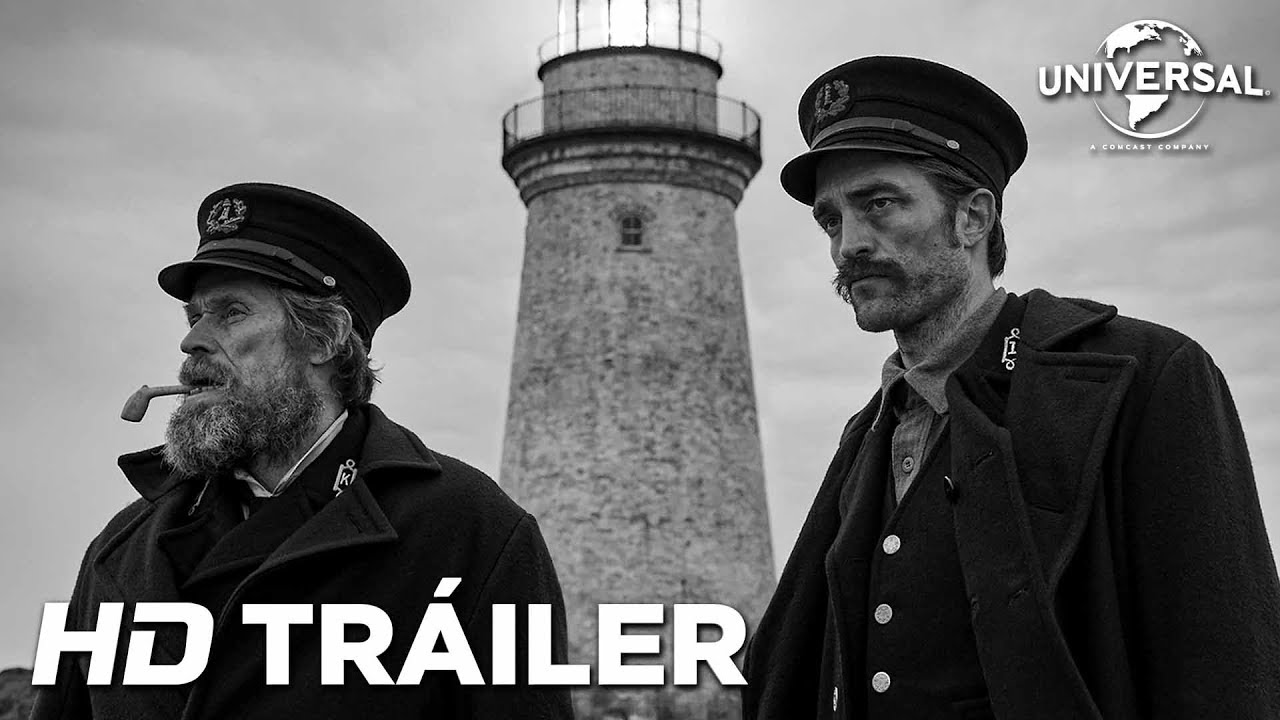
Ending Explained: The Lighthouse
Ficha de Daños Colaterales en Sala
Certificado de impacto psicofísico emitido por Dante Sangre
Ni un solo parpadeo voluntario. El asiento, inusualmente cómodo.
El móvil permaneció en el bolsillo donde debía estar.
Ninguna. Esta obra no necesita muletas estimulantes.
"No hubo. La coherencia se mantuvo hasta el último fotograma."
💬 El Veredicto de la Comunidad
¿Qué te ha parecido la película? Deja tu nota de 0 a 10 para contrastarla con el análisis de la redacción.
Aún no has votado
📢 ¿Te ha gustado el ácido?
Comparte esta crítica con tus amigos cinéfilos o desata la polémica en redes.
⚡ THE CINEMATIC VENOM YOUR INBOX CRAVES
No sugarcoated ratings, no corporate fluff. Subscribe for our uncensored weekly analysis or join the private Telegram for press previews, poll clashes, and instant alerts.
Alertas de estrenos en 1 segundo, encuestas en caliente y audios al salir de pases de prensa.
Recibe la dosis semanal en tu mail + regalo inmediato del PDF con 50 joyas ocultas de culto.
Related Reviews
Recommended autopsies for demanding film buffs.
 🔥 Fusión Nuclear9.0
*The Witch: Extreme Puritanism, Talking Goats, and Traditional Folklore—When Religious Guilt Becomes an Extreme Sport*
⚡Del mismo director (Robert Eggers): analiza la evolución o degradación de su estilo.
Robert Eggers made his debut with a rigorous and hypnotic Gothic tale about the religious paranoia of a 17th-century colonist family and the whispers of Black Phillip, the goat who’s either the devil or just really good at small talk.
 🔥 Fusión Nuclear9.2
*Nosferatu: Eggers’ Glorious, Gothic Vampire Revival – A Masterclass in Mold, Shadows, and Carnal Obsession*
⚡Del mismo director (Robert Eggers): analiza la evolución o degradación de su estilo.
Robert Eggers resurrects the immortal vampire classic with a sublime, tenebrous, and sweat-drenched symphony of shadows, rats, and fleshly obsession.
 🔥 Fusión Nuclear8.5
*Alleluia: Love as a Terminal Illness (or How to Turn Crimes of Passion into a Sweaty, Fleshy Spectacle)*
⚡Afinidad temática directa en atmósfera, estilo y fijaciones visuales.
Fabrice Du Welz reimagines the myth of the lonely hearts killers in a feverish whirlwind of jealousy, submission, and blood, led by Lola Dueñas in a performance that’s equal parts hypnotic and harrowing.
Editorial Ecosystem
Cinephile connections, archive interviews and related analyses.
🎞️ In Claqueta Cinematheque2
💬 Debate Cinéfilo & Autopsia de Lectores
0 veredictos¿Discrepas con nuestra nota? ¿Es una obra maestra o veneno puro? Deja tu veredicto abajo sin necesidad de registro.

Aún nadie ha dejado su veredicto para esta película.
Sé el primero en clavarle el colmillo rellenando el formulario de arriba.