"Old — The Twist That Doesn’t Turn, or How M. Night Shyamalan Aged Worse Than His Characters"
M. Night Shyamalan delivers a beachside thriller that ages worse than its own protagonists—a feast of predictable twists and self-help manual dialogue set against a tropical backdrop.

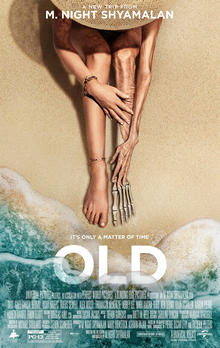


In the vast graveyard of genre cinema, where the exquisite corpses of The Village lie alongside the shambling zombies of After Earth, Old (or Tiempo, for purists who insist on the Spanish title as if that makes it any less predictable) emerges as just another tombstone in M. Night Shyamalan’s personal necropolis. It’s not the worst film in his filmography—that dubious honor still belongs to The Happening, where Mark Wahlberg fled murderous trees as if the apocalypse smelled like a pine-scented air freshener—but it’s a painful reminder that the Indian-American director has gone from being the enfant terrible of suspense to a craftsman of glitter and cellophane, peddling plot twists like they’re the Holy Grail when they’re really just a plastic cup of tap water.
The Setting: A Luxury Resort (and a Luxury of Cheap Ideas)
Shyamalan has turned luxury resorts into his favorite leitmotif, as if consumerist capitalism were the true villain of his films. In Old, the Anamika—a name that sounds like a duty-free perfume or a brand of bottled water from a private island—is the perfect setting for his latest experiment: a cursed beach where time accelerates like an influencer on Black Friday. The premise, adapted from the graphic novel Sandcastle by Pierre Oscar Lévy and Frederik Peeters, has that Twilight Zone vibe Shyamalan loves, but with one fundamental problem: he confuses "mystery" with "hiding obvious information."The resort is a microcosm of stereotypes: the dysfunctional family (because, of course, what thriller would be complete without a mother with a brain tumor and a father who can’t communicate?), the crumbling marriage (with dialogue straight out of a Dr. Phil episode), the cynical scientist (Rufus Sewell, playing Rufus Sewell—i.e., a guy with a permanent frown and a white suit), and horny teenagers (Alex Wolff and Thomasin McKenzie, doomed to age like raisins in a dehydrator). The beach, where time supposedly speeds up, is actually the perfect metaphor for the film itself: it moves so fast you get bored before it ends, but so slow every minute feels like an hour.
Time as the Villain (or How Shyamalan Wastes a Great Idea)
The acceleration of time is a fascinating concept. Films like The Curious Case of Benjamin Button (2008) and In Time (2011) explored its philosophical and emotional implications, but Shyamalan, true to form, turns it into a gimmick for a survival thriller. Instead of delving into how sudden aging affects the characters’ psyches—what happens when an 11-year-old becomes a teenager in hours? How does a mother process her daughter growing up and dying in a single day?—the film settles for showing bodies shriveling like raisins and bones snapping like stale cookies, oscillating between the grotesque and the unintentionally comedic.There are moments when Old seems aware of its own ridiculousness, like when a character suffers an accelerated heart attack in a long take meant to emulate Birdman (2014) but ends up looking like a sketch from Inside No. 9. Or when another character ages so fast their skin peels off like a cheap Halloween costume. Instead of embracing surrealism or body horror—like David Cronenberg would—Shyamalan opts for forced drama straight out of a Lifetime movie. The film wants to be The Shining on the beach but ends up as Baywatch with a slightly bigger budget.
The Twist: Or How to Ruin a Movie in Three Acts
Ah, the twist. Shyamalan’s coup de grâce. The moment the director rubs his hands together-la-cueva-de-los-espejos-rotos" class="text-amber-400 font-black hover:text-amber-300 transition underline decoration-amber-500/40 hover:decoration-amber-300" title="[6.5/10 ⚡ Ácido Cítrico] Lee nuestra autopsia de «Together»" data-acid-interlink="together-la-cueva-de-los-espejos-rotos">together like a Scooby-Doo villain while the audience holds its breath, waiting for the truth to be revealed. In The Sixth Sense (1999), the twist worked because it was organic, poetic, and—above all—necessary to the plot. In Signs (2002), it added depth, turning an alien invasion film into a family drama. But in Old, the twist isn’t just predictable—anyone with half a brain sees it coming from the first act—it’s also irrelevant.Shyamalan seems obsessed with the idea that a good thriller needs a scientific or conspiratorial explanation at the end, as if cinema were a biology exam and not an art form. Old’s twist—which we won’t spoil here, though it’s as obvious as Split’s ending—is so forced it feels like it was written by a Netflix algorithm that analyzed the most popular twists of the last 20 years and mashed them together into a cliché smoothie. It adds nothing to the plot, doesn’t deepen the characters, and—worst of all—doesn’t surprise. It’s as if Shyamalan forgot that real terror isn’t in the "what" but in the "how." The how of Hereditary (2018), the how of Get Out (2017), even the how of The Descent (2005). In Old, the how is so clumsy it feels like a YouTube tutorial on "How to Write a Twist in Five Easy Steps."
Direction: Shyamalan on Autopilot
M. Night Shyamalan directs Old as if he’s shooting an episode of The X-Files with the budget of a Stranger Things episode and the ambition of a 90s music video director. The film has moments of genuine tension—like the sequence where the characters try to escape the cliffs as their bodies disintegrate—but they’re drowned in a sea of clunky dialogue, uneven performances, and a mise-en-scène that looks like it came from a beginner’s screenwriting workshop.The cinematography by Mike Gioulakis, a regular collaborator with David Robert Mitchell (It Follows) and Shyamalan himself (Split), tries to salvage the film with shots reminiscent of psychological horror: sweaty close-ups, elongated shadows clawing at the screen, framing meant to convey claustrophobia. But even Gioulakis seems to give up halfway through, as if he knows he’s working with material that’s beyond saving. The beach—a real location in the Dominican Republic that should have been both idyllic and terrifying—ends up looking artificial due to bizarre framing, as if the crew was afraid to capture the vastness of the horizon. Shyamalan, once hailed as a master of suspense, seems to have forgotten that terror is built on silence, on glances, on that moment when the audience senses something is wrong even if they can’t pinpoint what. In Old, it’s all noise and fury, signifying nothing.
Performances: A Cast That Aged Before Its Time (And Not Because of the Beach’s Curse)
The cast of Old is as uneven as a poorly mixed cocktail: some actors shine despite the material, others seem lost in a Grey’s Anatomy episode, and a few look like they’re in a completely different movie.Gael García Bernal, as family man Guy Cappa, tries to add depth to a character whose only defining trait is his job as an actuary. Bernal, an actor capable of conveying emotion with a single gesture, is forced to battle a forced English accent and dialogue that sounds like it was written by an AI trained on telenovela scripts. Beside him, Vicky Krieps (Phantom Thread) juggles dignity and emotion in the subplot of Prisca’s illness. Krieps is, without a doubt, the best actor in the cast, and her performance is one of the few elements that saves the film from absolute mediocrity. But even she seems aware she’s working with material that doesn’t give her enough to work with.
The young Thomasin McKenzie (Last Night in Soho) and Alex Wolff (Hereditary) have their moments, especially in scenes where their characters age suddenly. Wolff, in particular, conveys the terror and confusion of a teenager turning into an adult in hours, though his performance is weighed down by a script that doesn’t know what to do with him. Rufus Sewell, meanwhile, plays Rufus Sewell—i.e., a guy with a permanent frown and a white suit who looks like he wandered in from an episode of The Crown. His character, the cynical scientist, is so one-dimensional he feels like a archetype pulled from a screenwriting manual.
The rest of the cast—including Abbey Lee as a supermodel with a traumatic past—drowns in a sea of stereotypes and stiff dialogue. Shyamalan, who once worked with actors like Bruce Willis and Samuel L. Jackson, seems to have forgotten how to direct an ensemble. In Old, the actors move like they’re in a community theater rehearsal, reciting lines that sound more like exposition than real conversation.
Score: The Buzz of a Mosquito in an Empty Room
Trevor Gureckis’ score is so unobtrusive it feels designed to avoid annoyance, like elevator muzak. There are moments when the music tries to build tension, but it ends up sounding like the buzz of a mosquito in an empty room. Shyamalan, who in films like The Sixth Sense and Signs knew how to use silence and music effectively, seems to have abandoned any sonic ambition in Old. The score adds nothing to the film, not even in the most dramatic moments. It’s as if Gureckis was given the instruction to "not stand out" and took it literally.Editing: A Jigsaw Puzzle with Missing Pieces
Brett M. Reed’s editing is another weak point in Old. The film lurches forward, alternating between moments of genuine tension and others so clumsy they feel like they’re from a Saturday Night Live sketch. Some scenes drag on unnecessarily—like the endless dialogues at the resort—while others fly by so fast the audience doesn’t have time to process what’s happening. The pacing is so erratic the film seems to suffer from ADHD: it doesn’t know if it wants to be an intimate drama, a survival thriller, or a dark comedy.Cinematic Comparisons: What Could’ve Been (But Wasn’t)
Old echoes many films but fails to capture the essence of any. The premise of a cursed beach recalls The Beach (2000), but without Danny Boyle’s social critique or visual style. The time acceleration evokes In Time (2011), but without the dystopian satire or breakneck pacing. The claustrophobic tone and final twist are pure Shyamalan, but without the originality of The Sixth Sense or the tension of Signs.There are even moments when Old feels like a lost episode of The Twilight Zone, but without the irony or depth of the original series. Shyamalan, once compared to Rod Serling, seems to have forgotten what made The Twilight Zone great: the ability to turn the mundane into something eerie, to explore human fears without resorting to monsters or special effects. In Old, the mundane becomes ridiculous, and human fears are reduced to a cheap gimmick.
Industrial Context: Universal Pictures and Low-Budget Genre Cinema
The industrial context of Old is about as fascinating as a documentary on beach chair manufacturing. After the success of Split (2016) and the lukewarm critical reception (though strong box office) of Glass (2019), Shyamalan found himself at a crossroads: either reinvent his formula or become a walking meme, the kind of director studios hire out of nostalgia, like your great-uncle reminiscing about how he met Alfred Hitchcock at a film festival in 1978.Universal Pictures, always eager to bet on genre films with tight budgets and guaranteed profit margins, saw Old as the perfect opportunity to revive the beachside survival thriller that obsessed filmmakers in the 2000s. But the problem is that in 2021, audiences no longer settle for a poorly executed jump scare or a twist you can see coming from the first frame. We want Jordan Peele, we want Ari Aster, we want directors who turn the everyday into nightmares without resorting to a plot twist written by a Netflix algorithm.
Shyamalan, however, chose to stay on the beach, like those tourists who refuse to leave the beach bar even as the hurricane bears down. Old is the result of that stubbornness: a film that tries to be a psychological thriller but ends up as a reminder that sometimes, it’s better to let the past stay in the past.
The best
- Vicky Krieps’ performance: The Luxembourgish actress brings humanity to a character who would otherwise be just another cliché. Her portrayal of Prisca is emotional without veering into melodrama, and it’s one of the few elements that saves the film from absolute mediocrity.
- Some moments of tension: There are sequences, like the escape across the cliffs or the discovery of the first corpse, that manage to create an atmosphere of claustrophobia and despair. They’re glimpses of what could’ve been a great film, drowned in a sea of clunky dialogue and predictable twists.
The worst
The final twist: Not only is it predictable, it’s also irrelevant. Shyamalan seems obsessed with the idea that a good thriller needs a scientific explanation, as if cinema were a biology exam and not an art form. Old*’s twist is so forced it feels like it was written by a Netflix algorithm. The dialogue: From the clunkiest exposition to the attempts at character depth, Old*’s dialogue sounds like it was written by an AI. It’s stiff, unnatural, and—in many cases—downright laughable.The Verdict of Claqueta Ácida (5/10)
Old is the cinematic equivalent of an hourglass that empties too quickly: at first, it seems like you have all the time in the world, but suddenly you’re left with just a few grains of sand and an existential void. M. Night Shyamalan, in his desperation to repeat the formula that made him successful in the 90s, has turned his cinema into a theme park of predictable twists and self-help manual dialogue. The film has flashes of what it could’ve been—a meditation on mortality, a claustrophobic thriller, a family drama—but it ends up as a generic beachside thriller, as forgettable as the sunscreen the characters slather on. If Old ages poorly, it’s not because of the beach’s curse, but because of the curse of a director who refuses to evolve. And in cinema, as in life, time waits for no one.🎬 Tráiler Oficial
Abrir en YouTube
Ending Explained: "Old
Ficha de Daños Colaterales en Sala
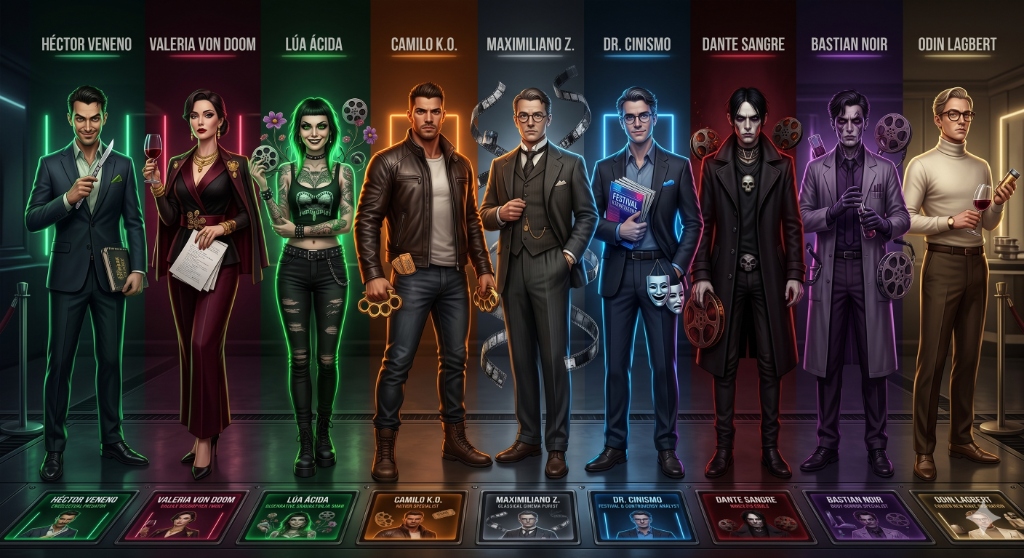
Certificado de impacto psicofísico emitido por Valeria Von Doom
1 amago en el tramo intermedio; pestañeo pesado en las transiciones más innecesarias.
Minuto 46 y minuto 66 (comprobando cuánto quedaba de suplicio).
1 espressos para no dejarse vencer por la mediocridad cómoda.
"A mitad del segundo acto cuando la subtrama secundaria empezó a pesar más de lo que aportaba."
💬 El Veredicto de la Comunidad
¿Qué te ha parecido la película? Deja tu nota de 0 a 10 para contrastarla con el análisis de la redacción.
Aún no has votado
📢 ¿Te ha gustado el ácido?
Comparte esta crítica con tus amigos cinéfilos o desata la polémica en redes.
⚡ THE CINEMATIC VENOM YOUR INBOX CRAVES
No sugarcoated ratings, no corporate fluff. Subscribe for our uncensored weekly analysis or join the private Telegram for press previews, poll clashes, and instant alerts.
Alertas de estrenos en 1 segundo, encuestas en caliente y audios al salir de pases de prensa.
Recibe la dosis semanal en tu mail + regalo inmediato del PDF con 50 joyas ocultas de culto.
Related Reviews
Recommended autopsies for demanding film buffs.
 ⚡ Ácido Cítrico6.0
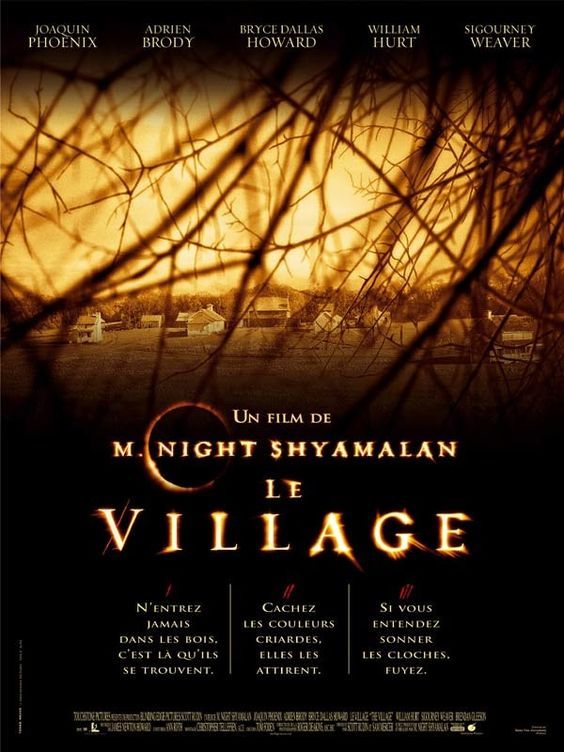
*The Village: M. Night Shyamalan’s Twist That Just Won’t Turn*
⚡Del mismo director (M. Night Shyamalan): analiza la evolución o degradación de su estilo.
M. Night Shyamalan builds a cardboard village with bargain-bin monsters and a twist so stale it smells like mothballs. Roger Deakins lights up the boredom.
 ⚡ Ácido Cítrico7.1
28 años después
⚡Afinidad temática directa en atmósfera, estilo y fijaciones visuales.
Una secuela que huele a podrido desde el primer fotograma. Garland y DaCosta intentan revivir el género, pero el resultado es un KO técnico disfrazado de obra maestra.
 ⚡ Ácido Cítrico5.8
**A Serbian Film: The Snuff That Thought It Was Art (and Ended Up a High-School Nightmare)**
⚡Afinidad temática directa en atmósfera, estilo y fijaciones visuales.
**Srđan Spasojević serves up a depravity feast swinging between gratuitous shock and social commentary. Genius or pretentious trash? Claqueta Ácida dissects it with surgical precision.**
Editorial Ecosystem
Cinephile connections, archive interviews and related analyses.
🎞️ In Claqueta Cinematheque1
💬 Debate Cinéfilo & Autopsia de Lectores
0 veredictos¿Discrepas con nuestra nota? ¿Es una obra maestra o veneno puro? Deja tu veredicto abajo sin necesidad de registro.

Aún nadie ha dejado su veredicto para esta película.
Sé el primero en clavarle el colmillo rellenando el formulario de arriba.