"Taboo — The Empire of Shadows Where Tom Hardy Plays Ghost (and Almost Pulls It Off)"
Tom Hardy rises from the dead to inherit an empire of rotting ships and enemies with grinning masks. A gothic masterpiece or a soap opera in dirty suits? Claqueta Ácida dissects this feast of shadows.

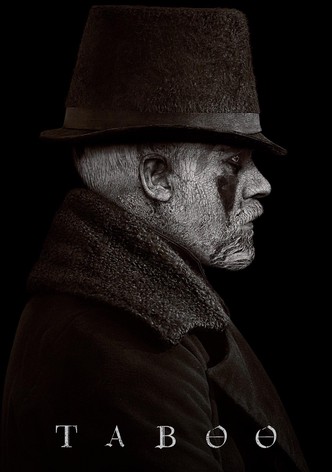


Taboo is, above all, a bold experiment: a series that tries to be many things at once—historical drama, supernatural thriller, gothic fable, capitalism allegory—and ends up as a Frankenstein of unchecked ambition, stitched together-la-cueva-de-los-espejos-rotos" class="text-amber-400 font-black hover:text-amber-300 transition underline decoration-amber-500/40 hover:decoration-amber-300" title="[6.5/10 ⚡ Ácido Cítrico] Lee nuestra autopsia de «Together»" data-acid-interlink="together-la-cueva-de-los-espejos-rotos">together with threads of brilliance and patches of self-indulgence. Steven Knight, that architect of dark worlds who previously gifted us the claustrophobia of Locke and the grimy realism of Peaky Blinders, teams up here with Tom Hardy and his father, Chips Hardy, to birth a creature that reeks of gunpowder, sweat, and rotten family secrets. The result is a series that, like its protagonist, lurches between grandeur and absurdity, like a drunken specter in a 19th-century brothel.
finalExplicado: "James Keziah Delaney mata a su medio hermano y a la mayoría de sus enemigos en una orgía de violencia ritual, quema su propio barco con los cadáveres dentro y huye con Zilpha, su hermana-amante, hacia América para fundar su imperio lejos del Imperio británico. En el último plano, se revela que ha sellado un pacto definitivo con las fuerzas oscuras africanas: su mirada ya no es humana. Simbólicamente, el desenlace significa que la venganza absoluta solo se consigue convirtiéndose en el monstruo que se pretendía destruir. Delaney no hereda el imperio: se convierte en él. El fuego purifica y condena al mismo tiempo; la incestuosa huida final sella su transformación total en espíritu ancestral, un fantasma que ya no pertenece ni a los vivos ni a los muertos, sino al Taboo eterno."
The Premise: Hamlet in a Dumpster with More Mud and Fewer Monologues
The genesis of Taboo is almost as murky as its plot. It was 2017, and the world was still reeling from Brexit and the post-Game of Thrones hangover, craving stories steeped in betrayal, blood, and cold tea. Scott Free Productions, the brainchild of the Scott brothers (yes, those who gave us Gladiator and Blade Runner 2049), bet on a project that promised to be Britain’s Deadwood: more fog, fewer gold teeth, but just as filthy. What no one expected was that Taboo would end up as a gothic banquet where the sublime and the ridiculous shook hands like old friends in a Whitechapel pub.
The premise is irresistibly simple: James Keziah Delaney (Tom Hardy), a man who returns from Africa with skin scorched by the sun and a soul sold to the devil, inherits a shipping empire and a mountain of enemies. His father, a living monster, has just died, and London—this city of perpetual fog and unchecked ambition—is ready to devour him alive. Delaney isn’t a hero; he’s an antihero with more scars than principles, a man who seems to have struck a deal with dark forces just to survive. Sounds like Hamlet with more mud and fewer monologues? Absolutely, except here, the Danish prince would wear a bloodstained coat, have a nervous twitch in his left eye, and subsist on raw meat.
The problem, as always, is execution. Taboo arrives at a time when British television was dominated by the grimy realism of Peaky Blinders (also by Knight) and the decadent splendor of The Crown. Amid this landscape, the series tries to be a hybrid of historical drama and supernatural thriller, with a touch of gothic noir reminiscent of Penny Dreadful, but without its cardboard monsters. The result is a strange beast: hypnotic at times, tedious at others, like someone mixed Heart of Darkness with a particularly bleak episode of EastEnders. And at the center of it all, Tom Hardy, acting as if every scene were a duel to the death between his character and common sense.
Direction: A Macabre Dance Between Genius and Excess
If there’s one thing directors Kristoffer Nyholm and Anders Engström achieve under Knight’s baton, it’s creating oppressive atmospheres. In Taboo, London isn’t a city; it’s a living, rotting organism, a place where the fog doesn’t just hide crimes—it seems to feed on them. Mark Patten’s cinematography is, without a doubt, one of the series’ greatest strengths: every frame is drenched in a palette of grays, browns, and blacks, as if the celluloid had been steeped in cold tea for weeks. The interiors, lit by candles and oil lamps, have that grainy texture reminiscent of Andrei Tarkovsky’s cinema, but with a grindhouse edge that keeps the series from drowning in its own solemnity.
The problem is that sometimes the aesthetic devours the script. There are entire scenes where all that matters is the mood, as if the filmmakers forgot that, in the end, a series needs a plot that moves, not just an atmosphere that suffocates. Taboo’s pacing is another weak point: the series has the patience of a Buddhist monk and the urgency of an arthritic snail. The early episodes are especially slow, as if the staging were more interested in making the viewer smell London’s mud than in telling a story. There are moments when the series feels like a slideshow of dark paintings: beautiful, yes, but static. The result? An experience that’s sometimes fascinating and sometimes like watching paint dry—albeit with more Tom Hardy grunts.
That said, when the plot finally decides to move, it does so with the force of a derailed train: betrayals, murders, conspiracies, and a family mystery that reeks of rot from the first episode. The problem is that by the time you reach the end of the season, you realize you’ve invested eight hours of your life in a story that could’ve been told in four—and with fewer monologues about fate.
The Script: A Wild Animal (and Sometimes Clumsy One)
Written by six hands between Knight, Hardy, and Dean Baker, Taboo’s script is a wild animal: sometimes brilliant, sometimes clumsy, but always unpredictable. There are dialogues that sound like Shakespeare wrote for The Wire, and others that seem lifted from an Assassin’s Creed fanfic. The script’s great virtue is its thematic ambition: Taboo isn’t just a story about a man inheriting an empire; it’s a meditation on colonialism, corruption, and the price of vengeance. The problem is that, in its eagerness to be profound, the series sometimes loses itself in its own fog.
There are subplots that go nowhere (remember that character who vanishes after episode three?) and plot twists that feel cobbled together from a grab bag. But when it hits the mark, it hits hard. The relationship between Delaney and his sister Zilpha (a radiant Oona Chaplin) is one of the series’ strongest points, a duel of glances and silences that says more than any monologue. Then there’s the villain, the East India Company, embodied by a Jonathan Pryce who seems plucked from a Dracula nightmare. His performance is so over-the-top it borders on camp, but it works because Taboo’s world is so grotesque that even the villains feel like caricatures.
The script also suffers from pretentiousness. Sometimes, Taboo seems more interested in being deep than in telling a story, as if every line were written with the solemnity of a sermon and the subtlety of a sledgehammer to the skull. There are scenes where Hardy seems to be competing with a drunk priest to see who can deliver the longest speech, and the result is a mix of genius and self-indulgence that can be exhausting.
The Cast: A Ensemble That Survives the Fog (Mostly)
If there’s a god of cinema, they must be very proud of Tom Hardy. Because, let’s be honest, no one else could’ve played James Delaney without the character collapsing under the weight of his own pretension. Hardy doesn’t act; he inhabits Delaney like a spirit possessing a corpse. Every grunt, every sideways glance, every time he chews raw meat like it’s a satanic ritual—it’s pure physical theater, a reminder that cinema (and television) can be a visceral spectacle.
The problem is that sometimes Hardy seems to be acting in a completely different movie than the rest of the cast. While everyone else tries to maintain a realistic tone, he dives headfirst into melodrama, as if he’s playing a ghost in a 19th-century play. Is it over-the-top? Yes. Is it effective? Also yes. Because, at the end of the day, Taboo isn’t a series about subtlety; it’s a shadow circus where characters scream their traumas instead of whispering them.
The rest of the cast does their best not to drown in Hardy’s tsunami. Oona Chaplin (Zilpha) is the big revelation: her chemistry with Hardy is electrifying, full of sexual tension and fraternal resentment. David Hayman (Brace) brings heartbreaking humanity to his character, a man torn between loyalty and survival. And then there’s Jonathan Pryce, who plays the Company’s leader with the smile of a man who’s just discovered he likes the taste of blood. His performance is so exaggerated it’s like a cross between Sir Laurence Olivier’s Richard III and a villain from Batman: The Animated Series. But again, it works because Taboo’s world is so grotesque that even the villains seem plucked from a comic book.
The cast’s only weak link is, ironically, Benjamin Wilton (played by Leo Bill), whose role in the Company’s offices is sometimes so flat and functional he feels like a cardboard cutout. His subplot is so bland at times that it makes the rest of the cast look like the Royal Shakespeare Company in comparison. But in a series where even the side characters have more layers than a rotten onion, his bureaucratic presence barely registers.
The Technical Department: When Mud Becomes Art
If there’s one thing Taboo does right (and it does it very right), it’s its production design. The series recreates 1814 London with an authenticity that reeks of sweat, coal, and misery. The sets are so detailed they look like museum pieces, but with that layer of grime that keeps the series from slipping into traditional heritage drama. The costumes, especially Hardy’s, are a masterclass in characterization: his coat isn’t just a coat; it’s psychological armor, a symbol of his isolation and rage. And then there’s the makeup, which turns the characters into creatures of the night. Delaney looks like a freshly exhumed corpse, and it’s no accident: his face is designed to make the viewer feel like they’re watching a man who no longer belongs to this world.
Mark Patten’s cinematography is another highlight. Every shot is composed like a painting by Francisco Goya, full of elongated shadows and dim lights that seem on the verge of extinguishing. The use of color is especially brilliant: earth tones dominate the palette, but there are flashes of red (blood, wine, lips) that act as visual warnings. The problem is that sometimes the aesthetic overwhelms the narrative. There are entire scenes where all that matters is the mood, as if Patten and the directors forgot that a series needs to move forward, not just suffocate the viewer with its atmosphere.
The score, composed by Max Richter (yes, the same one who did The Leftovers), is a masterpiece of oppressive minimalism. The themes are sparse, but when they appear, they hit like a hammer to the chest. The use of silence is just as effective: there are scenes where all you hear is the creak of floorboards or the sound of rain, and it’s in those moments that Taboo reaches its peak. The editing, however, is uneven. Some sequences flow with the elegance of a waltz, but others seem cut by someone who fell asleep at the keyboard. The pacing is the series’ Achilles’ heel: sometimes it surges forward like a raging river, but other times it stagnates like a puddle of dirty water.
The Best
Mark Patten’s cinematography: A visual feast of elongated shadows, dim lights, and earth tones that turn every frame into a Goya painting. Taboo*’s London isn’t just seen; it’s smelled.- Tom Hardy: An actor who turns every grunt into poetry and every glance into a dagger. Delaney isn’t a character; he’s a force of nature in a filthy coat.
- Production design: A 1814 London so authentic it reeks of coal, sweat, and betrayal. The sets aren’t just sets; they’re characters.
- Max Richter’s score: Minimalist, oppressive, and perfect. Every note is a reminder that you’re watching something that hurts.
- Oona Chaplin: An actress who shines in a cast of shadows. Her chemistry with Hardy is electric, full of tension and resentment.
The Worst
- The pacing: A series that moves like an arthritic snail. Eight episodes that could’ve been told in four.
- The script: A bizarre and brilliant portrait at times, but clumsy at others. Like a rough diamond with too many edges.
- Benjamin Wilton’s writing: A character so flat in his expository function that he makes the rest of the cast look like the Royal Shakespeare Company. His role is so one-dimensional he feels like a cardboard cutout.
- The monologues: Too many, too long, and too solemn. There are scenes where Hardy seems to be competing with a drunk priest to see who can deliver the longest sermon.
The Verdict of Claqueta Ácida (8/10)
Taboo is that strange creature born when you mix the grime of Peaky Blinders with the fog of Penny Dreadful and add a dash of Hamlet played by a man who eats raw meat on screen. It’s not a masterpiece, but it’s not a failure either; it’s a wounded beast that limps with style, like a ghost refusing to die. It has moments of absolute genius (the cinematography, Hardy, the score) and others of unbearable tedium (the pacing, the monologues, the stiffness of some side characters). It’s a series that demands patience, like an expensive wine that tastes like vinegar at first but improves with time. If you survive the early episodes, you’ll find a dark, ambitious, and deeply flawed story, like a diamond cut by a drunk. But let’s be honest: in a world where television seems written by algorithms, Taboo is a breath of rotten, necessary air. 💀Ending Explained: "Taboo
Ficha de Daños Colaterales en Sala
Certificado de impacto psicofísico emitido por Lúa Ácida
Cero. La pantalla absorbió cada segundo de atención disponible.
Ninguna comprobación del tiempo. Se agradece la rareza.
Ninguna: la adrenalina cinematográfica es suficiente.
"No aplica. La obra se sostiene sola."
💬 El Veredicto de la Comunidad
¿Qué te ha parecido la película? Deja tu nota de 0 a 10 para contrastarla con el análisis de la redacción.
Aún no has votado
📢 ¿Te ha gustado el ácido?
Comparte esta crítica con tus amigos cinéfilos o desata la polémica en redes.
⚡ THE CINEMATIC VENOM YOUR INBOX CRAVES
No sugarcoated ratings, no corporate fluff. Subscribe for our uncensored weekly analysis or join the private Telegram for press previews, poll clashes, and instant alerts.
Alertas de estrenos en 1 segundo, encuestas en caliente y audios al salir de pases de prensa.
Recibe la dosis semanal en tu mail + regalo inmediato del PDF con 50 joyas ocultas de culto.
Related Reviews
Recommended autopsies for demanding film buffs.
 🔥 Fusión Nuclear8.0
Abigail: Ballet, Rivers of Hemoglobin, and the Worst Nightmare of a Discount Kidnapping Gang
⚡Afinidad temática directa en atmósfera, estilo y fijaciones visuales.
Radio Silence signs a delightfully entertaining, bloody, and hyperbolic vampire slasher within a mansion where a twelve-year-old ballerina is the monster.
 ⚡ Ácido Cítrico7.5
*Among the Living: Lost Childhood, the Deep America Slasher Transplanted to the French Countryside*
⚡Afinidad temática directa en atmósfera, estilo y fijaciones visuales.
Bustillo and Maury fuse the spirit of *Stand by Me* with the ultra-violent rural slasher vibe of *The Texas Chain Saw Massacre* in a raw, physical film that hits like a sucker punch.
 🔥 Fusión Nuclear9.0
*The Island: Kim Ki-duk and Cinema as a Rusty Knife in the Throat*
⚡Afinidad temática directa en atmósfera, estilo y fijaciones visuales.
Kim Ki-duk tears through Korea with *The Island*: a visual poem of violence, silence, and love that hurts more than a thousand razor blades. 9.0 out of sheer exquisite suffering.
Editorial Ecosystem
Cinephile connections, archive interviews and related analyses.
💬 Debate Cinéfilo & Autopsia de Lectores
0 veredictos¿Discrepas con nuestra nota? ¿Es una obra maestra o veneno puro? Deja tu veredicto abajo sin necesidad de registro.

Aún nadie ha dejado su veredicto para esta película.
Sé el primero en clavarle el colmillo rellenando el formulario de arriba.