Requiem for a Dream — The Symphony of Collapse in 24 Frames per Second
Darren Aronofsky turns addiction into a grotesque ballet of sweat, pixels, and shattered souls. A masterpiece that hurts more than heroin withdrawal.

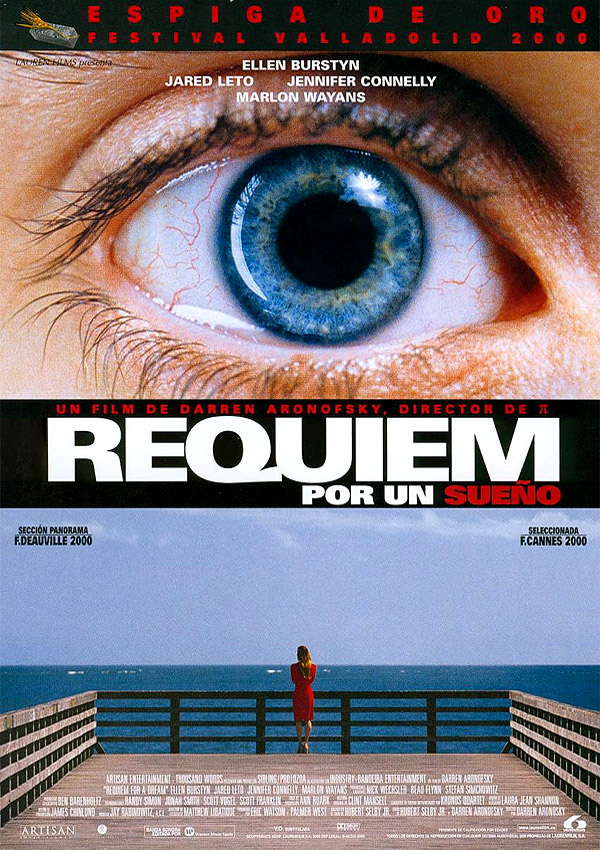
When cinema is great, it doesn’t just tell stories—it infects them, corrupts them, and spits them back out in a vomit of celluloid and sweat. Darren Aronofsky, that enfant terrible of New York indie film, had already proven in Pi (1998) that his obsession with the spiral—that geometric figure twisting toward infinity or nothingness—was more than just a visual quirk. With Requiem for a Dream, however, the director didn’t just refine his cinematic language; he turned it into a weapon of mass emotional destruction. Released in 2000, at the height of the Clinton era and Silicon Valley’s American Dream, the film landed like a gut-punch to a society that preferred to ignore the corpses rotting under the rug of prosperity. Aronofsky, with the precision of a surgeon and the cruelty of an executioner, decided to dissect addiction in all its forms: not just the chemical kind, but the addiction to success, validation, love, television, and the illusion that things can get better. Spoiler: they can’t. At least not in the morally rotten universe he constructs with almost sadistic meticulousness.
The project was born from personal obsession. Aronofsky, alongside his co-writer and then-partner Hubert Selby Jr.—author of the eponymous novel on which the film is based—wanted to capture the essence of urban despair with the same rawness Selby had brought to Last Exit to Brooklyn. Selby, a man who had battled addiction to drugs and life itself for decades, infused the script with an authenticity no method actor could fake. Their collaboration, in Aronofsky’s own words, was “like two alcoholics sharing a bottle of whiskey in a dark alley.” The result was a screenplay that didn’t just depict addiction—it embodied it: short, repetitive, obsessive phrases, like the buzzing of a fly trapped in a jar. The narrative structure, divided into three acts marked by the seasons, wasn’t an arbitrary aesthetic choice but a metaphor for the cycle of decaying life: summer (illusion), autumn (the fall), and winter (the freezing of all hope).
But if the script was the skeleton of the film, Aronofsky’s direction was the rotting flesh covering it. The director, who at the time hadn’t yet succumbed to the siren call of blockbusters (Black Swan, Noah), proved here that cinema could be as visceral as a documentary and as stylized as an opera. His use of handheld camera, extreme close-ups that warped faces into lunar landscapes, and rapid cuts mimicking the rhythm of a heart racing with anxiety created a sensory experience that went beyond narrative. Aronofsky didn’t want the audience to watch addiction; he wanted them to feel it, to smell it, to taste it like a metallic tang in the mouth. And damn, did he succeed. The scene where Sara Goldfarb (Ellen Burstyn) injects herself with amphetamines to lose weight, the camera spinning around her face as if trapped in a whirlwind, is so uncomfortable you can’t help but look away. But like a car crash, you can’t tear your eyes away completely.
The cultural climate in which Requiem for a Dream emerged was, paradoxically, one of superficial optimism. The U.S. was riding the tail end of the ’90s, a decade of unprecedented economic growth, tech bubbles, and the illusion that the future would be bright, clean, and digital. But beneath that polished surface, the cracks were already showing: the ’80s crack epidemic had left deep scars in Black communities, obesity and eating disorders were skyrocketing among the middle class, and television—that opiate of the masses—had become the new god to worship. Aronofsky, with the eye of an entomologist, chose to focus his lens on those forgotten margins. It’s no coincidence the film is set in Coney Island, that decaying amusement park that once symbolized the American Dream and now is nothing more than a rusted skeleton of what it was. The perfect place for a story about dreams rotting away.
The Direction: A Nightmare Ballet Choreographed by the Devil
If there’s one thing that defines Darren Aronofsky’s style, it’s his ability to turn suffering into choreography. In Requiem for a Dream, every camera movement, every cut, every sound effect is calculated to generate discomfort. The director doesn’t just show addiction; he ritualizes it, turns it into a macabre dance where the characters are puppets moved by invisible strings. His use of visual hypnosis—that technique where the camera slowly zooms in on a character’s face while the ambient sound distorts—isn’t just a gimmick; it’s a way to immerse the viewer in the fractured minds of the protagonists. When Harry (Jared Leto) and Tyrone (Marlon Wayans) shoot up in a club bathroom, the camera doesn’t just show the act—it celebrates it, with extreme close-ups of the needle piercing the vein and a sucking sound straight out of David Cronenberg’s nightmares.
But where Aronofsky truly shows his genius is in his use of editing. The “happiness montage,” where the four protagonists experience fleeting moments of ecstasy through their respective addictions, is a perfect example of how cinema can be both beautiful and repulsive. The images flash by at a frenetic pace, set to Clint Mansell’s Lux Aeterna—now a modern cinema anthem—while the characters float in a state of artificial euphoria-echando-la-vista-atras" class="text-amber-400 font-black hover:text-amber-300 transition underline decoration-amber-500/40 hover:decoration-amber-300" title="[3.6/10 ⚠️ Ácido Sulfúrico] Lee nuestra autopsia de «Euphoria»" data-acid-interlink="euphoria-echando-la-vista-atras">euphoria. But even in these moments of apparent happiness, the director slips in small details that foreshadow the fall: the sweat on Sara’s brow, Harry’s dilated pupils, Marion’s vacant stare. Aronofsky won’t let you enjoy the high because he knows that in his world, happiness is always the prelude to disaster.
The film’s technical aspects are, in a word, flawless. Matthew Libatique’s cinematography, with its cold color palette and naturalistic lighting, reinforces the feeling that we’re watching a documentary about human misery. The wide shots of Coney Island, with its rusted rides and deserted beaches, are so desolate they could be lifted from a horror film. And then there are the close-ups—those faces twisted by anguish, silently screaming. Libatique isn’t afraid to show ugliness because he knows that in this story, beauty lies precisely in the rawness of reality.
The Performances: A Witches’ Sabbath of Despair
If Requiem for a Dream is a symphony of pain, then its actors are the instruments Aronofsky plays with sadistic glee. Ellen Burstyn, as Sara Goldfarb, delivers one of the most brutal and heart-wrenching performances in cinema history. Her physical transformation—from a woman obsessed with television to a gaunt specter crawling on the floor—is so convincing you can’t help but wonder if she took some of that suffering home with her. The scene where Sara, crazed by amphetamines, tries to force her foot into a shoe that no longer fits is so painful it physically hurts. Burstyn doesn’t act; she suffers, and she makes us suffer with her.
At the other end of the emotional spectrum is Jared Leto, whose Harry is the American Dream turned nightmare. Leto, who at the time hadn’t yet descended into the excesses of Suicide Squad, delivers a restrained, almost minimalist performance where every gesture—a lost look, a trembling hand—speaks louder than a thousand lines of dialogue. His chemistry with Jennifer Connelly (Marion) is so intense it’s almost unbearable. The scene where they kiss on the beach, the sound of waves mingling with their ragged breaths, is one of those pure cinematic moments that leaves you breathless. But even here, Aronofsky introduces a touch of distortion: the shot repeats over and over, as if the director wants to remind us that in his world, even love is a drug you’ll eventually depend on.
Marlon Wayans, as Tyrone, brings a darkly comic counterpoint to the tragedy. His character, the most aware of the spiral they’re trapped in, tries to stay optimistic even as everything crumbles. But even he, the most resilient of the four, succumbs to despair. The scene where Tyrone, arrested in a Southern jail, is forced to clean a feces-filled toilet while the guards laugh at him is so humiliating you can’t help but cringe. Wayans, previously known mainly for his comedic roles, proved here he was an actor of unexpected depth.
The best
- Darren Aronofsky’s direction: A masterclass in cinematic sadism that turns suffering into art. Every shot, every cut, every sound effect is designed to unsettle, and damn, does it work.
- Ellen Burstyn’s performance: A Sara Goldfarb that lodges in your memory like a rusty knife. Her physical and emotional transformation is so brutal it hurts to watch.
- Matthew Libatique’s cinematography: A cold color palette and naturalistic lighting that make you feel like you’re watching a documentary about human misery. The close-ups of faces warped by anguish are simply hypnotic.
- The editing: A festival of rapid cuts, obsessive repetitions, and visual distortions that mimic the rhythm of a brain unraveling from addiction. The “happiness montage” is a modern cinema masterpiece.
The worst
- The lack of hope: Not a flaw in the film, but an artistic choice. Still, there are moments when you wish the characters could catch even a glimmer of light. Spoiler: they don’t.
- The obsessive repetition: Some viewers might find the film’s frenetic pace exhausting, especially during the rapid montage sequences. Not a movie to watch while hungover.
The Verdict of Claqueta Ácida
Requiem for a Dream isn’t a film; it’s an experience. One that grabs you by the throat, drags you through a hell of sweat, tears, and pixels, and spits you out at the end feeling like something inside you has broken forever. Darren Aronofsky doesn’t make movies to entertain; he makes them to destroy, and in that sense, this masterpiece is a resounding success. It’s not a film you watch; it’s a film you suffer, you feel, you live in every frame. And even if you leave the theater wanting to burn all your possessions and join a Buddhist monastery, you’ll know you’ve witnessed something great. Something important. Something that, like addiction, will haunt you for the rest of your days. Rating: 9.3/10. An instant classic that stings more than unrequited love. 💀
🎬 Tráiler Oficial
Abrir en YouTube
Ending Explained: Requiem for a Dream
Ficha de Daños Colaterales en Sala
Certificado de impacto psicofísico emitido por Valeria Von Doom
Ni un solo parpadeo voluntario. El asiento, inusualmente cómodo.
Ninguna comprobación del tiempo. Se agradece la rareza.
Ninguna: la adrenalina cinematográfica es suficiente.
"No hubo. La coherencia se mantuvo hasta el último fotograma."
💬 El Veredicto de la Comunidad
¿Qué te ha parecido la película? Deja tu nota de 0 a 10 para contrastarla con el análisis de la redacción.
Aún no has votado
📢 ¿Te ha gustado el ácido?
Comparte esta crítica con tus amigos cinéfilos o desata la polémica en redes.
⚡ THE CINEMATIC VENOM YOUR INBOX CRAVES
No sugarcoated ratings, no corporate fluff. Subscribe for our uncensored weekly analysis or join the private Telegram for press previews, poll clashes, and instant alerts.
Alertas de estrenos en 1 segundo, encuestas en caliente y audios al salir de pases de prensa.
Recibe la dosis semanal en tu mail + regalo inmediato del PDF con 50 joyas ocultas de culto.
Related Reviews
Recommended autopsies for demanding film buffs.
 🔥 Fusión Nuclear7.7
Black Swan: The Obsession That Gazed Back from the Mirror (And Winked)
⚡Del mismo director (Darren Aronofsky): analiza la evolución o degradación de su estilo.
Darren Aronofsky turns ballet into a razor-sharp psychological thriller. Natalie Portman dances, suffers, and leaves us breathless. Masterpiece or freak show?
 🔥 Fusión Nuclear8.5
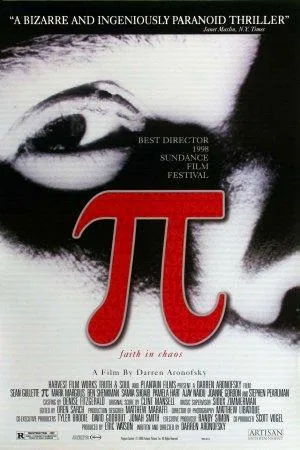
**Pi: Faith in Chaos** – A Mind-Bending Descent into the Outer Limits of Sanity
⚡Del mismo director (Darren Aronofsky): analiza la evolución o degradación de su estilo.
Max cracks the secret code behind the stock market in this 1998 fever-dream of a film—where math and madness collide like a Molotov cocktail in a petri dish.
 🔥 Fusión Nuclear9.5
*2001: A Space Odyssey – A Monkey, a Monolith, and Two Hours of Cosmic Pretentiousness*
⚡Afinidad temática directa en atmósfera, estilo y fijaciones visuales.
We dissect Stanley Kubrick’s magnum opus. A visual feast of minimalism and space hypnosis that cemented "serious" sci-fi—and bored half of humanity to tears.
Editorial Ecosystem
Cinephile connections, archive interviews and related analyses.
🎞️ In Claqueta Cinematheque3


💬 Debate Cinéfilo & Autopsia de Lectores
0 veredictos¿Discrepas con nuestra nota? ¿Es una obra maestra o veneno puro? Deja tu veredicto abajo sin necesidad de registro.


Aún nadie ha dejado su veredicto para esta película.
Sé el primero en clavarle el colmillo rellenando el formulario de arriba.