
Black Swan — The Obsession That Gazed Back from the Mirror (And Winked)
Darren Aronofsky turns ballet into a razor-sharp psychological thriller. Natalie Portman dances, suffers, and leaves us breathless. Masterpiece or freak show?


Black Swan: full review

As an Amazon Associate, Claqueta Ácida earns from qualifying purchases.
The Lincoln Center had never reeked so strongly of sweat, blood, and cheap perfume. Darren Aronofsky, that guy who turns human suffering into art with the finesse of a surgeon wielding a sledgehammer, decided ballet deserved a deep dive into hell. And damn, did he deliver. Black Swan isn’t just a movie about dance; it’s a psychological thriller disguised as a tutu, a hallucinogenic trip where mirrors lie more than a politician on the campaign trail and fingernails become weapons of mass destruction. Released in 2010, the film arrived at a time when Hollywood still believed auteur cinema could be profitable (oh, those were the days), and Fox Searchlight, bless their hearts, bet on a project that smelled like a nightmare and an Oscar from the very first frame. They weren’t wrong: Portman took home the statue, but the movie walked away with something far more valuable—our collective sanity.
The shoot was, of course, a circus of epic proportions. Portman, who had already proven in V for Vendetta that she could kick ass with elegance, subjected herself to ballet training so intense it nearly landed her in the hospital. Eight hours a day for a year, until her feet looked like they’d been plucked from a Goya painting. But the physical suffering was just the appetizer. Aronofsky, that master of cinematic sadism, pushed her to emotional limits that would make a psychopath cry. The hallucination scenes, where Nina peels her skin off in strips or sees her reflection move on its own, weren’t cheap CGI tricks. They were the result of an actress on the verge of collapse, a director obsessed with perfection, and a crew that probably needed therapy after every day’s shoot. And then there’s Mila Kunis, who arrived on set with the grace of a professional ballerina (yes, she trained like a woman possessed) and the attitude of someone who knew she was about to steal the movie from an Oscar winner. Spoiler: she did.
Mark Heyman’s script, based on an original idea by Aronofsky and his collaborators, is a masterclass in ambiguity. Is Nina losing her mind, or is the world around her really a nest of vipers in tutus? The answer, as in the best horror films, doesn’t matter. What counts is the journey, and Black Swan grabs you by the hand (or the throat) and doesn’t let go until you’ve seen every crack in its protagonist’s psyche. Her relationship with her mother, played by Barbara Hershey as if she were the witch from Snow White but with a Manhattan apartment, is so toxic it makes the mothers from Psycho and Carrie look like paragons of maternal love. And Vincent Cassel, as the company’s director, is the perfect villain: a manipulator with a shark’s grin who knows exactly which buttons to push to drive Nina to the brink. Or beyond.
The film wouldn’t be half as effective without its technical work, which is, quite simply, flawless. Matthew Libatique, Aronofsky’s frequent collaborator and cinematographer, turns New York into a claustrophobic labyrinth where the Lincoln Center’s hallways seem endless and the dressing rooms are gilded cages. The color palette, dominated by sickly whites and blacks as deep as wells, reflects Nina’s duality: the purity of the white swan and the darkness of the black swan, two sides of a coin that rusts as the plot unfolds. And the editing, by Andrew Weisblum, is so frenetic in the dance scenes it leaves you breathless, as if you were on stage with Portman, sweating, bleeding, and wondering how the hell you got there.

Direction and staging: The ballet of horrors
Aronofsky doesn’t direct—he dissects. Every shot in Black Swan is designed to unsettle, to make you feel like you’re invading a sacred (or cursed) space. The dance scenes, filmed with handheld cameras that move as if drunk, put you in Nina’s skin: the vertigo, the pressure, the fear of falling. But where the director truly shines is in the hallucination sequences. That scene where Nina sees her reflection in the mirror smiling while she cries is pure cinematic black magic. No digital effects, just a camera trick and Portman’s acting, which makes you doubt what you’re seeing. Is it real, or is it the beginning of the end?
The use of sound is another strong point. Clint Mansell, Aronofsky’s go-to composer, delivers a score that blends the ethereal with the ominous, as if Tchaikovsky and John Carpenter had an illegitimate child. The violins pierce your brain like needles, and the high-pitched whistles accompanying Nina’s transformation scenes are so disturbing they’ll make you glance over your shoulder on the subway. And then there’s the silence. Those moments when the film goes mute, leaving only Portman’s ragged breathing, are the most terrifying. Because in Black Swan, silence always precedes the storm.

Performances: When the method becomes madness
Natalie Portman doesn’t act in Black Swan—she bleeds. Her Nina is a fragile, obsessive creature, a woman who has spent her life trying to be perfect and ultimately discovers that perfection is a monster that feeds on its own flesh. Portman doesn’t just dance; she suffers, writhes, screams, and cries with an intensity that borders on unbearable. There’s one scene in particular—where Nina peels a strip of skin from her back while her mother watches with a satisfied smile—that’s so visceral it makes you want to vomit. And it’s not just the physicality: Portman conveys her character’s mental exhaustion with a naturalism that’s downright chilling. When, at the end of the film, her arms bloodied and her gaze lost, she whispers, "It was perfect," you don’t know whether to laugh or cry. Or both.
But Black Swan wouldn’t be the same without Mila Kunis. Her Lily is the perfect counterpoint to Portman’s Nina: uninhibited, sensual, free. Kunis, who trained like a professional for the role, dances with a grace that makes you wonder why the hell she isn’t the Bolshoi’s prima ballerina. But where she truly shines is in her scenes with Portman, especially in that moment when the two kiss and Nina sees, for a second, Lily’s face transform into her own. It’s a brief, almost subliminal shot, but it’s one of those details that elevates the film from good to unforgettable. And then there’s Vincent Cassel, who plays the company’s director as if he were a cross between a ballet teacher and a sexual predator. His scene with Portman in the dressing room, where he tells her that to play the black swan she has to "fuck fear," is so uncomfortable you’ll want to cover your eyes. But you can’t. Because, like Nina, you’re trapped.
The best
- Natalie Portman’s performance: A physical and emotional tour de force that leaves you breathless. Portman doesn’t just dance; she suffers, bleeds, and drags you into the abyss of obsession with her. The Oscar was deserved, but it doesn’t do her justice.
- Matthew Libatique’s cinematography: New York has never felt so claustrophobic. The sickly whites and deep blacks create a nightmarish atmosphere that perfectly reflects Nina’s duality.
- Sound design and score: Clint Mansell delivers a score that’s pure black magic. The violins pierce your brain, and the high-pitched whistles in the transformation scenes are so disturbing they’ll haunt your dreams.
- The chemistry between Portman and Kunis: Two actresses at the top of their game. The sexual and emotional tension between Nina and Lily is the film’s beating heart, and their kiss scene is one of those moments that defines a movie.
- Andrew Weisblum’s editing: The dance scenes are so frenetic they leave you breathless. Weisblum makes you feel Nina’s vertigo and pressure, as if you were on stage with her.
The worst
- The mother character (Barbara Hershey): Hershey does what she can with the material, but the script turns her into a caricature of a controlling mother. She’s so over-the-top that at times she borders on the ridiculous, like when she cuts her adult daughter’s nails as if she were a five-year-old.
Some psychological thriller clichés: The film doesn’t escape certain genre tropes, like mirror hallucinations or the bloody bathroom scene. They’re effective, but we’ve seen them before in films like Repulsion or The Shining*.
- The ending: Without spoilers, let’s just say the conclusion is so symbolic it verges on pretentious. Aronofsky overreaches and, instead of ending with a bang, opts for a message that sounds like cheap self-help: "Perfection hurts, but it’s worth it." Okay, Darren, but couldn’t you have been a little more subtle?
- Vincent Cassel’s character: Cassel is a great actor, but his character, the company’s director, is a walking stereotype. A manipulator with a shark’s grin straight out of a 90s villain handbook. He works within the plot, but he’s still a cliché.
The Verdict of Claqueta Ácida
Black Swan is one of those films that leaves a mark. It’s not perfect—it has its moments of pretension and some grating clichés—but it’s so intense, so visceral, that it’s impossible not to succumb to its spell. Darren Aronofsky turns ballet into a razor-sharp psychological thriller, and Natalie Portman delivers a performance so agonizing to watch it’s impossible to forget. It’s not a movie for everyone: if you don’t like dark dramas, disturbing hallucinations, or bloody scenes with tutus, stay home and watch Dirty Dancing. But if you’re looking for a cinematic experience that leaves you breathless, with your nerves on edge and the feeling of having witnessed something unique, Black Swan is your film. Just don’t spend too much time looking in the mirror afterward. You never know what might be looking back. 💀
🎬 Tráiler Oficial
Abrir en YouTube
Black Swan: frequently asked questions
- What is the rating of "Black Swan" on Claqueta Ácida?
- "Black Swan" scored 7.7/10 on Claqueta Ácida in the review by Dr. Cinismo.
- Is "Black Swan" worth watching?
- Yes. We gave it 7.7/10 (Nuclear Fusion), our rating for must-see films.
- Who directed "Black Swan"?
- "Black Swan" was directed by Darren Aronofsky.
Theater Collateral Damage Report
Psychophysical impact certificate issued by Dr. Cinismo
2 amagos en el tramo intermedio; pestañeo pesado en las transiciones más innecesarias.
Un par de miradas al reloj en el tramo intermedio, comprobando cuánto quedaba de suplicio.
How much second-hand embarrassment the film causes (10 = maximum). It is not the review score.
1 espressos para no dejarse vencer por la mediocridad cómoda.
"A mitad del segundo acto cuando la subtrama secundaria empezó a pesar más de lo que aportaba."
📋 Ficha Técnica
| Año | 2010 |
| Duración | 109 min |
| País | United States |
| Guión | Mark Heyman |
| Fotografía | Matthew Libatique |
| Productora | Fox Searchlight Pictures, Cross Creek Pictures |
| Dónde ver | |
| Letterboxd | Ver Ficha ↗ |
⭐ Estrella Emergente
Natalie Portman
Portman doesn’t just act—she hemorrhages in every frame. Her Nina is a hurricane of fragility and fury, a performance so agonizing to watch it’s impossible to forget.
💬 Community Verdict
What did you think of the film? Rate it from 0 to 10 to compare it with the editorial review.
You haven't voted yet
📢 ¿Te ha gustado el ácido?
Comparte esta crítica con tus amigos cinéfilos o desata la polémica en redes.
⚡ THE CINEMATIC VENOM YOUR INBOX CRAVES
No sugarcoated ratings, no corporate fluff. Subscribe for our uncensored weekly analysis or join the private Telegram for press previews, poll clashes, and instant alerts.
Alertas de estrenos en 1 segundo, encuestas en caliente y audios al salir de pases de prensa.
Recibe la dosis semanal en tu mail + regalo inmediato del PDF con 50 joyas ocultas de culto.
By subscribing you agree that we use your email only to send you the newsletter. Unsubscribe at any time. Privacy policy
Related Reviews
Recommended autopsies for demanding film buffs.
 🔥 Fusión Nuclear 8.5
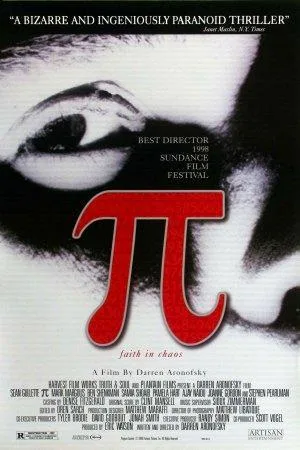
Pi: Faith in Chaos – A Mind-Bending Descent into the Outer Limits of Sanity
⚡ Del mismo director (Darren Aronofsky): analiza la evolución o degradación de su estilo.
Max cracks the secret code behind the stock market in this 1998 fever-dream of a film—where math and madness collide like a Molotov cocktail in a petri dish.
 🔥 Fusión Nuclear 9.5
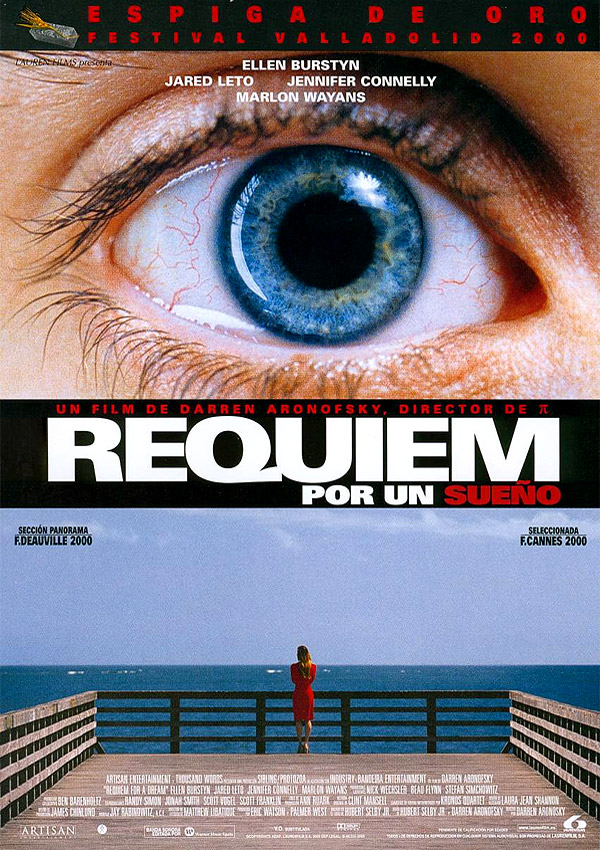
*Requiem for a Dream: The Symphony of Collapse in 24 Frames per Second*
⚡ Del mismo director (Darren Aronofsky): analiza la evolución o degradación de su estilo.
Darren Aronofsky turns addiction into a grotesque ballet of sweat, pixels, and shattered souls. A masterpiece that hurts more than heroin withdrawal.
 🔥 Fusión Nuclear 9.3
2001: A Space Odyssey — The Day Kubrick Left Us Speechless (and Oxygenless)
⚡ Afinidad temática directa en atmósfera, estilo y fijaciones visuales.
Kubrick turned science fiction into pure art: 149 minutes of eloquent silence, bone-wielding apes, and a psychopathic computer. Masterpiece or pretentious fraud? Here’s the verdict.
Editorial Ecosystem
Cinephile connections, archive interviews and related analyses.
🎞️ In Claqueta Cinematheque 3

💬 Debate Cinéfilo & Autopsia de Lectores
¿Discrepas con nuestra nota? ¿Es una obra maestra o veneno puro? Deja tu veredicto abajo sin necesidad de registro.
📏 Normas: se critica la película, no a las personas. Los insultos y los ataques personales se pueden borrar.