
Salò, or the 120 Days of Sodom — Pasolini's Black Mirror
A brutal dissection of the power system where Pasolini forces us to be accomplices in his architecture of pure horror.

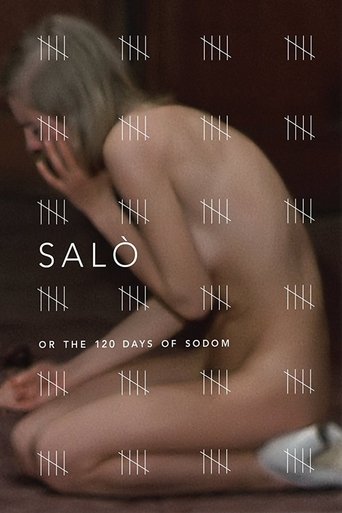
Salò, or the 120 Days of Sodom: full review

As an Amazon Associate, Claqueta Ácida earns from qualifying purchases.
The eruption of Salò, or the 120 Days of Sodom onto the cinematic horizon of its time was not merely an arrival, but a tectonic impact that left the critics of the era stammering pathetic moral excuses while they desperately tried to understand why Italian cinema had suddenly decided to explode from within. Pier Paolo Pasolini was no longer seeking the redemption of the proletariat or the peasant mysticism that had saturated his earlier, more romanticized works; here, the Italian director decides to execute a deliberate, cold-blooded aesthetic suicide. While in Teorema we could still trace a recognizable psychology, however hermetic and deeply disturbing it may have been, in this final, jagged piece the author strips himself of every single narrative tool that might allow the viewer to take refuge in the comfort of empathy. It is an exercise in total vacuity where cinema sheds its protective seams to reveal to us that beauty is, more often than not, the most dangerous and deceptive wrapping for tyranny. There is no exit door, no cinematic safety valve, only a mirror that slowly, agonizingly shatters under the weight of the viewer's own complicit gaze.
It is truly curious to observe how the current reception, stagnant at a mediocre 3.02 on Letterboxd, attempts to process this monumental work through the shallow, infantile optics of pornographic shock. It is a lazy, intellectually bankrupt reading, typical of those who desperately need art to ask for their permission before it dares to strike. Salò is not a film about gratuitous cruelty, but a clinical laboratory experiment where the viewer is invited—or rather, forced—to occupy the vacant place of the fifth master. Pasolini compels us to share the structural guilt of the system being displayed, ruthlessly eliminating any trace of cinematic subjectivity that could possibly soften the crushing weight of the gaze. There is no manipulative music to guide us emotionally through the carnage, only fragments of opera that act as a cold, biting irony, a sonic mignardise served over the rotting corpse of human dignity. The viewer is not an observer; they are an accomplice trapped indefinitely in the waiting room of hell.
The structure of the film, divided with an almost bureaucratic, soul-crushing rigidity into three acts that repeat with minimal, maddening variations, is the definitive proof that we are facing an artifact that utterly despises conventional narrative. The mise-en-scène, with its static shots and mechanical, soulless movements, transforms the mansion into a theater of horror where time does not flow, but rather stagnates in an eternal, suffocating loop. Tonino Delli Colli, behind the lens, captures this void with a precision that borders on the clinical, flatly refusing to embellish the ordeal with warm lights or dynamic, heroic angles. We are facing an architecture of oppression where the form is the content, and the content is an absolute, terrifying nothingness that returns to us our own latent capacity for horror. The camera does not judge; it merely documents, and that cold, detached documentation is what is truly, profoundly terrifying.

The architecture of silence and power

The screenplay by Sergio Citti is, in its essence, a chilling treatise on the nature of obedience and the systematic process of dehumanization. The absence of deep, meaningful dialogue or traditional character arcs is not a narrative error, but a deliberate, formal decision. The characters, from the Duke masterfully interpreted by Paolo Bonacelli to the Bishop of Giorgio Cataldi, are not individuals, but mere functions within a complex, grinding gear of absolute power. The chilling coldness with which they dispatch the lives of the captives is what is truly terrifying; there is no passion in their sadism, only a sterile bureaucracy of pain that is executed with the same casual naturalness with which one might take afternoon tea. Pasolini shows us that the purest horror is not born of madness, but of the terrifying normalization of abuse as a system of government. Power here does not shout; it whispers, and it whispers with the sickening elegance of one who knows they have the weight of historical truth on their side.
The performances, if we can even call the absolute, harrowing surrender of this cast that, are an exercise in extreme, almost superhuman, restraint. Paolo Bonacelli manages to convey an authority as empty as it is terrifying, while actresses like Hélène Surgère and Sonia Saviange move through the space with a rigidity that suggests they have already been entirely consumed by the system. There is no trace of histrionics here. Pasolini demands a neutrality that is the perfect reflection of the camera itself, an absolute absence of judgment that forces the viewer to fill the resulting void with their own mounting discomfort. It is a choreography of death where no one stands out because no one has the permission to be human. Bodies are reduced to objects, gazes are rendered empty, and sexuality becomes an act of total, crushing submission that erases any vestige of free, human desire.
The denial of empathy

The technical aspect of the film is a triumph of absolute austerity. In an environment where industrial cinema usually abuses music to manipulate the emotions of the audience, the decision to use operatic pieces as a distant, mocking counterpoint is a stroke of cynical genius. The music does not accompany the tragedy; it observes it from afar, with an aristocratic indifference that underscores the total isolation of the victims. It is this distance that turns Salò into an anti-film, an object that refuses to be consumed in the way we typically consume bourgeois entertainment. Here there is no ascent, no fall, no redemption, only a cycle of violence that repeats until the viewer, utterly exhausted, is forced to recognize their own position in the chain of command. Delli Colli's cinematography, with its high-contrast black and white, eliminates any possibility of warmth, turning the mansion into a flowchart of power where every corner is designed for surveillance and control.
The production design is another fundamental pillar of this grinding machinery of torture. The spaces are symmetrical, cold, and profoundly dehumanized, with an aesthetic that recalls the palaces of the Enlightenment but stripped of all human content. The rooms are not homes; they are cells in a laboratory where experiments are conducted on the flesh and the spirit alike. The repetition of these spaces reinforces the idea that there is no escape, that the system is total and encompasses every single centimeter of the captives' existence. The clothing, the objects, the gestures, everything is meticulously coded to reinforce the social hierarchy. There is no improvisation; everything is calculated, and that calculation is precisely what makes the film so difficult to endure. It is not chaos that terrifies us; it is the order.
The best
- The mise-en-scène : The geometric coldness of the spaces turns the mansion into a cell from which it is impossible to mentally escape. Each shot is composed like a painting of oppression, without any visual shortcuts.
- The direction of Pasolini : His total renunciation of subjectivity is the most radical act of artistic courage that Italian cinema has ever produced. He does not seek to please; he seeks to incriminate.
- The soundtrack : The use of classical operas as background music for barbarism creates a contrast that is unbearable and, at the same time, fascinating. The musical beauty highlights the ugliness of the act.
The worst
- The structural repetition : The insistence on the cycle of humiliation can be tedious for those seeking a traditional dramatic progression. The monotony is part of the message, but also an obstacle to attention.
- The narrative aridity : The lack of concessions to the viewer makes the work a difficult object to digest, even for the most seasoned cinephile. There are no emotional footholds, only hard rock.
The Verdict of Claqueta Ácida
Salò is a black monolith that rises in the middle of a cinema that prefers comfort to truth. Pasolini does not invite us to look; he forces us to be witnesses to our own capacity for indifference in the face of the pain of others. It is a piece of such brutal honesty that it is offensive to those who confuse cinema with entertainment. It is not a film to be enjoyed, but to be survived, a reminder that power always finds new ways to empty the individual until they become a mere object of consumption. A superb exercise in nihilism that, after half a century, remains the most honest and terrible mirror that the seventh art has left us. 💀
🎬 Tráiler Oficial
Abrir en YouTube
Ending Explained: Salò, or the 120 Days of Sodom
Salò, or the 120 Days of Sodom: frequently asked questions
- What is the rating of "Salò, or the 120 Days of Sodom" on Claqueta Ácida?
- "Salò, or the 120 Days of Sodom" scored 7.6/10 on Claqueta Ácida in the review by Odin Lagbert.
- Is "Salò, or the 120 Days of Sodom" worth watching?
- Yes. We gave it 7.6/10 (Nuclear Fusion), our rating for must-see films.
- Who directed "Salò, or the 120 Days of Sodom"?
- "Salò, or the 120 Days of Sodom" was directed by Pier Paolo Pasolini.
- How does "Salò, or the 120 Days of Sodom" end?
- Spoilers in Salò, or the 120 Days of Sodom ending explained .
Theater Collateral Damage Report
Psychophysical impact certificate issued by Odin Lagbert
Ni el espectador más anestesiado por el consumo de plástico digital podría apartar la vista de este abismo.
El tiempo aquí se detiene, y mirar el reloj es un acto de cobardía que el propio Pasolini castigaría con el desdén que merece.
How much second-hand embarrassment the film causes (10 = maximum). It is not the review score.
Un espresso doble cargado de amargura, servido en una taza de porcelana que sepas que vas a romper.
"La instauración de las reglas del juego en la mansión, donde el lenguaje se convierte en un arma de aniquilación total."
Another critic from the newsroom scores the same film. The main score is still the one at the top of the review.

The rebuttal from Lúa Ácida (Queen of the Box Office)
In stark disagreement with the review given by Odin Lagbert.
Me sentí como una epidermis desgarrada al entrar en la sala. La cámara se arrastra, sin ritmo, como una autopsia sin anestesia; la luz se cuela en manchas mortecinas, sin textura. Cada plano parece una feromona de horror que no huele a nada más que a vacío. La composición es un grotesco sagrado de repetición, sin contraste, sin pulso. Los intérpretes quedan inmóviles, sus gestos son mutilación lírica, sin verdad. El sonido golpea como pulsión de muerte, pero sin cadencia, solo ruido. Lo que el autor quiso como denuncia se diluye en una exposición de sangre sin contexto, una pornografía estética que no trasciende. La pieza no me sacude, me deja entumecida, como si el lente fuera una pared sin ventana. 3.2/10
📋 Ficha Técnica
| Año | 1976 |
| Duración | 116 min |
| País | Italy, France |
| Guión | Sergio Citti |
| Fotografía | Tonino Delli Colli |
| Productora | Les Productions Artistes Associés, PEA |
| Dónde ver | |
| Letterboxd | Ver Ficha ↗ |
⭐ Estrella Emergente
Paolo Bonacelli
His embodiment of the Duke is a masterclass in aristocratic coldness that freezes the blood without ever needing to raise his voice.
💬 Community Verdict
What did you think of the film? Rate it from 0 to 10 to compare it with the editorial review.
You haven't voted yet
📢 ¿Te ha gustado el ácido?
Comparte esta crítica con tus amigos cinéfilos o desata la polémica en redes.
⚡ THE CINEMATIC VENOM YOUR INBOX CRAVES
Every Sunday: the week’s reviews, a recommended antidote and the editors’ verdict (in Spanish). No sugarcoated ratings, no corporate fluff. Or join the private Telegram for press previews, poll clashes, and instant alerts.
Alertas de estrenos en 1 segundo, encuestas en caliente y audios al salir de pases de prensa.
Get the weekly dose in your email, every Sunday.
By subscribing you agree that we use your email only to send you the newsletter. Unsubscribe at any time. Privacy policy
Related Reviews
Recommended autopsies for demanding film buffs.
 🔥 Fusión Nuclear 8.5
*Alleluia: Love as a Terminal Illness (or How to Turn Crimes of Passion into a Sweaty, Fleshy Spectacle)*
⚡ Afinidad temática directa en atmósfera, estilo y fijaciones visuales.
Fabrice Du Welz reimagines the myth of the lonely hearts killers in a feverish whirlwind of jealousy, submission, and blood, led by Lola Dueñas in a performance that’s equal parts hypnotic and harrowing.
 🔥 Fusión Nuclear 8.5
*High Tension (Haute Tension): The Brutal Birth of the New French Extremism – Or How to Turn Flesh into Poetry with a Machete*
⚡ Afinidad temática directa en atmósfera, estilo y fijaciones visuales.
Alexandre Aja shocked global screens with a relentless rural bloodbath, redefined by breakneck pacing and a divisive twist that splits serious cinephiles right down the middle.
 🔥 Fusión Nuclear 8.5
*Aterrados: The Rebirth of Ghost Stories in the Raw Grit of Buenos Aires*
⚡ Afinidad temática directa en atmósfera, estilo y fijaciones visuales.
Demian Rugna revolutionizes paranormal horror—possessions, poltergeists, and all—by transplanting it to a residential neighborhood in Buenos Aires, armed with a devastating sound design that rattles your bones.
Editorial Ecosystem
Cinephile connections, archive interviews and related analyses.
💬 Debate Cinéfilo & Autopsia de Lectores
¿Discrepas con nuestra nota? ¿Es una obra maestra o veneno puro? Deja tu veredicto abajo sin necesidad de registro.
📏 Normas: se critica la película, no a las personas. Los insultos y los ataques personales se pueden borrar.