

Superhost — The Hell of Five Stars
A half-working Airbnb horror comedy. Brandon Christensen captures the traveler's paranoia, but the script falls halfway. Rating: 5.8.


Superhost: full review

There is a moment in Superhost where the camera stays fixed on the kitchen door while the sound of a lock turning is amplified until it becomes deafening. It is a simple shot, almost boring, but in that exact instant I felt a real chill. Not because the film is a masterpiece, but because Brandon Christensen knows exactly where to tighten the screw of discomfort. We are in 2021, the golden age of remote work and mass tourism, and genre cinema has decided that the real monster is not an ancient demon, but a host with a pathological obsession for five stars. It is a premise that smells like a low-budget TV series script, and partly it is, but Christensen executes it with a surgical precision that borders on the professional. The film does not try to be Get Out, not even The Lodge; it tries to be something smaller, more intimate, and in that modesty lies both its greatest virtue and its greatest limitation.
The production by Superchill, a studio that sounds like a name invented by a film student in their sophomore year, has opted for an 83-minute format that allows itself no luxuries. There are no filler scenes, no unnecessary romantic subplots, no explanations of sci-fi nonsense that nobody asked for. It is a closed-room film, of accumulative tension, where the space compresses as the protagonists' paranoia expands. And this is where the problem comes in: the film works like a clockwork mechanism, but it lacks a soul. It is competent, yes. It is entertaining, too. But it leaves no mark on your retina. It is the kind of genre cinema you watch on a long flight, which keeps you awake but doesn't make you dream. And in a market saturated with slashers and psychological horror, the competition is fierce.
The cultural context is undeniable. The film is released in the middle of a pandemic, when the concept of "safe space" has become a bitter mockery. Claire and Rebecca, played by Sara Canning and Gracie Gillam, are travel vloggers, image professionals, people who sell their lives as a product. That their host, Teddy, played by Osric Chau, subjects them to absolute control under the guise of hospitality is a perfect metaphor for digital surveillance. It is not a conspiracy theory, it is reality. And Christensen knows it. The problem is that the film stays on the surface of that metaphor. It doesn't delve deeper, it doesn't take risks, it doesn't force you to think beyond the scene. It is a mirror that reflects your anxiety, but shows you nothing new.
The first impression is of a technical solidity that surprises. Clayton Moore's cinematography is clean, almost aseptic, with a cold color palette that reinforces the feeling of isolation. There are no dramatic shadows, no strobe lights. There is an unsettling normality. And that is what works. But it is also what limits it. The film lacks a breaking point, an instant where reality shatters and horror becomes abstract. It stays in the literal, the physical, the tangible. And that, for a film that plays with paranoia, is a risky decision that doesn't always pay off.

The architecture of paranoia
Christensen's direction is methodical. Every shot is designed to maximize tension without resorting to cheap scares. There is a scene in the second act where Claire tries to record a vlog while Teddy watches her from the threshold of the door. The camera does not move. There is no music. Only the sound of Canning's breathing and the oppressive silence of the house. It is a moment of almost claustrophobic intensity, and it shows that the director knows how to handle the pacing. But then, the film gets careless. The script, also by Christensen, introduces twists that feel forced, as if the author needed a quick way out so as not to drag the film out longer than necessary. The third act is resolved with a logic that, although coherent, is not satisfying. It is an ending that closes the story, but does not elevate it.
The performances are the film's lifesaver. Sara Canning is, without a doubt, the best casting choice. Her Claire is vulnerable but not weak, and her ability to convey the transition from trust to despair is believable. Osric Chau, for his part, plays Teddy with a disturbing calm that borders on the sinister. He doesn't yell, he doesn't threaten. He just smiles. And that smile is more terrifying than any scream. Gracie Gillam and Barbara Crampton do a solid job, although their characters remain somewhat flat. Jeff Butcher, as Lou, brings a touch of comedy that, at times, breaks the tension unnecessarily. It's not that he's bad, it's that he doesn't quite fit with the overall tone of the film. It is a calibration error, not an execution one.

Sound and image as weapons
Martin Macphail's sound design is, perhaps, the most successful element of the film. The use of silence is masterful. There are moments where the absence of music is more terrifying than any orchestral theme. The sound of the house, the creaking of the wood, the wind outside, everything is amplified until it becomes a tangible presence. It is a detailed work that demonstrates a deep knowledge of the medium. Moore's cinematography, although not innovative, is functional. The framing is symmetrical, almost geometric, which reinforces the feeling of order and control that Teddy exerts over the space. There are no Dutch angles, no sudden movements. There is a calm that is, in itself, a threat. And that is what makes the film work on a technical level, although not on an emotional one.
The editing is clean, without unnecessary cuts. The film respects real time, which increases the feeling of immersion. But that is also what makes the film feel static at times. There is no dynamism, no energy. It is a pacing problem, not an execution one. The film moves at a constant pace, and that pace is enough to maintain attention, but not to generate an emotional connection. It is a genre cinema that delivers, but does not move. And in a world where the viewer is accustomed to overstimulation, the sobriety of Superhost can be as much a virtue as a limitation.
The best
- Brandon Christensen's direction: Surgical precision in building tension that demonstrates absolute control of pacing.
- Sara Canning's performance: A vulnerable and believable interpretation that holds the emotional weight of the film.
- The sound design: A masterful use of silence and ambient sounds that amplifies the feeling of paranoia.
The worst
- The script: It falls halfway, with forced twists and an ending that closes the story but does not elevate it.
- The lack of depth: The metaphor of digital surveillance stays on the surface, without taking risks or delving deeper.
- The static pacing: The sobriety of the editing and cinematography, although functional, can be boring for the viewer accustomed to dynamism.
The Verdict of Claqueta Ácida
Superhost is a genre film that works halfway. It is competent, it is entertaining, and it has moments of genuine tension. But it leaves no mark on you. It doesn't force you to think. It doesn't surprise you. It is the kind of genre cinema you watch on a long flight, which keeps you awake but doesn't make you dream. In a market saturated with slashers and psychological horror, the competition is fierce, and Superhost does not stand out. It is a 5.8 that is watchable, but not memorable. A film that delivers, but does not move. And in genre cinema, that is a death sentence. 💀
🎬 Tráiler Oficial
Abrir en YouTube
Superhost: frequently asked questions
- What is the rating of "Superhost" on Claqueta Ácida?
- "Superhost" scored 5.8/10 on Claqueta Ácida in the review by Dr. Cinismo.
- Is "Superhost" worth watching?
- With reservations. We gave it 5.8/10 (Citric Acid), our rating for uneven films with something worth saving.
- Who directed "Superhost"?
- "Superhost" was directed by Brandon Christensen.
Theater Collateral Damage Report
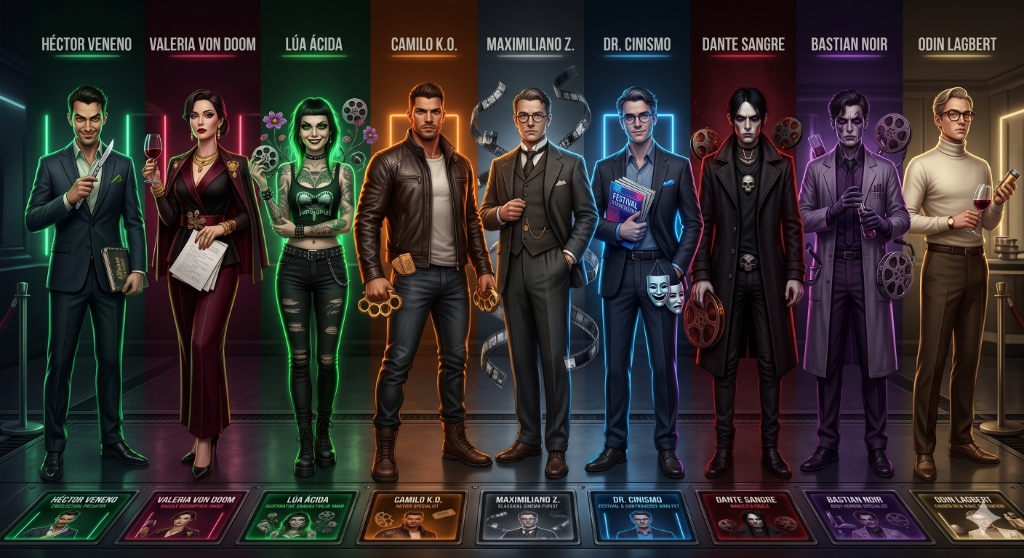
Psychophysical impact certificate issued by Dr. Cinismo
1 amago en el tramo intermedio; pestañeo pesado en las transiciones más innecesarias.
Un par de miradas al reloj en el tramo intermedio, comprobando cuánto quedaba de suplicio.
2 espressos para no dejarse vencer por la mediocridad cómoda.
"A mitad del segundo acto cuando la subtrama secundaria empezó a pesar más de lo que aportaba."
💬 Community Verdict
What did you think of the film? Rate it from 0 to 10 to compare it with the editorial review.
You haven't voted yet
📢 ¿Te ha gustado el ácido?
Comparte esta crítica con tus amigos cinéfilos o desata la polémica en redes.
⚡ THE CINEMATIC VENOM YOUR INBOX CRAVES
No sugarcoated ratings, no corporate fluff. Subscribe for our uncensored weekly analysis or join the private Telegram for press previews, poll clashes, and instant alerts.
Alertas de estrenos en 1 segundo, encuestas en caliente y audios al salir de pases de prensa.
Recibe la dosis semanal en tu mail + regalo inmediato del PDF con 50 joyas ocultas de culto.
Related Reviews
Recommended autopsies for demanding film buffs.
 ⚡ Ácido Cítrico 7.1
28 Years Later: The Bone Temple: when cult cinema trips over its own shadow
⚡ Afinidad temática directa en atmósfera, estilo y fijaciones visuales.
A sequel that smells rotten from the very first frame. Garland and DaCosta try to revive the genre, but the result is a technical knockout dressed up as a masterpiece.
 ⚡ Ácido Cítrico 5.8
A Serbian Film: The Snuff That Thought It Was Art (and Ended Up a High-School Nightmare)
⚡ Afinidad temática directa en atmósfera, estilo y fijaciones visuales.
Srđan Spasojević serves up a depravity feast swinging between gratuitous shock and social commentary. Genius or pretentious trash? Claqueta Ácida dissects it with surgical precision.
 ⚡ Ácido Cítrico 6.0
Adolescence, Sex, and Death at Camp Miasma: The Slasher That Reeks of Teen Sweat and a Recycled Script
⚡ Afinidad temática directa en atmósfera, estilo y fijaciones visuales.
Jane Schoenbrun turns a summer camp into a dumpster fire of hormones and clichés. Art or autopsy of a dying subgenre?
Editorial Ecosystem
Cinephile connections, archive interviews and related analyses.
💬 Debate Cinéfilo & Autopsia de Lectores
0 veredictos¿Discrepas con nuestra nota? ¿Es una obra maestra o veneno puro? Deja tu veredicto abajo sin necesidad de registro.


Aún nadie ha dejado su veredicto para esta película.
Sé el primero en clavarle el colmillo rellenando el formulario de arriba.