Opera of Blood — Dario Argento’s Technicolor Nightmare Ballet
Dario Argento turns the opera house into a gothic slaughterhouse where the color red isn’t makeup—it’s a lifestyle. Masterpiece or self-parody? Claqueta Ácida dissects this macabre circus with surgical precision.

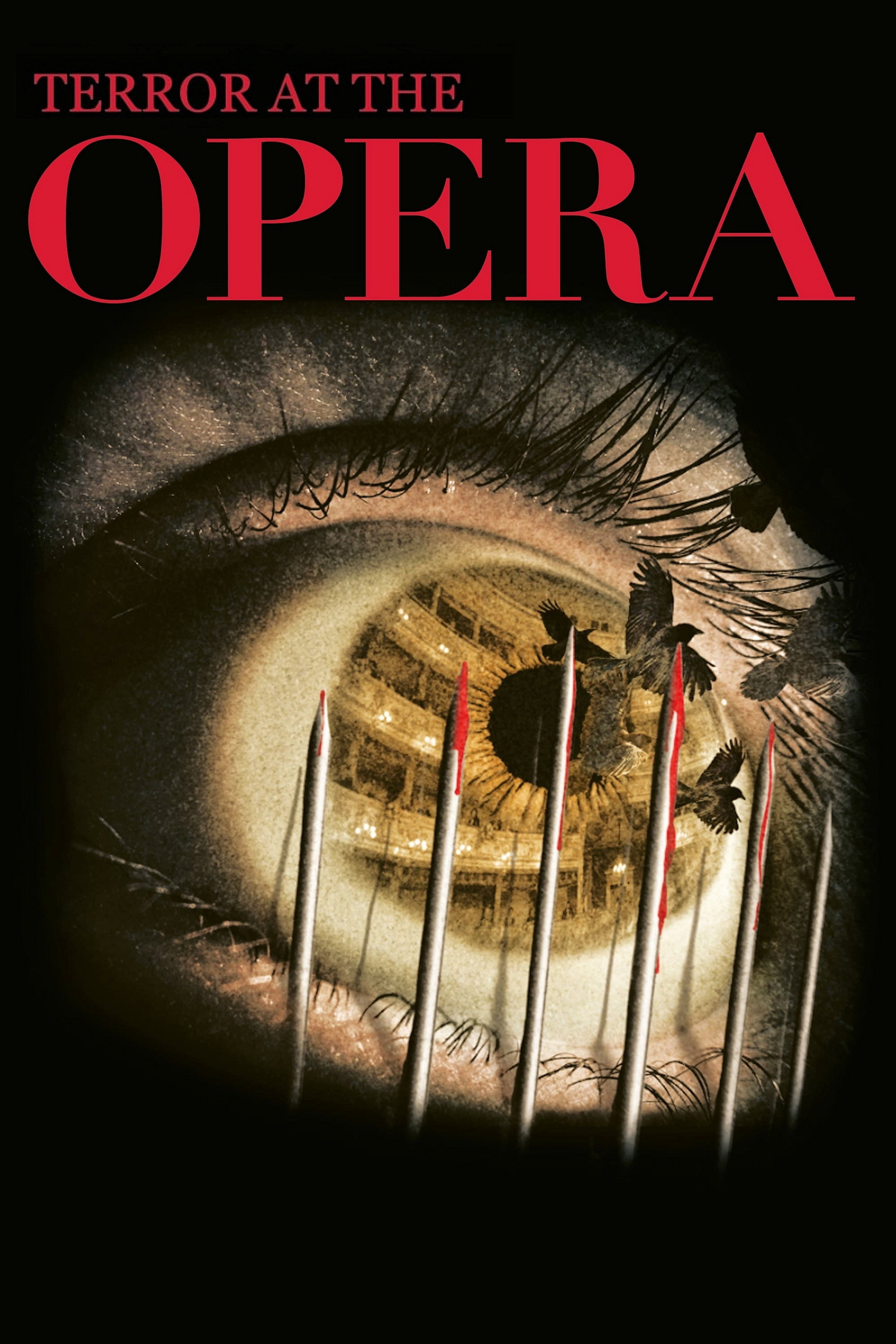
The curtain rises on a La Scala that reeks of sweat, cheap perfume, and congealed blood. Dario Argento, that cinematic butcher with a scalpel made of celluloid, decides the opera stage is the perfect operating table for his next autopsy. It was 1987, and the giallo was already gasping its last breaths between neon spasms and rusty knives, but the Italian maestro refused to let go of his favorite toy. Opera isn’t just a film; it’s a personal exorcism, a final desperate attempt to conjure the magic of Italian horror before Hollywood turned it into a digital theme park. Argento, who had already signed masterpieces like Suspiria and Deep Red, here faces his greatest enemy: self-indulgence. Because when a director falls too hard for his own style, the result is usually a funhouse mirror where genius and ridicule waltz in a macabre embrace. And oh, how they dance in this bloody opera, where every shot screams, ‘Look at me, I’m art!’ while the script whispers, *‘I’m just an excuse for the director to jerk off visually.’’
The project was born from Argento’s almost pathological obsession with the lyric theater— that world of histrionic divas and century-old curses straight out of a Hoffmann tale, snuff edition. The official synopsis talks of a young soprano, Betty, who inherits the lead role in Macbeth after an accident, but what really plays out on screen is the eternal drama of the artist selling their soul to the devil of showbiz. Franco Ferrini, Argento’s go-to screenwriter, constructs a plot that’s little more than a spider’s thread on which the director weaves his web of oneiric images. The problem isn’t the simplicity of the story—giallo was never a genre for deep scripts—but its clumsiness in trying to disguise as mystery what’s really just a parade of choreographed deaths with all the subtlety of an elephant in a china shop. Every murder seems designed to make the audience groan, ‘Not again!’ as if we’re trapped in a Scooby-Doo loop where the villain is always the butler in a plastic mask. But—oh surprise—in Argento’s cinema, even clichés have style. Or at least, that’s what we keep telling ourselves like a mantra as we watch a raven peck out a victim’s eyes in a close-up that lingers three seconds too long.
The industrial context of the era didn’t help. Italy, cradle of the spaghetti western and gothic horror, was no longer the country that birthed Mario Bava or Lucio Fulci. Italian genre cinema was drowning in its own blood, victim to piracy, lack of funding, and the invasion of American productions with budgets that made Opera look like a student short. Argento, aware his star was fading, decided to go all out: filming in La Scala, practical effects by Sergio Stivaletti (the same wizard behind Demons), and cinematography that reads like a cocktail of Suspiria and The Phantom of the Opera on an LSD trip. The result is a film that oscillates between the sublime and the ridiculous with the grace of a drunk tightrope walker. Because, let’s be honest, when the villain sports a trench coat straight out of a Blade Runner runway and sunglasses screaming ‘I’m an ‘80s psychopath!’, it’s hard to take the whole thing seriously. But Argento isn’t trying to be taken seriously. He wants to be admired. And damn it, he succeeds.
The shoot was a hell worthy of an Argento film. Cristina Marsillach, the poor soprano playing Betty, had to endure not just the demands of a director obsessed with impossible shots, but also the weight of starring in a film more interested in ravens than in her character. Rumors speak of a tyrannical Argento, fixated on details like the exact angle blood should splatter the stage or how birds should fly over victims. The crew suffered in silence as the Italian maestro forced them to repeat takes to exhaustion, convinced every frame had to be a Baroque painting. And damn it, he pulled it off. Opera is, above all, a visual feast, a banquet of saturated colors, elongated shadows, and compositions that seem lifted from a Caravaggio painting—if Caravaggio had access to a 35mm camera and a special effects budget. The problem is that when style devours substance, the viewer ends up dizzy, like someone who’s drunk too much wine at a dinner where the dishes are beautiful but inedible.
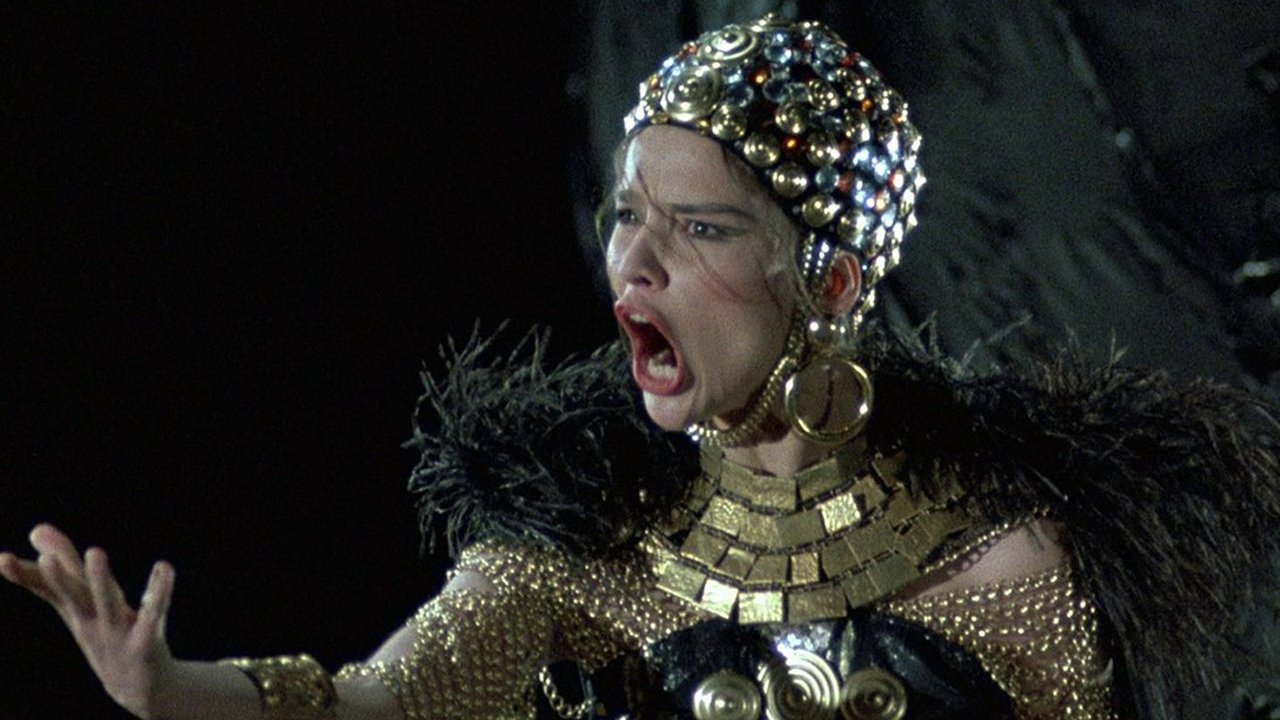
The direction: A three-ring circus with a single clown
If Dario Argento’s cinema were a perfume, it would smell of burnt incense, fresh blood, and a hint of cheap brilliantine. In Opera, the Italian director deploys his entire visual arsenal with the subtlety of a magician pulling rabbits from a hat... except the rabbits are corpses and the hat is stained with guts. The opening sequence, with Betty rehearsing in an empty theater while the camera glides between seats like a ghost, is pure cinematic poetry. Argento proves here why he’s the king of giallo: his command of space, lighting, and camera movement is so precise it feels like the film itself is breathing. But, like in a bad dream, this elegance is constantly interrupted by moments of almost childish clumsiness. Example? The villain, a serial killer with more swag than common sense, who seems plucked from a Miami Vice episode directed by a Halloween fanboy.
The problem isn’t that Argento overindulges in his style—after all, style is all he has left—but that he seems incapable of deciding whether he’s making a horror film or a psychological thriller. The result is an uncomfortable hybrid, like if Psycho and The Phantom of the Opera had a bastard child in an ‘80s disco. The opera scenes, filmed with almost reverential respect, clash with the murders, which seem designed by a teenager with access to a slaughterhouse. The subjective shot from a raven’s point of view—yes, you read that right—is so pretentious it borders on the ridiculous, yet so audacious you can’t help but admire it. Argento toys with the audience like a cat with a mouse: one moment he immerses you in a gothic nightmare, the next he hits you with a jump scare so predictable it could’ve been lifted from Scooby-Doo. But—and here’s the director’s genius—even his worst decisions have a perverse charm. Because, at the end of the day, who needs coherence when you can have a murder filmed from a bird’s perspective?
The performances: A chorus of divas and a tenor off-key
The cast of Opera is like a Verdi opera directed by Ed Wood: there are moments of grandeur, but also crashes so spectacular you wonder if the actors were reading their lines off a teleprompter written by a drunk. Cristina Marsillach, as Betty, is the quintessential virginal soprano: her performance oscillates between ethereal and expressionless, like a Barbie character trapped in a horror film. Marsillach has a magnetic presence, but her Betty is so flat she could’ve been plucked from a shampoo commercial. The problem isn’t her, but the script, which gives her so little to work with that her character ends up as little more than a mannequin bad things happen to. Ian Charleson, as Inspector Alan Santini, is the typical giallo cop: handsome, serious, and with a mustache straight out of a 1970s catalog. His chemistry with Marsillach is nonexistent, but let’s be honest—in an Argento film, chemistry between characters is as important as a libretto in a Godzilla movie.
The real show, however, is stolen by the villain, played by Urbano Barberini. Bless this actor, who seems convinced he’s starring in an ‘80s action flick, not an Italian giallo. His performance is so over-the-top it borders on camp, with a trench coat that looks made of dragon skin and sunglasses that could blind a vampire. Barberini doesn’t act; he poses. Every time he appears on screen, it’s as if someone injected testosterone directly into the celluloid. But—and here’s the fascinating part—his overacting works within the film’s tone. Opera isn’t a psychological drama; it’s a three-ring circus where the villain is the main clown, and Barberini plays him with a commitment worthy of an Oscar... if the Oscar were for Best Villain in a trash film.
The rest of the cast fulfills their role as cannon fodder. Daria Nicolodi, muse and ex-wife of Argento, has a cameo so brief it feels like a nod to her glorious past. Coralina Cataldi-Tassoni, as Betty’s friend, is the typical dumb blonde of giallo, but with a charisma that makes her death more memorable than some main characters’. In short, the cast of Opera is like an opera chorus: some sing well, others are off-key, but together they create a symphony of the absurd that, against all odds, works.
The technical department: A feast for the senses (and a headache)
If cinema were gastronomy, Opera would be a tasting menu by Ferran Adrià: every dish is a unique sensory experience, but by the end of the night you wonder if it was worth it. Ronnie Taylor’s cinematography is, without a doubt, the main course. Taylor, who had already worked with Argento on Phenomena, turns every frame into a Baroque painting where light and shadow dance a macabre tango. The shots of La Scala, bathed in reds, blues, and golds, are so beautiful they make you forget you’re watching a horror film, not a documentary on the decadence of high culture. But, as with any banquet, there are dishes that overstay their welcome. Sergio Stivaletti’s special effects are a mix of the sublime and the laughable. The murders involving ravens—yes, those damned ravens again—are so exaggerated they seem lifted from a Tom and Jerry episode, but there are moments, like the scene where a victim is stabbed while the camera circles them, that are pure cinematic magic.
The editing, meanwhile, is as uneven as the film’s rhythm. Some sequences flow with the elegance of a Viennese waltz, like the murder in the empty theater, but others seem edited by someone who’s had too much espresso. The soundtrack, composed by Claudio Simonetti and Bill Wyman (yes, the Rolling Stones bassist), is a collage of ‘80s synthesizers, operatic choirs, and guitar riffs that sound like The Cure scoring an Italian horror film. It’s pretentious, exaggerated, and sometimes downright ridiculous, but it’s also so catchy you’ll find yourself humming it as you leave the theater. Or, in this case, as you close the browser tab.
The production design and costumes are another highlight. La Scala, with its red velvet seats and chandeliers, is the perfect stage for a film obsessed with the idea that art is as dangerous as it is beautiful. The costumes, especially the villain’s, are a mix of ‘80s fashion and giallo aesthetics, with long trench coats, leather gloves, and sunglasses designed to blind victims before killing them. But, as with everything else, there are moments where the excess of style suffocates the substance. Betty’s apartment, for example, looks like it was plucked from an IKEA catalog directed by David Lynch, with white furniture, red curtains, and an overall vibe that someone tried to decorate a horror set with the leftovers from a Dynasty episode.
The best
- Ronnie Taylor’s cinematography: A visual feast that turns every frame into a Baroque painting. The shots of La Scala bathed in reds and golds are pure cinematic poetry.
- Urbano Barberini’s villain: A performance so over-the-top it borders on camp, but it works perfectly within the film’s tone.
- The soundtrack: A mix of ‘80s synthesizers and operatic choirs that’s as ridiculous as it is catchy. Claudio Simonetti and Bill Wyman deliver an unforgettable score.
- The production design: La Scala is the perfect stage for this bloody opera, with its blend of elegance and decadence.
The worst
- Franco Ferrini’s script: A flimsy excuse for Argento to show off visually. The plot is predictable, the dialogue flat, and the characters little more than mannequins.
- Cristina Marsillach’s performance: Betty is so expressionless she could be a storefront mannequin. Marsillach has presence, but the script gives her nothing to work with.
- The uneven pacing: The film oscillates between moments of cinematic elegance and sequences so clumsy they seem edited by an amateur.
- Argento’s self-indulgence: The director seems more interested in impressing us with his style than telling a coherent story. The result is a film that sometimes borders on self-parody.
The Verdict of Claqueta Ácida
Opera is like a Molotov cocktail served in a Murano glass: beautiful, dangerous, and with an aftertaste of pretension that doesn’t always sit well. Dario Argento delivers a film that’s equal parts masterpiece and self-parody, a giallo that wavers between the sublime and the ridiculous with the grace of a drunk tightrope walker. It’s not his best film—that honor still belongs to Suspiria—but it’s one of his most fascinating, a final burst of genius before the director lost himself in the labyrinth of his own obsession with style. Recommended? Only if you like horror with more style than substance, and if you don’t mind getting slapped with beauty while being stabbed in the back. Because, in the end, in Argento’s cinema, elegance always comes with blood. And in Opera, the blood flows in torrents. 💀
🎬 Tráiler Oficial
Abrir en YouTube
Ending Explained: Opera of Blood
Ficha de Daños Colaterales en Sala
Certificado de impacto psicofísico emitido por Valeria Von Doom
3 amagos en el tramo intermedio; pestañeo pesado en las transiciones más innecesarias.
Minuto 37 y minuto 71 (comprobando cuánto quedaba de suplicio).
1 espresso para no dejarse vencer por la mediocridad cómoda.
"A mitad del segundo acto cuando la subtrama secundaria empezó a pesar más de lo que aportaba."
💬 El Veredicto de la Comunidad
¿Qué te ha parecido la película? Deja tu nota de 0 a 10 para contrastarla con el análisis de la redacción.
Aún no has votado
📢 ¿Te ha gustado el ácido?
Comparte esta crítica con tus amigos cinéfilos o desata la polémica en redes.
⚡ THE CINEMATIC VENOM YOUR INBOX CRAVES
No sugarcoated ratings, no corporate fluff. Subscribe for our uncensored weekly analysis or join the private Telegram for press previews, poll clashes, and instant alerts.
Alertas de estrenos en 1 segundo, encuestas en caliente y audios al salir de pases de prensa.
Recibe la dosis semanal en tu mail + regalo inmediato del PDF con 50 joyas ocultas de culto.
Related Reviews
Recommended autopsies for demanding film buffs.
 🔥 Fusión Nuclear9.0
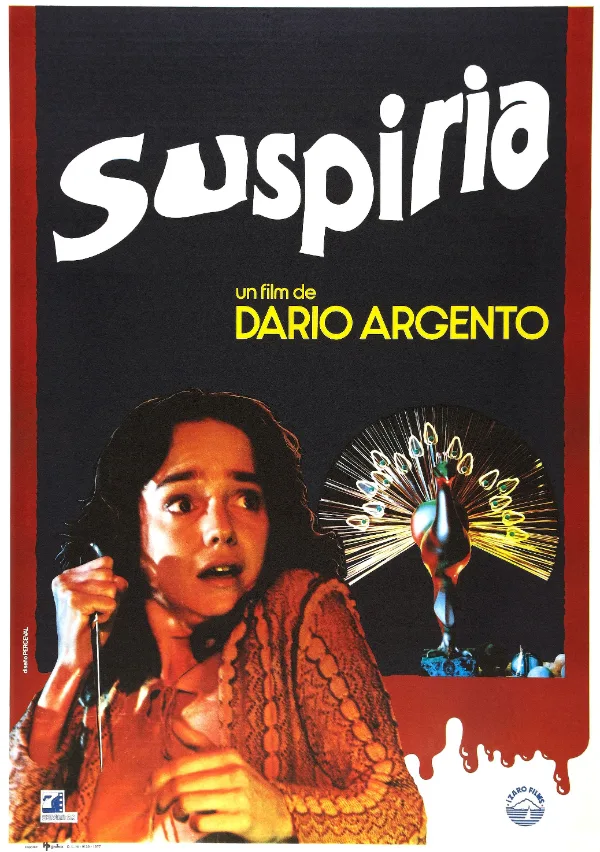
*Suspiria: Argento’s Ballet of Blood and Technicolor Nightmares*
⚡Del mismo director (Dario Argento): analiza la evolución o degradación de su estilo.
Dario Argento turns horror into a psychedelic light show drenched in gore. Claqueta Ácida dissects his masterpiece: *art or a technicolor nightmare?*
 🔥 Fusión Nuclear9.5
*2001: A Space Odyssey – A Monkey, a Monolith, and Two Hours of Cosmic Pretentiousness*
⚡Afinidad temática directa en atmósfera, estilo y fijaciones visuales.
We dissect Stanley Kubrick’s magnum opus. A visual feast of minimalism and space hypnosis that cemented "serious" sci-fi—and bored half of humanity to tears.
 🔥 Fusión Nuclear9.3
2001: A Space Odyssey — The Day Kubrick Left Us Speechless (and Oxygenless)
⚡Afinidad temática directa en atmósfera, estilo y fijaciones visuales.
Kubrick turned science fiction into pure art: 149 minutes of eloquent silence, bone-wielding apes, and a psychopathic computer. Masterpiece or pretentious fraud? Here’s the verdict.
Editorial Ecosystem
Cinephile connections, archive interviews and related analyses.
🎞️ In Claqueta Cinematheque1
💬 Debate Cinéfilo & Autopsia de Lectores
0 veredictos¿Discrepas con nuestra nota? ¿Es una obra maestra o veneno puro? Deja tu veredicto abajo sin necesidad de registro.

Aún nadie ha dejado su veredicto para esta película.
Sé el primero en clavarle el colmillo rellenando el formulario de arriba.