The Americans — The Show That Will Make You Question Loyalty (and Your Sanity)
A scathing, satirical takedown of The Americans—because nothing says "family drama" like Soviet sleeper agents gaslighting their neighbors.

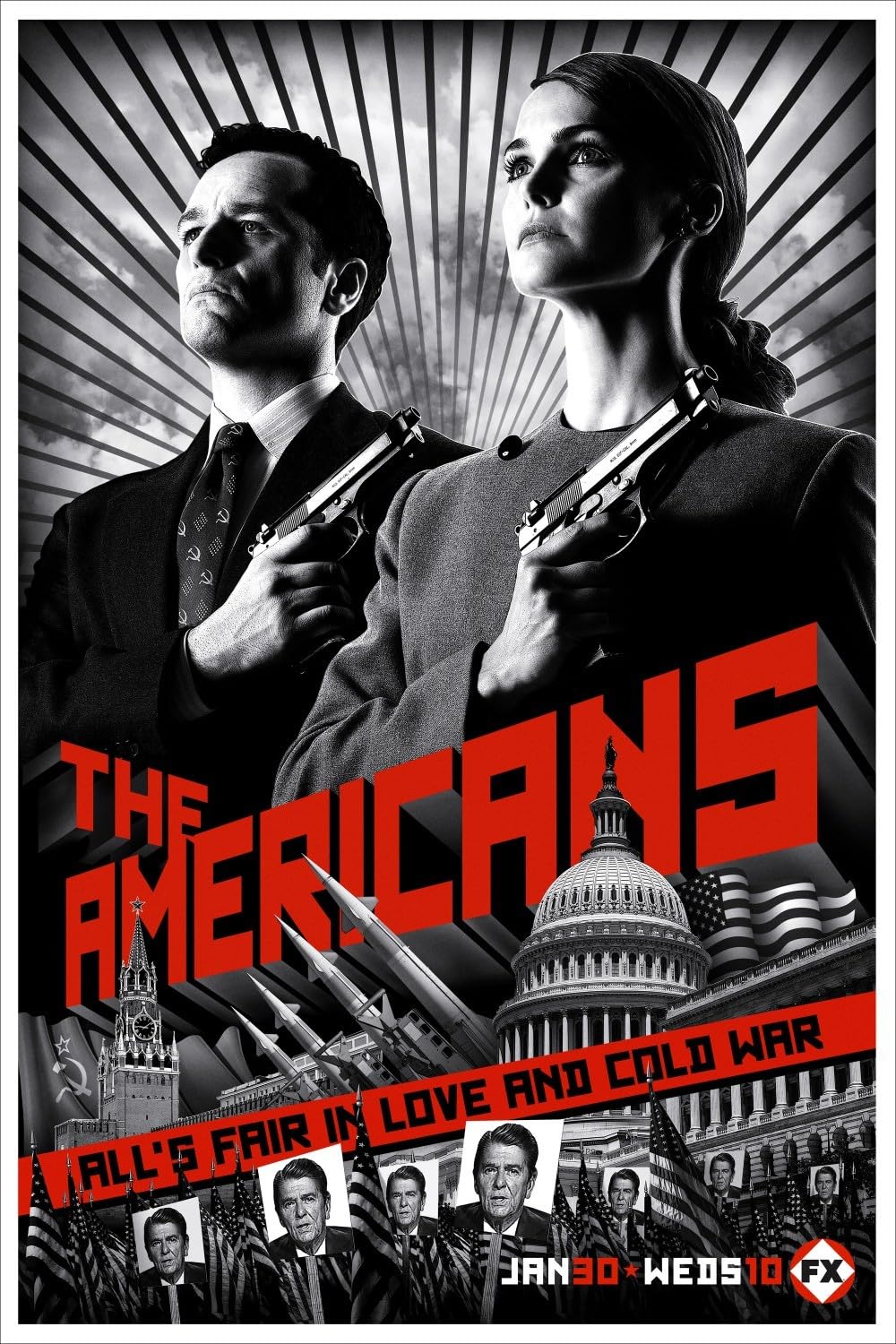

In a world where TV series have become the opium of the masses—hooked on cheap cliffhangers, predictable plot twists, and characters flatter than a Netflix script written by an algorithm—The Americans emerges as an oasis of sophistication in the wasteland of television mediocrity. This isn’t just a show; it’s an emotional autopsy disguised as a spy thriller, a reminder that during the Cold War, the real battle wasn’t fought in Kremlin offices or CIA briefings, but in bedrooms, supermarkets, and gas stations across American suburbia. Here, loyalty isn’t a virtue—it’s a currency that depreciates with every lie; betrayal isn’t an act—it’s a lifestyle; and morality isn’t a code—it’s a luxury no one can afford.
Joe Weisberg, a former CIA agent turned showrunner—because what better way to whitewash your past than by fictionalizing it?—doesn’t just helm this masterpiece; he bleeds it dry with surgical precision. Weisberg understands something most creators forget: espionage isn’t James Bond in Armani suits with shaken martinis—it’s boredom punctuated by terror. The Jennings aren’t heroes or villains; they’re bureaucrats of chaos, fear’s paper-pushers who spend more time filing fake reports and faking marital orgasms than saving the world. And that, dear viewers, is what makes The Americans so brutally real.
finalExplicado_en: "The series finale sees Elizabeth and Philip, burned out and exposed, abandon their mission and flee back to Russia with their daughter Paige, who chooses to stay behind in America. Stan Beeman, their neighbor and friend, lets them go in a gut-wrenching act of conflicted loyalty. The climax is quiet, devastating, and anti-climactic: no explosions, just two spies realizing their entire adult lives were built on a lie that devoured their family. Symbolically, the ending means loyalty is a fiction. Country, ideology, marriage, parenthood; all collapse under the weight of time and truth. The Americans ends as a tragedy of self-erasure: the spies win nothing except the hollow knowledge that home was never where they thought it was."
The Jennings Marriage: A Spy Romance (Or How to Fake Love While Destroying a Country)
Keri Russell and Matthew Rhys don’t play Philip and Elizabeth Jennings—they embody them with the ferocity of people who know every scene could be their last. Russell, who went from ’90s princess Felicity to a Soviet spy with more layers than a poisoned onion, delivers an Elizabeth who’s cold as steel yet fragile as glass. Her character is a killing machine with a moral code more twisted than an IKEA instruction manual, but Russell somehow makes you pity her somewhere between a cold-blooded murder and sobbing over the daughter who doesn’t know she’s a lie. It’s no small feat to humanize someone who strangles an informant with a phone cord while whispering "I’m sorry" in Russian, but Russell pulls it off with a naturalness that’s downright terrifying.
Rhys, meanwhile, is the series’ bleeding heart, a Philip Jennings who oscillates between Catholic guilt and Communist devotion with the grace of a drunk tightrope walker. His performance is a masterclass in emotional restraint: every micro-expression, every awkward pause, every sideways glance at his wife while plotting their next hit is calibrated to convey an uncomfortable truth—Philip loves Elizabeth, but he’s also terrified of her. And that fear, that underlying tension, is what makes their relationship the series’ central axis. This isn’t a romance; it’s a Cold War within the Cold War, where love is just another tool of manipulation.
Stan Beeman: The Neighbor You Should’ve Never Invited to Your BBQ
If the Jennings are the poison, Stan Beeman (Noah Emmerich) is the antidote you didn’t know you needed. Emmerich, an actor who usually fades into the background (does anyone remember his bit part in The Truman Show?), steals every scene here with a mix of charm and pathos that makes him the show’s most fascinating character. Stan is the FBI agent living next door to the Jennings—the friendly neighbor who lends you his lawnmower while plotting your arrest. He’s likable, clumsy, and deeply human, but he’s also the man who, unknowingly, is about to destroy the lives of the only friends he has.
What’s brilliant about Stan is that he’s no hero. He’s just a regular guy with a mortgage, a crumbling marriage, and an obsession with catching "the bad guys" that borders on the pathological. Emmerich plays him with a disarming vulnerability, making the audience hate him, pity him, and at some point, scream at the screen for him to wake the hell up. His relationship with Philip—a genuine friendship built on lies—is one of the series’ most gut-wrenching arcs. Because in the end, Stan isn’t the Jennings’ enemy; he’s their mirror, a reminder that in this spy game, everyone’s a pawn—even those who think they’re winning.
The Cinematography: When Color Becomes a Character
Richard Rutkowski, the director of photography, doesn’t just light the show—he poisons it with a color palette that’s pure visual psychology. The ’80s in The Americans aren’t the ’80s of Stranger Things—all neon and pop nostalgia—but a decade drenched in earthy tones, military greens, and icy blues, as if the whole world were covered in a film of mold and paranoia. Indoor scenes are bathed in a sickly yellow light, like they’re being filtered through a nicotine haze, while the outdoors—those picture-perfect suburbs—have a clinical coldness, as if even the trees are spying on you.
The use of handheld camerawork in action scenes is another win: no polished choreography or CGI, just controlled chaos, like you’re watching a declassified KGB documentary. And then there are the close-ups—those lingering shots of Philip’s hands adjusting a hidden mic or Elizabeth’s lips whispering an assassination order—that force you to look at what you don’t want to see. Rutkowski doesn’t just capture the era; he dissects it, showing that beneath the big hair and polyester suits, there’s a world of blood, sweat, and secrets.
The Pacing: When Suspense is a Marathon, Not a Sprint
This is where The Americans parts ways with conventional thrillers and ventures into psychological torture territory. Weisberg isn’t in a hurry. The show moves with the patience of a sniper, piling tension scene after scene until the viewer is so on edge they jump at the sound of a phone ringing. There are no jump scares or car chases; the real horror lies in the uncomfortable silences, the seemingly innocent conversations laced with double meanings, the way a simple "How was your day, honey?" can be a veiled threat.
That said, there are moments when the show lingers too long. Some story arcs, like that of teenage daughter Paige (Holly Taylor), crawl at a pace that makes you wonder if Weisberg dozed off at the keyboard. Paige is an interesting character—a girl who discovers her parents are spies and must decide whether to follow in their footsteps or betray them—but her development sometimes feels forced, as if the show isn’t quite sure what to do with her. Thankfully, Taylor gives her enough depth to avoid being a mere plot device, but there are episodes where her presence drags the narrative instead of enriching it.
The Soundtrack: The Silence That Screams
In an era where shows abuse epic scores to manipulate emotions (cough Stranger Things cough), The Americans opts for a minimalist, unsettling approach. Nathan Barr’s original music is sparse but effective, with themes that sound like a heartbeat on the verge of stopping. But the most haunting choice is the use of silence. There are scenes where the only sounds are the tick-tock of a clock, the creak of a wooden floor, or the ragged breathing of a character—and those moments are more terrifying than any Hans Zimmer score.
When the show does use diegetic music—like the Jennings blasting Tainted Love by Soft Cell or Every Breath You Take by The Police—it does so with brutal irony. These songs, which were ’80s anthems of love and rebellion, now sound like veiled threats, a reminder that in The Americans’ world, even the most innocent music is a trap.
Cinematic Comparisons: When Espionage Becomes Art
The Americans isn’t Homeland with a bigger budget or 24 without the filler. It’s the lovechild of Tinker Tailor Soldier Spy and Breaking Bad, a show that takes the best of classic spy cinema—moral ambiguity, psychological tension—and blends it with the raw family drama of a Vince Gilligan series. If The Sopranos proved mobsters could be complex characters, The Americans does the same for spies: it humanizes them to the point where the audience wonders if they’re rooting for the wrong side.
There are also echoes of ’70s cinema, particularly in its gritty realism and rejection of traditional heroes. The Jennings are closer to the characters of The Parallax View or Three Days of the Condor than those of Mission: Impossible. No futuristic gadgets, no impossible missions—just two people trapped in a game they can’t win, where every victory is temporary and every defeat is permanent.
The best
- Russell and Rhys’ toxic chemistry: A marriage that makes you question whether love is real or just another covert operation.
- Stan Beeman, the neighbor who doesn’t know he’s the hero of his own tragedy: Emmerich turns a supporting character into the show’s soul.
The worst
- Paige Jennings, the teen who discovers her parents are spies and no one knows what to do with her: A storyline that moves at the speed of a hungover snail.
- Episodes that drown in their own atmosphere: When suspense becomes self-indulgence, even the most patient viewer checks the clock.
The Verdict of Claqueta Ácida (8.5/10)
The Americans isn’t just a show—it’s a masochistic experience disguised as entertainment. Weisberg and his team have crafted a spy thriller that defies genre conventions, where the real enemy isn’t the KGB or the CIA, but loneliness, guilt, and the impossibility of escaping oneself. With performances that will haunt your dreams, cinematography that turns the ’80s into a nightmare landscape, and pacing that keeps you on the brink of a nervous breakdown, this series is as close as television gets to art. Just don’t watch it if you’re looking for easy answers or happy endings: in the Jennings’ world, the only victory is surviving another day. And even that’s not guaranteed. 🔪🎬🎬 Tráiler Oficial
Abrir en YouTube
Ending Explained: The Americans
Ficha de Daños Colaterales en Sala
Certificado de impacto psicofísico emitido por Dr. Cinismo
Cero bostezos. Pupilas dilatadas y tensión mandibular constante.
El móvil permaneció en el bolsillo donde debía estar.
Ninguna. Guarda el café para la sesión siguiente.
"No hubo. La coherencia se mantuvo hasta el último fotograma."
💬 El Veredicto de la Comunidad
¿Qué te ha parecido la película? Deja tu nota de 0 a 10 para contrastarla con el análisis de la redacción.
Aún no has votado
📢 ¿Te ha gustado el ácido?
Comparte esta crítica con tus amigos cinéfilos o desata la polémica en redes.
⚡ THE CINEMATIC VENOM YOUR INBOX CRAVES
No sugarcoated ratings, no corporate fluff. Subscribe for our uncensored weekly analysis or join the private Telegram for press previews, poll clashes, and instant alerts.
Alertas de estrenos en 1 segundo, encuestas en caliente y audios al salir de pases de prensa.
Recibe la dosis semanal en tu mail + regalo inmediato del PDF con 50 joyas ocultas de culto.
Related Reviews
Recommended autopsies for demanding film buffs.
 🔥 Fusión Nuclear9.0
*Six Feet Under: When Family Drama Smells Like a Decadent Corpse*
⚡Consagradas en el olimpo transgresor con 🔥 Fusión Nuclear.
HBO served us a feast of family dysfunction, pitch-black sarcasm, and metaphorical corpses. Alan Ball dug a grave so deep we still haven’t climbed out.
 🔥 Fusión Nuclear8.5
*Animal Kingdom: A Descent into Hell (Where Family is the Devil’s Playground)*
⚡Consagradas en el olimpo transgresor con 🔥 Fusión Nuclear.
A visceral takedown of *Animal Kingdom*, where "family values" take on a whole new (and deeply criminal) meaning.
 🔥 Fusión Nuclear8.5
**Bosch: The Noir Amazon Sold as "Premium" (And, Shockingly, Isn’t Corporate Trash)**
⚡Consagradas en el olimpo transgresor con 🔥 Fusión Nuclear.
A scorching review of *Bosch*, the series that leaves you craving more—because, against all odds, it actually delivers.
Editorial Ecosystem
Cinephile connections, archive interviews and related analyses.
💬 Debate Cinéfilo & Autopsia de Lectores
0 veredictos¿Discrepas con nuestra nota? ¿Es una obra maestra o veneno puro? Deja tu veredicto abajo sin necesidad de registro.

Aún nadie ha dejado su veredicto para esta película.
Sé el primero en clavarle el colmillo rellenando el formulario de arriba.