"Twin Peaks — The Logical Dream of a Place That Never Existed (Or How David Lynch Turned Boredom Into Art)"
David Lynch and Mark Frost gut the American Dream in this surreal nightmare where coffee tastes like blood and pies hide secrets darker than hell itself.

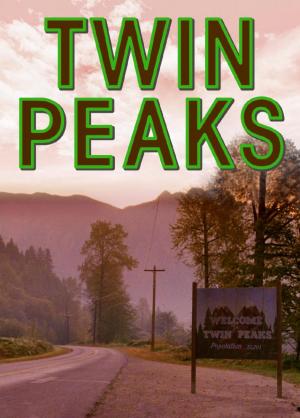


The celluloid flickers to life with an electric hum, as if the film itself knows it’s about to unleash something that neither time nor common sense can contain. Twin Peaks wasn’t born in 1990—it gestated in the rotting womb of the 1980s, that decade of shiny plastic and toothpaste-ad smiles, where the American Dream choked on its own vomit of cocaine and forced optimism. David Lynch, that absurdist magician who looks like an accountant who’s seen too much, and Mark Frost, a screenwriter hardened by conventional TV, teamed up to create what should have been a simple whodunit and ended up as a collective exorcism. It wasn’t a TV show; it was a shattered mirror in which America gazed and failed to recognize its own face.
The project emerged when Lynch, fresh off the commercial flop of Dune (1984)—a film so ambitious it ended up devouring itself—was searching for a refuge where he could play without studio executives clipping his wings. Frost, meanwhile, came from writing Hill Street Blues, a series that had proven television could be adult without losing its narrative edge. together-la-cueva-de-los-espejos-rotos" class="text-amber-400 font-black hover:text-amber-300 transition underline decoration-amber-500/40 hover:decoration-amber-300" title="[6.5/10 ⚡ Ácido Cítrico] Lee nuestra autopsia de «Together»" data-acid-interlink="together-la-cueva-de-los-espejos-rotos">Together, they decided the murder of a beauty queen in a forgotten Washington town would be the perfect excuse to dissect the rot beneath the veneer of small-town America. And dissect they did.
But Twin Peaks wasn’t just a product of its time—it was a prophecy. In 1990, the world had no idea the internet would turn it into a global village where everyone spies on everyone, secrets are currency, and paranoia is the new universal language. Lynch and Frost, perhaps unwittingly, created the first postmodern thriller, a work where magical realism wasn’t decoration but the only possible language to talk about loneliness, desire, and guilt. And they did it on a shoestring budget, with actors who looked like they’d been plucked from a soap opera casting call and a premise that, in less daring hands, would’ve ended up as an extended episode of Matlock. But here’s the catch: Twin Peaks wasn’t a show about a murder. It was a show about silence. About that awkward moment when everyone knows something stinks but no one dares to open the fridge. About the hypocrisy of a town where everyone knows each other but no one understands a damn thing. About the duality of Laura Palmer, that perfect girl who was, at the same time, the victim and the executioner of her own life. And above all, it was a show about fear—not the fear of monsters, but the fear of what lurks inside us when we turn off the lights and are left alone with our thoughts. Because, at the end of the day, what’s more terrifying: a serial killer or the idea that we all have one inside us?
The filming of Twin Peaks was a nightmare of unbridled creativity. Lynch, obsessed with details, demanded impossible shots, like the scene where Agent Cooper dreams of a dwarf dancing in a red theater while a woman with a black eye whispers riddles in an invented language. The actors, many of them strangers to surrealism, suddenly found themselves reciting lines that sounded like they’d been written during a bad LSD trip. Poor Kyle MacLachlan, as Agent Cooper, had to learn to drink coffee like it was a sacred ritual, talk to his tape recorder like it was a lover, and stare into the camera with that mix of fascination and terror only Lynch can evoke. Then there was the supporting cast—a circus of marvelous freaks: from Sheriff Truman, a man so honest he seemed plucked from a John Ford western, to Bobby Briggs, a teenager with the brain of a mosquito and the charisma of an encyclopedia salesman. Every character was an exaggerated caricature, but also an uncomfortable truth about the human condition. Because in Twin Peaks, no one is just one thing: the good guy is a little bad, the bad guy is a little good, and the village idiot might just be the smartest one of all.
The series aired on ABC, a network that had no idea what to do with it. Executives wanted answers—they wanted Laura Palmer’s mystery solved quickly, they wanted viewers to stop feeling so lost. But Lynch and Frost refused. To them, the mystery wasn’t the wrapping; it was the gift. And so, Twin Peaks became a cultural phenomenon, a cult object, the definitive proof that television could be art. Or at least, it could be as strange, as beautiful, and as disturbing as life itself.
The Direction: Or How David Lynch Turned Chaos Into a Visual Symphony
If there’s one thing that defines Twin Peaks, it’s its ability to feel like a dream and a nightmare at the same time. Lynch doesn’t direct scenes; he choreographs them like numbers in a surreal musical where the actors don’t know the lyrics. Every shot is loaded with symbolism, every frame a statement of intent. The camera moves with the slowness of a predator stalking its prey, but also with the delicacy of a lover caressing their beloved’s skin. And then there’s the color: those blood-reds, those electric blues, those sickly greens that seem plucked from a Francis Bacon painting. Lynch doesn’t film a town; he films a state of mind. A place where trees whisper, cherry pies taste like nostalgia, and evil isn’t an abstraction but a physical presence lurking in dark corners.The dream sequence in Episode 2 is a perfect example: a red theater, a dwarf speaking backward, a woman who looks like she stepped out of a Dalí painting. There’s no logic, no explanation, but there’s an emotional truth that hits the viewer like a gut punch. Because Twin Peaks isn’t watched—it’s felt. And that, dear cinephiles, is what separates art from mere craft.
The series’ pacing is another of its great strengths. Lynch and Frost play with time like it’s putty: sometimes the plot crawls at a glacial pace, like when Cooper interrogates the townsfolk and every answer is more cryptic than the last; other times, the action accelerates into a whirlwind of revelations and impossible twists. But even in its slowest moments, Twin Peaks is never boring. Why? Because every scene is charged with tension, that sense that something terrible (or wonderful) is about to happen. And when it does, the viewer can’t help but feel they’ve witnessed something unique, something that could only happen in this cursed town.
The series also shines in its use of sound: from the electric hum that accompanies the Black Lodge’s appearances to Angelo Badalamenti’s score, a soundtrack that sounds like it was composed by the demons of hell themselves. Every note, every silence, is calculated to create an oppressive, hypnotic, almost religious atmosphere.
The Cast: A Troupe of Brilliant Freaks (Or How to Turn Excess Into Virtue)
The cast of Twin Peaks is one of those rare occurrences that only happens once in a lifetime: a group of actors who, individually, might be forgettable, but together create something magical. Kyle MacLachlan is the heart of the series, the anchor that lets us navigate this sea of madness. His Agent Cooper is a fascinating character: a smart, educated, almost naive man in his goodness, but with an obsession for the occult that makes him the perfect guide for this descent into hell. MacLachlan conveys that mix of fascination and terror Cooper feels toward Twin Peaks’ mysteries with a naturalness that borders on the supernatural.But where the series truly shines is in its supporting cast—a circus of characters so exaggerated they seem plucked from a comic book, yet with a humanity that makes them unforgettable. There’s Sherilyn Fenn as Audrey Horne, the rebellious teenager who’s both the sexiest and most dangerous girl in town. There’s Jack Nance as Pete Martell, the man who finds Laura Palmer’s body and delivers one of TV’s most iconic lines: «She’s dead… wrapped in plastic.» And then there’s Frank Silva, the actor who played BOB, the demon haunting Twin Peaks’ woods. Silva wasn’t a professional actor—he was the show’s set decorator, and Lynch saw his reflection in a mirror during a shoot and decided he had to be the villain. The result is one of the most terrifying characters in TV history: a man with long, greasy hair, a grin from ear to ear, and eyes that seem to stare directly into the viewer’s soul. BOB isn’t a monster; he’s the embodiment of pure evil, and his presence in the series is so disturbing that, decades later, he still gives people nightmares.
But if there’s one character who defines the spirit of Twin Peaks, it’s Leland Palmer, Laura’s father. Played by Ray Wise, Leland is a broken man, a being tormented by guilt and pain who oscillates between tenderness and madness with unsettling ease. Wise conveys that duality with an intensity that borders on unbearable: one moment, Leland is a father shattered by his daughter’s death; the next, he’s a monster dancing with a smile on his lips as «The Pink Room» plays. It’s a performance that hurts, that unsettles, that leaves you breathless. Because in the end, Twin Peaks isn’t a show about good and evil—it’s a show about ambiguity, about the idea that we all carry a monster inside us and that, sometimes, that monster is the only thing keeping us alive.
The Technical Aspects: When the Devil Is in the Details
If there’s one thing that elevates Twin Peaks above the rest of its era’s TV shows, it’s its technical prowess. The cinematography, by Ron Garcia and Peter Deming, is a masterclass in light and shadow. The shots are loaded with symbolism: dark trees silhouetted against a gray sky, claustrophobic interiors where light seems to filter in from another world, close-ups of characters’ faces so intimate you can see every wrinkle, every bead of sweat, every lie they’re hiding. The series also stands out for its use of color: intense reds that evoke blood, cold blues that suggest sadness, sickly greens plucked from a fever dream. Every scene is carefully composed to create a unique atmosphere, a sense that you’re watching something that doesn’t belong to this world.The production design is another of the series’ great successes. Twin Peaks is a town that looks like it’s been plucked from a fairy tale, but with a sinister twist: the houses are too big, the forests too dark, the furniture too outdated. Everything seems designed to create discomfort, as if you’re in a place that isn’t quite real. And then there’s the Black Lodge, that surreal space where time doesn’t exist and demons dance to music only they can hear. The Black Lodge isn’t just a setting—it’s a character, a place where logic breaks down and the impossible becomes possible. It’s the series’ dark heart, the place where all mysteries are resolved and, at the same time, become even more incomprehensible.
Angelo Badalamenti’s music is, without a doubt, one of Twin Peaks’ most iconic elements. Badalamenti, a composer who had previously worked on B-movies, created a soundtrack that sounds like it came from a dream: ethereal melodies, synthesizers that sound like voices from beyond, guitars that weep like lost souls. The music doesn’t just accompany the series—it defines it. From the main theme, with its mix of nostalgia and terror, to diegetic songs like «Falling» or «The Pink Room», Badalamenti’s music is an essential part of the Twin Peaks experience. And then there’s the silence: those moments when the series falls mute, when all you hear is the hum of electricity or the rustle of leaves, and the viewer feels like the world has stopped. It’s in those moments that Twin Peaks becomes more than a show—it becomes a sensory experience, a journey into the heart of darkness.
The Best:
- David Lynch’s Direction: A master of surrealism who turns every scene into a disturbing work of art. Lynch doesn’t film a town; he films a state of mind, a place where trees whisper and evil has a human shape.
- Agent Dale Cooper (Kyle MacLachlan): A character so fascinating you’ll want to move to Twin Peaks just to have coffee with him. MacLachlan conveys that mix of intelligence, goodness, and obsession with the occult that defines Cooper.
- Angelo Badalamenti’s Score: A symphony of synthesizers and guitars that sounds like it was composed by the demons of hell themselves. Every note is calculated to create a hypnotic, almost religious atmosphere.
- The Supporting Cast: A circus of marvelous freaks, from Audrey Horne to BOB, who turn every scene into an unforgettable spectacle. Each character is an exaggerated caricature, but also an uncomfortable truth about the human condition.
- Production Design: Twin Peaks is a town that looks like it’s been plucked from a fairy tale, but with a sinister twist. Everything is designed to create discomfort, as if you’re in a place that isn’t quite real.
The Worst:
- Uneven Pacing: At times, the series crawls at a glacial pace, especially in the second season, where filler and unnecessary subplots weaken the main storyline.
- The Resolution of Laura Palmer’s Mystery: While the killer’s reveal is shocking, the way the mystery is resolved leaves a bitter aftertaste. Some viewers might feel the show toyed with them for too long.
- Flat Characters: Some side characters, like James Hurley or Donna Hayward, are so one-dimensional they seem plucked from a cheap soap opera. Fortunately, the rest of the cast more than makes up for these flaws.
- The Second Season: After resolving Laura Palmer’s mystery, the series loses some of its magic and dives into absurd plots (like the Windom Earle arc) that don’t always work. It’s as if Lynch and Frost didn’t know what to do with their own creation.
- The Finale: No spoilers, but let’s just say the final episode is so surreal it leaves a bittersweet taste. Some viewers might feel cheated; others, fascinated. It depends on how much you enjoy being left with more questions than answers.
The Verdict of Claqueta Ácida:
Twin Peaks isn’t a TV show—it’s an exorcism. A journey into the heart of darkness disguised as a small-town soap opera. Lynch and Frost created a masterpiece of televisual surrealism, a place where cherry pies taste like blood and demons dance to music only they can hear. It’s flawed, uneven, and sometimes frustrating, but it’s also one of the most unique and disturbing experiences television has ever offered. If you dare to enter Twin Peaks, prepare to leave unscathed. Because this town doesn’t forgive. This town changes you. And when you think you’ve understood something, the show will remind you that you haven’t understood a damn thing. Welcome to hell. The coffee’s on. ☠️🎬 Tráiler Oficial
Abrir en YouTube
Ending Explained: "Twin Peaks
Ficha de Daños Colaterales en Sala
Certificado de impacto psicofísico emitido por Odin Lagbert
Cero. La pantalla absorbió cada segundo de atención disponible.
El móvil permaneció en el bolsillo donde debía estar.
Ninguna: la adrenalina cinematográfica es suficiente.
"No aplica. La obra se sostiene sola."
💬 El Veredicto de la Comunidad
¿Qué te ha parecido la película? Deja tu nota de 0 a 10 para contrastarla con el análisis de la redacción.
Aún no has votado
📢 ¿Te ha gustado el ácido?
Comparte esta crítica con tus amigos cinéfilos o desata la polémica en redes.
⚡ THE CINEMATIC VENOM YOUR INBOX CRAVES
No sugarcoated ratings, no corporate fluff. Subscribe for our uncensored weekly analysis or join the private Telegram for press previews, poll clashes, and instant alerts.
Alertas de estrenos en 1 segundo, encuestas en caliente y audios al salir de pases de prensa.
Recibe la dosis semanal en tu mail + regalo inmediato del PDF con 50 joyas ocultas de culto.
Related Reviews
Recommended autopsies for demanding film buffs.
 🔥 Fusión Nuclear9.0
*Six Feet Under: When Family Drama Smells Like a Decadent Corpse*
⚡Consagradas en el olimpo transgresor con 🔥 Fusión Nuclear.
HBO served us a feast of family dysfunction, pitch-black sarcasm, and metaphorical corpses. Alan Ball dug a grave so deep we still haven’t climbed out.
 🔥 Fusión Nuclear8.5
*Animal Kingdom: A Descent into Hell (Where Family is the Devil’s Playground)*
⚡Consagradas en el olimpo transgresor con 🔥 Fusión Nuclear.
A visceral takedown of *Animal Kingdom*, where "family values" take on a whole new (and deeply criminal) meaning.
 🔥 Fusión Nuclear8.5
**Bosch: The Noir Amazon Sold as "Premium" (And, Shockingly, Isn’t Corporate Trash)**
⚡Consagradas en el olimpo transgresor con 🔥 Fusión Nuclear.
A scorching review of *Bosch*, the series that leaves you craving more—because, against all odds, it actually delivers.
Editorial Ecosystem
Cinephile connections, archive interviews and related analyses.
💬 Debate Cinéfilo & Autopsia de Lectores
0 veredictos¿Discrepas con nuestra nota? ¿Es una obra maestra o veneno puro? Deja tu veredicto abajo sin necesidad de registro.

Aún nadie ha dejado su veredicto para esta película.
Sé el primero en clavarle el colmillo rellenando el formulario de arriba.