"Raging Bull — The Review That’ll Knock the Wind Out of You"
A devastating takedown of Raging Bull. What’s in store for you?

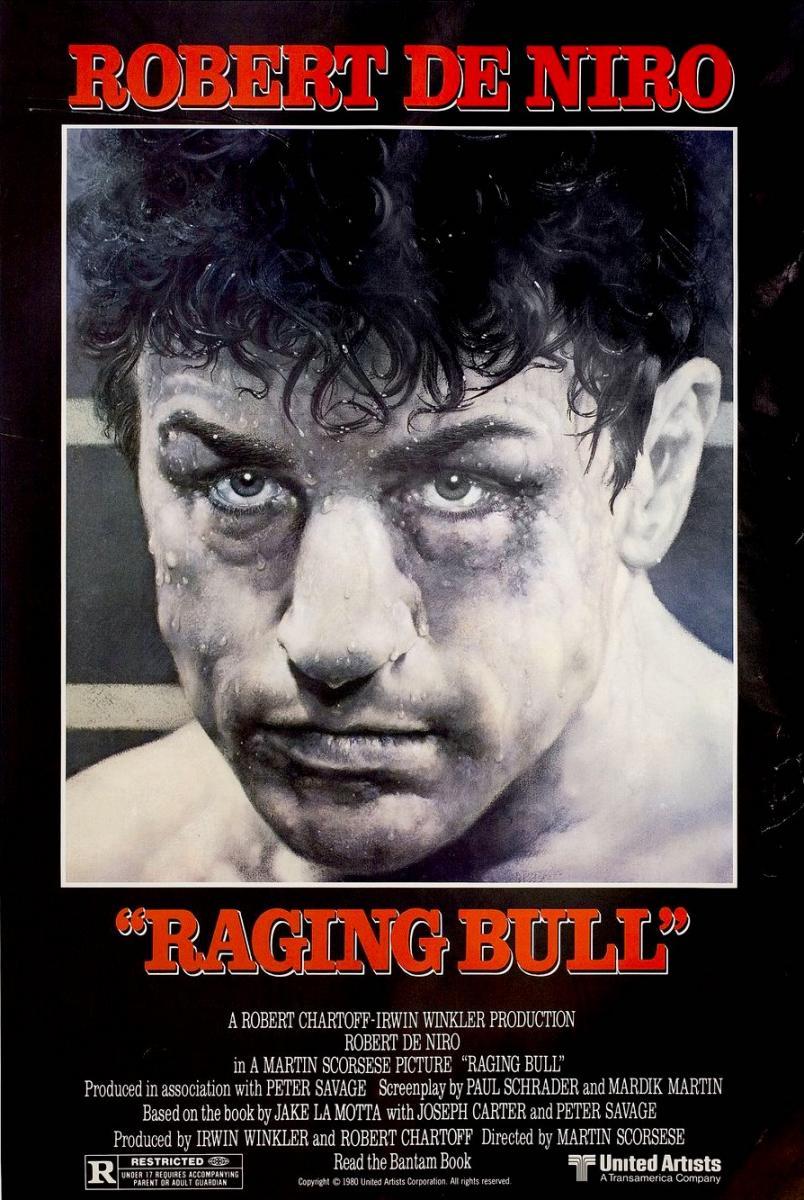

In a world where contemporary cinema seems obsessed with inflating CGI-filled balloons and churning out dialogue written by Netflix algorithms, Raging Bull (1980) lands like a sucker punch to the jaw of cinephile nostalgia. Martin Scorsese— that old sea wolf who’s sailed between genius (Taxi Driver, Goodfellas) and self-indulgent narcissism (The Irishman)— proves here that, when he’s on his game, he’s cinema’s most precise surgeon. He cracks open his protagonist’s chest, rips out the still-beating heart, and shoves it in the audience’s face— no anesthesia. And damn, does it hurt.
The film is the unflinching biography of Jake LaMotta, a boxer whose life could be summed up in three acts: unbridled ambition, self-destruction, and half-assed redemption. But reducing Raging Bull to a mere biopic is like saying The Godfather is a movie about a guy who sells olive oil. Scorsese and his screenwriter, Paul Schrader (that poet of masculine suffering, also the mind behind Taxi Driver), don’t settle for just telling the story of an athlete. They dissect the psychology of a man whose obsession with control leads him to sabotage everything he loves— including himself. LaMotta isn’t a tragic hero; he’s a pathetic antihero, a man who confuses love with possession and masculinity with the ability to take a beating without whining. In other words: every barroom macho’s wet dream.
finalExplicado_en: "Jake LaMotta loses his title, his family, and his freedom, then sits alone in a dark jail cell, bloodied and broken, reciting Marlon Brando’s “I coulda been a contender” monologue from On the Waterfront before finally admitting, “I’m not an animal.” The film ends on a biblical quote: “Once I was blind but now I see.” Scorsese’s brutal climax strips away every illusion of macho glory, revealing the self-destructive beast LaMotta has become. The ending ironically suggests a spiritual redemption that feels hollow; the animal may have glimpsed the light, but the cage remains."
Direction: Scorsese as the Choreographer of Violence and Misery
Scorsese doesn’t direct Raging Bull— he sculpts it. Every frame feels chiseled, every fight sequence a ballet of blood and sweat, proving that boxing, more than a sport, is a ritual of humiliation. The violence here isn’t glamorous like in Rocky (where Stallone turns punches into metaphors for personal growth), nor is it stylized like in Creed. Here, violence reeks of rotting flesh and failure.
The use of black and white isn’t some aesthetic whim— it’s a brilliant narrative choice. Cinematographer Michael Chapman turns every shadow into an omen and every beam of light into a fleeting glimmer of hope that, inevitably, fizzles out. The ring fights are shot with a rawness bordering on documentary: cameras on the ground to show feet slipping in blood, close-ups of faces warped by blows, and that sickening, wet sound of fists pounding flesh. Scorsese doesn’t sugarcoat a thing. If LaMotta takes a hit to the nose, we see his septum shatter. If he spits blood, it’s not some elegant trickle— it’s a thick, disgusting glob that splatters the lens. This isn’t cinema for the squeamish, nor for those who think boxing is a "noble" sport.
But what’s most fascinating about Scorsese’s direction is how he balances physical brutality with emotional violence. The domestic scenes between Jake and his wife Vickie (Cathy Moriarty, in a debut that should’ve won her an Oscar— but Hollywood prefers actresses who cry pretty) are as tense as the ring fights. Scorsese films LaMotta’s jealousy with the same intensity he films his uppercuts: both are expressions of a man incapable of controlling his demons. The scene where Jake accuses Vickie of infidelity based on a casual glance at a man by the pool is a masterclass in psychological suspense. No music, just the sound of De Niro’s ragged breathing and Moriarty’s uncomfortable silence. It’s like Scorsese took an episode of Who’s the Boss? and directed it like a Hitchcock thriller.
The Script: Schrader and Obsession as a Prison
Paul Schrader, that misanthropic genius, delivers one of his most brutal scripts here. The nonlinear structure (jumping between LaMotta’s rise and fall) isn’t some pretentious gimmick— it’s a way to underscore that the boxer never escaped his own mind. The script explores LaMotta’s paradox: a man who needs physical pain to feel alive but can’t handle emotional pain. It’s as if Schrader took Freud’s theory of moral masochism and turned it into a flesh-and-blood character.
One of the script’s most revealing moments comes when Jake, now retired and reduced to a pathetic nightclub act, recites the monologue from On the Waterfront: "I coulda been a contender." It’s a scene that stings because, deep down, we all know LaMotta never was a contender. He was a man who mistook stubbornness for strength, resilience for greatness. Schrader doesn’t judge his character, but he doesn’t redeem him either. LaMotta is a shattered mirror: every shard reflects a distorted version of himself.
The Performances: De Niro and the Art of Gaining Weight for Film
Robert De Niro won an Oscar for this role, and for good reason. His physical transformation (packing on over 60 pounds to play the older LaMotta) is legendary, but what’s truly staggering is how he vanishes into the character. De Niro doesn’t play LaMotta— he becomes him. Every gesture, every glare, every grunt is so organic it’s hard to believe we’re watching an actor and not a documentary about a broken man.
The scene where Jake beats his brother Joey (Joe Pesci, in another role that proves why he’s one of the greatest character actors of all time) is one of the hardest to watch in cinema. Not because of the violence itself, but because of the vulnerability De Niro conveys. Jake doesn’t hit Joey out of anger— he does it out of shame. He’s a man who’d rather destroy his family than admit he’s wrong. De Niro makes us hate LaMotta while simultaneously pitying him. That’s acting.
Cathy Moriarty, meanwhile, steals every scene she’s in. Her Vickie isn’t the typical long-suffering wife of sports biopics— she’s a woman who fights back with claws and teeth. When she tells Jake, "You don’t scare me," it’s not filler dialogue— it’s a declaration of independence in a world where women were treated like accessories. Moriarty has a commanding physical presence (Scorsese films her like a Greek goddess, with shots that highlight her beauty and strength), but also a fragility that makes her fate even more tragic.
Joe Pesci, in one of his first major roles, proves why he’s the king of supporting characters. Joey LaMotta is the perfect foil to Jake: where the latter is impulsive and violent, Joey is calculating and loyal. But Pesci doesn’t fall into the "good brother" stereotype— Joey has his own shadows, and when he snaps, he does so with a fury that foreshadows his later roles in Goodfellas and Casino. The chemistry between De Niro and Pesci is electric, and their relationship is the emotional core of the film.
Cinematography: Black and White as a Metaphor for Morality
Michael Chapman doesn’t shoot Raging Bull— he paints it. Every frame is a work of art, but one of those works that leaves you with a knot in your stomach. The black and white isn’t a nostalgic choice— it’s a way to strip the story of any artifice. There are no colors to distract from the rawness of what’s shown: blood is black, sweat glistens like oil, and the characters’ faces look carved from stone.
The ring fights are filmed with an almost abstract choreography. Scorsese and Chapman use slow motion, close-ups, and low angles to turn each bout into a macabre dance. The camera doesn’t just show the punches— it feels them. When LaMotta takes a liver shot, we don’t just see the impact— we see the air leave his lungs. When he hits the canvas, the camera spins as if the whole world is reeling with him.
But the cinematography is also intimate outside the ring. The shots of Jake and Vickie in their apartment are claustrophobic, with elongated shadows that feel like prison bars. Chapman uses light to underscore the characters’ loneliness: Jake is often lit from just one side, as if half his face is always in darkness. It’s a perfect visual metaphor for a man who never allowed himself to be vulnerable.
Editing: The Rhythm of Punches
Thelma Schoonmaker, Scorsese’s trusted editor, delivers one of her most brilliant works here. The editing of Raging Bull isn’t linear, but it’s not chaotic either. Schoonmaker jumps between past and present with surgical precision, creating a rhythm that mimics a boxing match: moments of calm followed by bursts of violence.
The fight sequences are edited with documentary realism, but also with a poetic sense. Schoonmaker uses quick cuts to convey the chaos of the ring, but also long takes to show the fighters’ exhaustion. The scene where LaMotta faces Sugar Ray Robinson for the last time is a perfect example: the editing speeds up when Jake is at his best, but slows down when he starts to falter, as if time itself is mocking him.
The Music: Silence and Roars
The soundtrack of Raging Bull is minimalist, but no less effective for it. Scorsese uses classical music (mainly the Intermezzo from Mascagni’s Cavalleria Rusticana) to underscore the most emotional moments, but in the key scenes, silence is the real star. There’s no music during the fights, nor during the most tense arguments. Just the sound of punches, screams, and ragged breathing.
When music does appear, it’s often as ironic counterpoint. For example, in the scene where Jake and Vickie dance in their apartment, a romantic 1940s song plays, but the tension between them is so thick the music feels like a taunt. Scorsese doesn’t need an epic score to convey emotion— he just needs the sound of a fist breaking bone.
Cinephile Comparisons: Where Does Raging Bull Fit?
Raging Bull isn’t a boxing movie— it’s a Greek tragedy with gloves. If Rocky (1976) is the fantasy of an underdog becoming a hero, Raging Bull is the reality of a winner becoming a pariah. If Creed is a drama about redemption, this film is a study in the impossibility of redemption.
Comparing it to other Scorsese films is inevitable, but also revealing. While Taxi Driver (1976) explores urban loneliness and Goodfellas (1990) is a dark comedy about organized crime, Raging Bull is Scorsese’s most intimate work. There are no grand speeches, no crowd scenes— just a man, his family, and his demons.
In contemporary cinema, films like The Fighter (2010) or Southpaw (2015) try to capture the same rawness, but they fall into melodrama or sentimentality. Raging Bull doesn’t aim to move you— it aims to hit you. And damn, does it land.
The best
- De Niro’s transformation: Gaining 60 pounds is easy; making every ounce matter on screen is art.
- Chapman’s cinematography: Black and white that hurts more than any Marvel-style saturated Technicolor.
The worst
- Misogyny as a narrative crutch: Vickie is a fascinating character, but the script reduces her to victim or temptation, with no middle ground.
- Violence as spectacle: Not for the faint of heart, and Scorsese knows it (and couldn’t care less).
The Verdict of Claqueta Ácida (8.5/10)
Raging Bull is the kind of film that leaves you breathless—not because it’s some untouchable masterpiece, but because it reminds you that cinema, in its purest form, is a stylish punch to the face. Scorsese doesn’t invite you to reflect; he grabs you by the collar and forces you to look. LaMotta is a detestable character, but he’s also real, and that’s the genius of this film: its ability to make you hate its protagonist while seeing yourself in him. If you’re looking for a movie that makes you uncomfortable, challenges you, and leaves you feeling like you’ve survived a street fight, Raging Bull is your film. Just don’t say I didn’t warn you: after watching it, you’ll need a stiff drink, a hug, or— in the worst case— a therapist. Cinema as shock therapy. 🥊💥🎬 Tráiler Oficial
Abrir en YouTube
Ending Explained: "Raging Bull
Ficha de Daños Colaterales en Sala
Certificado de impacto psicofísico emitido por Camilo K.O.
Cero. La pantalla absorbió cada segundo de atención disponible.
El móvil permaneció en el bolsillo donde debía estar.
Ninguna. Esta obra no necesita muletas estimulantes.
"No hubo. La coherencia se mantuvo hasta el último fotograma."
💬 El Veredicto de la Comunidad
¿Qué te ha parecido la película? Deja tu nota de 0 a 10 para contrastarla con el análisis de la redacción.
Aún no has votado
📢 ¿Te ha gustado el ácido?
Comparte esta crítica con tus amigos cinéfilos o desata la polémica en redes.
⚡ THE CINEMATIC VENOM YOUR INBOX CRAVES
No sugarcoated ratings, no corporate fluff. Subscribe for our uncensored weekly analysis or join the private Telegram for press previews, poll clashes, and instant alerts.
Alertas de estrenos en 1 segundo, encuestas en caliente y audios al salir de pases de prensa.
Recibe la dosis semanal en tu mail + regalo inmediato del PDF con 50 joyas ocultas de culto.
Related Reviews
Recommended autopsies for demanding film buffs.
 ⚡ Ácido Cítrico7.5
Species: The Alien Threat
⚡Hermana de saga: otro capítulo diseccionado con rigor forense.
A scathing review of the 1995 science fiction film
 🔥 Fusión Nuclear8.5
*Bring Him Back to Me*: Danny Philippou’s Ritual That’ll Steal Your Breath (and Your Sleep)
⚡Hermana de saga: otro capítulo diseccionado con rigor forense.
Danny Philippou delivers an Australian horror film with long takes that reek of scorched celluloid and a Sally Hawkins who devours souls. Claqueta Ácida dissects his nightmare.
 🔥 Fusión Nuclear9.2
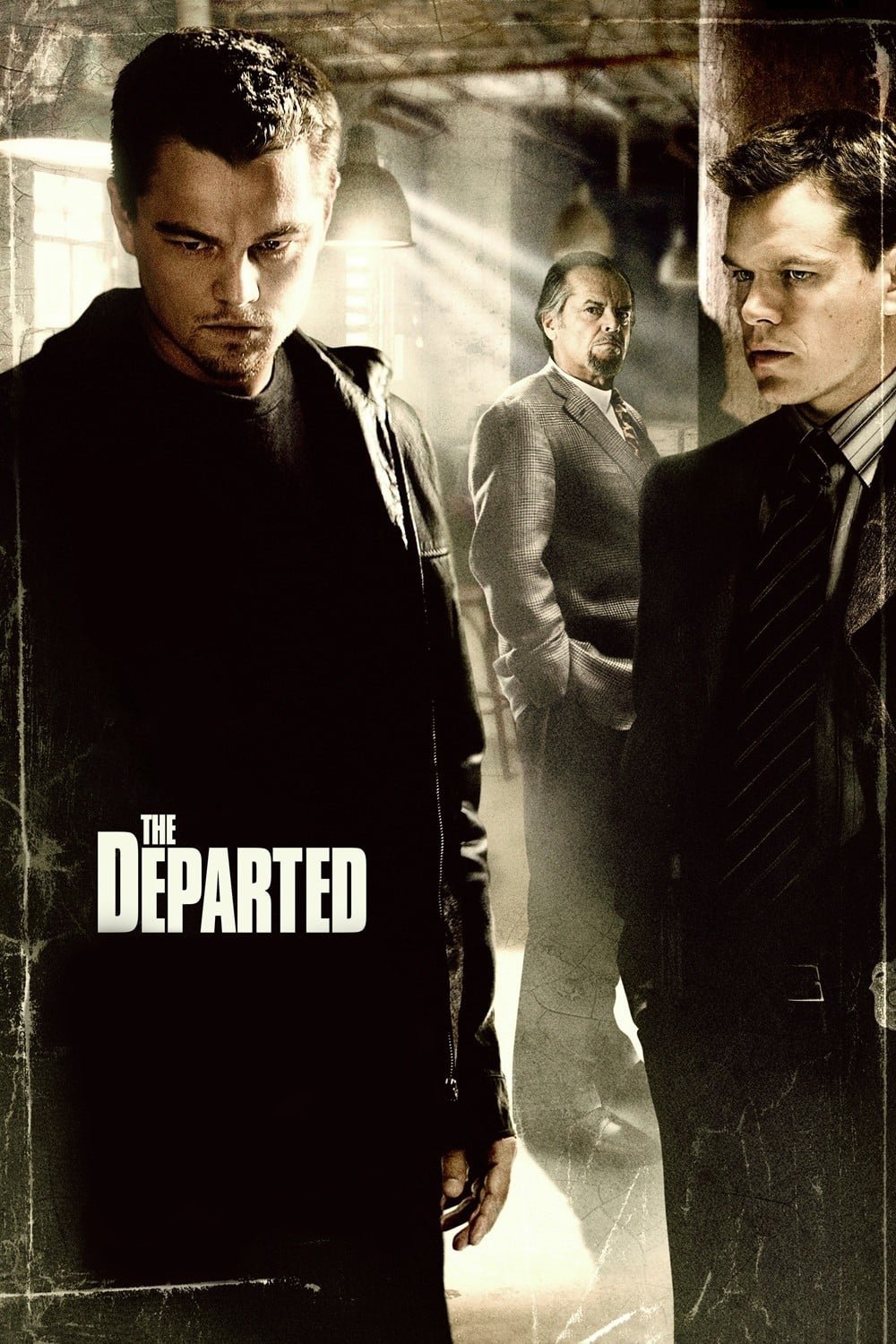
The Departed: Scorsese Plays Chess with Rats and We All Lose
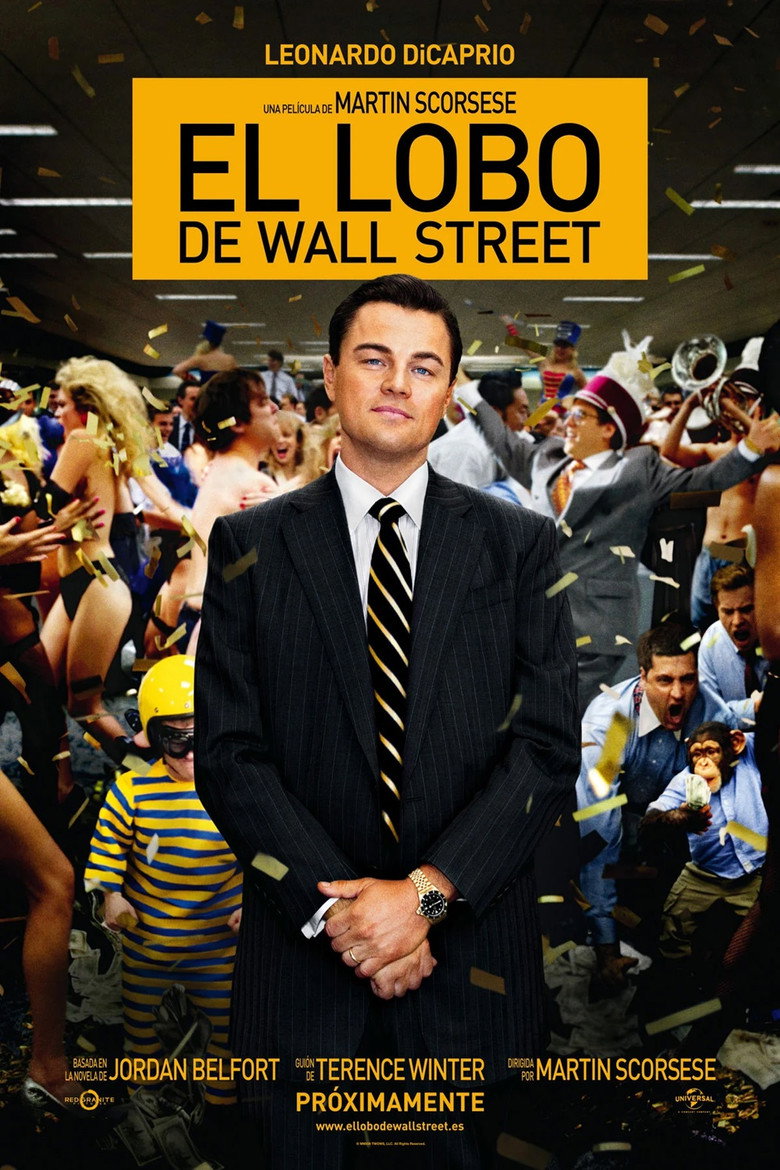
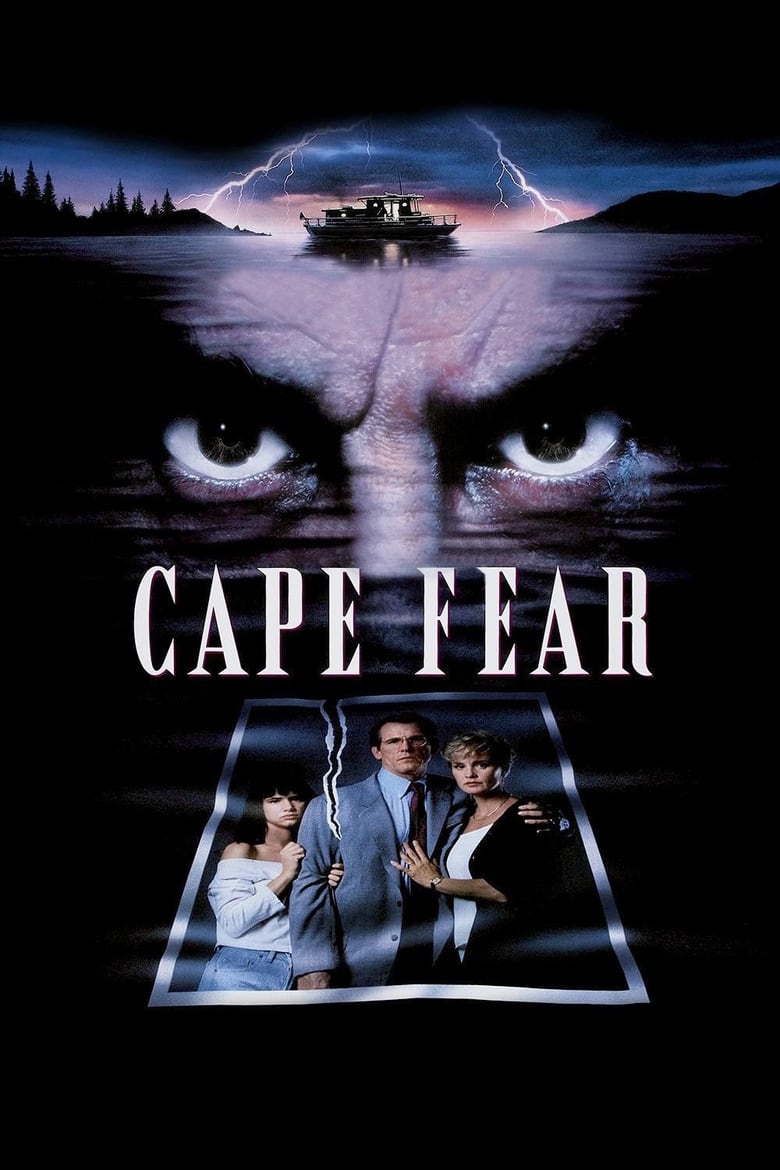
⚡Del mismo director (Martin Scorsese): analiza la evolución o degradación de su estilo.
Scorsese delivers a rat-infested thriller where Boston reeks of cheap whiskey and betrayal. Nicholson steals the show, DiCaprio sweats ink, and Damon grins like a psychopath. A masterpiece with an expiration date: never.
Editorial Ecosystem
Cinephile connections, archive interviews and related analyses.
🎞️ In Claqueta Cinematheque3
💬 Debate Cinéfilo & Autopsia de Lectores
0 veredictos¿Discrepas con nuestra nota? ¿Es una obra maestra o veneno puro? Deja tu veredicto abajo sin necesidad de registro.


Aún nadie ha dejado su veredicto para esta película.
Sé el primero en clavarle el colmillo rellenando el formulario de arriba.