Incendies — A Descent into the Abyss of the Soul
A masterpiece that rips your soul to shreds

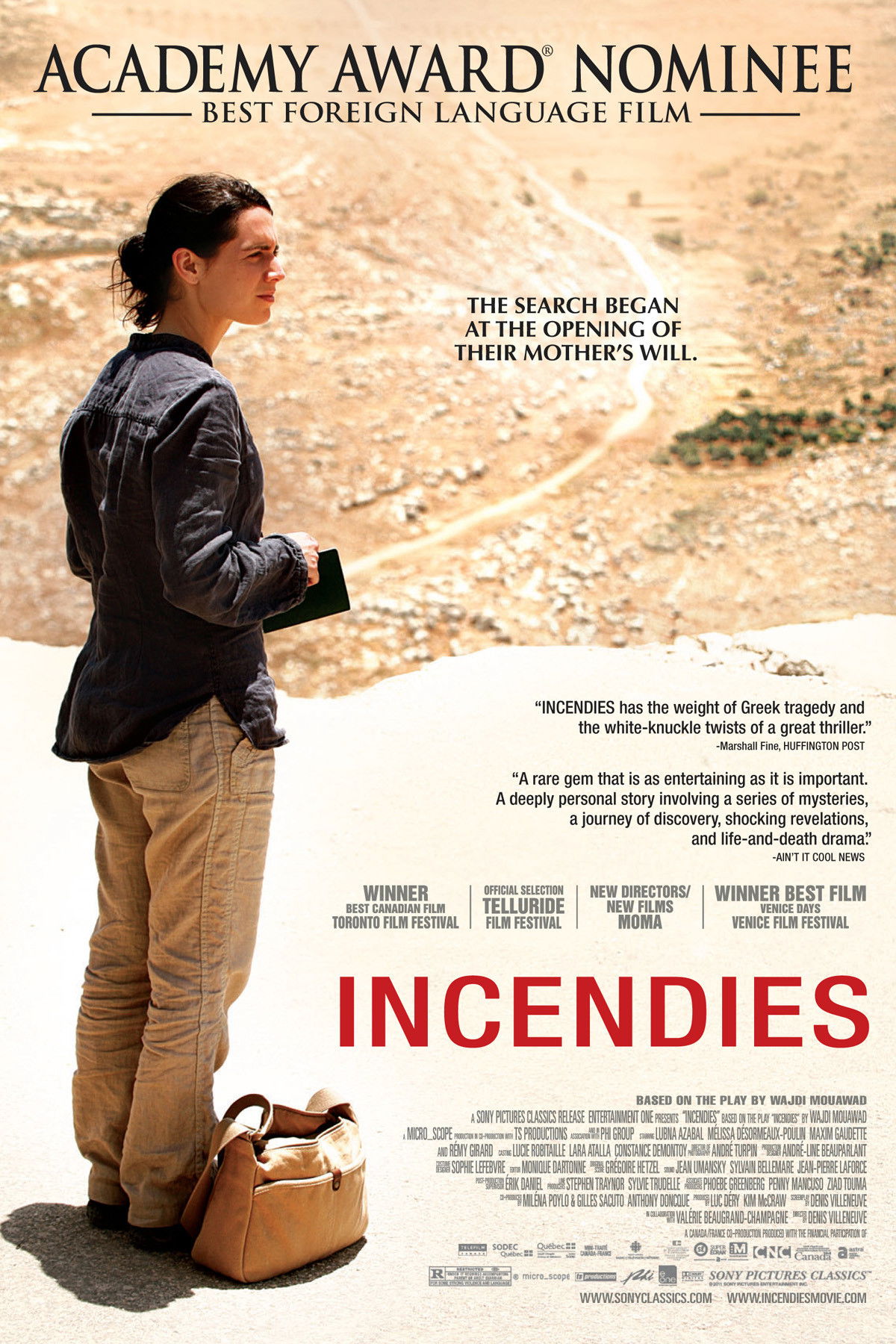


I staggered out of the cinema with the distinct sensation that someone had yanked out my guts and hung them out to dry in the sun. Incendies, Denis Villeneuve’s third feature to hit our screens after its triumphant festival run, isn’t a movie—it’s a surgical procedure performed without anesthesia. And no, I’m not being dramatic. If you think war films can’t shock you anymore, if you believe family dramas are a spent genre, Villeneuve is about to prove you wrong with the subtlety of a hatchet burying itself in rotten wood. The story of twins Jeanne and Simon Marwan, who inherit a posthumous testament from their mother that forces them to unravel her past in an unnamed country that reeks of Lebanon, is a descent into the heart of familial darkness that will leave your jaw slack and your stomach churning. This isn’t a film you watch—it’s a film you endure. And that, dear readers, is what makes it damn near perfect.
Denis Villeneuve isn’t a director—he’s a surgeon. A man who knows exactly where to cut so the pain is unbearable but necessary. After cutting his teeth in Canadian cinema with films like Maelström and Polytechnique, Villeneuve leapt onto the international stage with Prisoners and Sicario, proving he had a knack for capturing human darkness without stooping to cheap sensationalism. But with Incendies, adapted from Wajdi Mouawad’s play, Villeneuve doesn’t just flex his narrative mastery—he cements himself as one of the bravest directors in contemporary cinema. Brave not because of the themes he tackles—war, violence, incest—but because of how he tackles them: no concessions, no sugarcoating, no safety net. This is a film that grabs you by the throat and refuses to let go until you’ve seen the final frame, until you’ve felt every stab, every betrayal, every unspeakable secret. And just when you think it can’t hurt anymore, Villeneuve twists the knife with a plot revelation that leaves you gasping.

The narrative structure of Incendies is a labyrinth meticulously designed. The film toggles between the present, where Jeanne (Mélissa Désormeaux-Poulin) and Simon (Maxim Gaudette) try to decode their mother Nawal’s (Lubna Azabal) final wishes, and the past, where we follow Nawal’s youth, scarred by war and loss. Villeneuve and his co-writer, Valérie Beaugrand-Champagne, show no mercy: every revelation is a sucker punch, every flashback a backstab. But what’s truly staggering is how Villeneuve makes the audience not just accept these twists but crave them with a mix of dread and fascination. It’s like watching a car crash in slow motion—you know it’s going to hurt, but you can’t look away. And that, my friends, is the hallmark of a great director.
But let’s talk about the performances, because this is where Incendies transcends greatness and becomes a physical experience. Lubna Azabal, as Nawal, is a force of nature. Azabal, a Belgian actress of Moroccan descent, had already proven her chops in films like Paradise Now and The Marchers, but here she ascends to mythic proportions. Her Nawal isn’t a victim, a hero, or a villain—she’s a woman trapped in a spiral of violence and love that forces her to make impossible choices. Azabal conveys all of this with a glance, a gesture, a silence. There’s a scene where Nawal, after years of silence, sings a lullaby to her son. No dialogue, just her broken voice and Villeneuve’s camera, creeping closer until all we see are her eyes—brimming with tears and something darker: rage. It’s one of those moments that shatters you and suddenly makes you understand why cinema still matters.
Mélissa Désormeaux-Poulin and Maxim Gaudette, as Jeanne and Simon, are also phenomenal. Désormeaux-Poulin, in particular, has a scene where her character uncovers a truth so devastating that her reaction isn’t to scream or cry but to freeze completely, as if her body has decided it can’t take any more pain. It’s a moment of such restrained, raw acting that it hurts more than any wail. Gaudette, meanwhile, plays Simon with a blend of skepticism and vulnerability that makes him achingly human. Their relationship is the emotional core of the film, and Villeneuve films it with an intimacy that makes you feel like you’re eavesdropping on a private conversation.
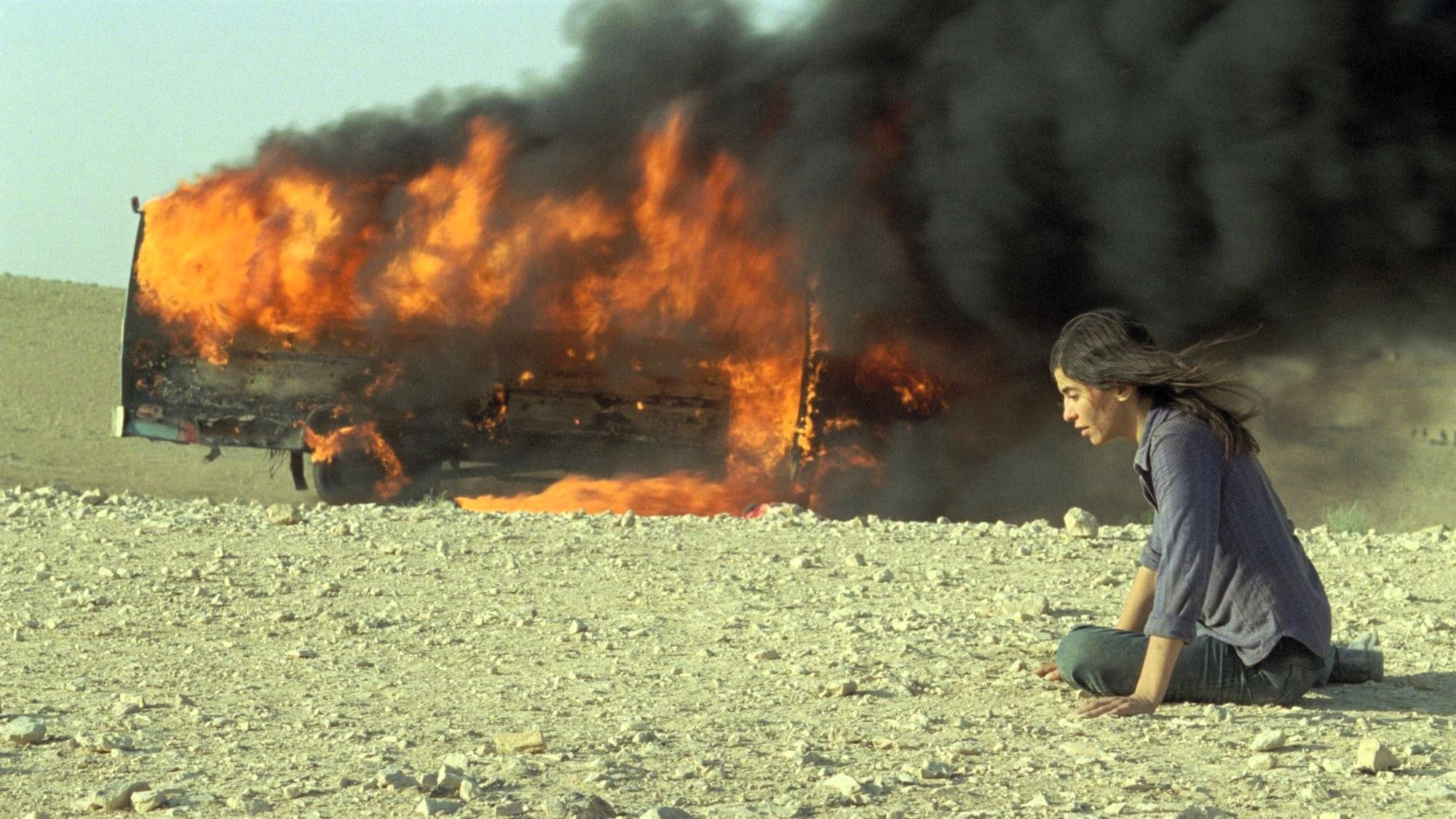
But Incendies wouldn’t be the masterpiece it is without the technical craft behind it. André Turpin, the cinematographer, had already collaborated with Villeneuve on Maelström and Polytechnique, and here he proves why he’s one of the best in the business. Turpin employs a desaturated palette dominated by earthy tones and grays, perfectly mirroring the film’s somber tone. But the real magic is in his play with light: there are scenes where the sunlight is so harsh it burns the screen, as if nature itself is trying to erase what’s happening. Then there are the night scenes, shot in such dense darkness you feel like you’re drowning in a bottomless pit. Turpin doesn’t just light the film—he drowns it in atmosphere.
Grégoire Hetzel’s score is another triumph. Hetzel, who’s worked with directors like François Ozon and Jacques Audiard, composes a soundtrack that’s both minimalist and devastating. The main theme, a haunting violin melody that recurs throughout the film, is as beautiful as it is heartbreaking. Hetzel doesn’t use music to underscore emotions—he amplifies them, pushing them to an almost unbearable level. There’s a scene where Nawal, after years of searching for her lost son, finally finds him. The music doesn’t kick in at the climax but a few seconds later, when the camera pulls back to reveal Nawal alone in a desolate landscape. It’s a moment of exquisite cruelty because Hetzel denies you the catharsis of music, leaving you to choke on the weight of the scene.
The production design, by André-Line Beauparlant, is another standout. Beauparlant recreates 1970s and 80s Lebanon with such precision it’s like stepping into a time machine. From bustling markets to claustrophobic prisons, everything in Incendies breathes authenticity. But the real genius is how Beauparlant makes the spaces reflect the characters’ emotional states. Nawal’s house, for instance, is cluttered with personal objects yet devoid of life, as if the house itself is in mourning. Then there are the barren landscapes—those arid fields and bald mountains that look like they’ve been plucked from a Bosch painting—mirroring the characters’ loneliness and pain.
Monique Dartonno’s editing is another element that makes Incendies so powerful. Dartonno, who also worked with Villeneuve on Polytechnique, strikes a perfect balance between past and present, action and reflection. There’s one scene in particular, where Jeanne and Simon uncover a truth about their mother that changes everything, that’s edited with surgical precision. Dartonno cuts between close-ups of the characters’ faces and wide shots of the landscape, creating a rhythm that keeps you on the edge of your seat until the very end. It’s editing that doesn’t just drive the plot forward—it deepens it, making every revelation feel like a punch to the gut.
But, like all great films, Incendies isn’t flawless. There are moments where it feels a tad overambitious, as if Villeneuve tried to cram too many ideas into one movie. The relationship between Nawal and her son, for example, is so tragic it occasionally veers into melodrama. And a couple of the plot twists, while shocking, can feel a bit forced. But these are minor quibbles in a film that, as a whole, is a masterpiece of contemporary cinema. Incendies isn’t for everyone—it’s for those willing to suffer, to question, to leave the theater with more questions than answers. It’s a film that changes you, that scars you, that leaves you with the feeling you’ve witnessed something important.
The best
- Denis Villeneuve’s direction: Villeneuve doesn’t just tell a story—he lives it. His staging is so precise, so visceral, it makes you feel every emotion as if it were your own. Some directors make films; others make experiences. Villeneuve belongs to the latter.
- Lubna Azabal’s performance: Azabal doesn’t play Nawal—she becomes her. Her acting is so intense, so gut-wrenching, it hurts to watch. It’s one of those performances that haunts you long after the credits roll.
- André Turpin’s cinematography: Turpin doesn’t just light the film—he drowns it in atmosphere. His use of light and shadow is so expressive it almost becomes a character in itself.
- Grégoire Hetzel’s score: Hetzel composes a soundtrack that’s both minimalist and devastating. His music doesn’t underscore emotions—it amplifies them, taking them to an almost unbearable level.
- Monique Dartonno’s editing: Dartonno strikes a perfect balance between past and present, creating a rhythm that keeps you hooked until the final frame. Her editing doesn’t just advance the plot—it deepens it.
The worst
- Some forced plot twists: A couple of the revelations, while shocking, can feel a bit too convenient. They don’t ruin the film, but they do chip away at its credibility in places.
- Melodramatic tone in some scenes: The relationship between Nawal and her son, in particular, occasionally veers into excessive territory. Villeneuve mostly keeps things balanced, but there are moments that slip into conventional dramatics.
The Verdict of Claqueta Ácida
Incendies isn’t a film—it’s an exorcism. Denis Villeneuve has crafted a masterpiece that grabs you by the throat and refuses to let go until you’ve felt every stab, every betrayal, every unspeakable secret. With searing performances, breathtaking cinematography, and a score that shreds your soul, Incendies is one of those films that changes you forever. It’s not for the faint of heart, but if you’re willing to suffer, to question, to leave the theater with more questions than answers, then Incendies is your film. Just don’t say I didn’t warn you: this hurts. A lot. 💀 tweets_alternativos:🎬 Tráiler Oficial
Abrir en YouTube
Ficha de Daños Colaterales en Sala
Certificado de impacto psicofísico emitido por Dr. Cinismo
Ni un solo parpadeo voluntario. El asiento, inusualmente cómodo.
Ninguna comprobación del tiempo. Se agradece la rareza.
Ninguna: la adrenalina cinematográfica es suficiente.
"No aplica. La obra se sostiene sola."
💬 El Veredicto de la Comunidad
¿Qué te ha parecido la película? Deja tu nota de 0 a 10 para contrastarla con el análisis de la redacción.
Aún no has votado
📢 ¿Te ha gustado el ácido?
Comparte esta crítica con tus amigos cinéfilos o desata la polémica en redes.
⚡ THE CINEMATIC VENOM YOUR INBOX CRAVES
No sugarcoated ratings, no corporate fluff. Subscribe for our uncensored weekly analysis or join the private Telegram for press previews, poll clashes, and instant alerts.
Alertas de estrenos en 1 segundo, encuestas en caliente y audios al salir de pases de prensa.
Recibe la dosis semanal en tu mail + regalo inmediato del PDF con 50 joyas ocultas de culto.
Related Reviews
Recommended autopsies for demanding film buffs.
 🔥 Fusión Nuclear8.0
The End of Oak Street: David Robert Mitchell Reinvents Cosmic Horror Without Losing Its Human Core
⚡Afinidad temática directa en atmósfera, estilo y fijaciones visuales.
Anne Hathaway and Ewan McGregor lead this claustrophobic descent where the unknown isn’t a monster—it’s reality itself unraveling at the seams. Mitchell proves once again that the most terrifying horror is the kind that festers in the intimate.
 🔥 Fusión Nuclear9.0
The Odyssey: Nolan’s Epic Ego Trip
⚡Afinidad temática directa en atmósfera, estilo y fijaciones visuales.
Christopher Nolan’s *The Odyssey*: A cinematic masterpiece—or a bloated vanity project drowning in its own pretensions?
 🔥 Fusión Nuclear8.0
**Evil Dead Rise: A Family Disaster on Fire**
⚡Afinidad temática directa en atmósfera, estilo y fijaciones visuales.
A scathing review of the horror flick *Evil Dead Rise*—where family drama burns brighter than the demons.
Editorial Ecosystem
Cinephile connections, archive interviews and related analyses.
💬 Debate Cinéfilo & Autopsia de Lectores
0 veredictos¿Discrepas con nuestra nota? ¿Es una obra maestra o veneno puro? Deja tu veredicto abajo sin necesidad de registro.


Aún nadie ha dejado su veredicto para esta película.
Sé el primero en clavarle el colmillo rellenando el formulario de arriba.