The Soul Eater — Mountain Legends, Lost Kids, and Rural Offal – A Feast for the Damned
Bustillo and Maury return in 2024 with a dark, filthy, and suffocating police-gothic thriller set deep in the forests of France—where the trees whisper and the locals really don’t like outsiders.

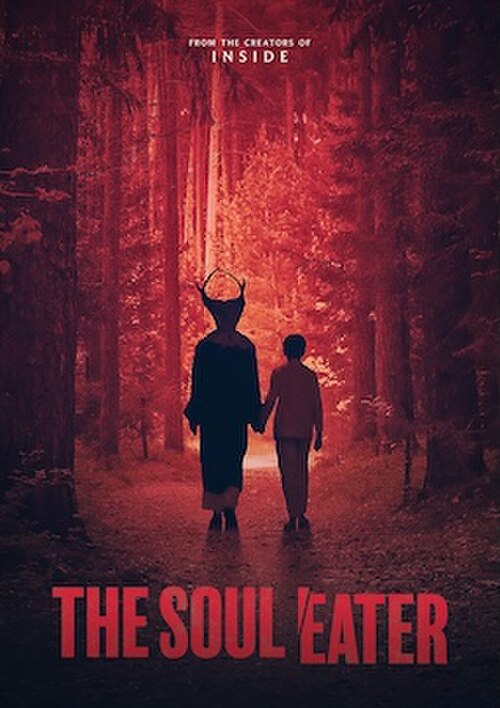

The Soul Eater (Le mangeur d'âmes) is the kind of film that sinks into your theater seat like a rusty blade: it’s not pretty, it’s not subtle, but damn, does it hurt in the most gloriously necessary way. In an era where police procedurals have become a parade of precincts lit like an Apple Store and detectives solving crimes with all the emotion of a civil servant stamping paperwork, Alexandre Bustillo and Julien Maury—those butchers of visceral horror who gifted us gems like Inside (2007) and Livide (2011)—return to remind us that the genre can (and should) get its hands dirty with mud, blood, and superstition. And boy, do they ever.
A Town That Breathes (and Stinks) of Gothic Rot
Roquenoire isn’t just a setting—it’s a character. A mountain village in France that looks like it was plucked from a Grimm Brothers tale after a bender of absinthe and black mass. The directors, alongside cinematographer Simon Filliot (a frequent collaborator), craft an atmosphere that oscillates between the grimy realism of The Wicker Man (1973) and the wintry nightmare of Let the Right One In (2008). The pine forests, eternally shrouded in a mist that seems to exhale the breath of the dead, aren’t some picturesque backdrop but an organic labyrinth where every tree hides a secret and every shadow could be the Soul Eater lurking.The color palette is a statement of intent: metallic grays, cadaverous blues, and filthy whites clashing with the bloody red of crime scenes. It’s no accident that Filliot employs near-Caravaggesque lighting in the interiors, with harsh beams sculpting the characters’ faces like melting wax masks. The cinematography doesn’t aim to beautify—it reveals the rot beneath the surface. And it succeeds brilliantly: when the camera lingers on mutilated corpses or missing children (their Polaroids pinned to wooden boards like some profane altar), you can’t help but feel like you’re seeing something you shouldn’t, as if the act of looking itself is a transgression.
Folk Horror as the Thriller’s DNA
Bustillo and Maury don’t reinvent the wheel—they sharpen it into a razor. The Soul Eater drinks from illustrious sources like Robert Eggers’ The Witch (2015) and Ari Aster’s Midsommar (2019), but instead of copying, it distills. There are no pagan dances or psychedelic flower crowns here—just raw rural terror, where superstition isn’t decoration but the engine of the plot. The legend of the Soul Eater—a being who punishes "sinful" children by taking them in the night—acts as a warped mirror to the protagonists’ traumas: Elisabeth (Virginie Ledoyen), the Parisian police captain, drags the weight of an unsolved case that haunts her like a curse; Franck (Paul Hamy), the local gendarme, sees in the missing children the reflection of his own broken childhood.The script, penned by the directors alongside Christophe Lemaire, masterfully toys with the audience: Are we dealing with a religiously obsessed serial killer? Or is something older, darker, at work in Roquenoire? The film flirts constantly with the supernatural but never fully commits, leaving it to the viewer to decide if the Soul Eater is man, myth, or something in between. This ambiguity recalls the best of British folk horror, like The Blood on Satan’s Claw (1971), where the real and the fantastical blur into indistinction.
Performances: When Pain Becomes Physical
Virginie Ledoyen and Paul Hamy aren’t just actors playing investigators—they’re two damned souls crawling through a hell of snow and lies. Ledoyen, with her angular face and icy gaze, embodies a woman who’s seen too much yet keeps searching for answers as if her sanity depends on it. There’s one scene in particular—when she interrogates an old village woman (played by a chilling Sandrine Bonnaire)—where her performance shifts from professional detachment to childlike terror in seconds. It’s a small moment but revelatory: Elisabeth isn’t a hero; she’s a woman on the verge of collapse, and Ledoyen conveys it with a painful economy of gesture.Paul Hamy, meanwhile, is the perfect counterpoint: where Ledoyen is restraint, Hamy is storm. His Franck is a man obsessed, almost possessed, by the hunt for the missing children, and his desperation seeps into every scene. There’s a sequence where he searches an abandoned house, lit only by the flickering beam of a flashlight, that recalls the most tense moments of The Descent (2005). Hamy doesn’t need to scream to convey panic; a tremor in his voice or a restrained gesture is enough to make the audience feel like he’s about to shatter.
And then there’s Francis Renaud, playing the town’s mayor—a man whose smile is as fake as a politician’s campaign promises. Renaud pulls off something difficult: making a supporting character both repulsive and fascinating. His performance is pure ambiguity, like he knows more than he’s letting on but enjoys the game too much to show his hand.
Editing and Score: The Beat of a Sick Heart
The editing by Baxter (the duo’s frequent collaborator, who also worked on Inside) is relentless. There’s no breathing room, no filler scenes—every shot either advances the plot or digs deeper into the characters’ psyches. The cuts are sharp, almost brutal, as if the editor himself is stabbing the film to keep it alive. There’s one sequence in particular—a flashback of a murder seen from the victim’s perspective—that’s edited with surgical precision, alternating between close-ups of raw terror and subjective shots that force us to see through the eyes of the dying.The score by Raphaël Haroche (better known as the artist Raphael) is another triumph. It’s not an epic or grandiose soundtrack but a collection of ambient sounds that drill into the brain like needles: strings vibrating like exposed nerves, distorted choirs that sound like wails from beyond the grave, and a main theme that evokes wind howling through a cursed forest. This isn’t music you listen to—it’s something you feel on your skin.
The Twists: When Excess Becomes Virtue (or Sin)
This is where The Soul Eater stakes its reputation. The final twenty minutes are a rollercoaster of revelations that, depending on your tolerance for narrative chaos, will either feel genius or outright absurd. There’s a moment where the plot takes such a sharp turn that you can’t help but let out a disbelieving laugh, as if the film suddenly decided it was an episode of The X-Files directed by David Lynch. Is it excessive? Absolutely. Is it coherent? To a point. Does it work? Surprisingly, yes.The issue isn’t the sheer number of twists but that some of them break the internal logic the film had so carefully built. One character’s final motivation feels so forced it might as well have been pulled from a rural thriller cliché handbook. And yet, even in its most absurd moments, The Soul Eater manages to maintain such an oppressive atmosphere that you end up forgiving its sins. It’s as if the directors decided that, since they were making a movie about a soul-devouring monster, they might as well devour the genre’s rules too.
Inevitable (and Necessary) Comparisons
If The Soul Eater had a family tree, its parents would be The Wicker Man (1973) and True Detective (Season 1), with a dash of Martyrs (2008) in its DNA. From the former, it inherits rural terror and the ambiguity between the real and the supernatural; from the latter, the dynamic of two traumatized investigators dragged into a pit of madness; and from the latter, a taste for extreme physical violence and suffering as spectacle.But where True Detective gets lost in its own pretentiousness and Martyrs falls into the trap of gratuitous torture, The Soul Eater keeps its balance. There are no monologues about "the labyrinth with no center" or scenes of prolonged violence just for shock value. Every blow, every wound, every scream has a purpose: to show pain as something tangible, almost physical, that clings to the viewer’s skin.
The Verdict of Claqueta Ácida
The Soul Eater isn’t a perfect film. It has its excesses, its clichés, and that third-act twist that divides audiences like a Christmas divorce. But above all, it’s an honest film. Honest in its brutality, its ambition, and its refusal to settle for being just another police procedural. Bustillo and Maury prove, once again, that horror doesn’t need digital effects or cheap jump scares to be effective. All it takes is a cursed village, two actors at the top of their game, and a legend that refuses to die.If you’re looking for a neat thriller with orderly investigations and happy endings, this isn’t your movie. But if you want to step into a nightmare forest where every shadow hides a secret and every whisper is a threat, then buckle up. Roquenoire awaits, and the Soul Eater is hungry.
finalExplicado_en: "In the film's grotesque climax, the mountain-dwelling Soul Eater fully reveals itself as an ancient, parasitic entity that has been using the rural community as both breeding ground and larder. The lost children are not victims but willing vessels; during a frenzied ritual feast of human offal and living flesh, they merge with the creature, tearing apart the few remaining adults who tried to escape. The protagonist's final desperate sacrifice fails when his own child turns on him, offering his entrails to the writhing mass. The ending symbolizes the inescapable cycle of inherited rural decay and monstrous tradition: the damned feast is not an aberration but the community's true religion, where innocence is devoured so that something older and fouler can perpetuate itself through the next generation of 'lost kids.'"
The best
The alpine atmosphere that freezes your soul: Roquenoire isn’t just a town—it’s a living organism that breathes misery, secrets, and eternal fog. Scarier than an elevator in The Shining*. Virginie Ledoyen and Paul Hamy, a detective duo that bleeds (literally) on screen: Two performances so intense they make Mindhunter*’s agents look like insurance salesmen.The worst
- The third act: a twist festival written by a hoarder of narrative junk: Too many revelations in too little time. You half-expect a unicorn to show up and solve the case.
The Verdict of Claqueta Ácida (7.7/10)
The Soul Eater confirms that Bustillo and Maury remain the kings of classy visceral horror. A film that blends French polar with the dirtiest folk horror, like if Se7en and The Witch had a bastard child in the Pyrenees. It’s not perfect—its ending is a controlled chaos—but it’s so atmospheric, so brutal, and so damn elegant that you can’t help but forgive its sins. If you like movies that leave a bloody taste in your mouth and the feeling you’ve just escaped something very, very bad, this is your date. Just don’t go mushroom picking at night afterward. You never know what (or who) might be lurking in the trees. 🌲🔪🎬 Tráiler Oficial
Abrir en YouTube
Ending Explained: The Soul Eater
Ficha de Daños Colaterales en Sala
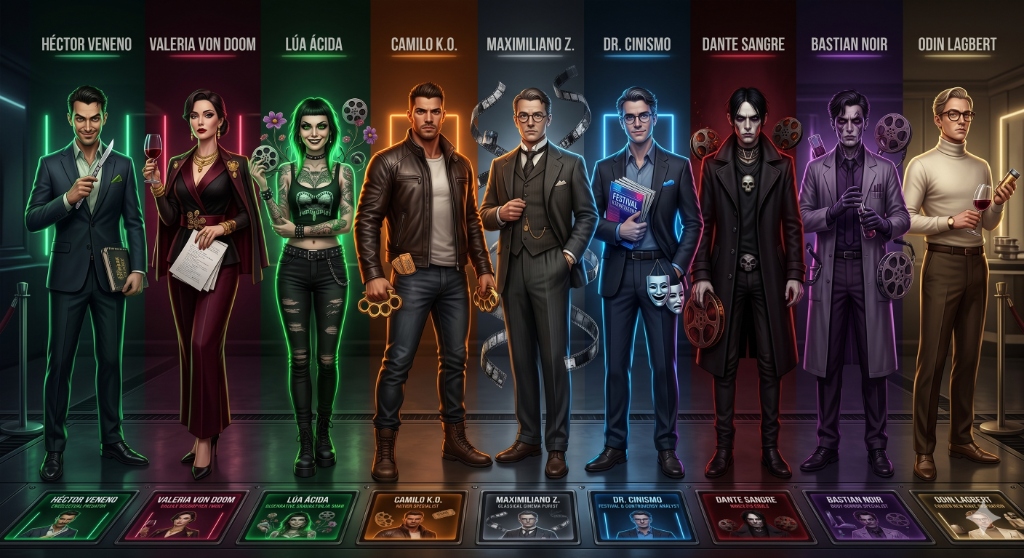
Certificado de impacto psicofísico emitido por Valeria Von Doom
1 amago en el tramo intermedio; pestañeo pesado en las transiciones más innecesarias.
Minuto 50 y minuto 67 (comprobando cuánto quedaba de suplicio).
2 espresso para no dejarse vencer por la mediocridad cómoda.
"A mitad del segundo acto cuando la subtrama secundaria empezó a pesar más de lo que aportaba."
💬 El Veredicto de la Comunidad
¿Qué te ha parecido la película? Deja tu nota de 0 a 10 para contrastarla con el análisis de la redacción.
Aún no has votado
📢 ¿Te ha gustado el ácido?
Comparte esta crítica con tus amigos cinéfilos o desata la polémica en redes.
⚡ THE CINEMATIC VENOM YOUR INBOX CRAVES
No sugarcoated ratings, no corporate fluff. Subscribe for our uncensored weekly analysis or join the private Telegram for press previews, poll clashes, and instant alerts.
Alertas de estrenos en 1 segundo, encuestas en caliente y audios al salir de pases de prensa.
Recibe la dosis semanal en tu mail + regalo inmediato del PDF con 50 joyas ocultas de culto.
Related Reviews
Recommended autopsies for demanding film buffs.
 ⚡ Ácido Cítrico7.5
*Among the Living: Lost Childhood, the Deep America Slasher Transplanted to the French Countryside*
⚡Del mismo director (Alexandre Bustillo, Julien Maury): analiza la evolución o degradación de su estilo.
Bustillo and Maury fuse the spirit of *Stand by Me* with the ultra-violent rural slasher vibe of *The Texas Chain Saw Massacre* in a raw, physical film that hits like a sucker punch.
 🔥 Fusión Nuclear8.0
*Livid*: A Gothic Nightmare of Blood Ballet, Dead Dolls, and the French Extreme’s Most Posh Descent into Madness
⚡Del mismo director (Alexandre Bustillo, Julien Maury): analiza la evolución o degradación de su estilo.
Bustillo and Maury ditch the grimy brutality of *Inside* to birth a stunningly perverse Gothic fairy tale of vampirism and decay.
 🔥 Fusión Nuclear8.5
*Alleluia: Love as a Terminal Illness (or How to Turn Crimes of Passion into a Sweaty, Fleshy Spectacle)*
⚡Afinidad temática directa en atmósfera, estilo y fijaciones visuales.
Fabrice Du Welz reimagines the myth of the lonely hearts killers in a feverish whirlwind of jealousy, submission, and blood, led by Lola Dueñas in a performance that’s equal parts hypnotic and harrowing.
Editorial Ecosystem
Cinephile connections, archive interviews and related analyses.
💬 Debate Cinéfilo & Autopsia de Lectores
0 veredictos¿Discrepas con nuestra nota? ¿Es una obra maestra o veneno puro? Deja tu veredicto abajo sin necesidad de registro.

Aún nadie ha dejado su veredicto para esta película.
Sé el primero en clavarle el colmillo rellenando el formulario de arriba.