
Collision — When the Bank Heist Is Just a Ghost in the Memory
Daniel Sánchez Arévalo abandons costumbrismo to sign in Collision a thriller where time betrays the thieves before the heist.
Collision: full review

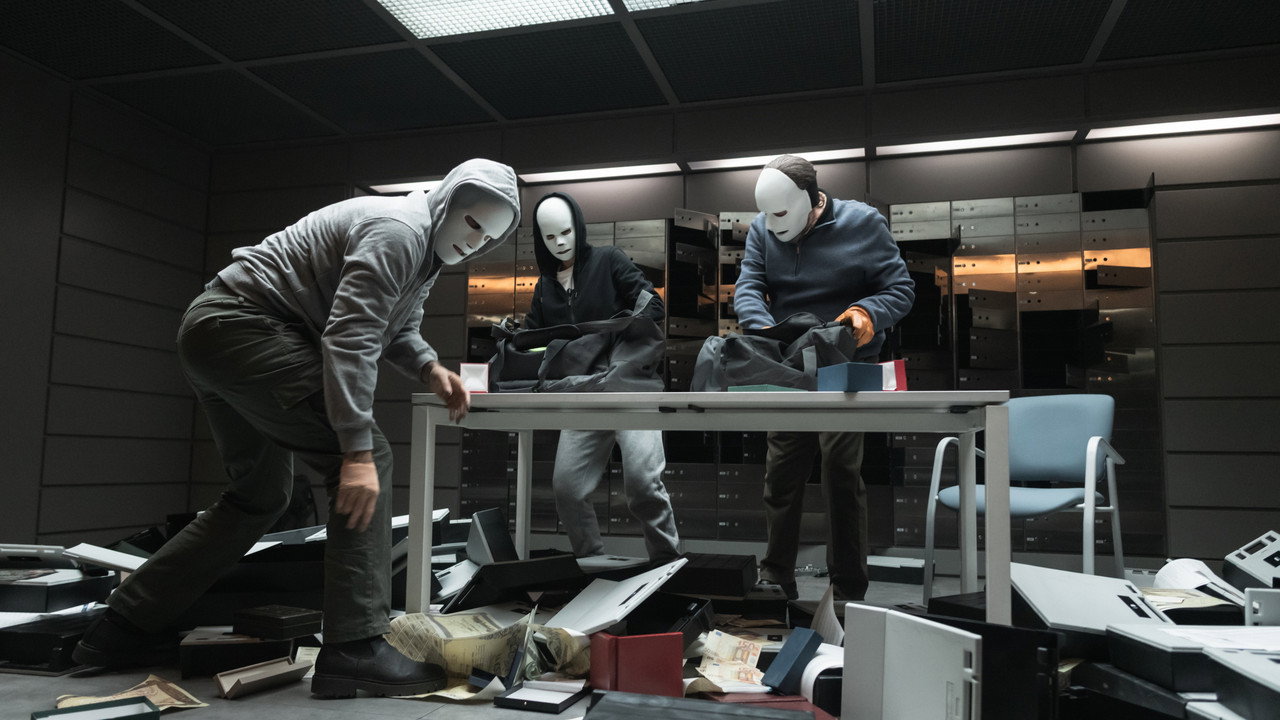
There are directors whose comfort zone becomes, with the years, a comfortable padded cell of cozy costumbrista tones from which one must escape at the wheel's blow. Daniel Sánchez Arévalo decides to abandon the friendly gears of his previous filmography to delve into the swampy terrains of genre thriller with an artifact that, on paper, seems to respond to the industrial coordinates of Bambú Producciones, but that hides under its hood an unusual turbidity. The premise places the spectator in the Spain of 2013, a period where the economic and moral seams of the country already hung from an invisible thread that threatened to section everything. It is in that context of environmental rot where a bank heist does not function as an apology for crime, but as the most evident symptom of a social decomposition prior to any judicial order. It is not the Spain of summer movies, but the Spain of unpaid mortgages and dreams crushed under wet asphalt.
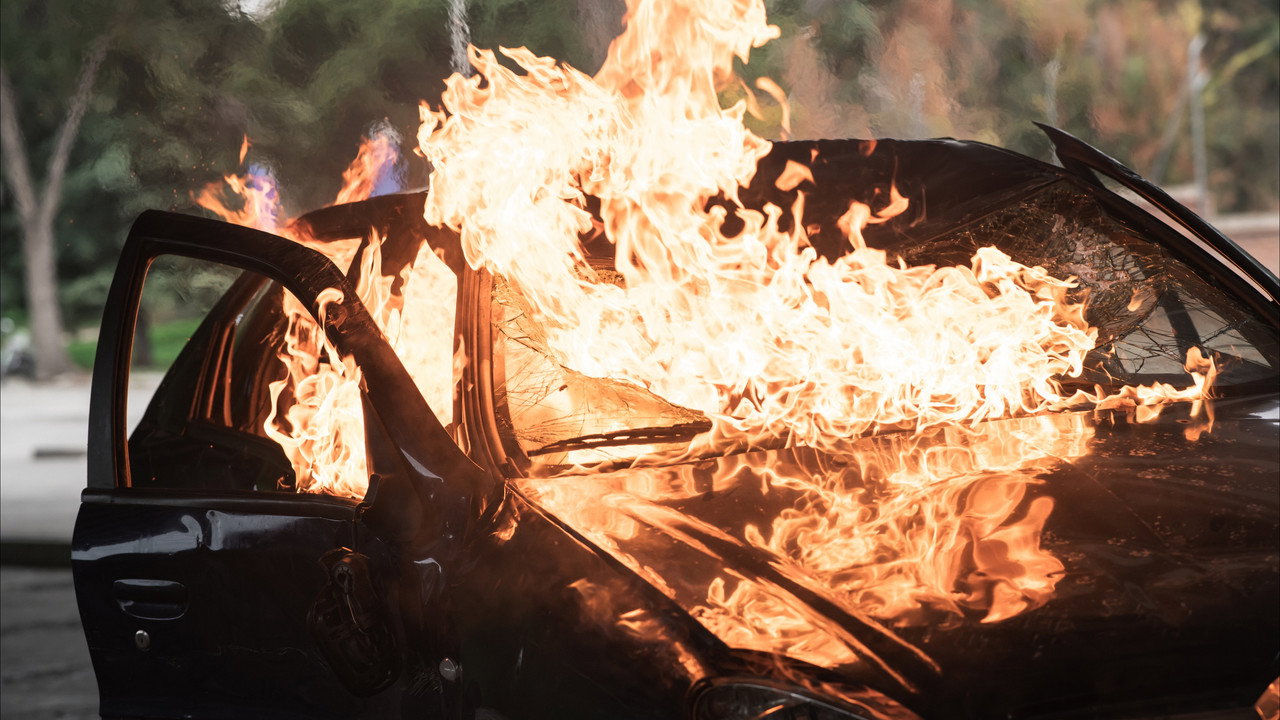
The engine that dynamites the story is not the loot stolen from the financial vaults, but a sinister traffic accident that acts as a retroactive catalyst of broken loyalties. The narrative structure disorients immediately by proposing that the night accident does not bring to light the true face of the band of pickpockets and robbers, but confirms what the spectator already intuited from the first frame: the betrayal did not come during the escape, but inhabited the foundational core of the alliance itself. The characters appear before the disaster not with the fury of the cornered criminal, but with the boredom of one who has been playing a role that no one believes anymore for too long. The wet road and the twisted iron thus become the perfect visual metaphor of biographies that had derailed many years before stepping on the accelerator towards the bank. It is a silent violence, more harmful than any shot, because it leaves no visible scars, only holes in the soul.
The interpretive dissection on the asphalt of guilt
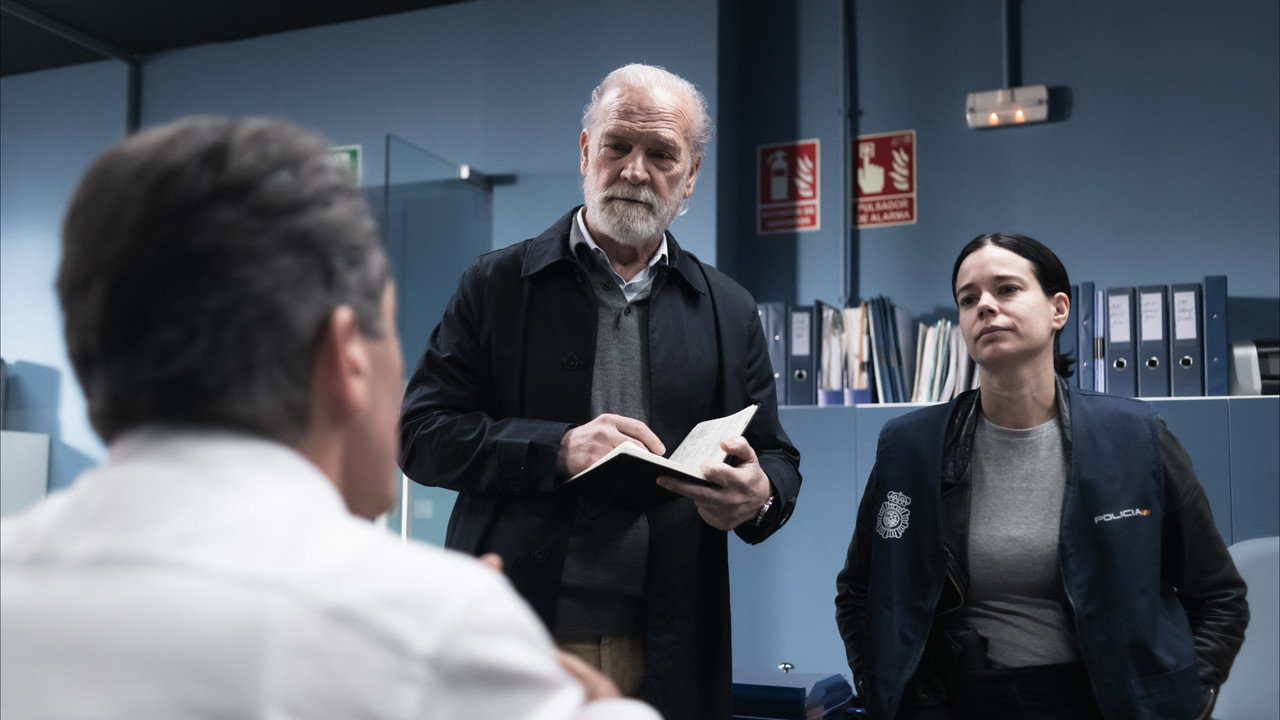
The dramatic weight falls on a coral cast where each face functions as a constant reminder of generalized imposture. Laia Costa assumes the emotional helm with a dry physicality, devoid of any interpretive vanity, embodying a Carla Mencía who seems to observe her own destruction with a mix of tiredness and fatalism. Her gaze does not ask for compassion, it demands justice, although she knows that justice is a luxury that her social class cannot afford. Opposite her, the veteran presence of Karra Elejalde and Luis Zahera brings that telluric roughness that national cinema demands when it comes to exploring everyday meanness, avoiding the caricatured tic thanks to an admirable containment of voice and gaze. They do not shout, they do not gesticulate; their mere presence in the frame weighs like a slab of reinforced concrete. Tamar Novas and Álvaro Cervantes complete the male flank with an agonizing vulnerability that disarms the archetype of the cinematic thug, turning their verbal exchanges into fencing duels where each pause weighs more than a loaded gun. The room work is noticeable, the chemistry forged in the repetition of dialogues that seem extracted from real life, not from a Hollywood script.
The score and the penumbra as architecture of collapse

In the technical department, the score composed by Federico Jusid avoids the effectist underlining of cheap tension, preferring to weave an atmosphere of low frequencies that accompanies the psychological collapse without invading the dramatic space. There are no dramatic strings or terror synthesizers; there is a constant hum, like that of an electric transformer about to explode. For its part, the direction of photography signed by Rafa García understands that the Spain of 2013 does not need strident filters, but a desaturated palette that turns oppressive interiors and lonely shoulders into extensions of the robbers' mood. The light is always artificial, hard, revealing the imperfections of the skin and the dirt accumulated in the souls. There is no gratuitous pyrotechnics in the staging, but a formal sobriety that forces to look fixedly at the faces furrowed by paranoia, remembering that national noir cinema reaches its maturity when it renounces imported artifice and embraces intimate misery. The editing, for its part, plays with real time, lengthening the silences until the spectator feels the need to intervene, to break the tension accumulated in the viciated air of the waiting rooms.
The best
- Laia Costa's interpretation: an exercise of containment and dull pain that sustains the riskiest moments of the script, demonstrating that acting greatness does not reside in the shout, but in the whisper that breaks the silence.
- The oppressive atmosphere: a recreation of the Spain of 2013 built from environmental unease and not from cheap nostalgia, managing to make the spectator feel the cold in the bones without the need for special effects.
- Sánchez Arévalo's narrative pulse: abandoning costumbrismo to transit with solvency through the darkest twists of the psychological thriller, demonstrating that the director has more string than was granted to him.
- The solvency of the supporting cast: Karra Elejalde and Luis Zahera bring an unquestionable physicality and veteranry, anchoring the story in a tangible and painful reality.
The worst
- The intermediate stretch: some explanatory flashbacks slow down the dry rhythm that the initial accident promised from the first minute, forcing the spectator to stop to digest information that could have been integrated more organically.
- The resolution of certain subplots: the excessive weight of individual family traumas sometimes dilutes the corrosive force of the main heist, making the collective tension dissipate in personal anecdotes that, although valid, reduce the impact of the final climax.
The Verdict of Claqueta Ácida
Collision is not the typical heist movie where the loot matters more than the alibis; it is a delayed autopsy on rotten loyalty. Daniel Sánchez Arévalo demonstrates that one can abandon bittersweet comedy without losing the bad temper, signing a story where the true impact occurs very inside the consciousness of its protagonists. The spectator who looks for impossible chases will leave disappointed; the cinephile who appreciates the aroma of betrayal cooked over low heat will find here one of the most uncomfortable surprises of the year. It is a movie that does not let you sleep, not because of the scare, but because of the uncomfortable reflection on how far we are willing to go when the world falls apart. 💀
🎬 Tráiler Oficial
Abrir en YouTube
Ending Explained: Collision
Collision: frequently asked questions
- What is the rating of "Collision" on Claqueta Ácida?
- "Collision" scored 7.3/10 on Claqueta Ácida in the review by Odin Lagbert.
- Is "Collision" worth watching?
- With reservations. We gave it 7.3/10 (Citric Acid), our rating for uneven films with something worth saving.
- Who directed "Collision"?
- "Collision" was directed by Daniel Sánchez Arévalo.
- How does "Collision" end?
- Spoilers in Collision ending explained .
Theater Collateral Damage Report
Psychophysical impact certificate issued by Odin Lagbert
Cero bostezos, aunque el espectador despistado termine pidiendo un croquis para entender qué pasó antes de que sonara la alarma.
Apetece mirar el reloj únicamente para comprobar cuánto tardarán los personajes en admitir lo inevitable.
How much second-hand embarrassment the film causes (10 = maximum). It is not the review score.
Un espresso doble servido sin azúcar, tan amargo como las confesiones que se cruzan en el asfalto.
"El instante exacto del impacto vial donde las coartadas de cartón se desmoronan bajo la luz fría de la carretera."
Another critic from the newsroom scores the same film. The main score is still the one at the top of the review.

The rebuttal from Lúa Ácida (Queen of the Box Office)
In stark disagreement with the review given by Odin Lagbert.
Me quedé con la piel rasgada, no con la trama. El coche se estrella y el sonido es un chirrido de metal sin sangre, una autopsia sonora que no corta. La cámara se pasea como un insecto sobre la epidermis del guion, sin mordida. Los actores se mueven como sombras sin feromona, sus gestos son plastilina dura. El ritmo se traba, los cortes son torpes, la tensión se disuelve en un vacío de luz. La supuesta crítica social se queda en un eco barato, una capa de polvo sobre el asfalto. No hay pulsión de muerte, solo una mutilación lírica de expectativas. El thriller se vuelve grotesco sagrado de lo predecible. 4.8/10. Sangre. Silencio. Vacío.
📋 Ficha Técnica
| Año | 2026 |
| Duración | 122 min |
| País | Spain |
| Guión | Daniel Sánchez Arévalo |
| Fotografía | Rafa García |
| Productora | Bambú Producciones |
| Dónde ver | |
| Letterboxd | Ver Ficha ↗ |
⭐ Estrella Emergente
Laia Costa
Laia Costa embodies with absolute anguish the guilt and moral fracture of a woman trapped in bygone lies.
💬 Community Verdict
What did you think of the film? Rate it from 0 to 10 to compare it with the editorial review.
You haven't voted yet
📢 ¿Te ha gustado el ácido?
Comparte esta crítica con tus amigos cinéfilos o desata la polémica en redes.
⚡ THE CINEMATIC VENOM YOUR INBOX CRAVES
Every Sunday: the week’s reviews, a recommended antidote and the editors’ verdict (in Spanish). No sugarcoated ratings, no corporate fluff. Or join the private Telegram for press previews, poll clashes, and instant alerts.
Alertas de estrenos en 1 segundo, encuestas en caliente y audios al salir de pases de prensa.
Get the weekly dose in your email, every Sunday.
By subscribing you agree that we use your email only to send you the newsletter. Unsubscribe at any time. Privacy policy
Related Reviews
Recommended autopsies for demanding film buffs.
 ⚠️ Ácido Sulfúrico 3.2
On the Run: A Senseless Sprint
⚡ Afinidad temática directa en atmósfera, estilo y fijaciones visuales.
A marathon of clichés and marketing sweat that leaves the audience feeling like they've run in circles. 💀
 ⚠️ Ácido Sulfúrico 3.8
Apocalypse Z: New World: The Repetition Virus in the Canary Shelter
⚡ Afinidad temática directa en atmósfera, estilo y fijaciones visuales.
Relentless critique of Apocalypse Z: New World, Carles Torrens' sequel that turns the end of the world into an exercise in inertia and generic recycling.
 ⚡ Ácido Cítrico 6.8
Azrael: Samara Weaving and the Hell of Silence
⚡ Afinidad temática directa en atmósfera, estilo y fijaciones visuales.
E.L. Katz and Simon Barrett deliver a brutal, relentless mute survival horror film where Samara Weaving once again proves why she is the modern scream queen.
Editorial Ecosystem
Cinephile connections, archive interviews and related analyses.
💬 Debate Cinéfilo & Autopsia de Lectores
¿Discrepas con nuestra nota? ¿Es una obra maestra o veneno puro? Deja tu veredicto abajo sin necesidad de registro.
📏 Normas: se critica la película, no a las personas. Los insultos y los ataques personales se pueden borrar.