Mad Max — Furiosa – The Desert Still Shines, the Script Doesn’t
We dissect George Miller’s latest release. A visual feast that overstays its welcome like gum on hot asphalt.




George Miller has returned to the desert, this time armed with an instruction manual and the determination to leave no blank space unfilled. Furiosa: A Mad Max Saga isn’t a movie—it’s a wiki in motion, a 148-minute visual encyclopedia hell-bent on explaining every last detail of how Furiosa lost her arm, her childhood, and, at times, her narrative dignity. Cannes may have wept as if their film critic credentials had been revoked, but outside the champagne-and-canapé bubble, reality is far less glamorous: Miller has mistaken building a myth for dismantling it piece by piece like an obsessive mechanic.
Wikipedia Syndrome: When Cinema Becomes a PowerPoint
Fury Road (2015) was a miracle because it explained nothing. It was a hurricane of metal, gasoline, and canned testosterone that bulldozed everything in its path, leaving audiences breathless and with the sense they’d witnessed something singular. We didn’t know—or care—why the world had become a nuclear wasteland, or what Immortan Joe ate for breakfast (though we suspected it was a smoothie of steroids and his wives’ tears). The film trusted its visual language, its frenetic editing, and the raw adrenaline of the chase. It was cinema in its purest form: show, don’t tell.
Furiosa, on the other hand, is an endless tell, tell, tell. Miller has decided his prequel needs five solemn chapters, as if we’re watching a Greek tragedy instead of a post-apocalyptic action flick. Every narrative arc is so signposted it feels like the film comes with subtitles for dummies: "Here, Furiosa learns to hate," "Here, Furiosa loses her innocence (and an arm)," "Here, Furiosa discovers the world is a dumpster fire and men are worse." There’s no room for ambiguity, mystery, or the sense that Furiosa is a force of nature rather than a character with a detailed family tree. In Fury Road, she was an enigma wrapped in grease and scars; here, she’s a case study in childhood trauma complete with flashbacks.
The didacticism reaches ridiculous heights. Did we need to know how Furiosa got her iconic war rig? No. Was a training montage essential to justify her skill with weapons? Hardly. Did we have to endure a scene of her shaving her head while staring into the void like a sacrificial lamb? For God’s sake, Miller, let her breathe. The problem isn’t that the film explains things—it’s that it does so with the clumsiness of a screenwriting student who just discovered worldbuilding and thinks more is better. The result is a movie that, in its eagerness to honor Fury Road’s legacy, drowns it in a sea of unnecessary exposition.
Anya Taylor-Joy: The Gaze That Saves a Foretold Disaster
If there’s one thing keeping Furiosa afloat—and not sunk in the same pit of self-indulgence that dooms most prequels—it’s Anya Taylor-Joy. Replacing Charlize Theron as Furiosa was a suicide mission, like trying to cross the Wasteland without water and with a "Wanted" poster on your back. Theron was a force of nature, a Furiosa carved from granite and testosterone, with a physical presence that filled the screen with just a breath. Taylor-Joy, by contrast, is more fragile, more human, but no less lethal.
What’s fascinating about her performance is how she conveys everything without saying almost anything. With barely thirty lines of dialogue in the entire film, Taylor-Joy builds a complex character through glances alone: the contained hatred when she looks at Dementus, the vulnerability when she remembers her childhood, the cold determination when she grips a weapon. It’s a physical, almost animalistic performance, where every gesture speaks louder than a two-page monologue. When Furiosa crawls through the desert with one arm missing, or charges at her enemies with the fury of someone who’s lost everything, Taylor-Joy proves she doesn’t need words to convey the weight of her trauma.
The problem is the film isn’t always worthy of her talent. There are moments when Furiosa feels more like a plot device than a character, dragged along by the current of the story like a driverless car. But when Taylor-Joy has material to work with—like in the war rig assault scene or the childhood flashbacks—the film soars. It’s a shame Miller didn’t trust her (or his own visual storytelling) more, instead of relying on explanatory dialogue.
Chris Hemsworth: The Villain Who Feels Like an Extra from Mad Max: The Musical
At the other end of the acting spectrum, we have Chris Hemsworth as Dementus, the film’s villain. If Immortan Joe was an iconic monster—a mix of fascist dictator and rock star with skin issues—Dementus is… well, he’s a guy with a ridiculous nasal prosthesis and a teddy bear strapped to his back. Hemsworth throws himself into the role with the energy of an actor who knows he’s in a Mad Max movie and wants to have fun, but the character is a tonal mess.
Dementus isn’t a villain—he’s a Shakespearean buffoon lost in the desert. He has moments of real menace—like when he kidnaps young Furiosa—but most of the time, he feels like a sad clown, a biker gang leader who’s acting as if he’s in a one-man Broadway show. His grandiosity is so exaggerated it borders on parody, and his rivalry with Furiosa, instead of feeling epic, sometimes seems lifted from a post-apocalyptic telenovela. "I took your childhood, and now I’ll take your future!" Dementus shouts at one point, as if reading from a script written by a fanfiction algorithm.
The problem isn’t Hemsworth, who commits to the role with infectious energy, but the tone. Furiosa oscillates between somber drama and farce without finding balance. When Dementus appears on screen, the film seems to be speaking to a different audience than the one following Furiosa’s journey. It’s as if Miller couldn’t decide whether he wanted to make a Greek tragedy or a black comedy, and the result is a hodgepodge that confuses more than it thrills.
The Symphony of Dust and Metal: Progress or Regression?
Visually, Furiosa is a beast. George Miller remains the king of choreographed chaos, and there are sequences in this film that prove why Fury Road revolutionized action cinema. The war rig assault, a fifteen-minute heart-pounding masterclass, is a clinic in editing, cinematography, and sound design. The choreography of the stunts, the way the vehicles move through space, the sense of real danger… it all harks back to the best of the saga.
Cinematographer Simon Duggan does a commendable job mimicking—and in some cases surpassing—the hyper-saturated palette of Fury Road. The desert has never looked so alive, with its copper tones and cyans contrasting against the blood-red violence. The modified vehicles, designed by the production team, are so detailed and creative they seem plucked from a steampunk nightmare. Every war rig, motorcycle, and death trap feels like an extension of the characters, and the result is a visual spectacle that justifies the ticket price on its own.
But—there’s always a but—Furiosa flirts too much with CGI. Fury Road was a physical, gritty, dangerous film. Every hit, explosion, and vehicle leap felt real because, largely, it was. Miller and his team built miniatures, used practical effects, and shot in extreme conditions to achieve that sense of authenticity. Furiosa, on the other hand, sometimes feels like a high-end video game. There are moments where the digital effects are so obvious they break immersion: backgrounds that look painted, explosions straight out of an After Effects plugin, camera movements that scream green screen.
It’s not that the film is bad in this regard—it’s still head and shoulders above the mediocrity of most modern blockbusters—but it’s a step back from the rawness of Fury Road. When Furiosa leaps from one vehicle to another in the middle of a sandstorm, or when the engines roar with an almost organic ferocity, the film recaptures its magic. But when Dementus delivers a monologue in front of a background that looks like a Windows 95 wallpaper, the spell shatters.
The Pacing: When Five Acts Are Too Many
The five-act structure of Furiosa is its biggest burden. Miller has decided his prequel needs to be a post-apocalyptic Bildungsroman, and the result is a film that stumbles forward. Each chapter has its own tone, its own rhythm, and some—especially the one dedicated to Furiosa’s childhood—feel like filler. It’s not that the film is slow—there are more than enough action sequences to hold interest—but the sense that every scene exists solely to plug a hole in Furiosa’s lore is exhausting.
Fury Road was a two-hour film that flew by. Furiosa is a two-and-a-half-hour film that feels longer. Not because it’s boring, but because Miller doesn’t trust the audience. Every plot twist, revelation, and development is so signposted it’s like the film comes with an attached PowerPoint. "Here, Furiosa learns a lesson," "Here, Furiosa suffers a loss," "Here, Furiosa gets revenge." It’s as if Miller has forgotten that cinema, at its core, is about suggestion, not explanation.
The Verdict: Is It Worth It?
Furiosa isn’t a bad film. In fact, it’s a very good one in many ways: it has spectacular action sequences, impeccable production design, a magnetic Anya Taylor-Joy, and a Chris Hemsworth who’s having the time of his life. But it’s also a film that suffers from an excess of narrative ambition, unnecessary didacticism, and a structure that weighs it down more than it enriches it.
If you’re looking for two and a half hours of visual chaos—modified vehicles, desert chases, and a protagonist who conveys more with a glance than most actors do with a ten-page monologue—Furiosa will satisfy. But if you were hoping for the same iconoclastic magic, the same relentless pacing, and the same freshness that made Fury Road an instant classic, you’ll likely leave the theater feeling like Miller has confused building a universe with drowning it in details.
Sometimes, legends are more powerful when left with blank spaces. Furiosa is a film that prefers to fill those spaces with explanations, flashbacks, and lore. And in that eagerness to leave nothing to chance, it loses some of the essence that made its predecessor great. It’s not a failure, but it’s not the miracle some were hoping for. At best, it’s a competent spin-off of a saga that deserved more than mere competence.
finalExplicado: "Furiosa culmina con el asalto final al Citadel: tras años de venganza, la joven Furiosa, desfigurada y endurecida, confronta a Dementus, lo derrota y lo condena a una muerte lenta y humillante atado al árbol de la vida. Luego asciende como la mano derecha de Immortan Joe, ocultando su identidad bajo una máscara mecánica y sacrificando su humanidad para convertirse en la guerrera que veremos en Fury Road. Simbólicamente, el desenlace representa la victoria pírrica de la rabia: Furiosa “gana” el desierto, pero pierde su alma. El árbol que florece sobre el cuerpo torturado de Dementus es la única nota de esperanza orgánica en un mundo mecánico y estéril; una metáfora de que la vida solo renace sobre la podredumbre y el sacrificio total. El mito se cierra, pero la leyenda queda vacía."
The Best
The war rig assault: Fifteen minutes of pure action cinema, where editing, cinematography, and sound design come together to create a sequence that rivals the best of Fury Road*. Anya Taylor-Joy: A physical, magnetic performance capable of conveying the weight of trauma with just a glance. Without her, Furiosa* would be an even more barren wasteland.The Worst
The excess of explanations: Miller has turned what should be a myth into an instruction manual. Every gap in the lore* is filled with the subtlety of a jackhammer. The obvious CGI: Where Fury Road was physical and dangerous, Furiosa sometimes feels like a high-end video game. Digital backgrounds and fake* explosions break immersion at key moments.The Verdict of Claqueta Ácida (6.5/10)
Furiosa is like that friend who insists on explaining the joke after telling it: well-intentioned but unnecessary. George Miller remains a master of visual chaos, but his obsession with filling every gap in the Mad Max universe has diluted the essence of what made Fury Road great. It’s not a bad film, but it’s a letdown for those who expected a miracle. In the end, Furiosa deserved more than a two-and-a-half-hour genealogy. She deserved silence, mystery, and a little less Wikipedia.🎬 Tráiler Oficial
Abrir en YouTube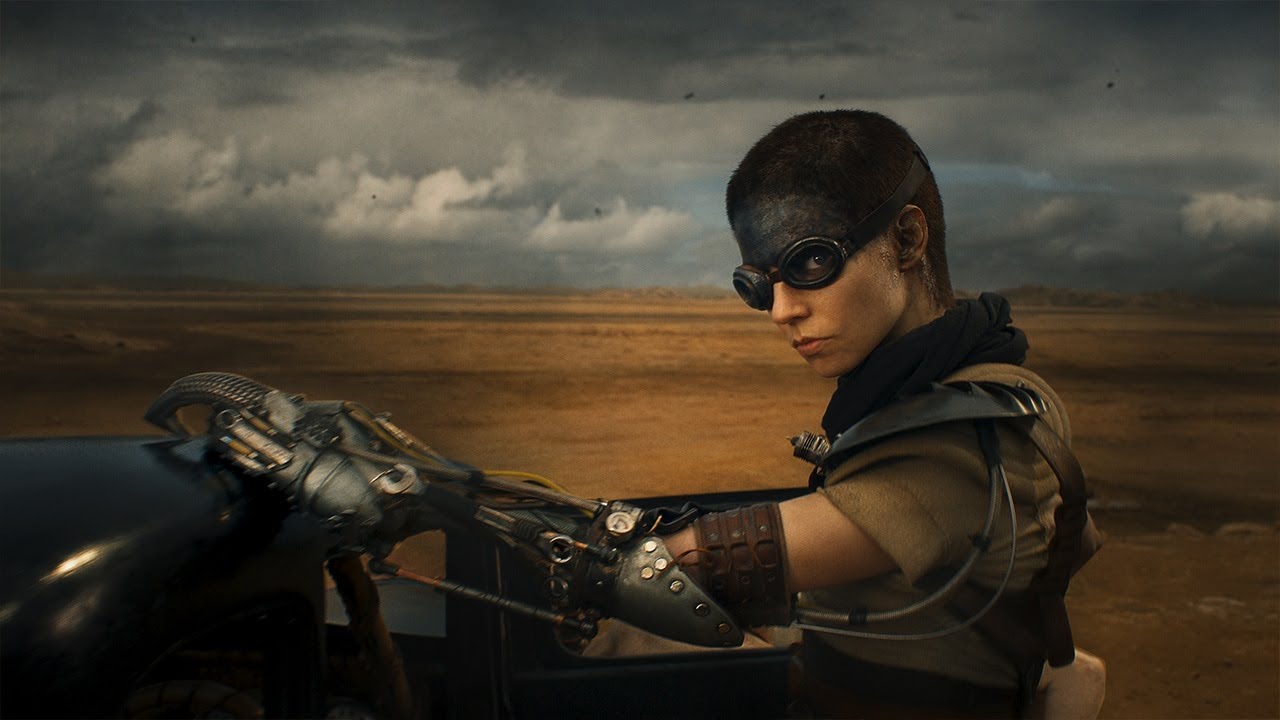
Ending Explained: Mad Max
Ficha de Daños Colaterales en Sala
Certificado de impacto psicofísico emitido por Lúa Ácida
3 amagos en el tramo intermedio; pestañeo pesado en las transiciones más innecesarias.
Minuto 53 y minuto 66 (comprobando cuánto quedaba de suplicio).
2 espressos para no dejarse vencer por la mediocridad cómoda.
"A mitad del segundo acto cuando la subtrama secundaria empezó a pesar más de lo que aportaba."
💬 El Veredicto de la Comunidad
¿Qué te ha parecido la película? Deja tu nota de 0 a 10 para contrastarla con el análisis de la redacción.
Aún no has votado
📢 ¿Te ha gustado el ácido?
Comparte esta crítica con tus amigos cinéfilos o desata la polémica en redes.
⚡ THE CINEMATIC VENOM YOUR INBOX CRAVES
No sugarcoated ratings, no corporate fluff. Subscribe for our uncensored weekly analysis or join the private Telegram for press previews, poll clashes, and instant alerts.
Alertas de estrenos en 1 segundo, encuestas en caliente y audios al salir de pases de prensa.
Recibe la dosis semanal en tu mail + regalo inmediato del PDF con 50 joyas ocultas de culto.
Related Reviews
Recommended autopsies for demanding film buffs.
 ⚡ Ácido Cítrico7.5
A Ghost Story: A Journey Through Time and Memory
⚡Afinidad temática directa en atmósfera, estilo y fijaciones visuales.
The Claqueta Ácida review of A Ghost Story, a film that explores existence and human connection.
 ⚡ Ácido Cítrico7.2
Acid in the Veins: Fede Álvarez Revives the Tactile Panic of Alien
⚡Afinidad temática directa en atmósfera, estilo y fijaciones visuales.
Industrial claustrophobia and pure physical terror. A merciless critique of Ian Holm's CGI and the cheap nostalgia that stains the franchise's return.
 🔥 Fusión Nuclear8.0
Backrooms: A Descent into the Void
⚡Afinidad temática directa en atmósfera, estilo y fijaciones visuales.
A film that flings wide the door to mystery and terror—if you dare to step through
Editorial Ecosystem
Cinephile connections, archive interviews and related analyses.
💬 Debate Cinéfilo & Autopsia de Lectores
0 veredictos¿Discrepas con nuestra nota? ¿Es una obra maestra o veneno puro? Deja tu veredicto abajo sin necesidad de registro.

Aún nadie ha dejado su veredicto para esta película.
Sé el primero en clavarle el colmillo rellenando el formulario de arriba.