
Lamb — The Beast That Consumes Us
A scathing critique of the Icelandic film that will leave you speechless


Lamb: full review

As an Amazon Associate, Claqueta Ácida earns from qualifying purchases.
Lamb, Valdimar Jóhannsson’s feature debut, isn’t a film: it’s a pagan ritual shot in high-resolution digital with the patience of an Icelandic shepherd and the cruelty of a bored Norse god. We are facing a film object that smells of damp earth, sour milk and that strange blend of tenderness and horror only Icelanders seem able to distill, as if Bergman had decided to shoot an episode of Black Mirror on the farm from The Witch, with the icy deliberation of Scandinavian cinema. The question isn’t whether Lamb is good or bad, but whether we are ready for cinema to remind us, with the delicacy of an axe to the back of the neck, that nature isn’t wise but sadistic, and that love, in its purest form, can be indistinguishable from the most absolute madness.
The context of this film is as fascinating as its plot: Valdimar Jóhannsson, an Icelandic director with more experience in the technical and special-effects departments of big productions than in directing features, decided his fiction debut would be a rural fable about a couple who adopt a lamb... or something like it. But let’s not fool ourselves: Lamb isn’t Babe on steroids, nor a Scandinavian Life Is Beautiful with sheep. No. This is folk horror in its purest state, a pastoral nightmare where innocence is a trap and motherhood an act of emotional cannibalism. The film was conceived when international horror was enjoying a renaissance thanks to films like The Witch (2015) and Midsommar (2019), but Jóhannsson didn’t want to jump on the elevated-horror bandwagon with its obvious metaphors and textbook symbolism. Instead, he went to the countryside, literally, and shot a film where the real monster isn’t a demon or an alien but the very idea of what we consider “family”. And he did it making every Icelandic króna count, with the backing of strong production companies and distribution from the infallible A24, so that such a bizarre proposal looks like an impeccable production in which every shot resembles a cursed oil painting.
The cultural climate in which Lamb was born is just as interesting. Premiered at the 2021 Cannes Film Festival in the Un Certain Regard section, the film arrived when the world was still reeling from the pandemic, and cinema, as always, chose to reflect our deepest fears. But while other films went for metaphors about isolation or social collapse, Lamb decided to explore something far more primitive: the fear of the unknown, of what we can’t control, of the moment when nature reminds us that, when all is said and done, we are just animals with smartphones. And it did so with a coldness that would freeze even the characters of Fargo. No sudden scares, no shrill music, no easy jolts. Only silence, the wind, the creak of branches and that guttural, almost human sound little Ada makes when she looks at the camera with eyes black as bottomless wells. If Hitchcock said suspense was like a dripping tap, Jóhannsson has decided that horror is the sound of a sheep chewing grass... just before you realize it isn’t grass it’s chewing.
But let’s talk about Iceland, because this country isn’t just a setting but another character. Lamb couldn’t have been shot anywhere else in the world. Iceland is a land where nature isn’t a backdrop but an active, almost conscious force that watches, judges and sometimes decides to crush you like an insect. Eli Arenson’s cinematography captures this essence with surgical precision: the acid greens of the pastures, the metallic greys of the sky, the dirty whites of melting snow... Everything looks lifted from a fever dream, as if Tarkovsky had decided to shoot an observational document about life on an Icelandic farm. The wide shots of mountains and valleys aren’t mere postcards: they are warnings. The camera moves with the slowness of a predator stalking its prey, and every frame seems designed to remind us that, however comfortable we are in our seats, there’s something out there watching us, something not human, but not entirely animal either. And that something is shaped like a lamb.
Direction: The art of filming as if the devil were watching
If anything defines Valdimar Jóhannsson’s direction in Lamb, it’s his ability to turn the everyday into something sinister with a simple shift of focus. No big camera moves, no endless long takes, no visual choreography screaming “look what an artist I am!”. No, Jóhannsson prefers subtlety, the static shot, the framing that looks casual but is in fact calculated to the millimeter to create discomfort. It’s as if Michael Haneke had decided to shoot Funny Games on a farm, swapping urban cruelty for rural mysticism and a sense of humor so black it would make Lars von Trier pale.One of the film’s most brilliant moments is the sheep giving birth, filmed with a rawness that borders on the unbearable. No music, no dialogue, just the sound of the animals and that viscous fluid that seems to spring from the farm’s entrails as Maria and Ingvar assist the birth. Jóhannsson spares us no detail: we see the lamb’s legs emerging, the blood, the mother’s effort... It’s a scene that could have been grotesque but, in the director’s hands, becomes almost sacred, as if we were witnessing a pagan ritual where the divine and the abject join hands. And then there’s that first close-up of Ada, the hybrid creature, looking at us with eyes that seem to know more than they should. Jóhannsson doesn’t explain what she is, where she comes from or what she wants. He simply shows her to us, as if saying: “Here she is. Treat her as your own.”
The film’s narrative pulse is another of its great strengths. Lamb is in no hurry, but it never stalls. Each scene advances with the inevitability of a moving glacier: you know something is going to happen, but not when, how or why. And when it finally does, it’s as if the universe itself had been holding its breath. The sequence in which Ada briefly goes missing outside the house is a perfect example. No tension music, no point-of-view shots, nothing telling us something bad is about to happen. Just the wind, the fog and the sound of footsteps moving away. And then, suddenly, silence. A silence so dense you could cut it with a knife. Jóhannsson understands that horror isn’t in what is shown but in what is sensed, in what hides in the cracks of the image. He is a master of “less is more”, not in the minimalist, boring sense of some arthouse directors, but in the sense that every shot, every sound, every gesture is loaded with meaning. Or with menace.
And then there’s the ending. Oh, the ending. No spoilers, but let’s say Jóhannsson isn’t afraid of cruelty. It isn’t an ambiguous, open or poetic ending. It’s an ending that hurts, that burns, that leaves you feeling something has been torn out of your guts. It’s the kind of ending that makes you want to watch the film again immediately, not to look for clues or hidden meanings, but to make sure what you just saw really happened. Because, deep down, Lamb isn’t a film about a hybrid lamb, or about a couple trying to dodge the pain of the past, or even about nature and its mysteries. It’s a film about guilt, about the moment you realize you’ve crossed a line and there’s no going back. And Jóhannsson films it with the coldness of a surgeon and the compassion of an executioner.
Actors: Noomi Rapace and the anatomy of despair
If Lamb works, it’s largely thanks to Noomi Rapace, an actress who seems born to play women on the edge of the abyss. Maria, her character, isn’t a heroine, or a victim, or even a mother in the traditional sense. She’s a broken, tired woman who has found in Ada something to fill the void of her existence, while knowing that what she’s doing defies the laws of nature. Rapace doesn’t play Maria: she inhabits her. Every gesture, every glance, every silence carries a truth that hurts. No overacting, no histrionics, nothing to remind us we’re watching a film. Just a woman who has decided to love something she shouldn’t, and pays the price.The moments when Maria cares for and feeds Ada are among the most disturbing in the film, not for what we see (though that too) but for what we sense. Rapace conveys a mix of tenderness and revulsion, of love and disgust, that is almost unbearable. It’s as if her body knew what she’s doing borders on the forbidden while her heart refused to accept it. And then there are those moments of silence, when Maria looks at Ada with a mix of pride and fear, as if she knew that sooner or later the consequences of what she has welcomed into her home will devour her. Rapace doesn’t need dialogue to convey all this. A sigh is enough, a tremor in her hands, that lost look that seems to say: “What have I become?”
The other great asset of the cast is Hilmir Snær Guðnason, who plays Ingvar, Maria’s husband. Guðnason is an actor of measured, precise resources, and in Lamb he achieves something extraordinary: conveying the fragility of a man who has chosen to ignore the irrationality of the situation because, deep down, he prefers to cling to the happiness of this new domestic illusion. Ingvar isn’t a coward or naive: he’s a man who has chosen to look away because he knows that if he accepts the raw reality, his world will collapse. And Guðnason plays him with a naturalness that hurts. No big gestures, no dramatic monologues. Just a tired man trying to stay sane in an environment that has stopped making sense. They are masterfully joined by Björn Hlynur Haraldsson as Pétur, Ingvar’s troubled brother, whose arrival at the farm introduces the counterpoint of outside sanity and completely destabilizes the couple’s fragile pact of silence.
But if one “actor” steals the film, it’s Ada, the hybrid creature. We don’t know exactly how many layers of code and organic textures lie behind those black eyes, but it doesn’t matter, because thanks to the prodigious digital integration over child actors and real lambs on set, Ada feels like a completely living being. Jóhannsson and his technical team managed to create a character who is at once tender and terrifying, innocent and sinister. Ada doesn’t speak, doesn’t cry, doesn’t do anything a creature like her wouldn’t... but there’s something in her gaze, in the way she moves, that freezes your blood. It’s as if she knew something we don’t, as if she were waiting for her moment. And when that moment comes, there’s no music, no dialogue, nothing to cushion the blow. Only silence. And the sound of something breaking.
Technical side: The magic of the invisible in the digital age
If Lamb proves anything, it’s that cinema doesn’t need superhero pyrotechnics to be powerful. What it needs is patience, vision and the understanding that sometimes the best visual effects are those that don’t shout their presence. In that sense, the film’s technical side is a masterclass in putting cutting-edge digital technology at the service of a dirty, raw realism.Let’s start with the cinematography, because Eli Arenson deserves a monument. Lamb isn’t a pretty film: it’s a beautiful one, in the darkest, most disturbing sense of the word. The Icelandic landscapes aren’t a set but another character, one that watches, judges and sometimes punishes the protagonists for their hubris. The wide shots of mountains and valleys aren’t mere postcards: they’re warnings. The natural light, cold and merciless, captured with impeccable sharpness, lights every scene as if revealing truths we’d rather not know. And then there are those close-ups, so intimate they feel almost invasive, in which the characters’ faces become landscapes of pain and despair. Arenson isn’t afraid of darkness, tight framings or letting the camera stay still while the tension unfolds before our eyes. It’s cinematography that hurts, that burns, that leaves you feeling you’ve been looking at something you shouldn’t have seen.
The sound design is another of the film’s great strengths. Lamb has no traditional, ever-present score; Þórarinn Guðnason’s music is surgical and appears only when the atmosphere demands it. Instead, the sound is organic, almost tactile: the wind, the animals, footsteps on wet earth, the creak of branches... Everything is amplified, as if we were hearing the world through Maria’s ears. And then there’s the silence. Oh, the silence. There are moments when the film seems to hold its breath, as if the universe itself were waiting for something to happen. And when that something happens, the sound is so real, so physical, you seem to feel it on your own skin. It’s sound design that doesn’t just accompany the image but completes it, making it more real, more tangible, more nightmarish.
The makeup and digital visual effects are the true miracle of the show. The digital effects team managed to invisibly merge the lambs’ animal features with the physiognomy of the children who served as doubles on set. No seams, no robotic movements, no “uncanny valley” pulling us out; Ada feels physical and real. The texture details are so precise that at times it’s hard to believe the titanic digital work behind them. And then there are the real livestock births, the wounds, the blood... All integrated with a realism that borders on the unbearable but is also necessary. Lamb isn’t a film for sensitive stomachs, but it isn’t gratuitous either. Every detail, however repulsive, is there for a reason. Because horror, true horror, isn’t in what you see but in what you feel.
The costumes, coordinated by Margrét Einarsdóttir, and the production design, by Snorri Freyr Hilmarsson, also deserve a mention. Maria and Ingvar’s farm isn’t a studio set: it’s a living place, steeped in damp, real. Every object, every piece of furniture, every garment seems to have a history, as if it had always been there. Nothing looks new, clean or artificial. Everything is worn, used, as if life itself had left its mark in every corner. And the costumes, with their thick traditional wool sweaters (the iconic Icelandic lopapeysa), rubber boots and heavy coats, reflect not only the Icelandic climate but also the characters’ personalities. Maria and Ingvar aren’t people who care about appearances: they are survivors of their own drama, and their clothes show it. No glamour, no style, nothing to remind us we’re watching a film. Just the rawness of real life.
And then there’s the script, or the lack of one. Lamb isn’t a film of dialogue, mechanical explanations or anything resembling what we’re used to in fast-food horror. It’s a film of actions, glances and silences. Valdimar Jóhannsson and Sjón (the co-writer, a celebrated poet and frequent Björk collaborator) understood that sometimes words are superfluous. That some things can’t be explained, only lived. That’s why the script is so minimalist, so austere, so... Icelandic. No dramatic monologues, no textbook revelations, nothing reminiscent of the genre’s commercial clichés. Just life, in all its rawness and beauty. And horror, always there, lurking, waiting for its moment.
The best
- Eli Arenson’s cinematography: Work of disturbing beauty that turns the Icelandic landscapes into another character, one that watches, judges and punishes.
- Noomi Rapace’s performance: A physical, visceral, heartbreaking performance that conveys more with a sigh than many actors do with pages of dialogue.
- Valdimar Jóhannsson’s direction: A solid debut proving that suspense and pagan folklore can be handled with unbearable restraint.
The worst
- Its unhurried pace: The stretching of dead time may exhaust viewers used to loud commercial horror.
- Secondary emotional disconnect: Apart from the central couple, the supporting characters work more as dramatic devices than as three-dimensional beings.
The Claqueta Ácida Verdict (8.5/10)
Lamb is a dazzling, glacial folk poem that disturbs through its stillness and its absolute lack of mercy. Valdimar Jóhannsson delivers a memorable debut in which maternal tenderness blurs into cosmic aberration. A rare and fascinating gem for those who enjoy uncanny horror and savage fables.🎬 Tráiler Oficial
Abrir en YouTube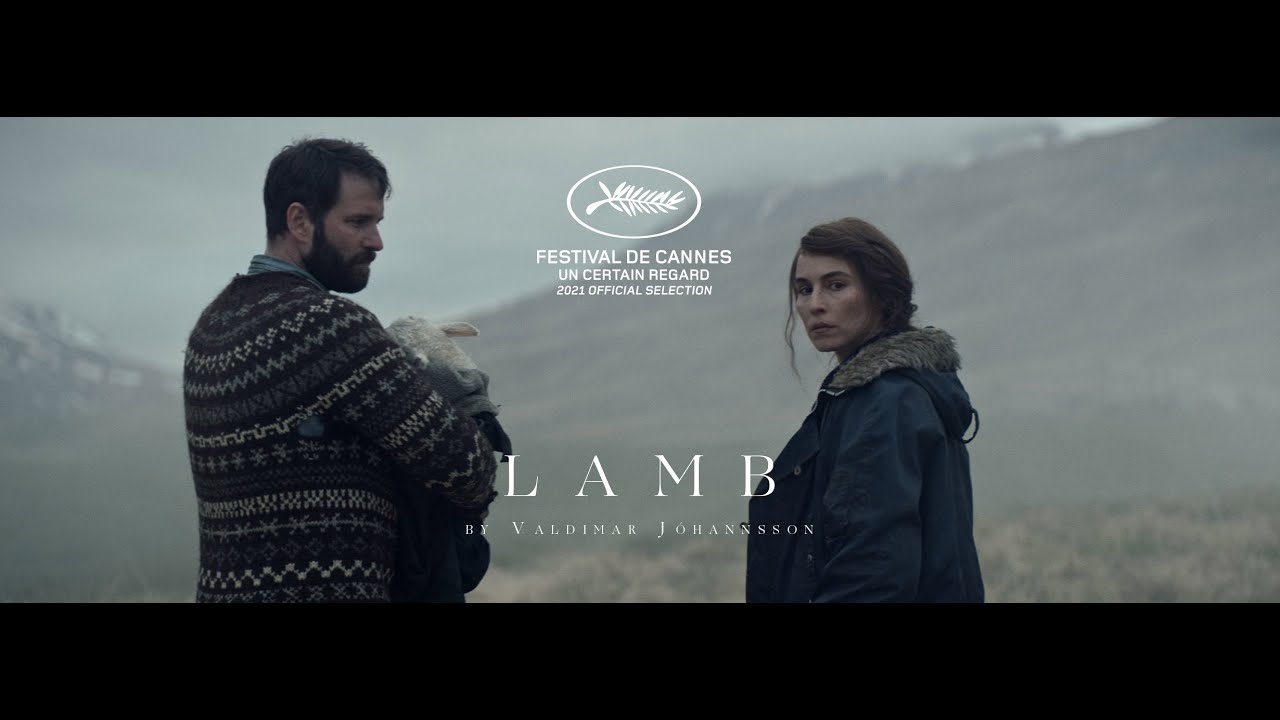
Ending Explained: Lamb
Lamb: frequently asked questions
- What is the rating of "Lamb" on Claqueta Ácida?
- "Lamb" scored 8.5/10 on Claqueta Ácida in the review by Odin Lagbert.
- Is "Lamb" worth watching?
- Yes. We gave it 8.5/10 (Nuclear Fusion), our rating for must-see films.
- Who directed "Lamb"?
- "Lamb" was directed by Valdimar Jóhannsson.
- How does "Lamb" end?
- Spoilers in Lamb ending explained .
Theater Collateral Damage Report
Psychophysical impact certificate issued by Odin Lagbert
Cero. La pantalla absorbió cada segundo de atención disponible.
Ninguna comprobación del tiempo. Se agradece la rareza.
How much second-hand embarrassment the film causes (10 = maximum). It is not the review score.
Ninguna: la adrenalina cinematográfica es suficiente.
"No hubo. La coherencia se mantuvo hasta el último fotograma."
💬 Community Verdict
What did you think of the film? Rate it from 0 to 10 to compare it with the editorial review.
You haven't voted yet
📢 ¿Te ha gustado el ácido?
Comparte esta crítica con tus amigos cinéfilos o desata la polémica en redes.
⚡ THE CINEMATIC VENOM YOUR INBOX CRAVES
No sugarcoated ratings, no corporate fluff. Subscribe for our uncensored weekly analysis or join the private Telegram for press previews, poll clashes, and instant alerts.
Alertas de estrenos en 1 segundo, encuestas en caliente y audios al salir de pases de prensa.
Recibe la dosis semanal en tu mail + regalo inmediato del PDF con 50 joyas ocultas de culto.
By subscribing you agree that we use your email only to send you the newsletter. Unsubscribe at any time. Privacy policy
Related Reviews
Recommended autopsies for demanding film buffs.
 🔥 Fusión Nuclear 8.5
*Alleluia: Love as a Terminal Illness (or How to Turn Crimes of Passion into a Sweaty, Fleshy Spectacle)*
⚡ Afinidad temática directa en atmósfera, estilo y fijaciones visuales.
Fabrice Du Welz reimagines the myth of the lonely hearts killers in a feverish whirlwind of jealousy, submission, and blood, led by Lola Dueñas in a performance that’s equal parts hypnotic and harrowing.
 🔥 Fusión Nuclear 8.5
*High Tension (Haute Tension): The Brutal Birth of the New French Extremism – Or How to Turn Flesh into Poetry with a Machete*
⚡ Afinidad temática directa en atmósfera, estilo y fijaciones visuales.
Alexandre Aja shocked global screens with a relentless rural bloodbath, redefined by breakneck pacing and a divisive twist that splits serious cinephiles right down the middle.
 🔥 Fusión Nuclear 8.5
*Aterrados: The Rebirth of Ghost Stories in the Raw Grit of Buenos Aires*
⚡ Afinidad temática directa en atmósfera, estilo y fijaciones visuales.
Demian Rugna revolutionizes paranormal horror—possessions, poltergeists, and all—by transplanting it to a residential neighborhood in Buenos Aires, armed with a devastating sound design that rattles your bones.
Editorial Ecosystem
Cinephile connections, archive interviews and related analyses.
💬 Debate Cinéfilo & Autopsia de Lectores
¿Discrepas con nuestra nota? ¿Es una obra maestra o veneno puro? Deja tu veredicto abajo sin necesidad de registro.
📏 Normas: se critica la película, no a las personas. Los insultos y los ataques personales se pueden borrar.