The Devil’s Bath — A Black Mass in the Woods That Fails to Exorcise Boredom
Severin Fiala and Veronika Franz deliver a historical psychological horror drama that drowns in its own solemnity. Visually flawless, emotionally frigid. Art or autopsy?


'''''''''''''''''''''''''''''''tweets_alternativos:'''''''''''''''''''''''''''''''
- "@severinfiala y @veronikafranz convierten el siglo XVIII en un manicomio gótico, pero se olvidan de darle cuerda al reloj. ¿Terror histórico o ejercicio de estilo? La respuesta duele. #DesTeufelsBad"
- "@AnjaPlaschg es lo único que salva a #ElBañoDelDiablo de ser un cuadro colgado en un museo vacío. Su Agnes es un fantasma que ni siquiera sabe que está muerto."
- "@UlrichSeidlFilm y @HeimatfilmAT: cuando el presupuesto alcanza para paisajes de postal pero no para diálogos que no suenen a sermón de domingo. #CineAustriaco"
But here’s the catch: The Devil’s Bath wants to be many things at once and ends up a cinematic Frankenstein. On one hand, it’s a historical drama that brutally depicts the lives of women in 18th-century rural Europe, where marriage was a life sentence and motherhood a lottery with more losing tickets than winners. On the other, it’s a psychological horror film that toys with the idea of demonic possession—without ever fully committing. And deep down, it aspires to be a character study of Agnes (Plaschg), a young woman who marries a man she barely knows and is slowly dragged into an abyss of guilt, paranoia, and violence. The problem? Amid all the genre-blending and symbolism, the film forgets the most crucial thing: making the audience feel something.
According to Fiala, the shoot was a precision hell. They filmed in real locations in the Austrian Alps, blending non-professional actors with seasoned performers, under weather conditions that swung between polar cold and suffocating humidity. All to achieve that sense of authenticity which, on screen, translates into static shots of almost painful beauty. But authenticity isn’t synonymous with emotion, and The Devil’s Bath is living proof. Take, for instance, the scene where Agnes washes clothes in a river while her mother-in-law watches with a gaze that could freeze over hell. The shot lingers just long enough for you to feel the weight of the water in Agnes’s hands, the cold seeping into her bones, the exhaustion of a life that’s only just begun. It’s a masterful sequence… and also a microcosm of what’s wrong with the film: it’s perfect in form, but hollow at its core.
It doesn’t help that Veronika Franz’s script, co-written with Fiala, suffers from an excess of solemnity. Dialogue is sparse and, when it does appear, it sounds like biblical edicts or folk proverbs no sane person would utter aloud. “The devil lurks in dark places,” a character hisses at Agnes at one point. No, that’s not a line from an 18th-century sermon—it’s the kind of phrase that only exists in films desperate to remind you they’re important. And The Devil’s Bath wants to be important, oh how it wants to be. The problem is that cinema isn’t made with good intentions, but with good stories. And this one, unfortunately, gets stuck halfway between folklore and textbook psychoanalysis.
Direction and Mise-en-Scène: A Painting That Doesn’t Breathe
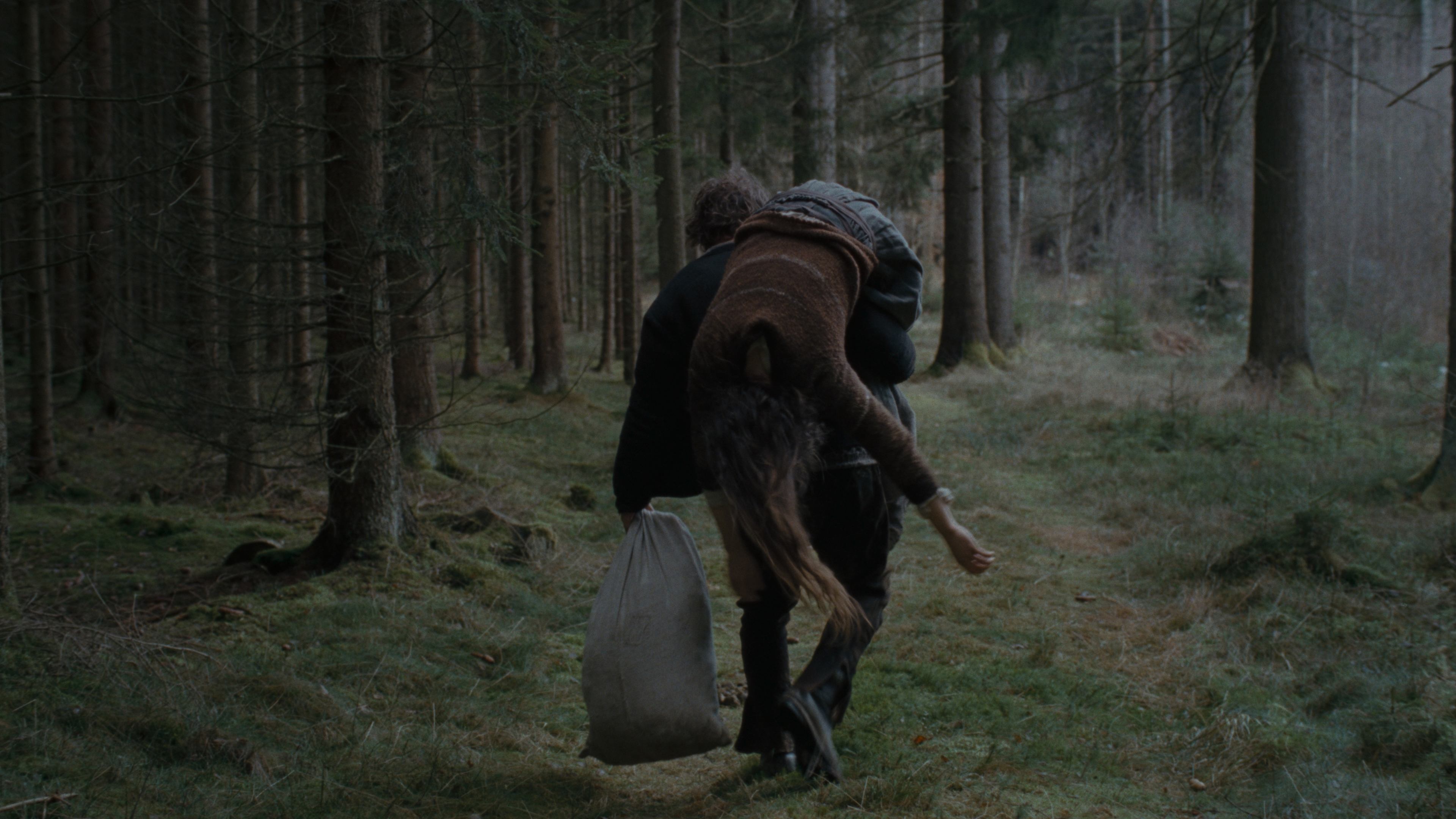
Severin Fiala has a clinical eye for framing. There’s no doubt about that. Every shot in The Devil’s Bath looks like it’s been plucked from a Baroque canvas: symmetrical compositions, earthy tones dissolving into mist, a palette of grays and browns that perfectly mirrors Agnes’s emotional state. But cinema isn’t painting, and a film can’t survive on visual beauty alone. Fiala knows this, which is why he tries to inject some dynamism into the narrative with a few editing tricks—like that jarring cut from Agnes smiling at her husband on their wedding night to a close-up of her face the next morning, now twisted in horror. But these are isolated solutions that fail to compensate for the film’s glacial pace.
Fiala’s greatest sin is his obsession with distance. The camera rarely gets close to the characters, as if afraid of contaminating itself with their emotions. In Goodnight Mommy, that distance worked because mystery was the story’s engine. Here, though, it backfires. Agnes is a character who unravels bit by bit, but the audience never feels that unraveling because the film insists on keeping us miles away. There’s a key scene near the end where Agnes ventures into the woods with an axe. The wide shot reduces her to a tiny speck amid the vastness of the trees, and you can’t help but think: Why won’t you let us see her face? Why won’t you let us feel her pain? But Fiala prefers symbolism over humanity, and that, in the end, is what dooms The Devil’s Bath to being a film that’s cold, calculated, and ultimately boring.
Performances: Anja Plaschg and the Art of Saying Nothing
If anything saves The Devil’s Bath from oblivion, it’s Anja Plaschg’s performance. The Austrian singer, known in the music world as Soap&Skin, makes her film debut with an acting masterclass in restraint. Plaschg doesn’t need to scream or cry to convey Agnes’s torment. A lost look, a nearly imperceptible twitch of the lips, or that moment when she stands still, as if her body no longer belongs to her—it’s all there. It’s a physical, almost animalistic performance that stands in stark contrast to the rigidity of the rest of the cast.
The problem is that Plaschg doesn’t have much material to work with. Franz and Fiala’s script gives her little room to explore Agnes’s psychology beyond the clichés of the oppressed woman descending into madness. So while her performance is flawless, you can’t help but feel like you’re watching a brilliant actress wasted in a role that doesn’t let her shine. The rest of the cast, meanwhile, is merely adequate. Maria Hofstätter, as Agnes’s mother-in-law, has a few memorable moments—like that shot where she watches her daughter-in-law with a mix of contempt and pity that’s pure dynamite—but her character is little more than an archetype. And David Scheid, as Agnes’s husband, is so inexpressive you wonder if he was paid to act or just stand there.
Technical Aspects: Beauty as Anesthesia
If there’s one thing The Devil’s Bath can’t be denied, it’s its technical craftsmanship. Martin Gschlacht’s cinematography is simply dazzling. Every frame looks like it was designed to be framed: dark forests with their gnarled trees, the dim, yellowish interiors of wooden houses, the faces of characters illuminated by candles casting long, warped shadows. Gschlacht makes you feel the cold, the damp, the weight of woolen clothes, the smell of burning wood. It’s a cinematography that hurts because it’s so beautiful, but also because it’s so distant.
The score, composed by Plaschg herself, is another highlight. She opts for a minimalist, almost ethereal sound that blends with the ambient noises—the creaking of branches, the wind whistling through the trees, the rushing water of the river—to create an oppressive atmosphere. There are moments when the music vanishes entirely, and the silence becomes so thick you can hear your own breathing. It’s a triumph, no doubt, but also a reminder that, in this film, the sound is more interesting than the dialogue.
The editing, handled by Michael Palm, is functional but uninspired. There are a few brilliant cuts—like that jump from Agnes in bed to Agnes in the woods, suggesting both a temporal ellipsis and a leap in her sanity—but overall, the pace is so slow you feel like you’re watching a documentary about 18th-century life… minus the informative bits. And the production design, while impeccable, suffers from the same issue as the rest of the film: it’s so realistic it borders on sterile. The houses, the clothes, the utensils—everything is so perfectly recreated you can almost smell the freshly baked bread. But cinema isn’t a museum, and a film can’t survive on historical authenticity alone.
The best
- Martin Gschlacht’s cinematography: Every frame is a postcard from hell. The dark forests, the candlelit interiors, the faces marked by light and shadow… Gschlacht turns the 18th century into a tangible, almost palpable place. It’s the only reason to sit through two hours of this film.
- Anja Plaschg: Her Agnes is a character that lingers in your memory. Plaschg doesn’t need grand gestures to convey her torment; a look, a sigh, a silence is enough. It’s a physical, visceral performance that contrasts with the film’s frigidity.
- Anja Plaschg’s score: Minimalist, ethereal, and oppressive. Plaschg knows when to fall silent and let the void speak for itself. There are moments when the music disappears entirely, and the emptiness it leaves behind is more eloquent than any dialogue.
- The production design: Everything in this film breathes authenticity. From the characters’ clothes to the utensils they use, from the wooden houses to the forested landscapes, it’s an impeccable work that transports you to 18th-century Austria… even if it’s not always a journey you want to take.
The worst
- The script: Veronika Franz and Severin Fiala seem more interested in creating an atmosphere than telling a story. Dialogue is sparse and, when it does appear, it sounds like biblical edicts or textbook proverbs. Agnes is a fascinating character, but the script doesn’t give her the space she needs to develop.
The pace: The Devil’s Bath* is a slow film. Too slow. There are moments when you feel like time has stopped, and not in a poetic way. Fiala seems more interested in creating static tableaux than telling a story with even a hint of dynamism.
- The emotional distance: The camera rarely gets close to the characters, as if afraid of catching their emotions. Agnes unravels before our eyes, but we never feel her pain because the film insists on keeping us at arm’s length. It’s a stylistic choice that ultimately backfires.
- The lack of nuance: Every character is an archetype. The evil mother-in-law, the absent husband, the oppressed young woman… There’s no room for ambiguity or complexity. Even the devil, who should be the most interesting character, remains an abstract concept, a presence more suggested than real.
The Verdict of Claqueta Ácida
The Devil’s Bath is a film that hurts because it’s so beautiful, but also because it’s so empty. Severin Fiala and Veronika Franz have crafted a perfect painting: every frame, every note of the score, every detail of the production design is meticulously planned. But cinema isn’t painting, and a film can’t survive on visual beauty alone. Agnes walks into the woods as if the devil has already whispered in her ear, but the film stays on the threshold, too scared to follow. It’s a shame, because there are moments when you glimpse something grand, something terrible and fascinating. But in the end, The Devil’s Bath is nothing more than a funeral without a corpse: solemn, flawless, and above all, boring. 💀
🎬 Tráiler Oficial
Abrir en YouTube
Ficha de Daños Colaterales en Sala
Certificado de impacto psicofísico emitido por Dr. Cinismo
1 amago en el tramo intermedio; pestañeo pesado en las transiciones más innecesarias.
Minuto 45 y minuto 69 (comprobando cuánto quedaba de suplicio).
2 espresso para no dejarse vencer por la mediocridad cómoda.
"A mitad del segundo acto cuando la subtrama secundaria empezó a pesar más de lo que aportaba."
💬 El Veredicto de la Comunidad
¿Qué te ha parecido la película? Deja tu nota de 0 a 10 para contrastarla con el análisis de la redacción.
Aún no has votado
📢 ¿Te ha gustado el ácido?
Comparte esta crítica con tus amigos cinéfilos o desata la polémica en redes.
⚡ THE CINEMATIC VENOM YOUR INBOX CRAVES
No sugarcoated ratings, no corporate fluff. Subscribe for our uncensored weekly analysis or join the private Telegram for press previews, poll clashes, and instant alerts.
Alertas de estrenos en 1 segundo, encuestas en caliente y audios al salir de pases de prensa.
Recibe la dosis semanal en tu mail + regalo inmediato del PDF con 50 joyas ocultas de culto.
Related Reviews
Recommended autopsies for demanding film buffs.
 ⚡ Ácido Cítrico7.1
28 años después
⚡Afinidad temática directa en atmósfera, estilo y fijaciones visuales.
Una secuela que huele a podrido desde el primer fotograma. Garland y DaCosta intentan revivir el género, pero el resultado es un KO técnico disfrazado de obra maestra.
 ⚡ Ácido Cítrico5.8
**A Serbian Film: The Snuff That Thought It Was Art (and Ended Up a High-School Nightmare)**
⚡Afinidad temática directa en atmósfera, estilo y fijaciones visuales.
**Srđan Spasojević serves up a depravity feast swinging between gratuitous shock and social commentary. Genius or pretentious trash? Claqueta Ácida dissects it with surgical precision.**
 ⚡ Ácido Cítrico6.0
Adolescence, Sex, and Death at Camp Miasma: The Slasher That Reeks of Teen Sweat and a Recycled Script
⚡Afinidad temática directa en atmósfera, estilo y fijaciones visuales.
Jane Schoenbrun turns a summer camp into a dumpster fire of hormones and clichés. Art or autopsy of a dying subgenre?
Editorial Ecosystem
Cinephile connections, archive interviews and related analyses.
💬 Debate Cinéfilo & Autopsia de Lectores
0 veredictos¿Discrepas con nuestra nota? ¿Es una obra maestra o veneno puro? Deja tu veredicto abajo sin necesidad de registro.


Aún nadie ha dejado su veredicto para esta película.
Sé el primero en clavarle el colmillo rellenando el formulario de arriba.