Vertigo — Hitchcock’s Broken Mirror or How to Turn Jimmy Stewart Into a Stylish Psychopath
A scathing, analytical takedown of Vertigo, Alfred Hitchcock’s suspense masterpiece. A descent into psychological obsession and visual fetishism that exposes Hollywood’s necrophilic romance.

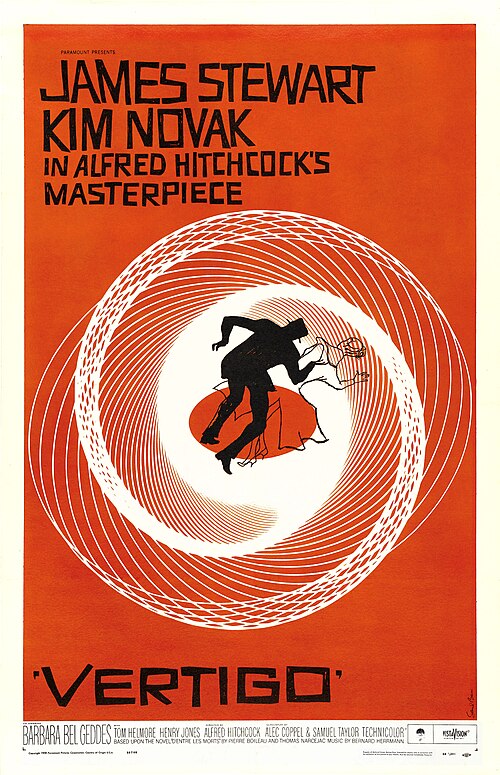


Vertigo: Hitchcock’s Broken Mirror or How to Turn Jimmy Stewart Into a Stylish Psychopath
Periodically crowned by the Sight & Sound aesthetes as "the greatest film of all time"—because, apparently, yawning through Citizen Kane for the umpteenth time no longer confers enough cinephile prestige—Vertigo (1958) marks the moment when Alfred Hitchcock, that portly master of suspense with more traumas than a Freud patient during rush hour, decided to pry open his subconscious like a can of rotten sardines and pour his entire collection of sexual fetishes, necrophilic obsessions, and guilt complexes onto celluloid. Released at a time when critics expected a snappy thriller with chases and operetta villains, Hitchcock handed them a disturbing romantic drama, a clinical study of obsession disguised as a crime mystery, and an autopsy of male desire so unsettling that today Stewart would be in therapy—and Novak would be suing for psychological harassment.
James Stewart: From "The Man Who Shot Liberty Valance" to "The Man Who Stalked Kim Novak Into Madness"
Hitchcock’s genius—and audacity—lay in taking James Stewart, that icon of American decency, the friendly face of the postwar era, the guy who sold democracy with a smile and a Stetson hat, and transforming him into John "Scottie" Ferguson, a retired detective whose acrophobia is nothing more than the perfect metaphor for his inability to face reality. Stewart, who until then had embodied upright heroes (It’s a Wonderful Life, The Man Who Shot Liberty Valance), here sheds all morality to plunge into an obsession spiral that would make any Criminal Minds protagonist blush.
After failing to protect Madeleine Elster—played by a Kim Novak as magnetic as a junkyard magnet, as cold as a ghost’s breath, and as unsettling as a mannequin with a life of its own—Scottie witnesses her apparent suicide from the top of the Mission San Juan Bautista tower. The poor man doesn’t just lose his job; his psyche shatters like a cheap mirror. And here’s where Hitchcock, with the subtlety of a drunk surgeon, shows us that Scottie’s real vertigo isn’t his fear of heights, but the terror of confronting his own demons.
Weeks later, when he crosses paths with Judy Barton, a humble department store clerk who bears an uncanny resemblance to the late Madeleine, Scottie doesn’t see a woman—he sees a walking corpse, a blank canvas onto which he projects his necrophilic obsession. The second half of Vertigo is one of the most uncomfortable, fascinating, and psychologically brutal sequences in cinema. Scottie doesn’t love Judy; he wants to resurrect Madeleine through her, like some suburban Frankenstein in a gray suit and tie. He forces her to dye her hair platinum blonde, to buy the same gray silk dresses, to style her hair in that spiral bun straight out of a How to Turn Your Girlfriend Into a 1950s Mannequin manual. Hitchcock films this psychological violation with a baroque and sickly aestheticism, turning the viewer into a silent accomplice in a crime that leaves no physical traces but destroys souls.
It’s fascinating how Stewart makes us hate and pity Scottie at the same time. He’s not a conventional villain; he’s a broken man, a nightmare Pygmalion who prefers living in illusion to accepting reality. And Novak, for her part, nails a dual role that oscillates between Madeleine’s spectral coldness and Judy’s heartbreaking vulnerability—a woman trapped in the macabre game of a man who doesn’t see her as a person, but as an object of desire and repair.
Color, Sound, and Vertigo as Characters: How Hitchcock Turned Technique Into Emotion
Visually, Vertigo is a masterclass in using the camera, color, and movement to narrate the subconscious. Hitchcock and cinematographer Robert Burks bathe Madeleine in ghostly cyan tones—the green car, the coat, the nocturnal lighting of her hotel room—turning her into an apparition, a fever dream. In contrast, the burning reds (Judy’s dress in the hotel, the city’s neon lights) represent Scottie’s neurotic passion, his sick desire burning like a gas station fire.
But if there’s one element that has gone down in cinema history, it’s undoubtedly the Vertigo Effect (or dolly zoom), that technical invention that revolutionized cinematic language. Designed by special effects technician Irmin Roberts, it involves a simultaneous dolly-out and zoom-in (or vice versa), creating a spatial distortion that physically conveys the panic of the void, the sensation that the world is warping beneath the protagonist’s feet. Hitchcock first uses it in the scene where Scottie, clinging to a gutter, looks down and feels the ground receding as if the entire universe were conspiring to push him into the abyss. It’s such a brilliant analog solution that it’s been imitated ad nauseam—from Spielberg in Jaws to Scorsese in Goodfellas—but never with the same surgical precision or psychological weight.
The score by Bernard Herrmann deserves its own chapter. Herrmann, that genius of the soundtrack who had already composed masterpieces like Psycho and North by Northwest, here creates a hypnotic, circular, obsessive melody, like a clock ticking away the time of Scottie’s madness. The violins twist like his thoughts, the arpeggios rise and fall like his ragged breathing, and the main theme, with its macabre waltz cadence, seems to drag the viewer into the same abyss as him. Without Herrmann, Vertigo would be a beautiful but cold film; with him, it becomes an overwhelming sensory and emotional experience.
The Script: When Logic Surrenders to Obsession
That said, not everything in Vertigo is perfect. The script, written by Alec Coppel and Samuel A. Taylor based on the novel D’entre les morts by Boileau-Narcejac, has its plot holes, especially in the middle section, where the crime plot requires the audience to suspend disbelief as if they were watching an episode of Scooby-Doo. Did no one in San Francisco notice that Madeleine and Judy were the same person? Did Madeleine’s husband plan the perfect crime based on a detective’s acrophobia—who just happened to be his friend? And that scene where Judy confesses everything in a letter that, oh surprise, she tears up before sending? Please. If this were a modern thriller, the writers would’ve been fired for plot holes smaller than a Swiss cheese.
We also have to mention Midge (Barbara Bel Geddes), the most underused character in the film. Midge is Scottie’s ex-girlfriend, a bra designer with a sharp wit and infinite patience. But instead of being a voice of reason or a real threat to Scottie’s obsession, she becomes a harmless therapeutic breather, a character who exists only to remind us that, at some point, Scottie had a normal life. Hitchcock uses her as a comic counterpoint—that scene where she paints a portrait of herself as Carlota Valdés is hilarious—but her dramatic passivity is frustrating. She could’ve been a key figure in Scottie’s downfall, but instead, she remains a human prop, like a piece of furniture with legs.
And then there’s the climax in the mission tower, a moment Hitchcock was forced to sugarcoat due to the censorship of the time. The original ending, in which Judy accidentally falls to her death while Scottie watches with a mix of horror and relief, was deemed too dark. So the studio made Hitchcock add a scene where a monk rings a bell, as if God himself were saying, "Hey, folks, this is too heavy—let’s add some spiritual light." The result is a ridiculous and moralistic accident that shatters the film’s oppressive atmosphere. It’s like, after two hours of psychological nightmare, someone turns on the house lights and says, "Well, actually, it was all just a dream."
The Legacy of Vertigo: Why It Remains the Most Influential (and Copied) Film in History
Despite its minor flaws, Vertigo is one of those films that redefined what cinema could do. It’s not just a psychological thriller; it’s a treatise on desire, identity, and the impossibility of possessing what we love. Hitchcock, who had always been a master of audience manipulation, here takes that manipulation to a nearly metaphysical level. He makes us accomplices in Scottie’s obsession, immerses us in his vertigo, makes us feel his desperation. And when we finally discover the truth alongside him, the blow is so brutal it leaves us breathless.
The influence of Vertigo is omnipresent. From the films of Brian De Palma (Obsession, Dressed to Kill) to those of David Lynch (Mulholland Drive), including Christopher Nolan’s Memento or Paul Thomas Anderson’s The Master, all have drunk from its well of obsession and visual distortion. Even in television, series like Twin Peaks or The Haunting of Hill House owe much to its atmosphere of romantic nightmare.
But what’s most fascinating about Vertigo is how it ages like fine wine (or a well-preserved corpse). While other 1950s films may seem anachronistic or naive, this one remains as disturbing as the day it premiered. Perhaps because, deep down, we all have a bit of Scottie inside us: that desire to control, to possess, to resurrect what is already dead. Hitchcock knew it, and that’s why Vertigo isn’t just a film—it’s a broken mirror in which we all see our reflection, whether we like it or not.
finalExplicado_en: "In the climax, Scottie drags the traumatized Madeleine (Judy) up the bell tower stairs, forces her to confess her role in the murder plot, and watches in horror as a nun's sudden appearance startles her into falling to her death. The film ends on Scottie gazing down into the abyss, finally cured of his vertigo yet utterly broken, alone with his guilt. Symbolically, the broken mirror is complete: Hitchcock has transformed Jimmy Stewart's everyman into a stylish, obsessive psychopath who has manufactured and then destroyed his ideal woman. The ending means there is no catharsis, only the abyss of male possession, where love and control are indistinguishable and leave only an empty steeple ringing with absence."
The Best
- James Stewart dismantling his all-American hero facade into a manual of classy psychological harassment. They didn’t give him an Oscar, but he should’ve been too ashamed to accept another after this.
- Bernard Herrmann’s score, which doesn’t accompany the film—it strangles it with a violin waltz until it’s left breathless. If the music were a character, it’d be the real villain of the story.
- The "Vertigo Effect," that optical trick that turned cinema into an amusement park for masochists. Spielberg and Scorsese have used it, but neither made the ground shift beneath our feet like Hitchcock.
The Worst
- A script with more holes than a lactose-intolerant Swiss cheese. If Judy and Madeleine are the same person, did no one in San Francisco have eyes?
- Midge, the character who exists only to remind us Scottie was once human. A shame her potential got reduced to a bra joke and an ugly painting.
The Verdict of Claqueta Ácida (9.5/10)
Vertigo isn’t just Hitchcock’s best film; it’s the definitive manual on how cinema can gut the human soul and serve it on a platter with impeccable aesthetics. It’s uncomfortable, obsessive, sick, and brilliant—like a mirror that shows you your worst self but with better cinematography. Stewart and Novak nail a macabre dance between desire and death, Herrmann composes a symphony of madness, and Hitchcock, that voyeur with a camera, turns us into accomplices in a crime that leaves no traces. If you want to understand why cinema is the most dangerous art of all, start here. Just don’t look down. Vertigo doesn’t forgive.🎬 Tráiler Oficial
Abrir en YouTube
Ending Explained: Vertigo
Ficha de Daños Colaterales en Sala
Certificado de impacto psicofísico emitido por Dante Sangre
Cero bostezos. Pupilas dilatadas y tensión mandibular constante.
Ni una sola mirada al móvil.
Ninguna. Esta obra no necesita muletas estimulantes.
"No hubo. La coherencia se mantuvo hasta el último fotograma."
💬 El Veredicto de la Comunidad
¿Qué te ha parecido la película? Deja tu nota de 0 a 10 para contrastarla con el análisis de la redacción.
Aún no has votado
📢 ¿Te ha gustado el ácido?
Comparte esta crítica con tus amigos cinéfilos o desata la polémica en redes.
⚡ THE CINEMATIC VENOM YOUR INBOX CRAVES
No sugarcoated ratings, no corporate fluff. Subscribe for our uncensored weekly analysis or join the private Telegram for press previews, poll clashes, and instant alerts.
Alertas de estrenos en 1 segundo, encuestas en caliente y audios al salir de pases de prensa.
Recibe la dosis semanal en tu mail + regalo inmediato del PDF con 50 joyas ocultas de culto.
Related Reviews
Recommended autopsies for demanding film buffs.
 🔥 Fusión Nuclear8.5
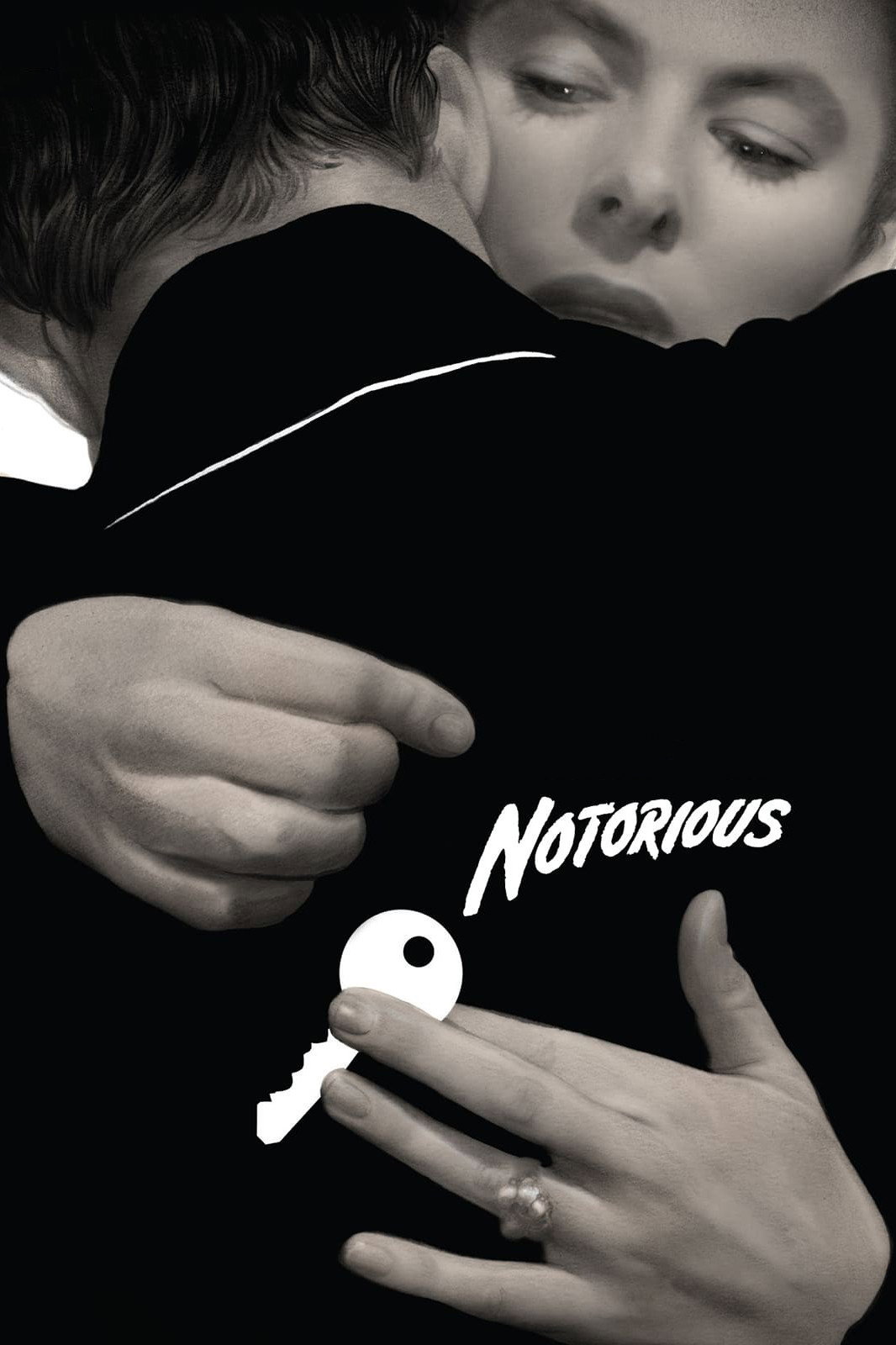
Chained: The Hitchcock Network
⚡Del mismo director (Alfred Hitchcock): analiza la evolución o degradación de su estilo.
Acidic review of 'Chained', the Hitchcock film that will trap you
 🔥 Fusión Nuclear8.5
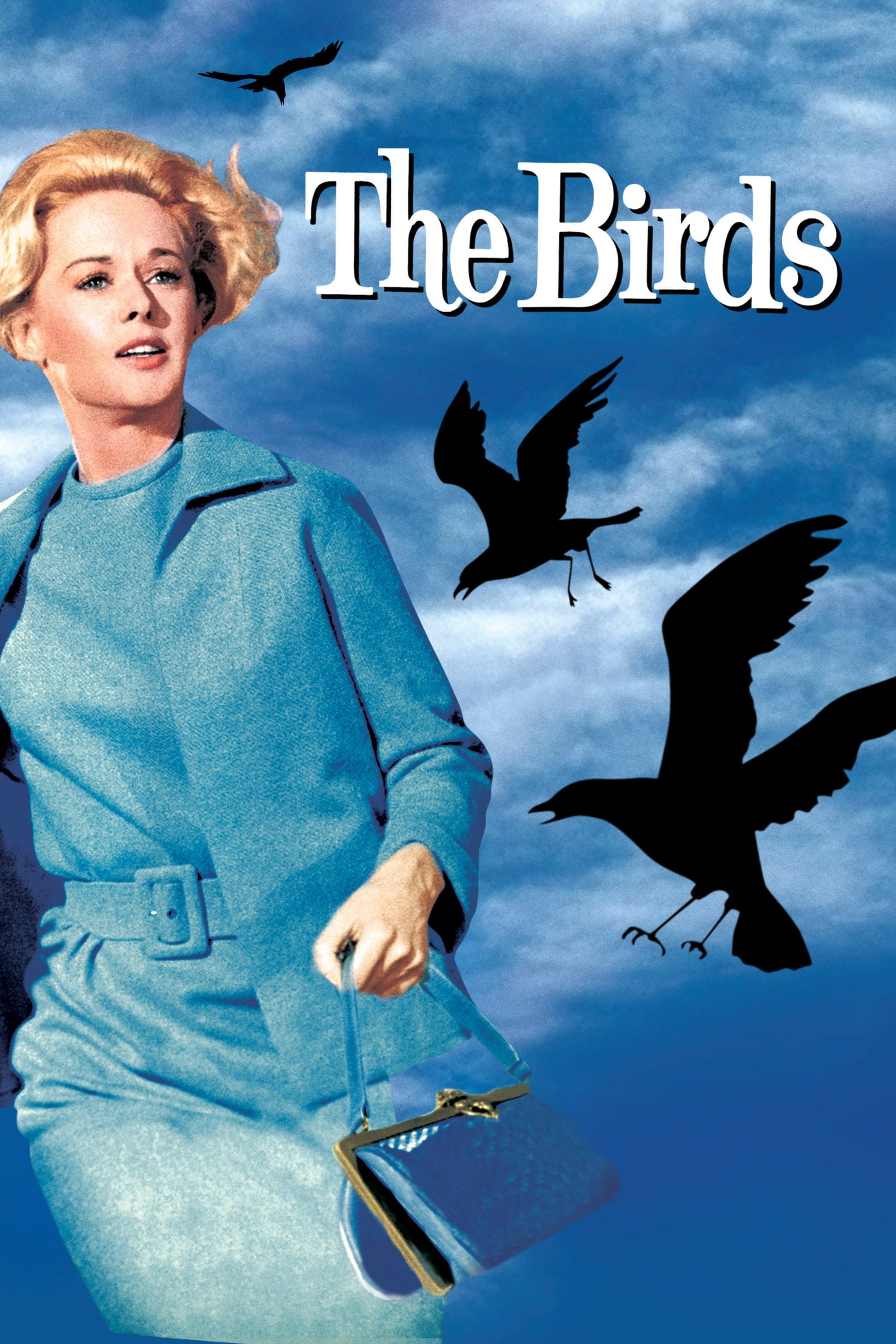
The Birds: When the Sky Became a Feathered Slaughterhouse of Psychosis
⚡Del mismo director (Alfred Hitchcock): analiza la evolución o degradación de su estilo.
Hitchcock turns birds into winged assassins in this ornithological nightmare. Masterpiece or feathered panic? Claqueta Ácida dissects the chaos.
 🔥 Fusión Nuclear9.5
*2001: A Space Odyssey – A Monkey, a Monolith, and Two Hours of Cosmic Pretentiousness*
⚡Afinidad temática directa en atmósfera, estilo y fijaciones visuales.
We dissect Stanley Kubrick’s magnum opus. A visual feast of minimalism and space hypnosis that cemented "serious" sci-fi—and bored half of humanity to tears.
Editorial Ecosystem
Cinephile connections, archive interviews and related analyses.
🎞️ In Claqueta Cinematheque2
💬 Debate Cinéfilo & Autopsia de Lectores
0 veredictos¿Discrepas con nuestra nota? ¿Es una obra maestra o veneno puro? Deja tu veredicto abajo sin necesidad de registro.

Aún nadie ha dejado su veredicto para esta película.
Sé el primero en clavarle el colmillo rellenando el formulario de arriba.