Midsommar — Swedish Couples Therapy in Broad Daylight
Ari Aster proves there’s nothing more terrifying than a Scandinavian folk festival, emotional codependency, and giant flower costumes.

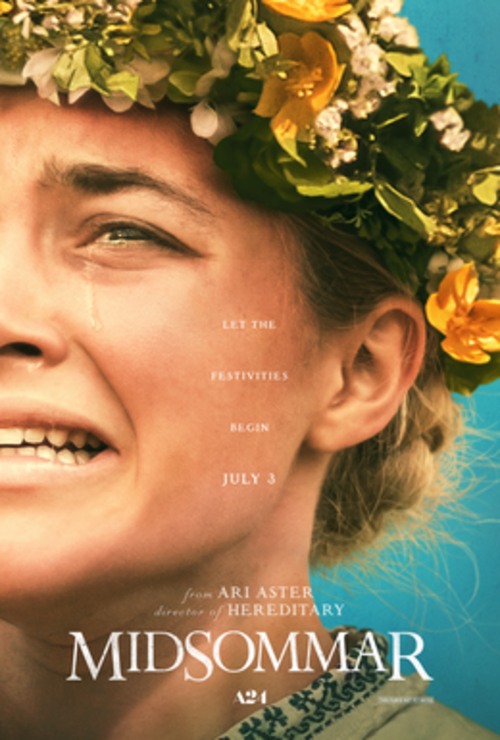

Ari Aster, that enfant terrible of contemporary cinema with a Freudian fixation on dismembering not just bodies but also audience expectations, delivered Midsommar in 2019—a film that could be summed up as "couples therapy + LSD + an anthropology textbook written by H.P. Lovecraft." Produced by A24—that cinematic lab where indie reeks of pretension and arthouse smells like designer cologne—the movie dares to commit the greatest sacrilege of modern horror: abandoning darkness to embrace light with near-religious fervor. Here, there are no damp basements or flashlights flickering at the worst possible moment; Midsommar’s horror is so luminous it burns your retinas, so saturated with pastel hues and blue skies you can almost smell the lavender—and the roasting human flesh.
A Breakup Story with Torches, Flowers, and Ritual Sacrifices
At its core, Midsommar isn’t just a movie about a pagan cult that worships the sun and practices sacred incest (though, yes, that’s in there). It’s a breakup rom-com taken to the most grotesque and poetic extreme imaginable—a kind of "Before Sunrise" directed by a David Lynch with a shrooms hangover and a master’s in psychological trauma. The plot follows Dani (Florence Pugh, in a performance so gut-wrenching you suspect she signed the contract in tears instead of ink) and her boyfriend Christian (Jack Reynor, embodying the archetype of the emotionally illiterate man who confuses "commitment" with "gritting his teeth while his girlfriend sobs in the bathroom").Their trip to Hårga—a Swedish commune lost in time, where the sun never sets and the locals look like they stepped out of an IKEA catalog on steroids—begins as Christian’s half-hearted attempt to "do something nice" after Dani suffers a family tragedy so devastating the script refuses to describe it in words (because, let’s be honest, what sentence could capture the horror of losing your family in an accident as absurd as it is brutal?). Along for the ride is a group of grad-student friends—all anthropologists, because of course the best way to document a cult is with a bunch of academics too clueless to read the danger signs. Will Poulter stands out as Mark, providing comic relief before becoming a walking plot device (and, eventually, décor for the Nordic gods’ altar).
What starts as a backpacking trip with hallucinogenic mushrooms and quaint folk rituals—"Oh, how picturesque, they’re dancing around a tree!"—quickly spirals into a nightmare of high-fidelity geronticide, drinks with pubic hair, and sacrifices that would make the Saw writers blush. Aster shows no mercy: if Hereditary (2018) tortured us with grief and guilt, here he performs surgical dissection of codependency, where the real monster isn’t the pagan cult but humanity’s inability to communicate without self-destructing.
Direction and Cinematography: When the Sun Burns Hotter Than Hell
Ari Aster proves once again he’s a master of atmospheric tension, but instead of leaning into gothic horror clichés—looming shadows, haunted houses, whispers in the dark—he goes the opposite route: a relentless sun that floods everything, a color palette plucked from a psychedelic dream, and cinematography (by Pawel Pogorzelski) that turns every frame into an Edvard Munch painting on steroids.The use of natural light in Midsommar is so bright it hurts. Overexposed skies, endless green fields, and interiors bathed in golden, diffused light create a sense of dreamlike unreality, as if we’re seeing the world through the eyes of someone who just dropped a heroic dose of mushrooms. But the most unsettling part isn’t the visual beauty—it’s how Aster and Pogorzelski play with optical distortion: shots stretch, faces subtly warp, and more than once, you’ll feel like the ground is shifting beneath the characters’ (and your) feet.
The score, composed by Bobby Krlic (aka The Haxan Cloak), amplifies this constant unease. There are no jump scares or screeching violins; instead, Krlic opts for ethereal choirs, electronic hums, and tribal percussion that sounds like it’s being played by Hårga’s own residents. The result is a symphony of discomfort, accompanying every scene like an omen of what’s to come.
Performances: Florence Pugh and the Art of Crying Convincingly
If anything elevates Midsommar above conventional folk horror, it’s the acting—especially Florence Pugh’s. Dani isn’t a passive scream queen; she’s a deeply broken character whose anxiety and pain manifest in every gesture, every tear, every ragged breath. Pugh achieves something extraordinary: she makes the audience empathize with a woman who, in real life, would be exhausting. Let’s be honest—Dani is the kind of person who drains you: she cries at the worst moments, clings to a boyfriend who clearly doesn’t love her, and her idea of "healing" is joining a cult that dances naked around a tree. But Pugh gives her humanity, and that’s what makes her journey—from victim to "May Queen"—as fascinating as it is disturbing.Jack Reynor, meanwhile, plays Christian with a passivity so infuriating you’ll understand why the Hårga Swedes decide to sacrifice him in a ritual. Christian isn’t a classic villain; he’s the boyfriend who forgets your birthday, who tags along on trips out of obligation, and who, when things get ugly, hides behind a group of friends even more useless than he is. Reynor nails that male indifference that’s ultimately more terrifying than any supernatural monster.
The rest of the cast serves their purpose, though none shine as brightly as Poulter, whose Mark is the only one who seems to realize something stinks in Hårga (literally, at one point). The commune’s inhabitants, played by Swedish actors who look like they stepped out of an 18th-century rural documentary, bring an eerie authenticity that makes the cult feel less like a screenwriter’s invention and more like a real sect lurking in some forgotten village in Dalarna.
Themes and Satire: The Horror of Political Correctness
Beyond the ritual sacrifices and drug-induced hallucinations, Midsommar is a scathing critique of empathy’s absence in modern relationships, particularly in heterosexual dynamics. Christian and his anthropologist friends are the perfect example of academic indifference and toxic masculinity: men who study other cultures without understanding them, who travel to remote places out of intellectual curiosity but can’t emotionally connect with those around them.The film also mock the idealization of the "natural" and "traditional." The Hårga live in harmony with nature, practice sacred incest, and revere their elders... until they decide it’s time to sacrifice them in a nine-day ritual. Aster doesn’t outright judge their lifestyle, but he exposes its contradictions with biting irony: Is a cult that burns its members alive in a wooden temple really "purer" than a capitalist society that exploits its workers? The answer, like everything in Midsommar, is ambiguous and unsettling.
Cinematic Comparisons: From The Wicker Man to Eyes Wide Shut
It’s no secret Midsommar draws from classic folk horror, especially The Wicker Man (1973), that British gem where a clueless cop discovers an island’s inhabitants have very special plans for him. But while Robin Hardy’s film is a religious allegory with an iconic ending, Aster takes the subgenre into more psychological and visceral territory.There are also echoes of Kubrick’s Eyes Wide Shut (1999) in how it explores the fragility of relationships and sexual hypocrisy. But where Kubrick opts for mystery and ambiguity, Aster has no qualms about showing horror in all its gory glory: if Eyes Wide Shut’s secret ritual is an elegant orgy, Midsommar’s is a blood, semen, and bearskin extravaganza.
And, of course, there’s the psychedelic element, reminiscent of films like Altered States (1980) or Enter the Void (2009), where drugs aren’t just a plot device but a tool to rip reality apart and expose the characters’ deepest fears.
Pacing: Masterpiece or Induced Nap?
This is where Midsommar divides audiences. At two and a half hours, the film demands patience—and not everyone’s willing to grant it. If you’re looking for a fast-paced slasher like Scream or The Texas Chainsaw Massacre, the meadow strolls, runic chants, and folk-dancing scenes will feel interminable. Aster isn’t in a rush to reach the climax; he prefers building tension drop by drop, like a slow-acting poison.For some, this is auteur cinema at its finest; for others, it’s a test of endurance. But even in its slowest moments, Midsommar never loses its ability to disturb and fascinate, thanks to its flawless direction, hypnotic cinematography, and script full of cringe-worthy dialogue (like the scene where Christian tries to write his thesis on "masculinity in crisis" while Dani sobs in the bathroom).
The Ending: Liberation or Submission?
Without spoilers, Midsommar’s climax is as shocking as it is ambiguous. Dani, after enduring emotional and physical hell, finds a kind of peace in belonging to the cult—but is this liberation or surrender? Aster doesn’t offer easy answers: on one hand, Dani seems happy for the first time in the film, smiling through tears as the Hårga crown her their queen; on the other, her smile is too wide, too forced, as if she’s trapped in a drug-induced euphoria or the acceptance of a fate she knows, deep down, is monstrous.It’s an ending that sparks debate, and that’s what makes it brilliant. Has Dani found a family that loves her unconditionally, or has she just traded one form of oppression for another? The film doesn’t clarify, and perhaps that’s its greatest virtue: it forces us to question our own notions of freedom, happiness, and belonging.
finalExplicado: "Dani, tras presenciar la muerte ritual de su novio Christian —quien es drogado, violado por una joven del culto y luego quemado vivo dentro de un oso disecado—, es elegida como la nueva May Queen. En el clímax, sonriente y en trance, elige personalmente que Christian sea el sacrificio final mientras el pueblo entero celebra con cánticos. La cámara se detiene en su rostro: por primera vez en todo el metraje, Dani sonríe de verdad, liberada. Simbólicamente, el final invierte el duelo inicial: el trauma y la codependencia tóxica no se resuelven, se celebran. Dani no escapa del horror, lo abraza. El sol eterno, las flores y el sacrificio colectivo representan la eutanasia emocional de una relación agonizante: mejor arder rodeado de gente que seguir solo en la oscuridad. El terror no está en la muerte, sino en lo liberador que resulta para ella."
The best
Florence Pugh and her ability to cry without shedding a single fake tear: If the Oscar for Best Actress were awarded for physical and emotional suffering, Pugh would have a shelf full of them. Her performance is so realistic you can almost smell* the anxiety sweat in every scene.- Pawel Pogorzelski’s cinematography: when the sun becomes your worst enemy: Every frame is a disturbing work of art, like Van Gogh painting a sunflower field after ayahuasca. The use of color and light is so effective you’ll leave the theater with a headache... and not just from the volume.
The worst
- The pacing of a summer nap: If your idea of fun is watching a group of academics wander a meadow for two hours while tripping on mushrooms, this is your movie. If not, get ready to check your watch every five minutes like you’re in a boring work meeting.
The Verdict of Claqueta Ácida (8.5/10)
Midsommar is that uncomfortable movie that leaves you with a frozen smile, like you’ve just walked out of a group therapy session where everyone shared their traumas except you. Ari Aster proves the real horror isn’t monsters under the bed but humanity’s inability to communicate without destroying each other, and he does it with an aesthetic so hypnotic you’ll almost forgive the 150 minutes of sluggish pacing. It’s a modern folk horror masterpiece, a social satire disguised as a psychedelic nightmare, and, above all, a film that’ll make you side-eye any group of people in white dresses dancing around a tree. If hell exists, it’s probably a Swedish solstice festival where the sun never sets and toxic boyfriends are sacrificed in the name of "community." 8.5/10, and a wilted bouquet in memory of your sanity.🎬 Tráiler Oficial
Abrir en YouTube
Ending Explained: Midsommar
Ficha de Daños Colaterales en Sala
Certificado de impacto psicofísico emitido por Dante Sangre
Cero. La pantalla absorbió cada segundo de atención disponible.
Ni una sola mirada al móvil.
Ninguna: la adrenalina cinematográfica es suficiente.
"No aplica. La obra se sostiene sola."
💬 El Veredicto de la Comunidad
¿Qué te ha parecido la película? Deja tu nota de 0 a 10 para contrastarla con el análisis de la redacción.
Aún no has votado
📢 ¿Te ha gustado el ácido?
Comparte esta crítica con tus amigos cinéfilos o desata la polémica en redes.
⚡ THE CINEMATIC VENOM YOUR INBOX CRAVES
No sugarcoated ratings, no corporate fluff. Subscribe for our uncensored weekly analysis or join the private Telegram for press previews, poll clashes, and instant alerts.
Alertas de estrenos en 1 segundo, encuestas en caliente y audios al salir de pases de prensa.
Recibe la dosis semanal en tu mail + regalo inmediato del PDF con 50 joyas ocultas de culto.
Related Reviews
Recommended autopsies for demanding film buffs.
 🔥 Fusión Nuclear9.3
*Hereditary*: The Ultimate Family Grief Marathon (Or How to Turn Your Relatives Into a Satanic Boy Band)
⚡Del mismo director (Ari Aster): analiza la evolución o degradación de su estilo.
Ari Aster burst onto the horror scene with a devastating, gut-wrenching thesis on inherited grief, maternal madness, and the demon Paimon—because nothing says "family bonding" like ritual decapitations and ancestral curses.
 🔥 Fusión Nuclear8.5
*Alleluia: Love as a Terminal Illness (or How to Turn Crimes of Passion into a Sweaty, Fleshy Spectacle)*
⚡Afinidad temática directa en atmósfera, estilo y fijaciones visuales.
Fabrice Du Welz reimagines the myth of the lonely hearts killers in a feverish whirlwind of jealousy, submission, and blood, led by Lola Dueñas in a performance that’s equal parts hypnotic and harrowing.
 🔥 Fusión Nuclear8.5
*High Tension (Haute Tension): The Brutal Birth of the New French Extremism – Or How to Turn Flesh into Poetry with a Machete*
⚡Afinidad temática directa en atmósfera, estilo y fijaciones visuales.
Alexandre Aja shocked global screens with a relentless rural bloodbath, redefined by breakneck pacing and a divisive twist that splits serious cinephiles right down the middle.
Editorial Ecosystem
Cinephile connections, archive interviews and related analyses.
🎞️ In Claqueta Cinematheque1
💬 Debate Cinéfilo & Autopsia de Lectores
0 veredictos¿Discrepas con nuestra nota? ¿Es una obra maestra o veneno puro? Deja tu veredicto abajo sin necesidad de registro.

Aún nadie ha dejado su veredicto para esta película.
Sé el primero en clavarle el colmillo rellenando el formulario de arriba.