Get Out — Progressive Racism Dissected with a Scalpel (and a Side of Tea)
Jordan Peele made his directorial debut with a razor-sharp social horror satire about hypnosis, liberal hypocrisy in the suburbs, and brain transplants—because nothing says "woke" like turning Black bodies into empty vessels for rich white folks.



Get Out isn’t just a movie—it’s a shattered mirror Jordan Peele smashed into the face of white, liberal America. You know the type: the ones who call themselves "woke" while serving tea with silver spoons that hypnotize their Black guests into hollowed-out husks. Blumhouse, that low-budget horror factory that blessed us with gems like Paranormal Activity (read: people screaming at a curtain for 90 minutes), bet on a former TV sketch comedian and—against all odds—ended up producing one of the most incisive, intelligent, and necessary films of the 21st century. That it won the Oscar for Best Original Screenplay wasn’t a surprise; it was the establishment’s forced confession: "Yes, we have a problem, and no, we’re not going to fix it, but at least we can award a movie that exposes it with sadistic elegance."
finalExplicado: "Chris despierta atado a una silla y descubre la verdad: la familia Armitage y sus amigos liberales hipnotizan a personas negras para luego realizar trasplantes neuronales que implantan sus cerebros en cuerpos jóvenes y sanos. El objetivo es robar la “fuerza física y creativa” de los negros mientras conservan su propia conciencia. En el clímax, Chris logra liberarse, mata violentamente a Dean, Missy, Rose y a los invitados en una orgía de sangre y, finalmente, huye en el coche de su amigo Rod. Simbólicamente, el final invierte la fantasía liberal de “absorber” lo negro sin renunciar al privilegio: los progresistas no quieren convivir con los negros, quieren poseerlos. La masacre final no es catarsis barata, sino la única respuesta posible al horror blando y educado del racismo progre: la violencia es el único lenguaje que entiende el sistema cuando se le arranca la máscara de la corrección."
Comedy as the Trojan Horse of Systemic Horror
Peele didn’t reinvent the wheel, but he painted it black and gave it a twist so perverse even Hitchcock would’ve been jealous. Get Out draws from two seemingly opposed but equally effective cinematic traditions: on one hand, the cringe-inducing comedy of awkwardness (think Meet the Parents, but with racial subtext that turns every smile into a threat), and on the other, the paranoid conspiracy thriller (here, Rosemary’s Baby, The Stepford Wives, and The Man with the Golden Arm hold hands, but with a racial twist that makes it infinitely more disturbing).
Peele’s genius lies in his ability to turn the mundane into the terrifying without relying on special effects. No zombies, no masked killers, no haunted houses—the real monster is liberal condescension, that racism disguised as progressivism hiding behind phrases like "I don’t see color" or "I would’ve voted for Obama a third time." Dean Armitage (Bradley Whitford) isn’t your typical villain; he’s the perfect dad, the charming father-in-law who collects African art (because, of course, he loves Black culture—as long as it’s framed and hanging on his wall). His smile is as wide as his hypocrisy, and his mansion is a labyrinth of microaggressions where every seemingly innocent comment is another nail in Chris’s (Daniel Kaluuya) psychological coffin.
The hypnosis sequence is, without a doubt, one of the most brilliant moments in modern horror. Missy Armitage (Catherine Keener), the psychiatrist matriarch, doesn’t need monsters or special effects to drag Chris into The Sunken Place. A cup of tea, a silver spoon, and a repetitive metallic sound are enough to reduce him to a state of absolute paralysis, where his body no longer belongs to him and his voice is silenced. It’s a metaphor as obvious as it is devastating: systemic racism doesn’t need physical violence to erase its victims—just a power structure so ingrained it doesn’t even need to raise its voice. Keener, an actress who usually shines in supporting roles (see Being John Malkovich or Capote), steals every scene here with calculated coldness, as if every word she utters is measured to inflict maximum psychological damage.
The Cast: When Casting Is an Act of Racial Sabotage
Daniel Kaluuya, a British actor who had mostly flown under the radar in supporting roles (Black Mirror, Sicario), delivers a performance here that should’ve won him an Oscar (though, let’s be honest, the Academy doesn’t hand out awards to Black actors unless they’re playing historical or suffering figures). His Chris Washington is a complex character, a man oscillating between disbelief, fear, and repressed rage. Kaluuya doesn’t need to scream to convey terror; his gaze alone—"Did I just fall down the rabbit hole, or is this real?"—makes him the perfect everyman trapped in a Kafkaesque nightmare. His chemistry with Allison Williams (Rose Armitage) is another of the film’s triumphs: she plays the perfect white girlfriend, the progressive woman who believes her love for Chris absolves her of any complicity in a racist system. Williams, known for her role in Girls, proves here she can be as charming as she is sinister, especially in the third act, when her smile becomes a mask of betrayal.
The rest of the cast delivers, especially the actors playing the mansion’s domestic staff: Georgina (Betty Gabriel), Walter (Marcus Henderson), and Logan (Lakeith Stanfield). Their forced smiles, robotic movements, and seemingly innocent dialogue are the heart of Get Out’s terror. Peele turns them into a dystopian version of Gone with the Wind’s house slaves, but with a sinister twist: here, it’s not their bodies that are enslaved, but their minds. The scene where Chris tries to photograph Logan with his phone and Logan has a panic attack is one of the film’s most tense moments—a reminder that racism isn’t always obvious, but it always leaves a mark.
The Direction: When Low Budget Becomes a Virtue
Jordan Peele had no prior filmmaking experience, but he had an unhealthy obsession with classic horror and a knack for building tension. His direction is functional, almost TV-like at times (especially in the mansion’s interiors, where the flat lighting betrays Blumhouse’s budget constraints), but it achieves something far more important: making the audience feel the same discomfort as Chris. Peele doesn’t need long takes or elaborate camera movements; tight close-ups, sweaty faces, and a soundtrack that alternates between oppressive silence and musical stings (like Michael Abels’s masterful Sikiliza Kwa Wahenga, a track that sounds like it’s ripped from a tribal nightmare) are enough.
The editing, by Gregory Plotkin, is another of the film’s strengths. Peele and Plotkin know exactly when to stretch a scene to heighten discomfort (like the art auction sequence, where every bid is actually an offer for Chris’s body) and when to cut abruptly for maximum impact (the final climax, where violence erupts as suddenly as it is liberating). The film flows like a Hitchcock thriller, but with a racial subtext that makes it infinitely more relevant.
The Political Satire: When Horror Is More Real Than Reality
Get Out isn’t just a horror movie—it’s a political manifesto disguised as entertainment. Peele doesn’t just critique overt racism (the kind from white supremacists or cops who kill Black youth); he goes after cool racism, the kind from upper-middle-class white liberals who think buying African art or having a Black friend absolves them of guilt. The garden party scene at the Armitages’ is a masterclass in satire: a group of wealthy, educated white folks praising Chris for his "genetics" (read: his athletic body) or asking if "golf is a Black sport" with smiles that hide daggers. It’s the kind of racism you don’t see but feel, like slow-acting poison.
The Sunken Place is, without a doubt, the film’s most powerful metaphor. It’s not just a psychological limbo where Chris is trapped; it’s a visual representation of how the system silences minorities, reducing them to voiceless bodies, powerless spectators of their own oppression. That Peele turned it into a cultural concept (to the point where the term is now used to describe any marginalizing situation) is proof of its impact.
The Flaws: When TV Peeks Through
No film is perfect, and Get Out has its stumbles. The main one is its visual style, which occasionally betrays its TV roots. The lighting in some scenes is flat, almost sitcom-like, and the Armitages’ mansion interiors, though luxurious, lack the oppressive atmosphere that the exteriors (like that garden where the party turns into a surreal nightmare) achieve. It’s understandable, given the budget, but it’s a reminder that Blumhouse isn’t A24, and low-budget horror has its limits.
The other major flaw is Rod Williams (Lil Rel Howery), Chris’s TSA-agent friend. Rod is undoubtedly the film’s comic relief, and his dialogue is hilarious (especially when he theorizes about "white people kidnapping Black folks for sex slavery"), but his presence sometimes breaks the carefully built tension. There are moments when the film seems to forget it’s a paranoid thriller and turns into a comedy of errors, particularly in the scenes where Rod interacts with the police. It’s not a dealbreaker, but it’s a reminder that Peele was still learning how to balance humor and horror in the same film.
The best
- Peele’s screenplay: a Swiss watch of hidden clues and brutal twists. Every line in the first act is a seed that blooms in the third, and when the audience realizes it, they feel the same chill as Chris when he uncovers the truth.
- Daniel Kaluuya: the king of silent terror. His performance is a masterclass in conveying panic with a look, a sigh, or a trembling hand. That he didn’t win the Oscar is a crime against humanity.
The worst
The sitcom lighting. The Armitages’ mansion looks like it’s straight out of an episode of Modern Family*, and that hurts in a film that’s otherwise flawless in its atmosphere.- Rod Williams: the comic relief who sometimes relieves too much. Lil Rel Howery is hilarious, but his character shatters the tension like a bull in a china shop.
The Verdict of Claqueta Ácida (8.8/10)
Get Out is that rare bird that manages to be a flawless horror thriller, a devastating political satire, and an uncomfortable mirror reflecting the hypocrisies of a society that prefers to ignore its racism while serving tea with silver spoons. Jordan Peele debuted like a bull in a china shop of mediocre directors, proving that the real terror isn’t in monsters, but in that condescending smile hiding a "we tolerate you, but not too much." If this is his first film, we can only shudder at what’s to come. Or, better yet, sink into The Sunken Place and wait for someone to wake us up. Or not.🎬 Tráiler Oficial
Abrir en YouTube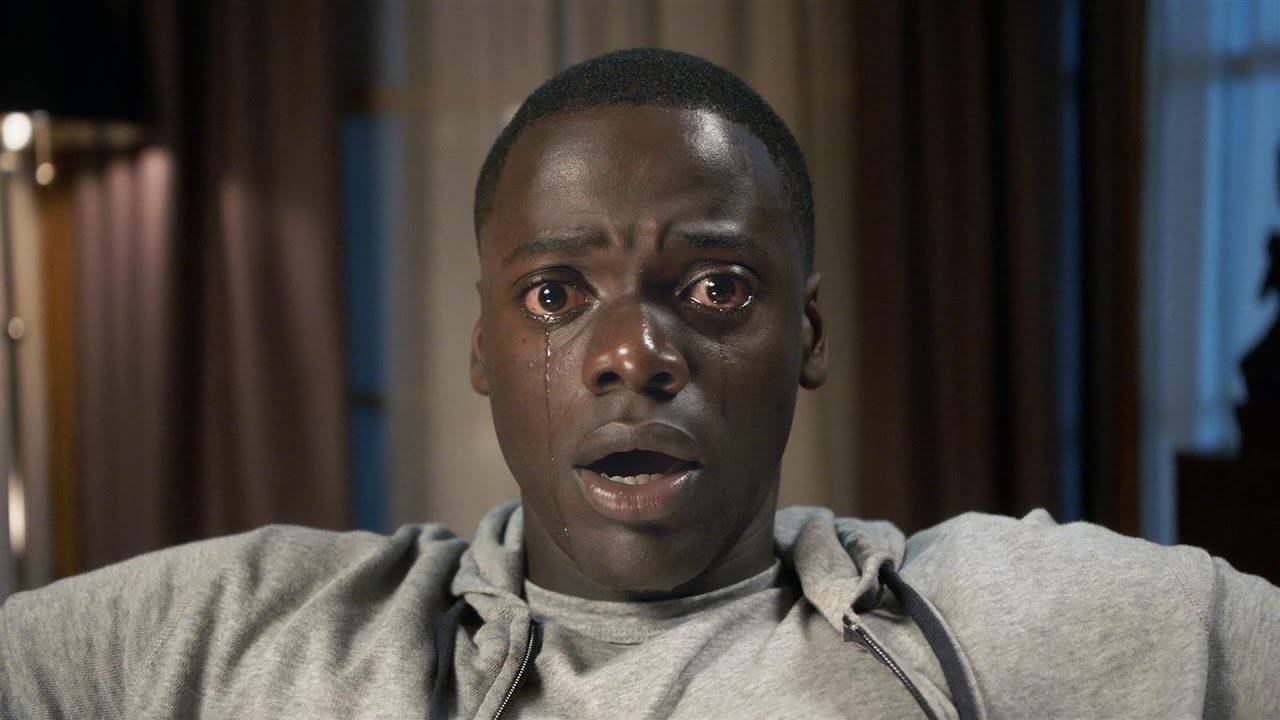
Ending Explained: Get Out
Ficha de Daños Colaterales en Sala
Certificado de impacto psicofísico emitido por Lúa Ácida
Cero bostezos. Pupilas dilatadas y tensión mandibular constante.
Ni una sola mirada al móvil.
Ninguna. Esta obra no necesita muletas estimulantes.
"Inexistente: pulso de hierro hasta los créditos finales."
💬 El Veredicto de la Comunidad
¿Qué te ha parecido la película? Deja tu nota de 0 a 10 para contrastarla con el análisis de la redacción.
Aún no has votado
📢 ¿Te ha gustado el ácido?
Comparte esta crítica con tus amigos cinéfilos o desata la polémica en redes.
⚡ THE CINEMATIC VENOM YOUR INBOX CRAVES
No sugarcoated ratings, no corporate fluff. Subscribe for our uncensored weekly analysis or join the private Telegram for press previews, poll clashes, and instant alerts.
Alertas de estrenos en 1 segundo, encuestas en caliente y audios al salir de pases de prensa.
Recibe la dosis semanal en tu mail + regalo inmediato del PDF con 50 joyas ocultas de culto.
Related Reviews
Recommended autopsies for demanding film buffs.
 🔥 Fusión Nuclear8.5
*Alleluia: Love as a Terminal Illness (or How to Turn Crimes of Passion into a Sweaty, Fleshy Spectacle)*
⚡Afinidad temática directa en atmósfera, estilo y fijaciones visuales.
Fabrice Du Welz reimagines the myth of the lonely hearts killers in a feverish whirlwind of jealousy, submission, and blood, led by Lola Dueñas in a performance that’s equal parts hypnotic and harrowing.
 🔥 Fusión Nuclear8.5
*High Tension (Haute Tension): The Brutal Birth of the New French Extremism – Or How to Turn Flesh into Poetry with a Machete*
⚡Afinidad temática directa en atmósfera, estilo y fijaciones visuales.
Alexandre Aja shocked global screens with a relentless rural bloodbath, redefined by breakneck pacing and a divisive twist that splits serious cinephiles right down the middle.
 🔥 Fusión Nuclear8.5
*Aterrados: The Rebirth of Ghost Stories in the Raw Grit of Buenos Aires*
⚡Afinidad temática directa en atmósfera, estilo y fijaciones visuales.
Demian Rugna revolutionizes paranormal horror—possessions, poltergeists, and all—by transplanting it to a residential neighborhood in Buenos Aires, armed with a devastating sound design that rattles your bones.
Editorial Ecosystem
Cinephile connections, archive interviews and related analyses.
💬 Debate Cinéfilo & Autopsia de Lectores
0 veredictos¿Discrepas con nuestra nota? ¿Es una obra maestra o veneno puro? Deja tu veredicto abajo sin necesidad de registro.


Aún nadie ha dejado su veredicto para esta película.
Sé el primero en clavarle el colmillo rellenando el formulario de arriba.