Goliath — Justice as a Power Play (Or How to Make a Legal Drama Without Tripping Over Your Own Pretensions)
A caustic takedown of Goliath, where justice isn’t blind—it’s just another rigged game in a courtroom circus.

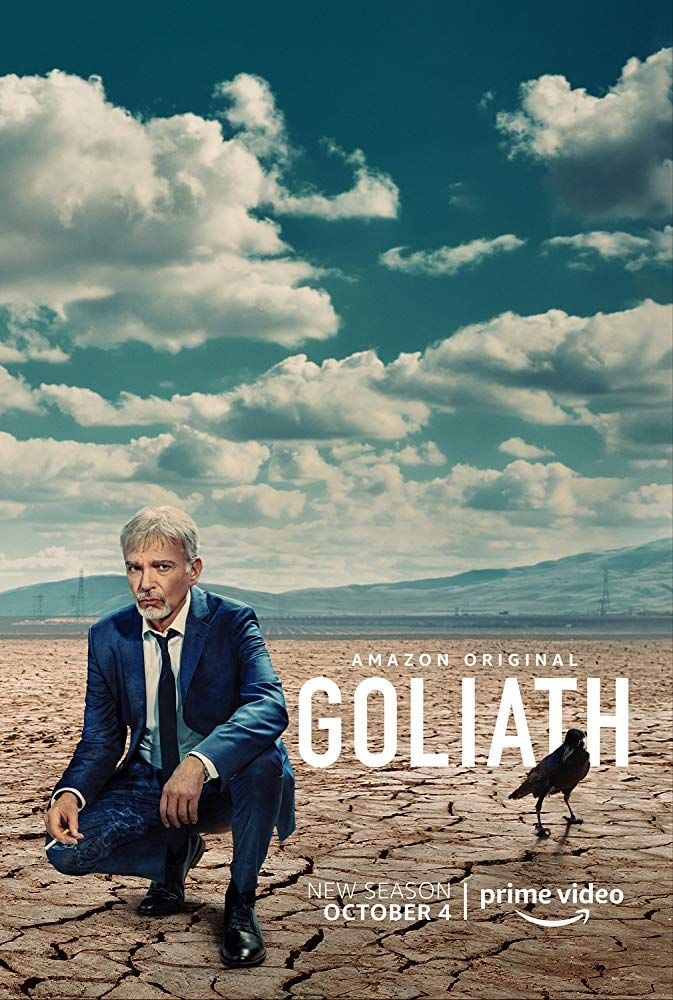

In the cathode-ray universe, where TV series multiply like cancer cells in pop culture’s liver, Goliath emerges as a benign but irritating tumor: a legal drama with the ambition of a shark and the elegance of a drunk lawyer in a bar brawl. Created by David E. Kelley—that wizard of TV scripts who went from writing quips for Ally McBeal to trying to convince us that lawyers can be heroes—and Jonathan Shapiro—a former prosecutor who probably dreamed of being John Grisham but settled for being the guy whispering in Kelley’s ear—the show bills itself as a legal thriller with film noir pretensions, but with the subtlety of a sledgehammer in a defamation trial. Billy Bob Thornton, that actor carved from oak wood with the facial expression of someone who just caught a whiff of someone else’s fart, plays Billy McBride, a lawyer who’s fallen lower than Harvey Weinstein’s reputation at a feminist film festival. His office is in a rundown motel, his most frequent client is his own bottle of whiskey, and his only ally seems to be a stray dog that, ironically, has more dignity than most of the supporting cast. But—plot twist!—this life-shattered man decides to rise like a hungover Lazarus to take on a law firm so powerful it makes Skadden Arps look like a small-town practice run by Law for Dummies interns.
finalExplicado: "En el clímax de Goliath: La sombra de la justicia, Billy McBride logra destruir públicamente a la megafirm corrupta en el tribunal, pero el veredicto final es anulado por un tecnicismo orquestado desde las más altas esferas. La justicia institucional se revela como un teatro vacío: el sistema se protege a sí mismo y el gigante corporativo sobrevive intacto, mientras Billy, victorioso en lo moral pero derrotado en lo legal, se aleja solo y borracho hacia la nada. Simbólicamente, el desenlace significa que la justicia no existe como ideal, solo como juego de poder. El verdadero Goliath no es la empresa, sino el propio sistema, que permite al héroe gritar y sangrar para luego seguir funcionando exactamente igual. Un final amargo y nihilista que confirma que, en este mundo, solo los cínicos sobreviven."
David E. Kelley’s career is as long as an episode of Boston Legal without commercial breaks. The man has written more witty dialogue than Aaron Sorkin on a good day, but he’s also fallen into the trap of believing TV is a place where characters can drop existential monologues like they’re in a Tennessee Williams play directed by Ryan Murphy. Kelley is the king of legal drama with absurdist comedy, a genre he helped invent when L.A. Law was the closest thing to Tinder for ambitious lawyers in the ’80s. With Goliath, Kelley tries to recapture that magic, but instead of doing it with the finesse of a Scorsese at his peak, he does it with the grace of an elephant in a china shop. The series is a collage of legal clichés: the fallen lawyer, the corrupt firm, the loyal secretary, the young associate with a crisis of conscience, and, of course, the corporate villain who looks like he was plucked from an episode of Suits directed by Michael Bay. The only thing missing is Billy McBride donning a cape and shouting, "For justice!" before leaping out of a courthouse window.
But not all is lost, because Billy Bob Thornton is here to save the day like a superhero without a cape but with a bottle of Jack Daniels in his pocket. Thornton doesn’t act; he inhabits Billy McBride like a ghost possessing the body of a bankrupt lawyer. His performance is so physical you’d swear the sweat dripping down his forehead is real, his hands aren’t trembling from acting, and his disdain for the world isn’t a performance choice but a life philosophy. Thornton doesn’t need grand speeches to convey his character’s pain, rage, and determination; a pregnant pause, a swig of whiskey, or a raised eyebrow is enough to make it clear this man has seen hell and decided if he’s going to burn, he’ll do it in style. It’s a performance that harks back to the great monsters of classic cinema—actors who could convey more with a glance than Adam Sandler in his entire filmography. Alongside him, Nina Arianda—playing Patty Solis-Papagian, the rival lawyer torn between ambition and morality—delivers a performance so intense it feels like she’s in a staring contest with a tiger. Arianda has that quality of great stage actresses: she can make a simple "no" sound like a death threat or a love confession, depending on the context. Her chemistry with Thornton is electric, like they’re playing a twisted version of Humphrey Bogart and Lauren Bacall, but with more booze and less glamour.
The rest of the cast isn’t far behind, though some characters feel like they were plucked from a TV tropes handbook. Tania Raymonde, as Brittany Gold, the young lawyer with a shady past, has moments where she shines like a diamond in a coal heap, but her character sometimes falls into the trap of being too predictable. Diana Hopper, as Denise McBride (Billy’s daughter), brings a mix of rebellion and vulnerability that recalls Jodie Foster in her younger roles. Bruce Dern, that old salt of American cinema, appears as Frank Zedeck, a corrupt judge who looks like he walked straight out of a Sergio Leone western, but in a robe. Dern has a way of making even the most ridiculous lines sound like biblical prophecies, and his screen presence is so magnetic you could watch him read a grocery list and be hypnotized. Brandon Scott, as Julius, the young associate at the rival firm, turns in a solid performance, though his character sometimes feels more like a walking cliché than a real person.
Direction: Between Noir and Judicial Vaudeville
The direction of Goliath is an awkward dance between classic film noir and modern TV melodrama. Kelley and Shapiro try to capture the essence of noir—with its elongated shadows, morally ambiguous characters, and fatalistic atmosphere—but they do it with the subtlety of an elephant in a china shop. The series is shot in a visual style that oscillates between pretentious and functional, as if the cinematographer received contradictory instructions: "I want it to look like Chinatown, but with the budget of Law & Order." Courtroom scenes are lit with a cold, bluish glow, as if the characters are being judged by an alien tribunal, while scenes in Billy’s motel have a yellowish warmth reminiscent of David Lynch’s roadside bars. The problem is that sometimes the series seems more interested in aping other styles than developing its own. There are moments when Goliath feels like an unintentional parody of itself, like when Billy McBride delivers a monologue about justice while the camera zooms in dramatically on his face, as if we’re watching a superhero movie trailer.
The editing is another aspect that fluctuates between brilliant and irritating. Some legal action sequences—like courtroom cross-examinations—are cut with a frantic pace, as if the editor wanted to compensate for the lack of dramatic tension with quick cuts and blaring music. Other moments, especially the dialogues between Billy and Patty, are shot with long, static takes, as if the director wanted to emulate Ingmar Bergman but without the philosophical depth. The result is a series that sometimes feels like two different productions stitched together-la-cueva-de-los-espejos-rotos" class="text-amber-400 font-black hover:text-amber-300 transition underline decoration-amber-500/40 hover:decoration-amber-300" title="[6.5/10 ⚡ Ácido Cítrico] Lee nuestra autopsia de «Together»" data-acid-interlink="together-la-cueva-de-los-espejos-rotos">together: a European art film and a ’90s American legal drama.
Performances: A Cast That Saves (Almost) Everything
If there’s one thing saving Goliath from becoming a pretentious disaster, it’s the performances. Billy Bob Thornton doesn’t just play Billy McBride; he embodies him with a ferocity that borders on the supernatural. Thornton has that unique quality of great actors: he can make a life-shattered character feel heroic without lapsing into cheap melodrama. His Billy McBride isn’t a tragic hero; he’s a broken man who refuses to be trampled, and Thornton conveys that mix of vulnerability and ferocity with a naturalness that leaves you breathless. There’s a scene in the first season where Billy, drunk and desperate, takes on a group of thugs in a bar. The sequence is shot with a gritty realism, like a documentary about self-destruction, and Thornton plays it with brutal physicality: his movements are clumsy, his voice a growl, but there’s a dignity in his defeat that breaks your heart. It’s the kind of performance that makes you forget you’re watching a TV show and not an indie film masterpiece.
Nina Arianda, for her part, is the perfect counterpart to Thornton. While Billy is chaos and self-destruction, Patty Solis-Papagian is control and ambition. Arianda plays Patty with a calculated coldness, but also with glimpses of humanity that make the character more than just the typical unscrupulous lawyer. There’s a scene where Patty, after winning a major case, collapses in her office and cries silently. Arianda conveys that hidden vulnerability with a heartbreaking subtlety, like she’s playing a female Don Draper, but with more heart and less whiskey. Her chemistry with Thornton is the heart of the series, and their verbal duels are so intense you could cut the tension with a knife.
The rest of the cast, while not reaching Thornton and Arianda’s level, delivers solid and, in some cases, memorable performances. Tania Raymonde has brilliant moments as Brittany Gold, especially in scenes where her character battles her own demons. Diana Hopper, as Denise McBride, brings a freshness that contrasts with the adults’ cynicism, and Bruce Dern steals every scene he’s in, like he’s competing in a deadly stare-down contest with Thornton himself. Brandon Scott, though his character sometimes feels like a walking cliché, manages to give Julius depth, especially in scenes where he questions his loyalty to the corrupt firm.
Technical Aspects: What Shines and What Stinks
The technical side of Goliath is a mix of brilliant hits and unforgivable misses, like a luxury buffet with expired dishes. Let’s start with the good: the cinematography, though uncredited in the titles (a cardinal sin in this era of inflated egos), is impressive in its ability to capture the series’ visual essence. Shots of Santa Monica—with its beaches, piers, and golden light—are filmed with an almost dreamlike aesthetic, like a fever dream of Raymond Chandler. There’s a scene in the first season where Billy walks along the pier at sunset, the sun reflecting off the water and seagulls flying overhead. The shot is so beautiful you can almost smell the salt air and feel the breeze on your face. It’s the kind of cinematography that makes you forget you’re watching a TV show and not a Paul Thomas Anderson film.
The score, composed by James S. Levine, is another highlight. Levine, known for his work on shows like American Horror Story, crafts an atmospheric soundtrack that oscillates between tense and melancholic, like Ennio Morricone and Trent Reznor had an illegitimate child. The series’ main themes have a modern western vibe, with distorted guitars and minimalist percussion reinforcing the sense that Goliath is a story of cowboys in suits. There’s a scene in the second season where Billy faces off against a rival in an empty courtroom. The music starts with a drumroll, like a 19th-century duel, and builds into a sonic hurricane. It’s the kind of moment that makes you want to shout "Yes!" like you’re watching a soccer match.
The production design is another aspect that works brilliantly. The sets—from Billy’s rundown motel to the luxurious offices of the rival firm—are designed with a gritty realism that reinforces the show’s atmosphere. Billy’s motel, in particular, is a character in its own right: its peeling walls, old furniture, and the scent of despair and alcohol (almost palpable through the screen) are as important to the atmosphere as the actors themselves. The rival firm’s offices, in contrast, are cold and sterile, like they were designed to suffocate any trace of humanity. It’s a visual duality that reinforces the series’ central theme: the struggle between the individual and the system.
But not everything is perfect in Goliath’s technical department. The script, for example, is a double-edged sword. On one hand, it has sharp, brilliant dialogue, especially in scenes between Billy and Patty. Kelley and Shapiro have an exceptional ear for legal language, and their exchanges sound authentic and tense, like they were lifted from a real trial. But on the other hand, there are moments where the script gets lost in its own pretension, like when characters deliver grandiloquent monologues about justice, power, or corruption. It’s as if Kelley forgot that less is more, and instead of trusting the acting and direction, he decided to explain everything with words. There’s a scene in the third season where Billy gives a speech about the importance of truth that’s so pompous it feels like it was lifted from a third-rate law school graduation speech.
The editing, as mentioned earlier, is another inconsistent aspect. Some sequences—like the courtroom interrogations—are cut with a frantic pace, as if the editor wanted to compensate for the lack of physical action with quick cuts and blaring music. But other moments, especially the intimate dialogues, are shot with long, static takes, like the director was trying to channel Bergman. The problem is that Goliath isn’t a European art film; it’s an American TV series, and that tone shift can be jarring. It’s like the editor couldn’t decide whether to make a legal thriller or a psychological drama, and ended up doing a little of both, but without the coherence of either.
The Best
- Billy Bob Thornton’s performance: A monumental acting feat, one that leaves you breathless and makes you forget you’re watching a TV show. Thornton doesn’t play Billy McBride; he inhabits him with a ferocity that borders on the supernatural, conveying pain, rage, and humanity in every gesture, glance, and sip of whiskey.
- The chemistry between Billy Bob Thornton and Nina Arianda: Their verbal duels are the heart of the series, with a sexual and professional tension that recalls the great classic cinema duos. Arianda matches Thornton’s intensity, and together they create scenes that burn up the screen.
- Production design: The sets—from Billy’s rundown motel to the luxurious offices of the rival firm—are designed with a gritty realism that reinforces the series’ atmosphere. The motel, in particular, is a character in its own right, with its scent of despair and alcohol almost tangible.
- Cinematography (though uncredited): It captures the visual essence of the series with a dreamlike aesthetic reminiscent of Raymond Chandler and Paul Thomas Anderson. Shots of Santa Monica at sunset are pure cinema, with a golden light that transports you to another world.
The Worst
- The pretentious, grandiloquent script: Kelley and Shapiro have moments of dialogue brilliance, but they also fall into the trap of pompous monologues about justice and corruption. It’s like they forgot that film (and TV) is made with images, not graduation speeches.
- Inconsistent editing: The series oscillates between the frantic pace of interrogations and the static slowness of intimate dialogues, as if the editor couldn’t decide what kind of show he was making. The result is jarring and, at times, boring.
- Underdeveloped supporting characters: Though the cast is solid, some characters—like Julius or Brittany Gold—feel like walking clichés without depth. Brandon Scott and Tania Raymonde do their best, but their characters sometimes feel like they were plucked from a TV tropes handbook.
The Verdict of Claqueta Ácida
Goliath is one of those shows that hooks you from the first frame and spits you out three seasons later with the feeling you’ve seen something grand, but not perfect. It has moments of absolute genius—thanks mostly to Billy Bob Thornton and Nina Arianda—a soundtrack that raises the hairs on your neck, and a visual aesthetic that borders on cinematic. But it also has unforgivable flaws: a pretentious script, inconsistent editing, and supporting characters who feel like they were
🎬 Tráiler Oficial
Abrir en YouTube
Ending Explained: Goliath
Ficha de Daños Colaterales en Sala
Certificado de impacto psicofísico emitido por Valeria Von Doom
Cero. La pantalla absorbió cada segundo de atención disponible.
Ninguna comprobación del tiempo. Se agradece la rareza.
Ninguna. Guarda el café para la sesión siguiente.
"Inexistente: pulso de hierro hasta los créditos finales."
💬 El Veredicto de la Comunidad
¿Qué te ha parecido la película? Deja tu nota de 0 a 10 para contrastarla con el análisis de la redacción.
Aún no has votado
📢 ¿Te ha gustado el ácido?
Comparte esta crítica con tus amigos cinéfilos o desata la polémica en redes.
⚡ THE CINEMATIC VENOM YOUR INBOX CRAVES
No sugarcoated ratings, no corporate fluff. Subscribe for our uncensored weekly analysis or join the private Telegram for press previews, poll clashes, and instant alerts.
Alertas de estrenos en 1 segundo, encuestas en caliente y audios al salir de pases de prensa.
Recibe la dosis semanal en tu mail + regalo inmediato del PDF con 50 joyas ocultas de culto.
Related Reviews
Recommended autopsies for demanding film buffs.
 🔥 Fusión Nuclear9.0
*Six Feet Under: When Family Drama Smells Like a Decadent Corpse*
⚡Afinidad temática directa en atmósfera, estilo y fijaciones visuales.
HBO served us a feast of family dysfunction, pitch-black sarcasm, and metaphorical corpses. Alan Ball dug a grave so deep we still haven’t climbed out.
 🔥 Fusión Nuclear8.5
*Animal Kingdom: A Descent into Hell (Where Family is the Devil’s Playground)*
⚡Afinidad temática directa en atmósfera, estilo y fijaciones visuales.
A visceral takedown of *Animal Kingdom*, where "family values" take on a whole new (and deeply criminal) meaning.
 🔥 Fusión Nuclear8.5
*Crematorio: Ambition Without Limits – A Masterclass in Moral Rot (Or How to Binge-Watch Your Own Corruption)*
⚡Afinidad temática directa en atmósfera, estilo y fijaciones visuales.
A scathing, no-holds-barred evisceration of *Crematorio*—the Spanish series that didn’t just show you the sewers of power, but handed you a shovel and dared you to dig deeper.
Editorial Ecosystem
Cinephile connections, archive interviews and related analyses.
💬 Debate Cinéfilo & Autopsia de Lectores
0 veredictos¿Discrepas con nuestra nota? ¿Es una obra maestra o veneno puro? Deja tu veredicto abajo sin necesidad de registro.


Aún nadie ha dejado su veredicto para esta película.
Sé el primero en clavarle el colmillo rellenando el formulario de arriba.