The Fall of the House of Usher — Mike Flanagan and His Corporate Gothic Drenched in Shareholder Blood
Mike Flanagan turns Poe’s tale into a gothic soap opera with more skeletons in the closet than in the basement. Masterpiece or luxury telenovela? Claqueta Ácida dissects this feast of guilt, money, and rot.

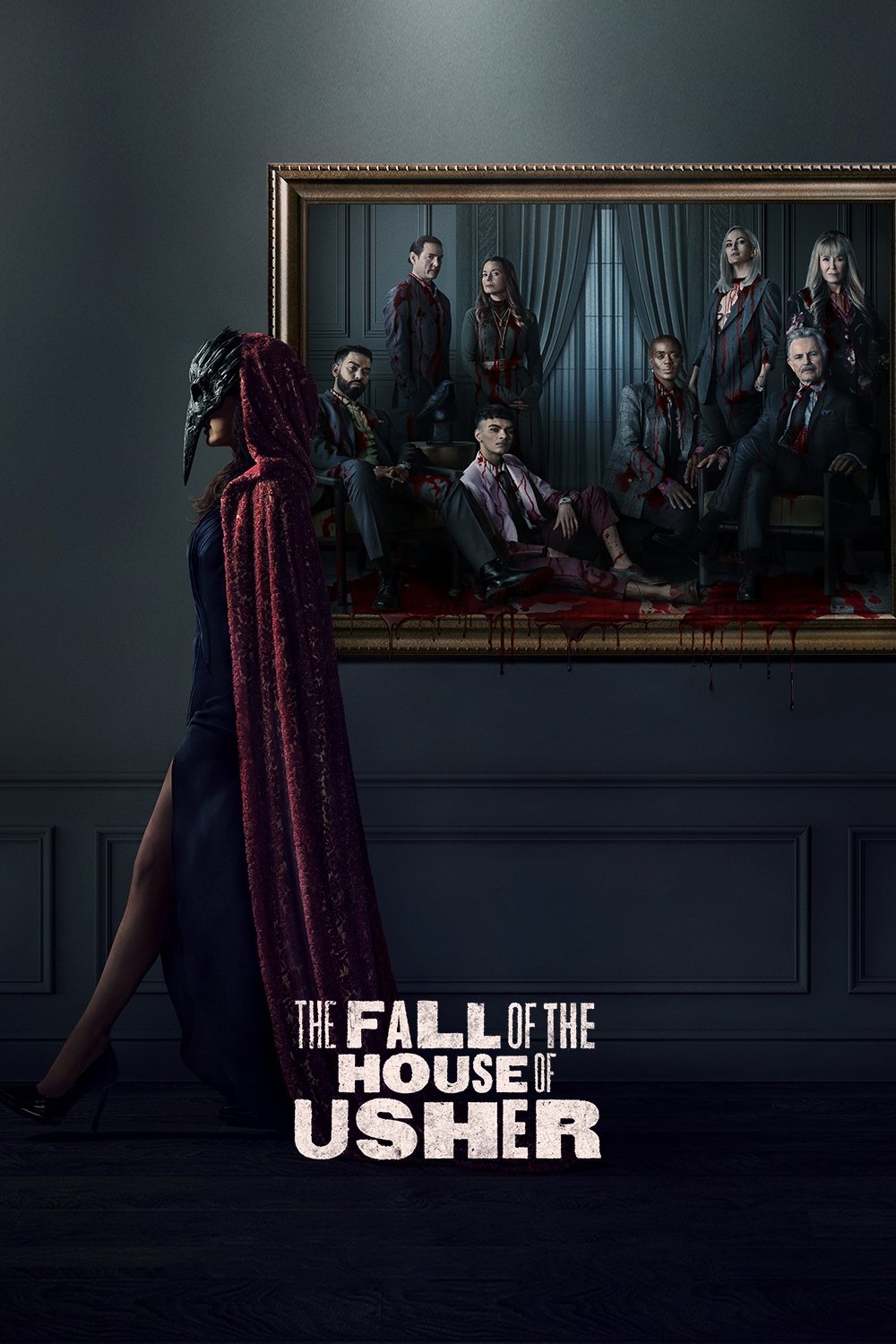

The project arrives at a strange moment for television horror. After the success of The Haunting of Hill House (2018), Flanagan became Netflix’s golden boy, that place where auteur terror rubs shoulders with algorithms and thumbnails of screaming faces. But here’s an interesting twist: "Intrepid Pictures, the production company behind this series, isn’t exactly a giant like A24 or Blumhouse. It’s a company with a patchy track record, known for projects like The Strangers (2008) or Ouija (2014), which waver between moderate success and box-office disaster. That Flanagan chose this ship over a more stable one speaks volumes about his ambition—or his blind faith in his own talent. Because, let’s be honest, The Fall of the House of Usher isn’t just any series: it’s a visual manifesto, a statement of intent where the director seems to say, \"I can turn a Poe tale into a corporate thriller without anyone noticing the seams.\""
The cultural context is also key. Released in 2023, the series arrives at a time when audiences are more than accustomed to true crime, financial fraud documentaries, and fictions exploring capitalism’s rot. Flanagan, cunning as a fox in a henhouse of screenwriters, doesn’t just ride that wave—he surfs it with a whip made of literary references and well-placed jump scares. But here’s the problem: "is being timely enough? Because, at the end of the day, The Fall of the House of Usher is a product of its time, a warped mirror of our obsession with easy money and the consequences of playing God with others’ lives. And that, dear readers, is dangerous terrain when your series relies so heavily on empathy for characters who, let’s face it, are more repulsive than an SEC report."
Then there’s the budget issue. While Netflix doesn’t spill numbers like they’re CIA secrets, it’s clear Flanagan had resources to play with. The House of Usher, a character in itself, is a marvel of production design, with its labyrinthine hallways, mirrors reflecting more guilt than faces, and basements that reek of ill-gotten wealth. But, as always in film and television, money isn’t everything. Or rather, money can buy a spectacular mansion, but it can’t buy soul. And that’s precisely what this series lacks at times: "that spark of genius to turn melodrama into something more than a well-executed stylistic exercise. Because, in the end, The Fall of the House of Usher is just that: a stylistic exercise. And like any exercise, it can be brilliant in moments and disappointing in others."
Direction: "The Master of Ceremonies of the Macabre"
Mike Flanagan isn’t just any director. He’s a choreographer of anguish, a man who knows how to build tension with the precision of a Swiss watchmaker and the patience of a medieval executioner. In The Fall of the House of Usher, his direction is, as always, technically flawless. The long takes that traverse the halls of the Usher mansion aren’t just a display of virtuosity—they’re a declaration of principles: "space is a character, and every room hides a secret. Flanagan uses architecture as a mirror of his characters’ psychology, something few directors achieve without falling into mannerism."
Performances: "A Luxury Cast at a Feast of Guilt"
But the real problem isn’t the performances—it’s the characters. Because, at the end of the day, The Fall of the House of Usher is a series about a family of monsters, and that’s something Flanagan seems to forget at times. The Ushers aren’t people; they’re caricatures of greed, and while that might be interesting from an allegorical standpoint, it also makes it hard to connect with them. How do you feel sorry for someone who’s spent their life exploiting others? Flanagan tries to humanize them with flashbacks and monologues, but in the end, the series gets trapped in its own premise: "it’s hard to pity characters who, deep down, had it coming."
Technical Aspects: "A Visual Feast with a Few Cold Dishes"
If there’s one thing The Fall of the House of Usher can’t be denied, it’s its visual ambition. The series is a feast for the eyes, with cinematography oscillating between Southern Gothic and corporate noir. Michael Fimognari, director of photography and co-writer, proves once again he’s a master of light and shadow. The interiors of the Usher mansion are bathed in a color palette reminiscent of Francis Bacon paintings: "dark tones, bloody reds, and sickly yellows reflecting the moral rot of its inhabitants. The exteriors, with their misty landscapes and leaden skies, are pure visual poetry."
- Carla Gugino’s performance: " A masterful portrayal that steals every scene she’s in. Gugino is pure elegant menace, like if Cruella de Vil and Hannibal Lecter had a lovechild."
- Mike Flanagan’s direction: " A masterclass in sustained tension, proving once again Flanagan is one of today’s best horror directors. His long takes are pure choreography of fear."
Michael Fimognari’s cinematography: " A color palette oscillating between Gothic and corporate, with lighting straight out of a Caravaggio painting but with neo-noir* touches."
- Production design: " The Usher mansion is a character in itself, with architecture reflecting its inhabitants’ psychology. Every room hides a secret, and every hallway is a labyrinth of guilt."
- The score: " The Newton Brothers create a unique atmosphere, blending Gregorian chants with electronic sounds for an unforgettable auditory experience."
- The characters: " The Ushers are more archetypes than real people, making it hard to empathize with them. How do you pity people who’ve spent their lives exploiting others?"
- The pacing: " Some episodes feel stretched beyond their dramatic usefulness, and constant flashbacks sometimes break tension instead of building it."
- Excessive CGI: " The finale suffers from too many digital effects, undermining a story that had relied on atmosphere until then."
- Self-awareness: " Flanagan sometimes seems more concerned with paying homage to Poe than telling a story that works on its own. The series can feel too pretentious at times."
Plot twists: " Some are predictable, others forced, as if Flanagan shoehorned a plot twist* where it wasn’t needed."
🎬 Tráiler Oficial
Abrir en YouTube
Ending Explained: The Fall of the House of Usher
Ficha de Daños Colaterales en Sala
Certificado de impacto psicofísico emitido por Maximiliano Z.
1 amago en el tramo intermedio; pestañeo pesado en las transiciones más innecesarias.
Minuto 43 y minuto 83 (comprobando cuánto quedaba de suplicio).
2 espresso para no dejarse vencer por la mediocridad cómoda.
"A mitad del segundo acto cuando la subtrama secundaria empezó a pesar más de lo que aportaba."
💬 El Veredicto de la Comunidad
¿Qué te ha parecido la película? Deja tu nota de 0 a 10 para contrastarla con el análisis de la redacción.
Aún no has votado
📢 ¿Te ha gustado el ácido?
Comparte esta crítica con tus amigos cinéfilos o desata la polémica en redes.
⚡ THE CINEMATIC VENOM YOUR INBOX CRAVES
No sugarcoated ratings, no corporate fluff. Subscribe for our uncensored weekly analysis or join the private Telegram for press previews, poll clashes, and instant alerts.
Alertas de estrenos en 1 segundo, encuestas en caliente y audios al salir de pases de prensa.
Recibe la dosis semanal en tu mail + regalo inmediato del PDF con 50 joyas ocultas de culto.
Related Reviews
Recommended autopsies for demanding film buffs.
 🔥 Fusión Nuclear9.0
*Six Feet Under: When Family Drama Smells Like a Decadent Corpse*
⚡Consagradas en el olimpo transgresor con 🔥 Fusión Nuclear.
HBO served us a feast of family dysfunction, pitch-black sarcasm, and metaphorical corpses. Alan Ball dug a grave so deep we still haven’t climbed out.
 🔥 Fusión Nuclear8.5
*Animal Kingdom: A Descent into Hell (Where Family is the Devil’s Playground)*
⚡Consagradas en el olimpo transgresor con 🔥 Fusión Nuclear.
A visceral takedown of *Animal Kingdom*, where "family values" take on a whole new (and deeply criminal) meaning.
 🔥 Fusión Nuclear8.5
**Bosch: The Noir Amazon Sold as "Premium" (And, Shockingly, Isn’t Corporate Trash)**
⚡Consagradas en el olimpo transgresor con 🔥 Fusión Nuclear.
A scorching review of *Bosch*, the series that leaves you craving more—because, against all odds, it actually delivers.
Editorial Ecosystem
Cinephile connections, archive interviews and related analyses.
💬 Debate Cinéfilo & Autopsia de Lectores
0 veredictos¿Discrepas con nuestra nota? ¿Es una obra maestra o veneno puro? Deja tu veredicto abajo sin necesidad de registro.


Aún nadie ha dejado su veredicto para esta película.
Sé el primero en clavarle el colmillo rellenando el formulario de arriba.