The Wait — A Father’s Lament That Turned Him Into a Monster (or How Spanish Cinema Rediscovered Analog Body-Horror)
F. Javier Gutiérrez exhumes rural trauma with cinematography that reeks of dried blood and a Víctor Clavijo who decomposes in real time. A gothic Andalusian horror masterpiece—or just a pretentious stylistic exercise?

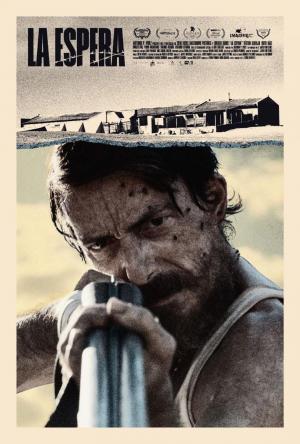

Spanish cinema has always had an uneasy relationship with gothic horror. For decades, it settled for exporting The Day of the Beast as if it were the only exorcism the genre needed, while the rest drowned in cheap jump-scare comedies and testosterone-fueled urban thrillers with all the atmosphere of a gym locker room. But here comes F. Javier Gutiérrez, a director who until now had been flirting with Hollywood mainstream (Rings—that abomination that turned Sadako’s myth into a theme-park jump scare), deciding to return to his roots with The Wait, a film that smells of damp earth, dried blood, and kerosene. It’s not a triumphant comeback, but a desperate—and at times fascinating—attempt to reclaim rural horror through the physical texture of celluloid, as if Gutiérrez himself had dug up old 1970s film reels and projected them directly onto the open wounds of a grieving father. The question is: does it transcend pastiche, or does it remain a pretentious stylistic exercise, like The Blair Witch Project with more vintage flair but just as hollow inside?
The Andalusia of The Wait isn’t the one from tourist brochures, but a cursed landscape where the sun burns like a red-hot iron and shadows stretch like claws. Gutiérrez, obsessed with España Negra (that subgenre blending the rural with the sinister, as if The Crime of Cuenca hooked up with The Holy Innocents), builds his story around Víctor Clavijo, a gamekeeper who loses his son in a hunting accident. The incident isn’t the climax but the trigger for a spiral of pain that Gutiérrez films with the patience of an entomologist watching a beetle rot under a microscope. The camera lingers on details: sweat trickling down Clavijo’s temple like wax tears, calloused hands gripping a rifle as if it were the last lifeline in an ocean of guilt, bloodshot eyes ready to burst like overripe grapes. There’s no rush. No mercy. Only the certainty that, in this universe, pain isn’t overcome—it’s chewed, swallowed, and shat out as vengeance.
The problem is that Gutiérrez, despite his visual ambition, doesn’t always balance symbolism with narrative. The Wait drinks from too-obvious wells: Italian giallo in its saturated color palette (those reds that look like fresh blood on a white canvas), British folk horror in its obsession with the countryside as a space of moral corruption, and even a touch of twilight western in the figure of the vengeful father, a horseless cowboy riding his own rage. But where films like The Witch or Midsommar subvert genre tropes to create something new, The Wait gets stuck halfway between homage and pastiche, as if Gutiérrez had binge-watched too many horror films during a sleepless night and decided to vomit them all into a script. There are brilliant moments—like that long take of Clavijo dragging a boar’s corpse through the mud, the camera clinging to his back like a parasite—but also others where the film seems lost in its own fog, as if the director isn’t quite sure whether he’s making a rural drama or a slasher with poetic pretensions.
And then there’s the revenge. Because, let’s be honest, The Wait isn’t a film about grief—it’s about how grief can corrupt until it turns a man into a monster. Gutiérrez doesn’t beat around the bush: his protagonist doesn’t cry, doesn’t collapse, doesn’t have moments of weakness. Instead, he fixates on Pedro Casablanc, the estate owner and moral culprit behind his son’s death, as if guilt were a virus that could only be cured with more violence. This is where the film gets interesting, because Gutiérrez doesn’t judge his character. There’s no moralizing, no redemption, no cathartic moment where the audience can sigh in relief and say, “Well, at least he learned something.” No. In The Wait, revenge isn’t an act of justice but of emotional cannibalism: Clavijo devours his own humanity to feed his hatred, and the result is as fascinating as it is repulsive. It’s as if Taxi Driver had been shot in an Andalusian dehesa, with fewer existential monologues and more boar blood.
The Direction: A Chiaroscuro That Burns Hotter Than the Andalusian Sun
F. Javier Gutiérrez isn’t a subtle director, and that, at its best, is his greatest virtue. The Wait is a film that reeks of sweat, upturned earth, and rotting flesh, and it shows in every frame. Gutiérrez, who started his career as a cinematographer before crossing over to the dark side of directing, proves here that he knows how to use light not just to illuminate but to torture. The cinematography by Miguel Ángel Mora is a masterclass in sickly chiaroscuro: the interiors of the gamekeeper’s house are bathed in a yellowish light that seems filtered through a cirrhotic liver, while the exteriors, shot in the Andalusian plains, have a raw, almost documentary crudeness, as if the sun were melting the characters’ skin in real time. There’s one shot in particular—Clavijo gazing at the horizon while the wind kicks up dust at his feet—that looks like it was lifted from a spaghetti western directed by David Lynch: beautiful, unsettling, and utterly hopeless.
But where Gutiérrez truly shines is in his handling of space. The Wait is a claustrophobic film, not because of a lack of settings, but because Clavijo’s world shrinks as his obsession grows. At first, the estate seems vast, almost infinite, but as the plot progresses, the shots become tighter, more oppressive, until the audience feels trapped in the same cage as the protagonist. Gutiérrez uses the scope (2.35:1) like an instrument of torture: the characters are constantly framed by doors, windows, or tree branches, as if the landscape itself were conspiring to suffocate them. And then there are the travellings—slow, deliberate, following Clavijo as if the camera were another predator stalking its prey. There are no jump scares, no jarring music, no cheap tricks that modern horror loves. Instead, there’s a tension that builds drop by drop, like cold sweat, until the audience is so on edge that any noise—a creaking branch, a bird’s flutter—makes them jump in their seats.
The problem is that Gutiérrez, in his eagerness to create an oppressive atmosphere, sometimes overdoes it. There are scenes where the film seems to move in slow motion just for the sake of it, as if the director were so in love with his own aesthetic that he forgot pacing matters. And then there are moments where the symbolism becomes so heavy-handed it borders on ridiculous: dead boars as a metaphor for lost innocence, broken mirrors reflecting a fractured soul, knives appearing over and over as harbingers of violence. These symbols aren’t bad in themselves, but Gutiérrez repeats them ad nauseam, as if he’s afraid the audience won’t get the hint. It’s like The Wait was directed by a film student who just discovered Tarkovsky and wants to impress his professor with every shot.
The Performances: Víctor Clavijo and the Art of Rotting on Screen
If anything saves The Wait from drowning in pretentiousness, it’s Víctor Clavijo. The actor, who until now had gone unnoticed in supporting roles (though memorable in Tomorrow or The Zone), proves here that he’s one of the most physical performers in Spanish cinema today. Clavijo doesn’t act out pain—he embodies it, chews it, and spits it out in minimal but devastating gestures. There’s a scene where his character, drunk and desperate, tries to embrace his wife (a Ruth Díaz who shines in silence) and ends up vomiting on her. It’s not just any vomit: it’s a thick bile, a contained rage, something that’s been rotting inside for too long. Clavijo pulls it off with such chilling naturalism that you can almost smell the alcohol and rotting flesh in the theater. It’s pure body-horror, but without special effects or exaggerated makeup—just the body of an actor who knows that terror isn’t in what you see, but in what you sense.
Ruth Díaz, meanwhile, gets the short end of the stick: the role of the silently suffering wife, as if her pain were just another prop in her husband’s tragedy. Díaz nails it, especially in those scenes where her character looks at Clavijo with a mix of pity and terror, as if she knows there’s nothing left of the man she married. But the script doesn’t give her much else to do, and in the end, her character remains an archetype: the weeping woman, the suffering woman, the woman who disappears when the plot demands it. It’s a shame, because Díaz has the ability to convey more with a silence than many actors do with a monologue.
The rest of the cast delivers, though without standing out. Pedro Casablanc, usually a guarantee of quality, here settles for playing the stock villain: the arrogant landowner, the man who has everything and doesn’t understand others’ pain. His character is so one-dimensional you almost expect him to twirl a mustache. The supporting actors—Moisés Ruiz, Manuel Morón, Antonio Estrada—do what they can with dialogue that sometimes sounds forced, as if Gutiérrez had written the script in English and then translated it into Spanish using Google Translate. There’s a moment where one of them says, “Pain is like a wild animal: if you don’t feed it, it devours you,” and you can’t help but laugh—it sounds like something from a creative writing workshop, not something an Andalusian peasant in the 1970s would say.
The Technical Department: When Sound Is More Terrifying Than the Image
If The Wait does one thing right—really right—it’s the sound design. In a film where the visuals sometimes veer into pretentiousness, the sound is what truly sinks its teeth into your neck. There’s no traditional score, just a symphony of organic noises: the crunch of branches underfoot, the buzz of flies over rotting flesh, Clavijo’s breathing, increasingly ragged, increasingly animalistic. In a key scene, the camera stays fixed on Clavijo’s face while we hear, off-screen, the sound of a knife being sharpened. We don’t see the knife, we don’t see who’s sharpening it, but the sound is so real, so close, that you can almost feel the blade grazing your throat. It’s a perfect example of how horror doesn’t need to show to scare—sometimes, suggestion is enough.
The editing, by José Manuel Jiménez, is another strong point. Gutiérrez and Jiménez avoid the fast cuts that modern horror loves and opt for a slow, almost hypnotic pace that forces the audience to immerse themselves in Clavijo’s nightmare. There are sequences that seem lifted from a fever dream: long shots where the camera stays fixed while the characters move in the background, as if time had stopped for them. But again, the problem is repetition. Gutiérrez falls so in love with his own ideas that some scenes drag on longer than necessary, as if he’s afraid the audience will miss the symbolism if he doesn’t give them an extra couple of minutes to digest it.
The production design, on the other hand, is impeccable. The estate where the action takes place is a character in itself: dirty, decaying, filled with objects that seem plucked from a museum of rural Spain (rusty shotguns, empty wine bottles, furniture that smells of damp). The costumes, by Paola Torres, reinforce this sense of authenticity: Clavijo’s clothes get dirtier, more torn, as if his body were decomposing at the same rate as his soul. Even the dead boars on screen have a physical presence that’s disgusting: they’re not prop animals but real carcasses, plucked from a slaughterhouse, with skin glistening with blood and flies buzzing around them. It’s a morbid detail, but it drives home the idea that The Wait isn’t a film to watch with popcorn—it’s one to watch on an empty stomach.
The Best
- Miguel Ángel Mora’s cinematography: A masterclass in sickly chiaroscuro that turns every frame into a gothic nightmare. The light doesn’t illuminate—it corrupts.
- Víctor Clavijo: An actor who turns pain into raw flesh. His performance is so physical you can almost smell his character’s rot.
- Sound design: A symphony of organic noises that sinks its teeth into your neck. Horror doesn’t need to show to scare.
- Art direction and costumes: The estate is a character in itself—dirty, decaying, and dripping with authenticity. Even the dead boars look real.
- Editing: A slow but hypnotic pace that forces you to drown in the nightmare. Less is more, and here, less is terrifying.
The Worst
- The script: Sometimes feels like it was written by a film student who just discovered Tarkovsky. Too much obvious symbolism and dialogue that sounds like it came from a creative writing workshop.
- The pacing: Some scenes drag on longer than necessary, as if Gutiérrez is afraid the audience won’t get the hint. Patience is a virtue; boredom isn’t.
- Pedro Casablanc: A villain so one-dimensional you expect him to twirl a mustache. His lack of nuance is a drag.
- Ruth Díaz’s underdevelopment: A fascinating character reduced to the “silently suffering wife” archetype. The script condemns her to being an accessory to her husband’s tragedy.
- Repetitive symbolism: Dead boars, broken mirrors, knives… Gutiérrez falls so in love with his own metaphors that they become tiresome.
The Verdict of Claqueta Ácida
The Wait is a film that hurts, that reeks of sweat and dried blood, that sinks its teeth into your throat and doesn’t let go until you’ve swallowed every last drop of its bile. F. Javier Gutiérrez proves that Spanish rural horror can be as visceral as British folk horror or Italian giallo, but also that ambition isn’t always synonymous with coherence. There are moments when the film shines with a sickly light, like a cirrhotic liver floating in formaldehyde, but others where it gets lost in its own labyrinth of symbols, as if the director forgot that, in the end, a film also needs to tell a story. Víctor Clavijo saves the ship with a performance that’s pure analog body-horror, but even he can’t prevent the script—sometimes pretentious, sometimes obvious—from throwing obstacles in his path. A masterpiece of Andalusian gothic horror? No. A fascinating and repulsive stylistic exercise in equal parts? Absolutely. The Wait isn’t a film to watch—it’s one to suffer through. And these days, that’s almost a miracle. 💀
🎬 Tráiler Oficial
Abrir en YouTube
Ending Explained: The Wait
Ficha de Daños Colaterales en Sala
Certificado de impacto psicofísico emitido por Odin Lagbert
2 amagos en el tramo intermedio; pestañeo pesado en las transiciones más innecesarias.
Minuto 38 y minuto 67 (comprobando cuánto quedaba de suplicio).
2 espresso para no dejarse vencer por la mediocridad cómoda.
"A mitad del segundo acto cuando la subtrama secundaria empezó a pesar más de lo que aportaba."
💬 El Veredicto de la Comunidad
¿Qué te ha parecido la película? Deja tu nota de 0 a 10 para contrastarla con el análisis de la redacción.
Aún no has votado
📢 ¿Te ha gustado el ácido?
Comparte esta crítica con tus amigos cinéfilos o desata la polémica en redes.
⚡ THE CINEMATIC VENOM YOUR INBOX CRAVES
No sugarcoated ratings, no corporate fluff. Subscribe for our uncensored weekly analysis or join the private Telegram for press previews, poll clashes, and instant alerts.
Alertas de estrenos en 1 segundo, encuestas en caliente y audios al salir de pases de prensa.
Recibe la dosis semanal en tu mail + regalo inmediato del PDF con 50 joyas ocultas de culto.
Related Reviews
Recommended autopsies for demanding film buffs.
 ⚡ Ácido Cítrico7.1
28 años después
⚡Afinidad temática directa en atmósfera, estilo y fijaciones visuales.
Una secuela que huele a podrido desde el primer fotograma. Garland y DaCosta intentan revivir el género, pero el resultado es un KO técnico disfrazado de obra maestra.
 ⚡ Ácido Cítrico5.8
**A Serbian Film: The Snuff That Thought It Was Art (and Ended Up a High-School Nightmare)**
⚡Afinidad temática directa en atmósfera, estilo y fijaciones visuales.
**Srđan Spasojević serves up a depravity feast swinging between gratuitous shock and social commentary. Genius or pretentious trash? Claqueta Ácida dissects it with surgical precision.**
 ⚡ Ácido Cítrico6.0
Adolescence, Sex, and Death at Camp Miasma: The Slasher That Reeks of Teen Sweat and a Recycled Script
⚡Afinidad temática directa en atmósfera, estilo y fijaciones visuales.
Jane Schoenbrun turns a summer camp into a dumpster fire of hormones and clichés. Art or autopsy of a dying subgenre?
Editorial Ecosystem
Cinephile connections, archive interviews and related analyses.
💬 Debate Cinéfilo & Autopsia de Lectores
0 veredictos¿Discrepas con nuestra nota? ¿Es una obra maestra o veneno puro? Deja tu veredicto abajo sin necesidad de registro.


Aún nadie ha dejado su veredicto para esta película.
Sé el primero en clavarle el colmillo rellenando el formulario de arriba.