The Piano Teacher — Haneke Flays the Soul with Ivory Keys and Razor Blades
Isabelle Huppert in a role that burns. Haneke turns the conservatory into an emotional slaughterhouse. Pain, silence, and a mother worse than hell itself.


The Piano Teacher: full review

The Vienna Conservatory had never sounded so much like a torture chamber. Michael Haneke, that surgeon of human cruelty, wields his scalpel once more in The Piano Teacher (2001), a film you don’t watch—you suffer. Based on the novel by Elfriede Jelinek—Nobel Prize in Literature, in case anyone doubted this would be light fare—the film is a clinical study of repression, desire, and self-destruction, served with the cold precision of a forensic report. Haneke doesn’t film emotions; he dissects them. And at the center of the operating room stands Isabelle Huppert, transformed into Erika Kohut, a piano teacher whose life is a staff of frustrations, humiliations, and unspeakable urges. If you thought European cinema was boring, just wait until Haneke shows you how to craft a psychological thriller without soaring violins or cheap twists. Here, the suspense isn’t in what’s going to happen—it’s in how long you’ll last before looking away.
The shoot of The Piano Teacher was, by all accounts, as tense as the film itself. Huppert and Haneke maintained a professional relationship that oscillated between mutual admiration and creative sadomasochism. The actress, who had worked with directors like Chabrol and Godard, knew Haneke wasn’t the type to hand out compliments. “If you don’t like what I’m doing, tell me,” Huppert snapped at one point. “Don’t worry, I will,” he replied. And oh, did he. The most brutal scenes—like the one where Erika self-mutilates in the bathroom—were shot with a rawness that left the entire crew speechless. Christian Berger, the cinematographer, opted for a cold, almost clinical color palette, turning the conservatory’s hallways into a labyrinth of distorting mirrors. The light, always diffused, seemed to filter through a veil of gauze, as if the very air were contaminated by the characters’ emotional rot. And then there’s the music: Schubert, Schumann, Bach. Sublime pieces that clash with the sordidness of the actions, creating a dissonance as uncomfortable as it is brilliant.
But The Piano Teacher wouldn’t be the masterpiece it is without its cast. Huppert, of course, is the film’s black soul. Her Erika is a character who swings between the vulnerability of a wounded bird and the ferocity of a predator. There’s a moment, almost at the end, when Walter Klemmer (Benoît Magimel) asks her, “What do you want from me?” Erika’s response—a silence laden with hatred and desire—is one of those instances that defines cinema as art. Magimel, for his part, rises to the occasion: his Walter is a young, arrogant man who thinks he’s playing a seduction game, until he realizes the prey is far more dangerous than the hunter. But if anyone steals the film, it’s Annie Girardot as Erika’s mother. A woman who is both jailer and victim, a figure as pathetic as she is terrifying. Her relationship with Erika is a duel of glances, eloquent silences, and gestures that hurt more than any slap. When the mother tells her daughter, “You’re useless,” it’s not an insult—it’s a diagnosis.
Haneke doesn’t beat around the bush. His cinema is a punch to the gut, but a punch calculated to the millimeter. Every shot, every frame, is designed to unsettle. Look at the scene where Erika spies on a couple making love in a car: the camera doesn’t move closer, doesn’t judge, it just observes. Like an entomologist studying an insect. Or the moment when Walter plays the piano for Erika: the music is perfect, but Huppert’s face says it all. There’s no ecstasy, only infinite sadness. Haneke doesn’t believe in happy endings, not even ambiguous ones. His cinema is a mirror that reflects your own misery back at you, and The Piano Teacher is, perhaps, his most unflinching work. It’s not a film for everyone. It’s a film for those who believe cinema should hurt, should disturb, should leave a mark. Like a cigarette burn on the skin.
Direction and Mise-en-scène: Haneke’s Cold Touch
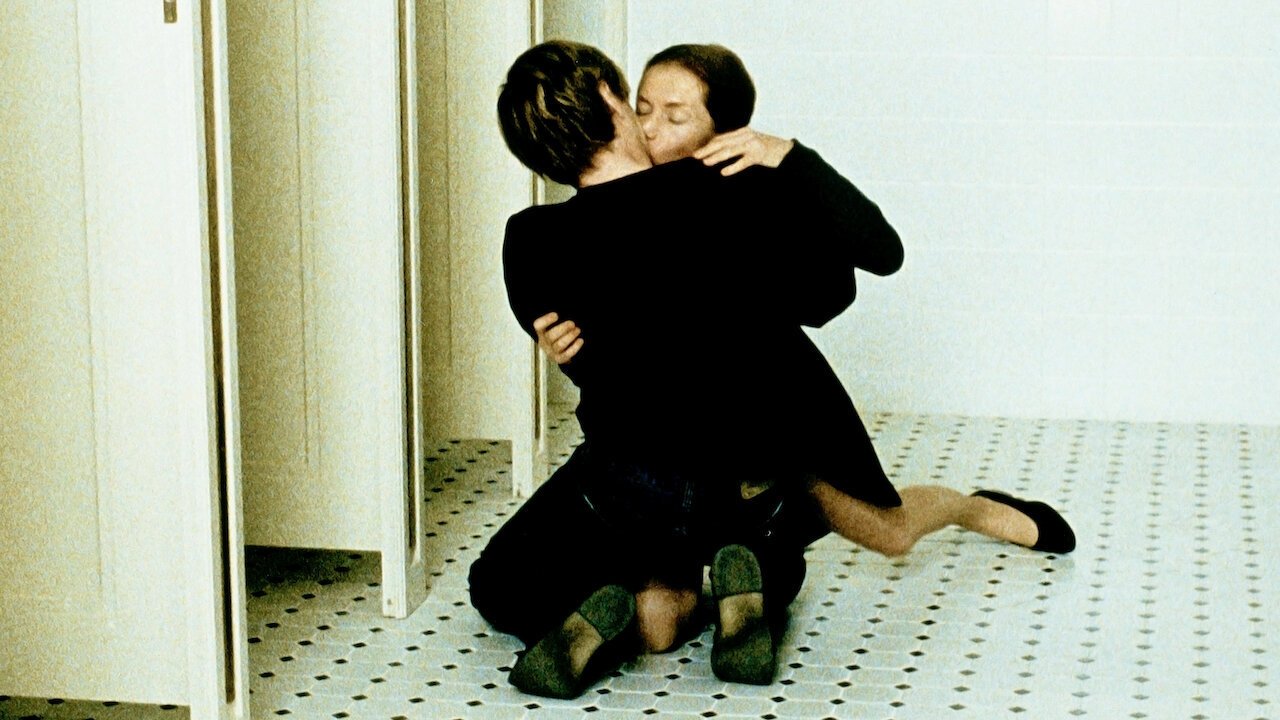
Michael Haneke doesn’t direct actors—he dissects them. His style is so precise it borders on the surgical, and in The Piano Teacher, he takes that obsession with detail to its extreme. Every shot is an exercise in control: the frames are symmetrical, almost geometric, as if the Vienna Conservatory were a prison of straight lines and right angles. Haneke doesn’t use extradiegetic music—except for the fragments of Schubert and Schumann played by the characters—because he knows silence is the best amplifier of pain. When Erika walks down the conservatory’s hallways, the sound of her heels echoes like a metronome marking the rhythm of her own despair. And then there are the close-ups: Huppert in the bathtub, razor in hand; Huppert in bed, eyes wide open; Huppert in the porn theater, her expression a mix of disgust and fascination. Haneke doesn’t need dialogue to convey what his character feels. A gesture, a sigh, a blink is enough.
The editing, handled by Monika Willi, is another of the film’s strengths. Haneke and Willi work with a minimalism that borders on austerity. There are no abrupt cuts, no jump scares, no concessions to the audience. The transitions are smooth, almost imperceptible, as if time had stopped in that cursed conservatory. But what’s most interesting is how Haneke plays with off-screen space. In the scene where Erika and Walter have their first sexual encounter, the camera stays outside the apartment, focusing on the closed door. We don’t see what happens inside, but the sounds—the moans, the thuds, the gasps—are enough to let our imaginations fill in the horror. Haneke doesn’t give us easy answers. He forces us to fill in the gaps with our own minds, and that’s what makes The Piano Teacher so disturbing.
Performances: Huppert and the Art of Suffering with Elegance
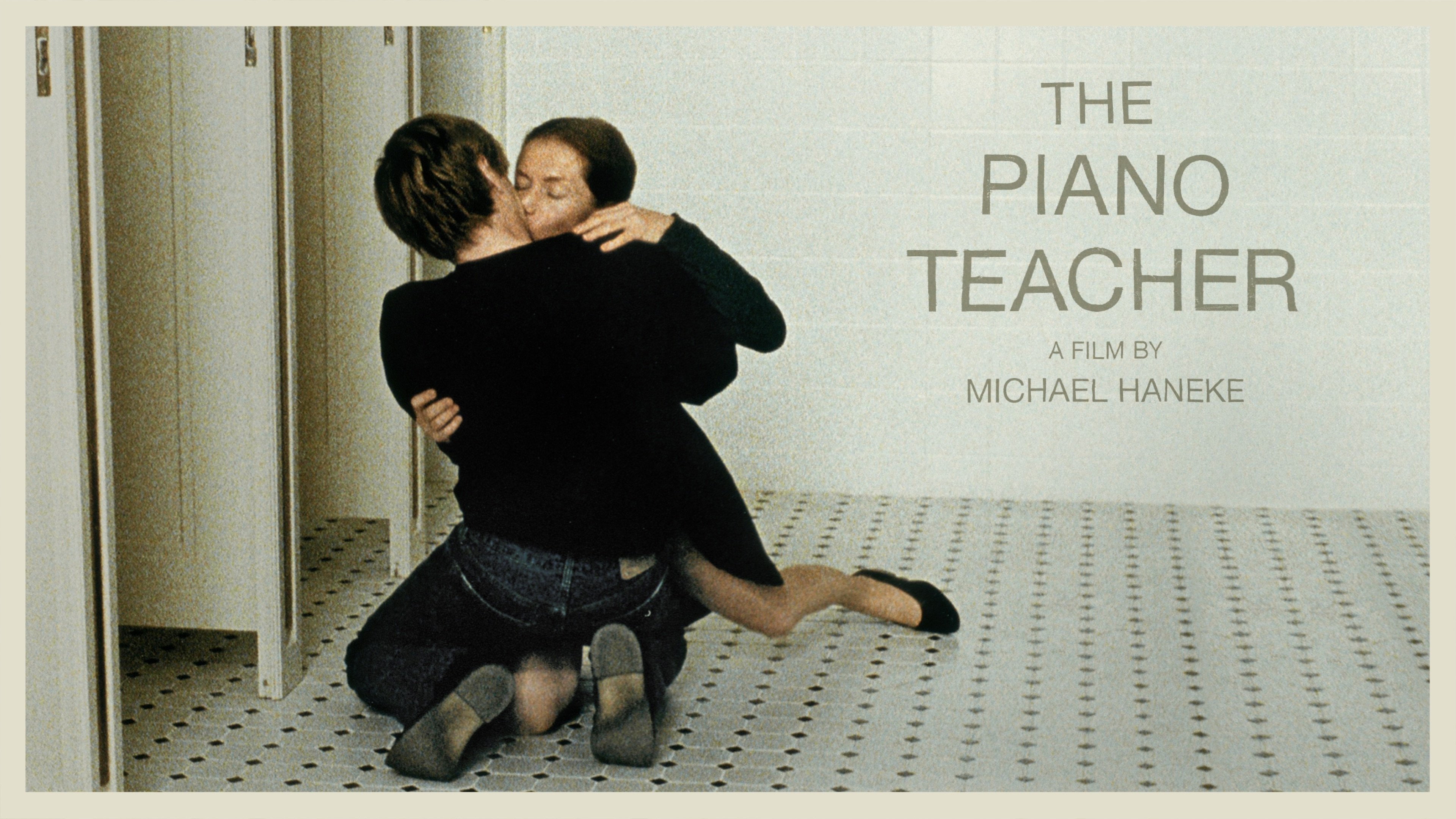
Isabelle Huppert doesn’t act in The Piano Teacher—she bleeds on screen. Her Erika Kohut is one of those characters who lodges in your memory like a splinter under the nail. She’s not a heroine, not even an antiheroine. She’s a victim of herself, a woman trapped in a body she hates and a life she can’t bear. Huppert conveys all of this with a restraint that borders on the supernatural. Look at the scene where Erika writes Walter the letter detailing her darkest sexual fantasies. Huppert doesn’t cry, doesn’t scream, doesn’t overact. She simply writes, with a calm that sends chills down your spine. And when Walter reads the letter aloud, his reaction isn’t one of surprise, but of infinite sadness. As if he knows that, no matter what he does, she’ll never escape her own mind.
Benoît Magimel, for his part, rises to the challenge. His Walter Klemmer is a young, arrogant man who thinks he’s in control of the situation, until he discovers Erika is a labyrinth with no exit. Magimel conveys that mix of fascination and repulsion his character feels, especially in the concert scene, when Walter plays the piano for Erika. The music is sublime, but the characters’ faces say it all: there’s no redemption possible. But if anyone steals the film, it’s Annie Girardot as Erika’s mother. A woman who is both jailer and victim, a figure as pathetic as she is terrifying. Her relationship with Erika is a duel of glances, eloquent silences, and gestures that hurt more than any slap. When the mother tells her daughter, “You’re useless,” it’s not an insult—it’s a verdict.
The best
Isabelle Huppert’s performance: A masterclass in restraint and pain. Huppert doesn’t play Erika Kohut—she becomes* her. Every gesture, every glance, every silence is a stab. Her scene in the bathroom, razor in hand, is one of those moments that stays with you forever.
- Michael Haneke’s direction: Cold, precise, relentless. Haneke makes no concessions to the audience, not even when the scenes border on the unbearable. His use of off-screen space and silence is simply brilliant.
- Christian Berger’s cinematography: A palette of cold colors and symmetrical frames that turn the conservatory into a prison. The diffused light and muted tones reinforce the sense of oppression that permeates the entire film.
- The relationship between Erika and her mother: Annie Girardot is brutal as Erika’s mother. Their dynamic is a study in familial toxicity, served with a rawness that hurts. When the mother tells Erika she’s useless, it’s not an insult—it’s a diagnosis.
- The use of classical music: Schubert, Schumann, Bach. Sublime pieces that clash with the sordidness of the actions, creating a dissonance as uncomfortable as it is brilliant. The scene where Walter plays the piano for Erika is heartbreakingly beautiful.
The worst
- The pacing in the first half: Haneke takes his time building the atmosphere, which can make the first 40 minutes feel slow. This isn’t a film for the impatient or those seeking nonstop action.
- The lack of development for some secondary characters: Characters like Mme. Schober (Susanne Lothar) or Dr. Blonskij (Udo Samel) are relegated to mere extras. It would’ve been nice to explore their stories a bit more.
- The brutality of some scenes: This isn’t a film for the squeamish. The scenes of self-mutilation, voyeurism, and sexual violence may be too intense for some viewers.
- The ending: No spoilers, but Haneke doesn’t believe in happy endings. Some may find it too abrupt or unsatisfying. I think it’s consistent with the film’s tone, but I get why it might not be for everyone.
The Verdict of Claqueta Ácida
The Piano Teacher isn’t a film—it’s an experience. One of those works that leaves you breathless, with the feeling of having witnessed something forbidden. Haneke doesn’t film emotions; he dissects them, exposes them to the air, and lets them rot under the cold light of his camera. Isabelle Huppert is sublime, Annie Girardot is a nightmare made flesh, and the Vienna Conservatory becomes the perfect stage for this drama of repression and self-destruction. It’s not cinema for everyone. It’s cinema for those who believe art should hurt, should disturb, should leave a mark. Like a cigarette burn on the skin. Or like a razor blade to the groin. 💀
🎬 Tráiler Oficial
Abrir en YouTube
The Piano Teacher: frequently asked questions
- What is the rating of "The Piano Teacher" on Claqueta Ácida?
- "The Piano Teacher" scored 8.7/10 on Claqueta Ácida in the review by Odin Lagbert.
- Is "The Piano Teacher" worth watching?
- Yes. We gave it 8.7/10 (Nuclear Fusion), our rating for must-see films.
- Who directed "The Piano Teacher"?
- "The Piano Teacher" was directed by Michael Haneke.
Theater Collateral Damage Report
Psychophysical impact certificate issued by Odin Lagbert
Ni un solo parpadeo voluntario. El asiento, inusualmente cómodo.
Ninguna comprobación del tiempo. Se agradece la rareza.
Ninguna. Esta obra no necesita muletas estimulantes.
"No aplica. La obra se sostiene sola."
💬 Community Verdict
What did you think of the film? Rate it from 0 to 10 to compare it with the editorial review.
You haven't voted yet
📢 ¿Te ha gustado el ácido?
Comparte esta crítica con tus amigos cinéfilos o desata la polémica en redes.
⚡ THE CINEMATIC VENOM YOUR INBOX CRAVES
No sugarcoated ratings, no corporate fluff. Subscribe for our uncensored weekly analysis or join the private Telegram for press previews, poll clashes, and instant alerts.
Alertas de estrenos en 1 segundo, encuestas en caliente y audios al salir de pases de prensa.
Recibe la dosis semanal en tu mail + regalo inmediato del PDF con 50 joyas ocultas de culto.
Related Reviews
Recommended autopsies for demanding film buffs.
 🔥 Fusión Nuclear 9.0
 The Pianist: Polanski and the Horror That Needs No Monsters
⚡ Hermana de saga: otro capítulo diseccionado con rigor forense.
Roman Polanski turns the Holocaust into art without redemption. Adrien Brody shatters our souls just by breathing. An uncomfortable masterpiece.
 🔥 Fusión Nuclear 8.7
 Caché (Hidden): The Silence That Screams and the Guilt That Won’t Forgive
⚡ Del mismo director (Michael Haneke): analiza la evolución o degradación de su estilo.
Michael Haneke dissects the French bourgeoisie with a psychological thriller that stings worse than a switchblade. Or is it just a hall of mirrors?
 🔥 Fusión Nuclear 8.5
 *Funny Games*: Haneke Tortures Us with a Sadistic Smile—and We Love It
⚡ Del mismo director (Michael Haneke): analiza la evolución o degradación de su estilo.
A satirical and squirm-inducing review of Michael Haneke’s modern Austrian cinema classic. A meta-cinematic essay that shames the viewer for their thirst for violence.
Editorial Ecosystem
Cinephile connections, archive interviews and related analyses.
🎞️ In Claqueta Cinematheque 3
💬 Debate Cinéfilo & Autopsia de Lectores
0 veredictos¿Discrepas con nuestra nota? ¿Es una obra maestra o veneno puro? Deja tu veredicto abajo sin necesidad de registro.


Aún nadie ha dejado su veredicto para esta película.
Sé el primero en clavarle el colmillo rellenando el formulario de arriba.