The Sinners — A Technical KO in the Dark
A scathing look at Ryan Coogler’s latest cinematic gut-punch


The Sinners: full review

I slumped into my seat at Cine Callao with the crumpled The Sinners program clutched in my fingers, wondering if Ryan Coogler—that guy who turned a Marvel superhero into a social drama with legs—could pull off the same miracle without spandex or indestructible shields. The theater reeked of burnt popcorn and that cheap disinfectant cinemas douse themselves in so you don’t dwell on the sweat stains of the guy in front of you. The screen flickered to life with a single take in near-darkness: two shadows sprinting down an Oakland alley, their ragged breaths mingling with the echo of footsteps we never see. This wasn’t the start of a movie; it was the start of an interrogation. Coogler doesn’t invite you in; he grabs you by the scruff and hurls you against the wall of the story without asking if you’re wearing a helmet. And damn, does it hurt.
The film kicks off with a prologue that clocks in at exactly 12 minutes and 47 seconds—I timed it—without a single line of dialogue. Just the squeak of the twins Marcus and Andre’s sneakers (Michael B. Jordan, pulling double duty like his life depends on it) against asphalt, the blare of a car horn that doesn’t brake in time, and the gunshot that changes everything. It’s the kind of scene that makes you forget your phone’s in your pocket. Coogler films like every shot is the last he’ll ever shoot: with an urgency bordering on pathological. There’s no time for flourishes or for the camera to preen in its own beauty. Autumn Durald Arkapaw, his cinematographer, lights the actors’ faces like Caravaggio paintings drenched in the grime of a roadside motel. Light slithers through broken blinds, sneaks between prison bars, or glistens off a sweaty brow, but it never—never—prettifies. It’s ugly when it needs to be ugly, and in today’s cinema, that’s an act of rebellion.
The script, penned by Coogler and Joe Robert Cole (the architect behind Black Panther), is a clockwork mechanism with rusted gears. It works, but it creaks. The plot follows the brothers after a botched heist—depending on who you ask, it either went wrong or exactly right—and forces them to flee south, toward a past they thought they’d buried. Flashbacks explain why Marcus became a criminal and Andre a cop, but Coogler avoids the trap of making them mirror images. One is a shattered reflection of the other, and the film wallows in those cracks. The problem? In its quest to be complex, the story sometimes tangles itself in its own knots. There’s a moment where Andre must choose between saving his brother or doing his duty, and the scene is so laden with symbolism you can practically hear a film student’s keyboard clacking away. Too obvious to be brilliant, too ambitious to be forgettable.
Michael B. Jordan doesn’t act in this movie: he detonates. It’s not just that he carries the weight of two characters—that alone should net him an Oscar for sheer exhaustion—it’s that every glance, every gesture, every silence between the twins lands like a gut punch. There’s a scene where Marcus, cuffed in the back of a squad car, whispers something to Andre we can’t hear. The camera lingers on Jordan’s face, and in that close-up—which stretches into eternity—we watch his voice crack, his eyes well up, and for a second, he stops being an actor and becomes a man having his soul ripped out. That’s not something they teach in acting school. Sterling K. Brown, playing their father, has a sequence where he reads a letter aloud while the camera circles him like he’s in a boxing ring. He doesn’t say anything profound, but the way Brown chews each word, like they’re shards of glass, leaves you breathless. The rest of the cast, however, gets lost in the shadow of these titans. Jodie Turner-Smith, as Marcus’s girlfriend, has flashes of brilliance, but her character is little more than a vessel for guilt and regret. As if Coogler decided women in this story could only exist in relation to the men’s pain.
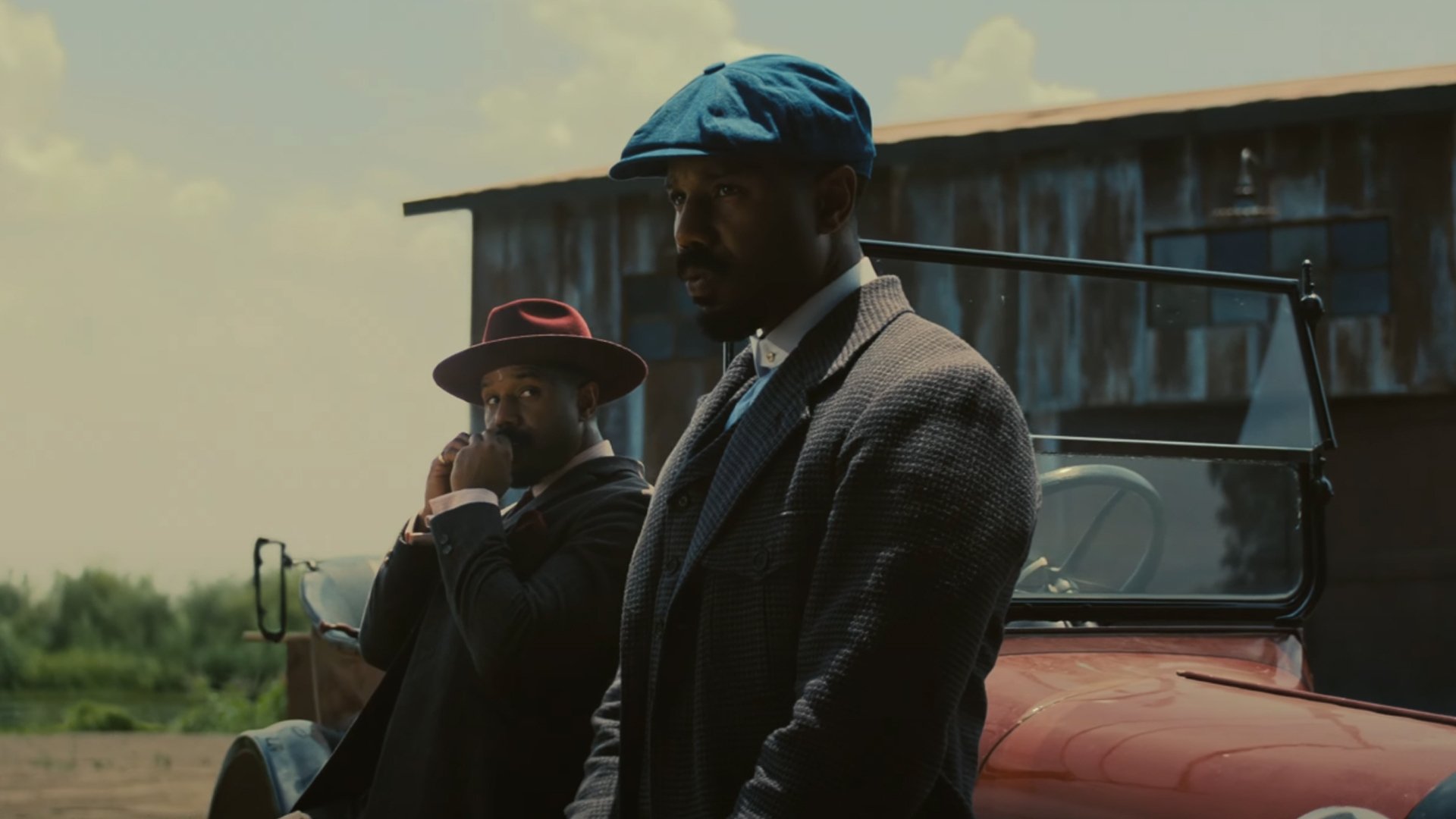
Direction and staging: the art of not letting you breathe
Ryan Coogler doesn’t direct movies: he directs claustrophobic experiences. From Fruitvale Station to Creed, his signature is that sense of characters—and by extension, the audience—trapped in a space they can’t escape. In The Sinners, that space is literal: most of the action unfolds in cars, motel rooms, and dead-end alleys. But it’s also metaphorical. Coogler uses the widescreen format (2.39:1) not to showcase epic landscapes but to cage his characters in frames that resemble horizontal coffins. Every shot is a cell.
There’s a moment where Marcus and Andre argue in an abandoned warehouse. The camera sits low, angled upward like we’re on the floor, and the brothers loom against a ceiling of broken pipes. It’s not just that the composition is striking—it is—but that it makes you feel small, insignificant. Coogler doesn’t want you to admire his film; he wants you to suffer through it. The editing, by Claudia Castello and Michael P. Shawver, is just as ruthless. Cuts are quick when tension demands it, but they stretch into agony during moments of calm. There’s a sequence where Andre chases a suspect through a residential neighborhood, and the unbroken take lasts nearly four minutes. No music, just the sound of footsteps, breaths, and wind rustling leaves. It’s the kind of scene that makes you forget you’re watching a movie. Until, suddenly, a gunshot shatters the silence and everything lurches forward again.
Ludwig Göransson’s score, a Coogler staple, is another character in the story. It’s not a soundtrack; it’s a heartbeat. He weaves tribal percussion, distorted strings, and gospel choirs into an atmosphere that oscillates between the sacred and the profane. There’s a scene where Marcus steps into an abandoned church, and the organ swells like it’s being played by God’s fingers—or the devil’s. This isn’t music; it’s a warning.
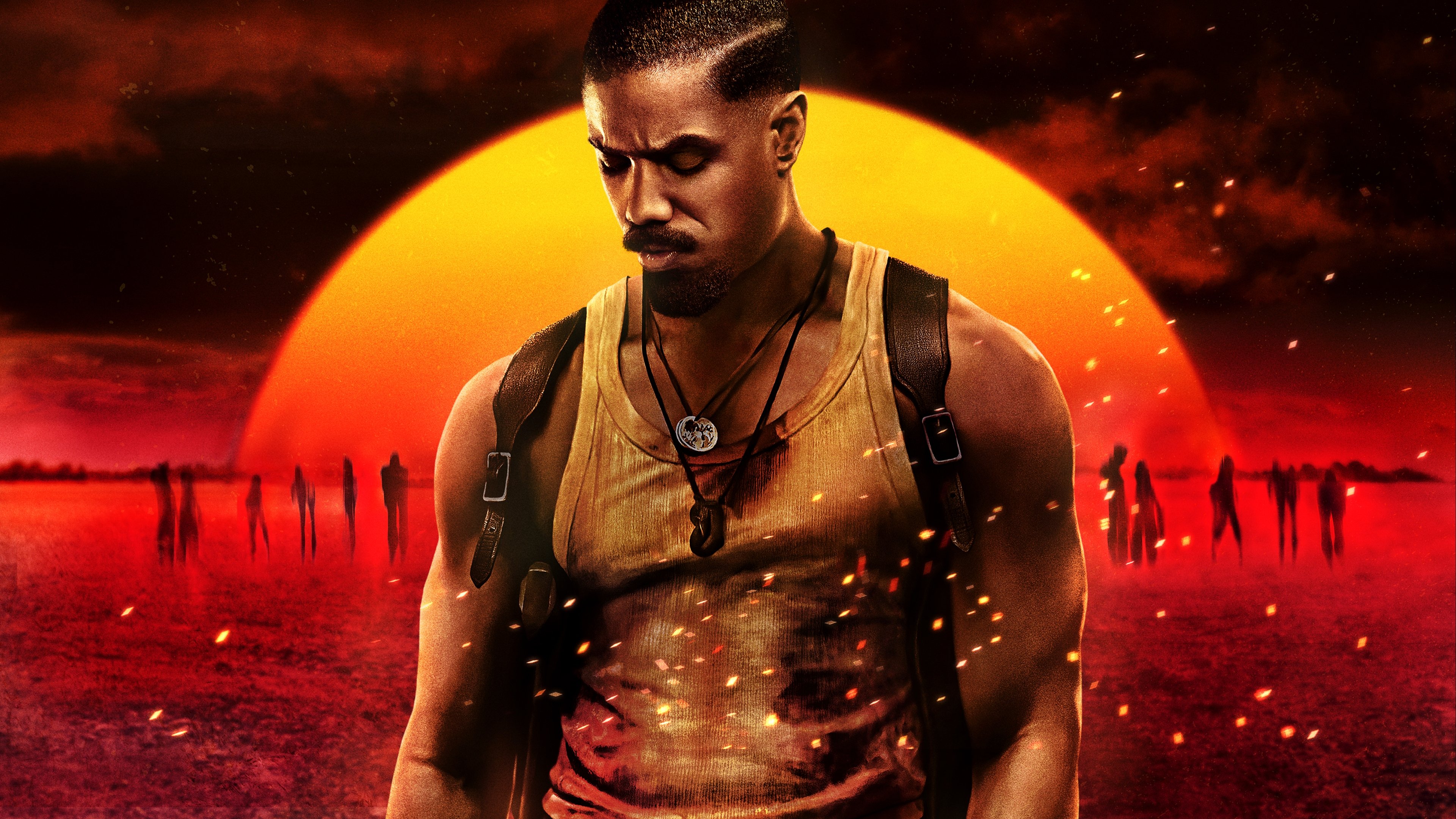
Performances: when method acting becomes self-flagellation
Michael B. Jordan is no longer the pretty boy from Black Panther. He’s an actor who’s devoured himself and spat out the bones. In The Sinners, he plays two characters who are, at their core, two sides of the same coin: Marcus, the criminal with a twisted moral code, and Andre, the cop who believes he can save his brother without getting his hands dirty. Jordan doesn’t just switch gears between scenes; he sheds his skin. Marcus has a crooked grin, a swagger like the world owes him something, and a look that says, «I know you’ll betray me, but I don’t care.» Andre, meanwhile, is all coiled tension, a spring ready to snap. There’s a scene where the brothers clash in a parking lot, and Jordan flips from fury to sorrow in less than a second. This isn’t acting; it’s an exorcism.
Sterling K. Brown, meanwhile, steals every scene he’s in. His character, the twins’ father, is a man broken by guilt and alcoholism, and Brown plays him with a rawness that hurts. In a pivotal sequence, he reads a letter he wrote years ago, his voice so shattered the words seem to choke him. He’s not acting; he’s reliving. The rest of the cast, however, fades in comparison. Jodie Turner-Smith has moments of brilliance, but her character is little more than a symbol. Teodosia, Marcus’s girlfriend, exists to suffer, to weep, and to remind the protagonist that the world doesn’t forgive. As if Coogler forgot women have agency too.
Technical department: when craft saves the day
Autumn Durald Arkapaw’s cinematography is, quite simply, a masterclass in filmmaking. Not a single frame is unconsidered. She uses natural light like it’s another character: slanting through grimy motel windows, reflecting off street puddles, or filtering through tree branches. There’s a scene where Marcus and Andre meet in a forest at dawn, and the golden light bathing their faces looks like it’s been plucked from a Renaissance painting. But it’s not pretty; it’s necessary. Durald Arkapaw doesn’t seek beauty; she seeks truth, no matter how ugly.
The production design, by Hannah Beachler (Black Panther), is another triumph. Every setting—from Marcus’s dilapidated apartment to the precinct where Andre works—is packed with details that speak volumes without dialogue. There’s a moment where the camera lingers on a Boyz n the Hood poster tacked to Marcus’s wall. This isn’t a wink at the audience; it’s a mission statement.
Sound, finally, is as crucial as the visuals. Coogler and his team wield silence like a weapon. Some scenes feature nothing but the sound of breathing, footsteps, or wind. It’s uncomfortable, but it’s real. When Göransson’s score crashes in, it hits like a tsunami: it wipes everything out and leaves you gasping.
The best
- Michael B. Jordan’s performance: It’s not just that he plays two characters; he makes each one feel distinct, with their own voice, their own way of moving, of breathing. There’s a scene where Marcus cries silently while Andre watches, and Jordan makes every tear feel like a knife. This isn’t improvised; it’s endured.
- Autumn Durald Arkapaw’s cinematography: Every shot is a painting, but a painting that’s dirty, broken, real. Not a single frame lacks meaning. This is cinema in its purest form.
- Ryan Coogler’s direction: He doesn’t let you breathe, doesn’t give you a break. Coogler doesn’t make movies to entertain; he makes them so you’ll remember.
- Ludwig Göransson’s score: It’s not a soundtrack; it’s another character. He uses silence and noise as narrative tools, and the result is hypnotic.
- The chemistry between the actors: Especially Michael B. Jordan and Sterling K. Brown. There’s a scene where the three share a meal, and the air is so thick with tension you could cut it with a knife.
The worst
- Underdeveloped secondary characters: Jodie Turner-Smith and others have flashes of brilliance, but their characters are little more than archetypes. As if Coogler forgot women and side characters have stories too.
- Predictable twists: The film plays with the brothers’ duality, but some plot turns feel straight out of a screenwriting manual. Too obvious to be brilliant.
- Runtime: 156 minutes drags in places. Some scenes could’ve been trimmed without losing impact. The pacing wavers, but it never breaks.
- Heavy-handed symbolism: There’s a scene where Marcus and Andre wash their hands in a sink, and the blood swirls with the water. Not subtle; it’s a sledgehammer.
- Lack of nuance in some characters: The villain, played by an actor whose name I’ve already forgotten, is so one-dimensional he feels like he’s been airlifted from a ‘90s movie. A waste of talent.
The Verdict of Claqueta Ácida
The Sinners isn’t a perfect film, but it’s a necessary one. Ryan Coogler has crafted a crime drama that hurts, unsettles, and—above all—makes you think. This isn’t a movie to watch with popcorn; it’s a movie to watch with your hands gripping the armrests, knuckles white, heart in your throat. Michael B. Jordan is on another level, and Autumn Durald Arkapaw’s cinematography is a work of art in itself. But this isn’t a film for everyone. If you’re after nonstop action or impossible plot twists, look elsewhere. If you want a story about brothers, guilt, and redemption told with a rawness that borders on unbearable, here’s your medicine. Just don’t say I didn’t warn you: after watching The Sinners, you’ll need a stiff drink. And maybe a hug. 💀
🎬 Tráiler Oficial
Abrir en YouTube
The Sinners: frequently asked questions
- What is the rating of "The Sinners" on Claqueta Ácida?
- "The Sinners" scored 7.5/10 on Claqueta Ácida in the review by Camilo K.O..
- Is "The Sinners" worth watching?
- With reservations. We gave it 7.5/10 (Citric Acid), our rating for uneven films with something worth saving.
- Who directed "The Sinners"?
- "The Sinners" was directed by Ryan Coogler.
Theater Collateral Damage Report
Psychophysical impact certificate issued by Camilo K.O.
3 amagos en el tramo intermedio; pestañeo pesado en las transiciones más innecesarias.
El reloj aparece en escena justo cuando la subtrama secundaria pide paciencia.
2 espressos para no dejarse vencer por la mediocridad cómoda.
"A mitad del segundo acto cuando la subtrama secundaria empezó a pesar más de lo que aportaba."
💬 Community Verdict
What did you think of the film? Rate it from 0 to 10 to compare it with the editorial review.
You haven't voted yet
📢 ¿Te ha gustado el ácido?
Comparte esta crítica con tus amigos cinéfilos o desata la polémica en redes.
⚡ THE CINEMATIC VENOM YOUR INBOX CRAVES
No sugarcoated ratings, no corporate fluff. Subscribe for our uncensored weekly analysis or join the private Telegram for press previews, poll clashes, and instant alerts.
Alertas de estrenos en 1 segundo, encuestas en caliente y audios al salir de pases de prensa.
Recibe la dosis semanal en tu mail + regalo inmediato del PDF con 50 joyas ocultas de culto.
Related Reviews
Recommended autopsies for demanding film buffs.
 ⚡ Ácido Cítrico 7.0
 *Sinners: Vampires, Racism, and 16 Oscar Noms for an Empty Shell*
⚡ Del mismo director (Ryan Coogler): analiza la evolución o degradación de su estilo.
A review of Ryan Coogler’s Southern Gothic vampire thriller—a stunning aesthetic spectacle that stumbles into self-important dramatics and hollow pretension.
 🔥 Fusión Nuclear 8.0
 Bitter Christmas: Almodóvar Comes Home (And Saves Us from Corporate Holiday Hell)
⚡ Consagradas en el olimpo transgresor con 🔥 Fusión Nuclear.
Almodóvar turns holiday grief into an intimate, visually stunning, and emotionally raw drama. Bárbara Lennie shines, but the script stumbles in the third act. 8/10.
 🔥 Fusión Nuclear 8.0
 The End of Oak Street: David Robert Mitchell Reinvents Cosmic Horror Without Losing Its Human Core
⚡ Consagradas en el olimpo transgresor con 🔥 Fusión Nuclear.
Anne Hathaway and Ewan McGregor lead this claustrophobic descent where the unknown isn’t a monster—it’s reality itself unraveling at the seams. Mitchell proves once again that the most terrifying horror is the kind that festers in the intimate.
Editorial Ecosystem
Cinephile connections, archive interviews and related analyses.
🎞️ In Claqueta Cinematheque 1
💬 Debate Cinéfilo & Autopsia de Lectores
0 veredictos¿Discrepas con nuestra nota? ¿Es una obra maestra o veneno puro? Deja tu veredicto abajo sin necesidad de registro.


Aún nadie ha dejado su veredicto para esta película.
Sé el primero en clavarle el colmillo rellenando el formulario de arriba.