Nosferatu — Eggers’ Glorious, Gothic Vampire Revival – A Masterclass in Mold, Shadows, and Carnal Obsession
Robert Eggers resurrects the immortal vampire classic with a sublime, tenebrous, and sweat-drenched symphony of shadows, rats, and fleshly obsession.

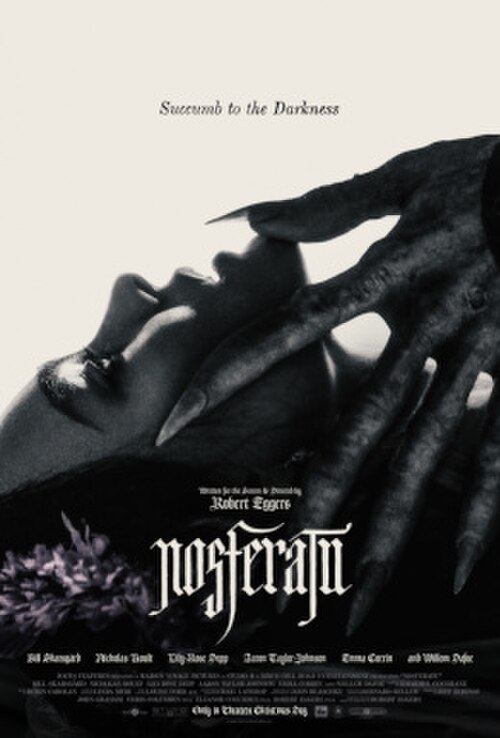


Robert Eggers has done it again—this time, he hasn’t settled for merely recreating a 17th-century Puritan hellscape with the precision of a Swiss watchmaker obsessed with biblical plagues (The Witch), nor for plunging us into a Viking’s psychedelic nightmare of serpents in the sky (The Lighthouse). No, this time, he’s decided to resurrect cinema’s most iconic silent-film vampire, Murnau’s Nosferatu—the one Bram Stoker’s widow tried to erase from existence with a legal sledgehammer. And, of course, he’s done it with the meticulousness of a taxidermist dissecting a bat, only to stitch it back together-la-cueva-de-los-espejos-rotos" class="text-amber-400 font-black hover:text-amber-300 transition underline decoration-amber-500/40 hover:decoration-amber-300" title="[6.5/10 ⚡ Ácido Cítrico] Lee nuestra autopsia de «Together»" data-acid-interlink="together-la-cueva-de-los-espejos-rotos">together with silver thread and bathe it in aesthetic formaldehyde. The result? A film that reeks of mildew, melted wax, and 19th-century peasant sweat—but also of pure cinema, of terror so thick you can chew it and swallow it with the same difficulty Ellen Hutter (Lily-Rose Depp) resists the spell of that specter with blackened nails and breath like an open grave.
finalExplicado: "Orlok irrumpe en Wisborg como una plaga encarnada. Ellen, consciente de su vínculo sobrenatural, lo atrae deliberadamente a su alcoba y se entrega a él en un coito mortal. Mientras el vampiro la viola y la desangra, ella lo retiene hasta el amanecer; la luz del sol lo incineró simultáneamente. Ambos mueren entrelazados, él convertido en cenizas putrefactas, ella con el pecho abierto y el rostro extasiado. Simbólicamente, el clímax invierte la posesión: Ellen no es víctima, sino la verdadera predadora. Su sacrificio sexual es un acto de amor-peste; solo entregándose por completo al monstruo puede aniquilarlo. La carne femenina se revela como el único antídoto contra la infección patriarcal y vampírica. Muerte y orgasmo se funden en una misma imagen: la única forma de vencer al mal es copular con él hasta que arda."
The Vampire as Disease: Orlok, the Plague in a Tuxedo
Bill Skarsgård doesn’t play Count Orlok—he embodies him like a virus in a tailcoat. Eggers and his design team have crafted a creature that is, above all, a biological abomination, a being coughed up by the same earth that ferments plague corpses. His fingers, elongated like rotting roots, dig into doorframes with the eagerness of a praying mantis in heat. His baldness isn’t just an aesthetic choice; it’s a reminder that this vampire has nothing human about him—no hair, no eyebrows, no lashes, just translucent skin and blue veins writhing like worms beneath the epidermis. When he leans over Ellen on the balcony, his shadow doesn’t fall like a man’s, but like that of a giant scorpion, and that image—so simple, so primitive—is more terrifying than any jump scare from the last two decades.
Skarsgård moves with the choreography of a sick predator: his steps are slow, not out of gothic elegance, but because every movement seems to pain him, as if his joints were rusted from centuries of stillness. When he runs, it’s with the clumsiness of a wounded animal, and when he feeds, it’s with the ferocity of a rat gnawing on stale bread. There’s no romance in this vampire, not even the kind Dracula had—the decency to seduce with words before biting. Orlok is pure instinct, a parasite that doesn’t even bother pretending to be anything else. And in a genre Hollywood has turned into a catalog of pale boyfriends with commitment issues (Twilight, The Vampire Diaries, Interview with the Vampire 2022 edition), that’s nothing short of revolutionary.
Eggers and Blaschke: Chiaroscuro as Religion
If there’s one thing Robert Eggers understands better than anyone, it’s that gothic terror isn’t born from what you see, but from what you sense. And for that, he has his usual accomplice, cinematographer Jarin Blaschke—a man who seems to have been born in 1890 and learned to light scenes with candles before electricity. Together, they’ve turned Nosferatu into a manual on how to use darkness as a character.
The film is drenched in a palette of sickly grays, cadaverous blues, and blacks that devour the screen, as if every frame had been dipped in dirty water before projection. Eggers and Blaschke don’t use light to illuminate; they use it to hint: a flickering candle in an endless hallway, the moon filtering through a fogged window, the glow of a lantern barely grazing Orlok’s face while the rest of his body lingers in shadow. It’s expressionist painting in motion, but without the histrionic exaggeration of The Cabinet of Dr. Caligari. Here, the horror is clinical, almost scientific. When Orlok first appears in the Hutter’s doorway, his silhouette is etched against the light like a Chinese ink drawing, and that image—so simple, so perfect—is more effective than any cutting-edge CGI.
The use of color is also masterful. Eggers avoids the typical bloody reds of the genre (though there is blood, of course—dirty, black, coagulated) and opts for tones that evoke rot and cold: the mossy greens of Transylvanian forests, the bilious yellows of tallow candles, the milky whites of the fog enveloping Orlok’s ship. Even the interiors of houses are designed to suffocate: low ceilings, heavy furniture, curtains that look like shrouds. Every shot is a trap, and the viewer, like Ellen, feels ensnared in a labyrinth of shadows with no escape.
The Ship Voyage: A Purgatory of Rats and Silence
One of the most debated sections of the film is the middle stretch on the ship, where Orlok travels from Transylvania to Germany with a crew that drops dead one by one, like flies in a jar of poisoned honey. Some critics have argued that this segment slows the pace, and they’re not entirely wrong: Eggers isn’t in a hurry, because gothic terror isn’t measured in minutes, but in atmospheres. And here, the atmosphere is so thick you could cut it with a rusty knife.
The ship, the Demeter, is a character in itself: a floating coffin where every plank creaks like a broken bone and every wave crashes against the hull like an omen. Eggers films this stretch with almost documentary realism, as if he were shooting found footage from the 19th century. There’s no music, just the sound of the wind, the creaking wood, and the moans of dying sailors, coughing up blood and dragging themselves across the deck like zombies before the term existed. When one of them opens a barrel and finds hundreds of rats devouring his shipmates’ corpses, the scene needs no dialogue: the horror is in the sailor’s bulging eyes, in the imaginary stench of rotting flesh that seems to seep through the screen.
This stretch is pure Hitchcockian suspense, but without the comic relief of a Cary Grant. Eggers takes his time building the terror, and by the time we reach Wisborg (the German city where the second half unfolds), the relief is so brief it almost hurts. Because we know, like Ellen, that Orlok is already here, and his arrival brings nothing good.
Lily-Rose Depp: Romantic Hysteria as Art
If there’s one character who steals the film (and not just because Orlok looks at her like a rare steak), it’s Ellen Hutter, played by Lily-Rose Depp with an intensity that borders on the unhinged. Ellen isn’t the typical gothic damsel who faints at the first suspicious shadow. No, Ellen is a woman who knows she’s doomed from the first frame, and that certainty drives her into a state of paranoid ecstasy that Depp portrays with surgical precision.
From the moment she receives her husband Thomas’s letter (Nicholas Hoult, in a role written for a man who never quite grasps what’s happening), Ellen knows something bad is coming. And it’s not a hunch—it’s a physical certainty: she touches her neck as if she already feels Orlok’s fangs, stares out the window as if expecting to see his silhouette at any moment, and when she finally does see him—in that iconic scene where the vampire is framed against the night sky—her reaction isn’t terror, but sick fascination. Depp plays this moment with a blend of revulsion and desire that recalls the heroines of 19th-century gothic novels: women who knew the monster would destroy them, but wanted to be destroyed anyway.
Her performance is physically exhausting: she writhes in bed as if possessed, scratches her arms until they bleed, and in the final scene, when she surrenders to Orlok in an act of romantic sacrifice, she does so with the smile of a martyr. It’s a performance that divides critics (some find it over-the-top, others call it a masterpiece), but the truth is, there’s no other actress in Hollywood who can convey so much with so little. Depp doesn’t need to scream to terrify us; she just needs to look at us with those glassy eyes, as if she’s already dead.
Willem Dafoe: The Van Helsing the Underworld Coughed Up
If there’s one character who keeps the film from drowning in solemn drama, it’s Professor Albin Eberhart Von Franz, played by Willem Dafoe with a controlled madness that verges on genius. Dafoe already proved in The Lighthouse that he can steal any scene with just an eyebrow twitch, but here, he outdoes himself.
Von Franz is a grotesque parody of vampire hunters: an occult-obsessed academic who speaks as if reciting a cursed poem, laughs like a maniac, and drinks wine like it’s holy water. Dafoe gives him a dash of black comedy that contrasts with the film’s somber tone without breaking the atmosphere. When he tells Thomas Hutter that "vampires are like cats: if you stare at them, they stare back," it’s not a joke—it’s a warning disguised as absurdity.
His most memorable scene is, without a doubt, the banquet at the Hutters’ house, where Von Franz gets drunk, sings bawdy songs, and toasts the undead with a grin from ear to ear. Dafoe plays this moment with macabre glee, as if he knows the world is doomed and all that’s left is to laugh while it burns. He’s the only character who seems to enjoy the horror, and that’s why we love him.
The Ending: Sacrifice and Silence
The climax of Nosferatu is as inevitable as it is beautiful. Eggers doesn’t beat around the bush: he knows we already know this story, that the vampire must die, that the heroine must sacrifice herself. But what makes this ending work is that there’s no redemption, only tragedy.
Ellen, in an act of desperate love (or madness, or both), lures Orlok to her room and surrenders to him, letting him drink her blood until the first ray of sunlight reduces him to ashes. The scene is silent, slow, almost liturgical: no music, just Ellen’s breathing, the rustle of sheets, and Orlok’s groan of pleasure and pain as he feeds. When the sun strikes him, there’s no explosion or special effects—just a body crumbling like burning paper, leaving behind a pile of dust and Ellen’s hollow gaze, who knows she’s won, but also knows she’s lost.
The final shot, with Ellen dying in Thomas’s arms, is pure gothic romance: she smiles, as if finally at peace, and he weeps, as if he’s just realized that the real monster wasn’t Orlok, but desire. Eggers closes the film with a fade to black that lasts longer than usual, as if giving us time to reflect on what we’ve just seen. And what we’ve seen is a three-act tragedy, where love, horror, and death intertwine until they become one and the same.
Odious (But Necessary) Comparisons
Nosferatu isn’t just a remake—it’s a correction of errors. While Murnau’s 1922 version was a masterpiece of German Expressionism (with obvious technical limitations) and Herzog’s 1979 take was a visual poem with Klaus Kinski as a more tragic than terrifying Orlok, Eggers’ version is the definitive one: faithful to the original’s spirit, but with the rawness and realism of a Black Death documentary.
Compared to other recent vampire films, Nosferatu is like a scalpel next to a plastic knife. While Coppola’s Dracula (1992) was a feast of velvet and eroticism, and Let the Right One In (2008) was a gothic love story with a child vampire, Eggers returns to the roots: the vampire isn’t a lover, an antihero, or a symbol of teenage rebellion. He’s a plague, a parasite, a disease. And in a genre Hollywood has turned into a catalog of teenage fanfiction, that’s revolutionary.
The best
- Production design and cinematography: Eggers and Blaschke have created a world where even the dust seems to have a history. Every frame is a painting, every shadow a character.
- Bill Skarsgård as Orlok: A vampire that’s equal parts disgusting, terrifying, and pitiable. The best creature design in years, without unnecessary CGI.
The worst
The plot’s linearity: If you already know the Nosferatu* myth, don’t expect plot twists. Eggers prioritizes atmosphere over narrative surprises.- The ship segment’s pacing: For some, it’ll be a suspense masterpiece; for others, a patience-testing rat infestation.
The Verdict of Claqueta Ácida (9.2/10)
Robert Eggers has delivered the vampire film the 21st century didn’t deserve but desperately needed: a feast of shadows, plague, and desire that reeks of melted wax and dried blood. Nosferatu isn’t just a remake—it’s an autopsy of gothic terror, where every frame is an incision and every performance a throbbing organ. If you leave the theater without checking your curtains, you haven’t understood a thing. A timeless masterpiece—or at the very least, the best excuse to lose sleep for a week.🎬 Tráiler Oficial
Abrir en YouTube
Ending Explained: Nosferatu
Ficha de Daños Colaterales en Sala
Certificado de impacto psicofísico emitido por Valeria Von Doom
Cero. La pantalla absorbió cada segundo de atención disponible.
Ni una sola mirada al móvil.
Ninguna. Guarda el café para la sesión siguiente.
"No hubo. La coherencia se mantuvo hasta el último fotograma."
💬 El Veredicto de la Comunidad
¿Qué te ha parecido la película? Deja tu nota de 0 a 10 para contrastarla con el análisis de la redacción.
Aún no has votado
📢 ¿Te ha gustado el ácido?
Comparte esta crítica con tus amigos cinéfilos o desata la polémica en redes.
⚡ THE CINEMATIC VENOM YOUR INBOX CRAVES
No sugarcoated ratings, no corporate fluff. Subscribe for our uncensored weekly analysis or join the private Telegram for press previews, poll clashes, and instant alerts.
Alertas de estrenos en 1 segundo, encuestas en caliente y audios al salir de pases de prensa.
Recibe la dosis semanal en tu mail + regalo inmediato del PDF con 50 joyas ocultas de culto.
Related Reviews
Recommended autopsies for demanding film buffs.
 🔥 Fusión Nuclear9.0
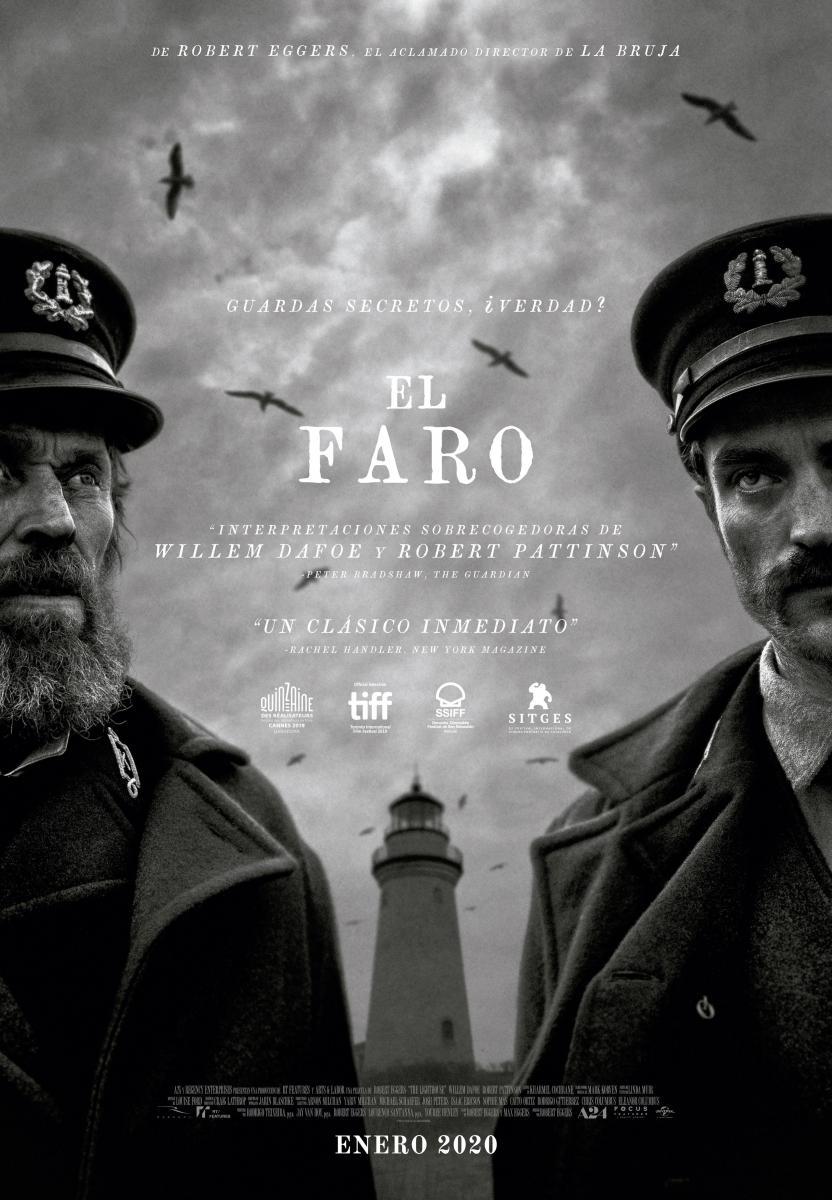
*The Lighthouse: Monotony, Madness, and the Stench of Kerosene-Drenched Maritime Mythology*
⚡Del mismo director (Robert Eggers): analiza la evolución o degradación de su estilo.
Robert Eggers locks Willem Dafoe and Robert Pattinson in a godforsaken rock to gift us a hypnotic, black-and-white maritime fever dream.
 🔥 Fusión Nuclear9.0
*The Witch: Extreme Puritanism, Talking Goats, and Traditional Folklore—When Religious Guilt Becomes an Extreme Sport*
⚡Del mismo director (Robert Eggers): analiza la evolución o degradación de su estilo.
Robert Eggers made his debut with a rigorous and hypnotic Gothic tale about the religious paranoia of a 17th-century colonist family and the whispers of Black Phillip, the goat who’s either the devil or just really good at small talk.
 ⚡ Ácido Cítrico7.5
A Ghost Story: A Journey Through Time and Memory
⚡Afinidad temática directa en atmósfera, estilo y fijaciones visuales.
The Claqueta Ácida review of A Ghost Story, a film that explores existence and human connection.
Editorial Ecosystem
Cinephile connections, archive interviews and related analyses.
🎞️ In Claqueta Cinematheque2
💬 Debate Cinéfilo & Autopsia de Lectores
0 veredictos¿Discrepas con nuestra nota? ¿Es una obra maestra o veneno puro? Deja tu veredicto abajo sin necesidad de registro.


Aún nadie ha dejado su veredicto para esta película.
Sé el primero en clavarle el colmillo rellenando el formulario de arriba.