Portraits of the Apocalypse — The Buenos Aires Zombie Who Didn’t Know He Was Dead (And Other Highbrow Trash Horrors)
Nicanor Loreti turns the zombie apocalypse into an Argentine style exercise: cheap, effective, and oozing more personality than a barbecue in Constitución. A masterpiece? Hardly. An instant cult classic? Probably.

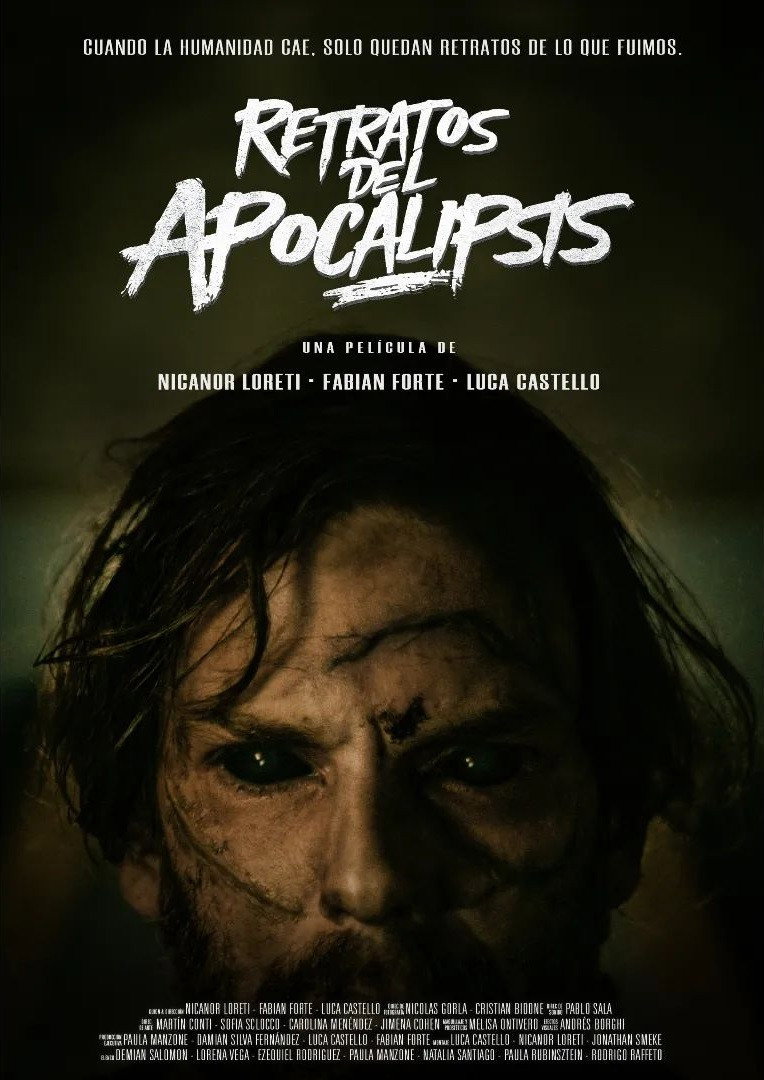

Argentine cinema has a messy relationship with genre filmmaking: it either ignores it with the disdain of a La Nación critic or embraces it with the clumsiness of a teenager discovering gore on YouPorn. Nicanor Loreti, that enfant terrible of local horror who already gifted us Plaga Zombie (1997)—a film so bad it became legendary—and Nunca estuve en Viena (2016)—a pretentious oddity even pretentious people hate—returns with Portraits of the Apocalypse, an experiment that wavers between an unabashed homage to classic zombies and an urgent portrait of a Buenos Aires on the brink of collapse. It’s no coincidence this film emerges in a country where the economic crisis is so chronic even the undead seem optimistic. Loreti, like a true child of the DIY culture, shoots with what he’s got: committed actors, a budget that could buy coffee at Starbucks (but not at Havanna), and an obsession with framing that borders on pathological. The result is a film that reeks of sweat, fake blood, and that mix of resignation and rebellion only Argentines understand when the world goes to hell. Literally.
In Loreti’s hands, the apocalypse isn’t some Hollywood pyrotechnic spectacle where zombies sprint like Olympic athletes and heroes drop epic one-liners between explosions. Here, the end of the world is dirty, intimate, and deeply porteño: there are breadlines amid the chaos, arguments about the dólar blue while the infected gnaw on ankles, and even a guy complaining because the zombie chasing him has bad breath. Luca Castello, the screenwriter, crafts four intertwined stories with the precision of a Swiss watch made in Once: a cabbie who refuses to accept his passenger is dead, a couple bickering during the evacuation (because in Argentina, even the apocalypse is an excuse for domestic drama), a group of survivors holed up in a supermarket (discovering the real horror isn’t zombies but the prices), and a scientist trying to find a cure while the government ignores her. The script is clever: it blends razor-sharp black humor with moments of genuine terror, as if Shaun of the Dead and The Hour of the Furnaces had an illegitimate child in a San Cristóbal tenement.
The problem—or the charm, depending on how you look at it—is that Portraits of the Apocalypse never decides if it wants to be a horror film, a black comedy, or a political manifesto disguised as genre. Yet that ambiguity is its greatest virtue. Loreti, heir to Argentina’s underground cinema tradition, shoots with the urgency of someone who knows the world is ending tomorrow (or that the INCAA is cutting his funding). His mise-en-scène is raw, almost documentary-like in places, with long takes that evoke Béla Tarr but on the budget of a Casados con hijos episode. Nicolás Gorla’s camera moves like another character: shaky when it needs to be, static when horror demands it, and always serving that lo-fi aesthetic that turns lack of resources into style. The cinematography, drenched in sickly greens and earthy tones, conveys the sense that Buenos Aires is rotting from within, like a corpse that doesn’t yet know it’s dead.
But where the film truly shines—or at least achieves its most unsettling effect—is in its portrayal of characters. There are no heroes here, just ordinary people trapped in a nightmare they don’t understand. Demián Salomón, as the cabbie, delivers a performance that oscillates between the pathetic and the poignant: his character is a coward, a selfish man, but also the most human of them all. Lorena Vega, as the abandoned scientist, has that mix of determination and fragility reminiscent of Lucrecia Martel’s heroines, but with a dark humor only Argentines can pull off. The rest of the cast holds their own, though some lapse into the overacting typical of local genre cinema, where fear is expressed through exaggerated screams and ‘did they really pay me for this?’ stares. Still, there’s chemistry among them, that complicity that only emerges when a group of actors dives into a project without a safety net, as if they’re shooting a home movie in grandma’s backyard.
Direction: Chaos as Aesthetic
Nicanor Loreti doesn’t direct—he choreographs disaster. His style is chaotic, but methodical: every shot seems designed to convey the feeling that the world is crumbling, not with a bang but with a pitiful whimper. There’s a moment where the camera follows a character down a dark hallway, lit by the flickering glow of a dying fluorescent bulb, that recalls the best of The Texas Chain Saw Massacre (1974), but on the budget of a YouTube video. Loreti isn’t afraid to show the seams: the zombies look fake, the blood effects seem made with ketchup and toilet paper, and in more than one scene, the actors are clearly holding back laughter. Far from detracting, that imperfection gives the film a trash charm that makes it unique. It’s as if John Waters and Gaspar Noé had a child at a BAFICI afterparty and raised it on fernet and B-movies.
The editing, by Alejandro Brodersohn, is another strong point. The four stories intertwine at a pace that avoids boredom, though some transitions feel forced, as if the editor had to improvise on the fly. The score, by Pablo Sala, is minimalist but effective: dark synthesizers that evoke ‘80s soundtracks, but with a lo-fi touch that fits the film’s aesthetic perfectly. The sound design, overall, is one of the most polished aspects: the groans of zombies, the screams of characters, and the ambient noise of a city in chaos are mixed with a precision that contrasts with the film’s amateur appearance.
Performances: Between Genius and Ridiculous
The cast of Portraits of the Apocalypse is a reminder that in Argentine cinema, talent isn’t always where it should be. Demián Salomón steals the show with a performance that swings between brilliant and desperate: his character is a coward, but a charismatic one, as if Travis Bickle had been born in Villa Lugano and drove a taxi. Lorena Vega, meanwhile, conveys a vulnerability that contrasts with her character’s toughness, though she occasionally slips into the overacting typical of genre films. The rest of the cast delivers, though there are stumbles: Ezequiel Rodríguez seems lost in his role, as if he showed up late to the shoot and was handed the first script found on the floor, and Paula Manzone overacts so much she seems to be gunning for worst performance of the year.
But the most interesting thing about the performances is how they reflect that mix of humor and terror that defines the film. There’s a scene where a character, fleeing a zombie, stops to argue with his girlfriend on the phone, and the dialogue is so absurd you don’t know whether to laugh or cry. It’s in these moments that Portraits of the Apocalypse achieves its greatest feat: it turns the apocalypse into something mundane, almost boring, as if the end of the world were just another crisis in a country used to living on the brink of collapse.
The best
- Nicanor Loreti’s direction: A stylistic exercise that turns limitations into virtues. Loreti films the apocalypse like a documentary about Argentine decay, and the result is as chaotic as it is brilliant.
- Luca Castello’s script: Four stories that intertwine intelligently, blending black humor, terror, and social critique without becoming a pamphlet. The dialogue rings true, even when it’s absurd.
- Nicolás Gorla’s cinematography: It captures the feeling of a rotting Buenos Aires, with a color palette that oscillates between sickly green and dirty brown. Every frame looks like it’s pulled from an urban nightmare.
- Demián Salomón’s performance: A pathetic, cowardly, yet deeply human character. His acting is the heart of the film.
- Sound and music: The mix of realistic sound effects and dark synthesizers creates an oppressive atmosphere that contrasts with the film’s sometimes comedic tone.
The worst
- Some overacted performances: There are moments where the cast seems to be in a school play, especially in the horror scenes. Fear is expressed through exaggerated screams and looks of terror that undermine credibility.
- Forced transitions between stories: The editing tries to connect the four plots elegantly, but the seams show too much, as if the editor had to improvise.
- Inconsistent tone: The film swings between horror, black humor, and social drama without always finding balance. Some scenes feel like they’re from different movies.
- Some unnecessary dialogue: In an attempt to add depth to the characters, the script occasionally falls into obvious explanations or filler monologues.
The Verdict of Claqueta Ácida
Portraits of the Apocalypse isn’t a masterpiece, nor does it try to be. It’s a film made with guts, on a budget that buys coffee but not decent special effects, with a cast acting as if the world is ending tomorrow (because in Argentina, the world always seems to be ending tomorrow). Nicanor Loreti achieves something rare in Argentine cinema: a genre film that doesn’t take itself too seriously but isn’t a joke either. It’s a portrait—fittingly—of a country on the brink of collapse, where the apocalypse isn’t a metaphor but an everyday reality. It’s not perfect, and it doesn’t need to be: it has more personality than most Argentine films released this year and an authenticity that can’t be faked. If you’re looking for zombies that sprint like athletes or Hollywood-level effects, this isn’t your film. But if you want to see the end of the world with a porteño accent, sweat, and a touch of black humor, Portraits of the Apocalypse is your one-way ticket to hell. Just bring bug spray: Argentine zombies have fleas too. 💀
🎬 Tráiler Oficial
Abrir en YouTube
Ending Explained: Portraits of the Apocalypse
Ficha de Daños Colaterales en Sala
Certificado de impacto psicofísico emitido por Odin Lagbert
Cero. La pantalla absorbió cada segundo de atención disponible.
Ninguna comprobación del tiempo. Se agradece la rareza.
Ninguna. Esta obra no necesita muletas estimulantes.
"No aplica. La obra se sostiene sola."
💬 El Veredicto de la Comunidad
¿Qué te ha parecido la película? Deja tu nota de 0 a 10 para contrastarla con el análisis de la redacción.
Aún no has votado
📢 ¿Te ha gustado el ácido?
Comparte esta crítica con tus amigos cinéfilos o desata la polémica en redes.
⚡ THE CINEMATIC VENOM YOUR INBOX CRAVES
No sugarcoated ratings, no corporate fluff. Subscribe for our uncensored weekly analysis or join the private Telegram for press previews, poll clashes, and instant alerts.
Alertas de estrenos en 1 segundo, encuestas en caliente y audios al salir de pases de prensa.
Recibe la dosis semanal en tu mail + regalo inmediato del PDF con 50 joyas ocultas de culto.
Related Reviews
Recommended autopsies for demanding film buffs.
 🔥 Fusión Nuclear8.5
*Alleluia: Love as a Terminal Illness (or How to Turn Crimes of Passion into a Sweaty, Fleshy Spectacle)*
⚡Afinidad temática directa en atmósfera, estilo y fijaciones visuales.
Fabrice Du Welz reimagines the myth of the lonely hearts killers in a feverish whirlwind of jealousy, submission, and blood, led by Lola Dueñas in a performance that’s equal parts hypnotic and harrowing.
 🔥 Fusión Nuclear8.5
*High Tension (Haute Tension): The Brutal Birth of the New French Extremism – Or How to Turn Flesh into Poetry with a Machete*
⚡Afinidad temática directa en atmósfera, estilo y fijaciones visuales.
Alexandre Aja shocked global screens with a relentless rural bloodbath, redefined by breakneck pacing and a divisive twist that splits serious cinephiles right down the middle.
 🔥 Fusión Nuclear8.5
*Aterrados: The Rebirth of Ghost Stories in the Raw Grit of Buenos Aires*
⚡Afinidad temática directa en atmósfera, estilo y fijaciones visuales.
Demian Rugna revolutionizes paranormal horror—possessions, poltergeists, and all—by transplanting it to a residential neighborhood in Buenos Aires, armed with a devastating sound design that rattles your bones.
Editorial Ecosystem
Cinephile connections, archive interviews and related analyses.
💬 Debate Cinéfilo & Autopsia de Lectores
0 veredictos¿Discrepas con nuestra nota? ¿Es una obra maestra o veneno puro? Deja tu veredicto abajo sin necesidad de registro.


Aún nadie ha dejado su veredicto para esta película.
Sé el primero en clavarle el colmillo rellenando el formulario de arriba.