Evil Dead Rise — Or How to Flog the Same Exorcism in a Luxury High-Rise
Lee Cronin revives Sam Raimi’s demons with a bigger budget and zero soul. Sequel or scam? Claqueta Ácida dissects the corpse.

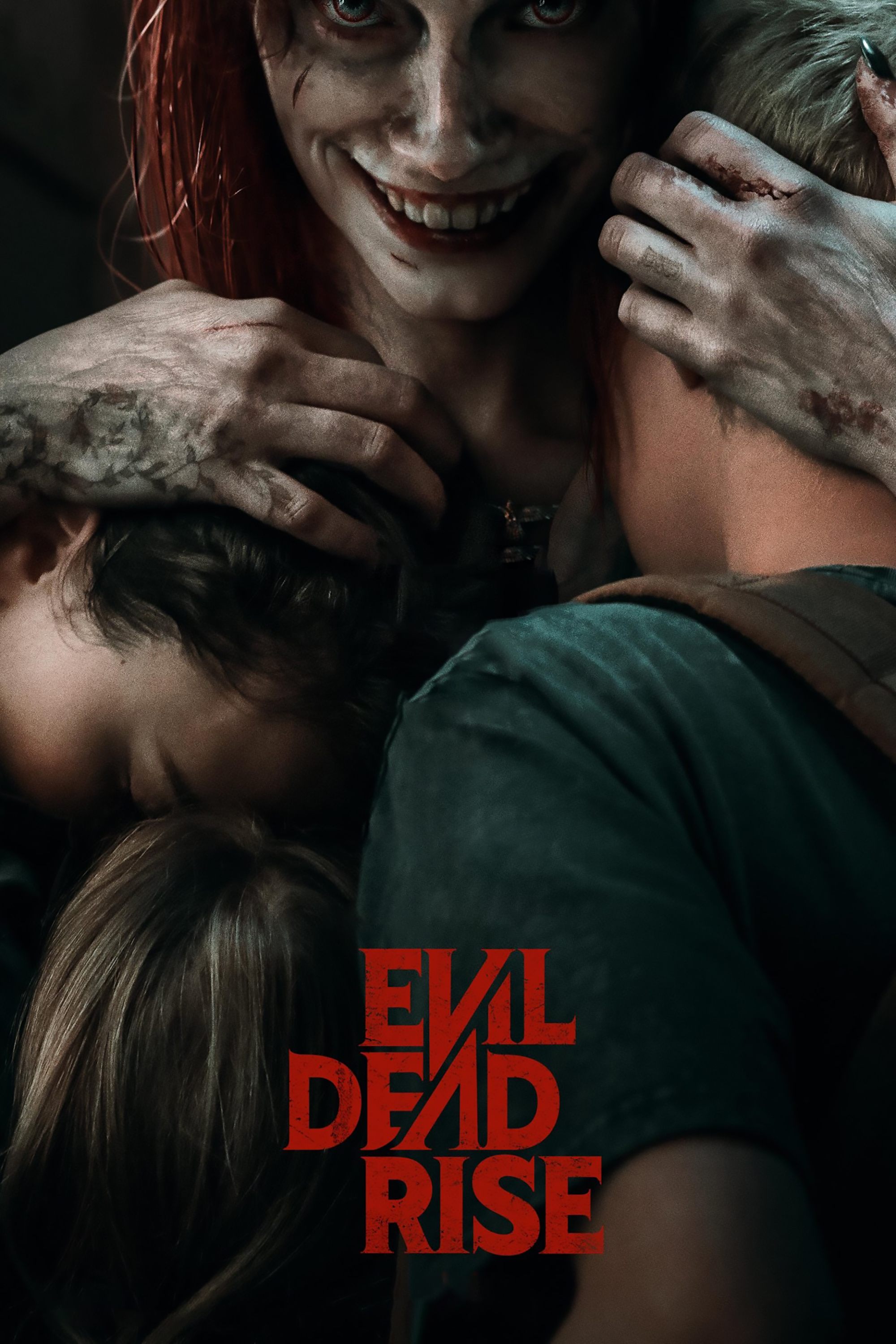


For three decades, I’ve watched Hollywood dig up cinematic corpses and hawk them as novelties. Evil Dead Rise is no exception, though at least it has the decency not to disguise its intentions under the guise of a “reimagining.” Lee Cronin, the Irish director who gifted us The Hole in the Ground (2019)—a horror thriller with more atmosphere than scares—tackles a sacred monster here: Sam Raimi’s original Evil Dead trilogy. He approaches it with the same reverence a plumber might bring to the Sistine Chapel. There’s respect, sure, but also a screwdriver in hand and zero clue where to start fixing the ceiling without bringing the whole thing crashing down around him.
The problem isn’t that Evil Dead Rise is a belated sequel—horror cinema thrives on nostalgia like vampires on blood. The problem is that Cronin confuses “homage” with “color photocopy.” The film unfolds almost entirely within a luxury high-rise apartment in Los Angeles, a setting that screams elevated horror but reeks of desperation to distance itself from the franchise’s cursed cabin. The result? A Hereditary without Ari Aster’s madness, an Exorcist without theological depth, and an Evil Dead without the black humor that made Ash Williams an unforgettable antihero. Here, the demons aren’t creatures of the woods; they’re obnoxious neighbors with a penchant for bad interior design and even worse tempers.
According to Cronin himself, filming took place in New Zealand and Ireland on a budget that, while modest by Hollywood standards (around $15-17 million, per Variety), is evident in every frame. It’s not that the film feels cheap—the diseño de producción is flawless, with an apartment straight out of a post-apocalyptic IKEA catalog—but there’s that unmistakable tension of a production that knows it can’t afford a single misstep. Cinematographer Dave Garbett opts for a palette of cold, metallic blues clashing with the crimson of the gore, an aesthetic choice that works in spurts but, in its eagerness to be “modern,” ends up diluting the visual chaos that made the original saga unique. In Evil Dead (1981), Raimi’s shaky camera and impossible angles turned terror into a physical experience. Here, everything’s too polished, as if fear had been run through an Instagram filter.
And then there’s the script. Oh, the script. Cronin, who also penned the screenplay, seems obsessed with proving he can write “realistic” dialogue for his characters, as if that could compensate for the lack of ideas. We meet Beth (Lily Sullivan), a tattoo artist with anger issues who arrives in Los Angeles to visit her sister Ellie (Alyssa Sutherland), a single mother raising three kids in an apartment that, of course, hides a cursed book in the basement. Their exchanges sound like a transcript from family therapy, with lines like “I can’t deal with this” or “Why do you always do this to me?” that might work in an indie drama but clash violently with the film’s tone. When the demons show up, the script forgets all about its characters’ humanity and settles into a repetitive loop: scream, blood, reaction shot, bad joke. Raimi’s signature black humor, the very thing that turned Evil Dead II into a cult classic, is nowhere to be found. Instead, we get comedy attempts that land like a brick in a pond, like when one of the kids asks if the demons are “like the ones in Fortnite” and the script doesn’t know whether to laugh or cry.
Direction: The Art of Swatting a Fly with a Bazooka
Lee Cronin isn’t a bad director. In fact, his work on The Hole in the Ground proved he can craft oppressive atmospheres and handle suspense with skill. But Evil Dead Rise is like watching a Michelin-starred chef try to recreate a cheeseburger: the ingredients might be top-tier, but the end result doesn’t taste like it should. Cronin opts for a visual approach that mixes found footage (in a particularly unnecessary sequence) with static shots and calculated camera movements, as if he’s desperate to prove he can do more than low-budget horror. The problem? In his quest to impress, he forgets the most important thing: terror isn’t built with pretty shots, but with tension.
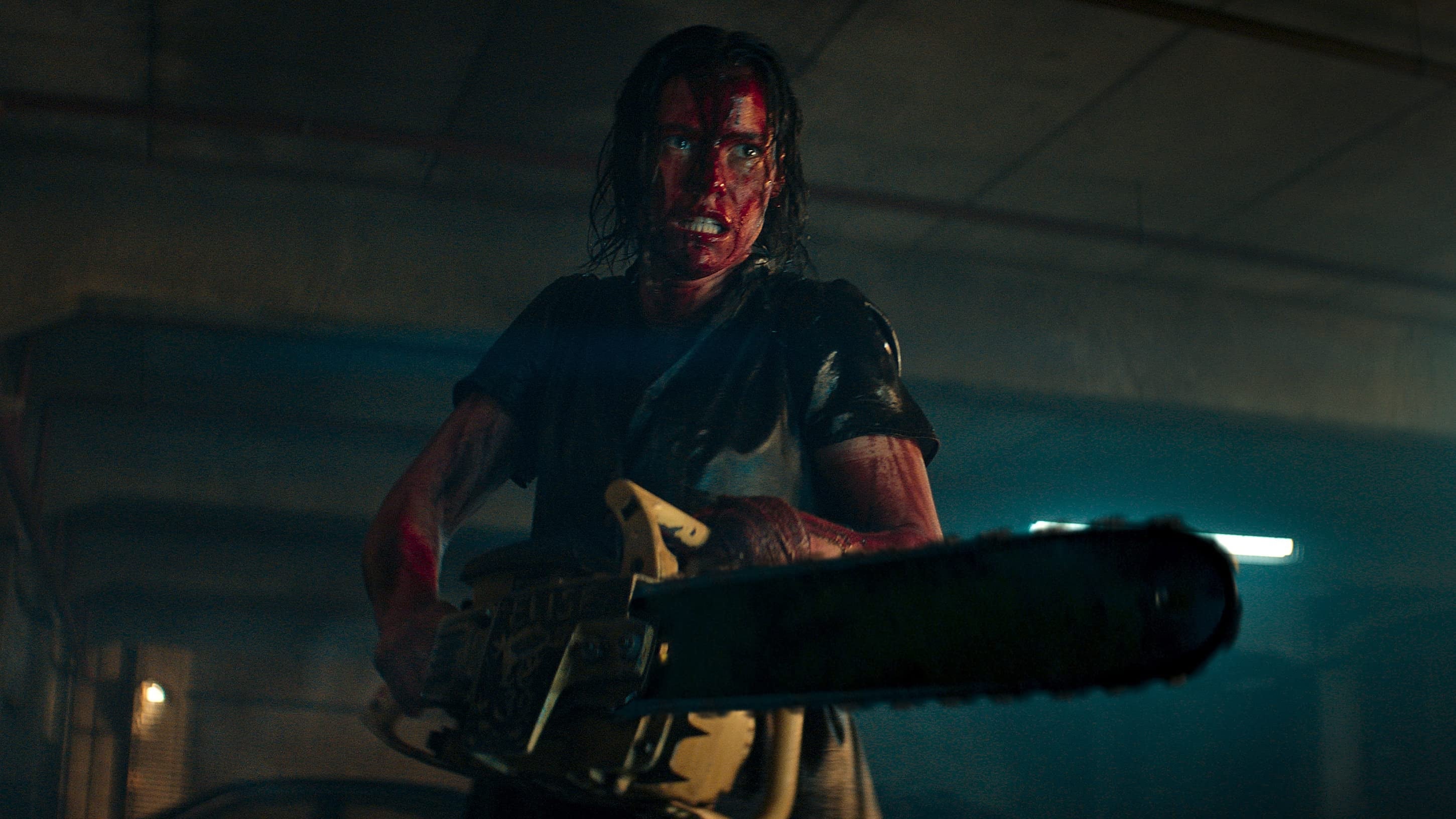
There are moments when the film seems to remember what the franchise is about. The scene where a possessed Ellie attacks her family with a chainsaw is pure Evil Dead essence: chaos, blood, and a macabre sense of humor that, at last, works. But these flashes are too brief. Cronin prefers to drag out insubstantial dialogue scenes or recycle jump scares we’ve seen a thousand times in worse movies. The climax, where the characters face a demonic version of Ellie that looks like it escaped from an American Horror Story episode, is visually striking but lacks the madness and inventiveness that made Raimi’s demons unforgettable. Here, the possessed are little more than meat puppets with blood-filled mouths, devoid of personality or charisma.
The editing, by Bryan Shaw, tries to keep the pace brisk, but the script doesn’t give him enough to work with. The film runs 96 minutes but feels longer because Cronin insists on stretching scenes that contribute nothing. There’s a subtext about dysfunctional families and the weight of motherhood that could’ve added depth, but the script abandons it the second the demons show up. It’s as if Cronin wrote two different movies—a family drama and a slasher—and then taped them together-la-cueva-de-los-espejos-rotos" class="text-amber-400 font-black hover:text-amber-300 transition underline decoration-amber-500/40 hover:decoration-amber-300" title="[6.5/10 ⚡ Ácido Cítrico] Lee nuestra autopsia de «Together»" data-acid-interlink="together-la-cueva-de-los-espejos-rotos">together with duct tape.
Performances: When the Cast Deserves Better Material
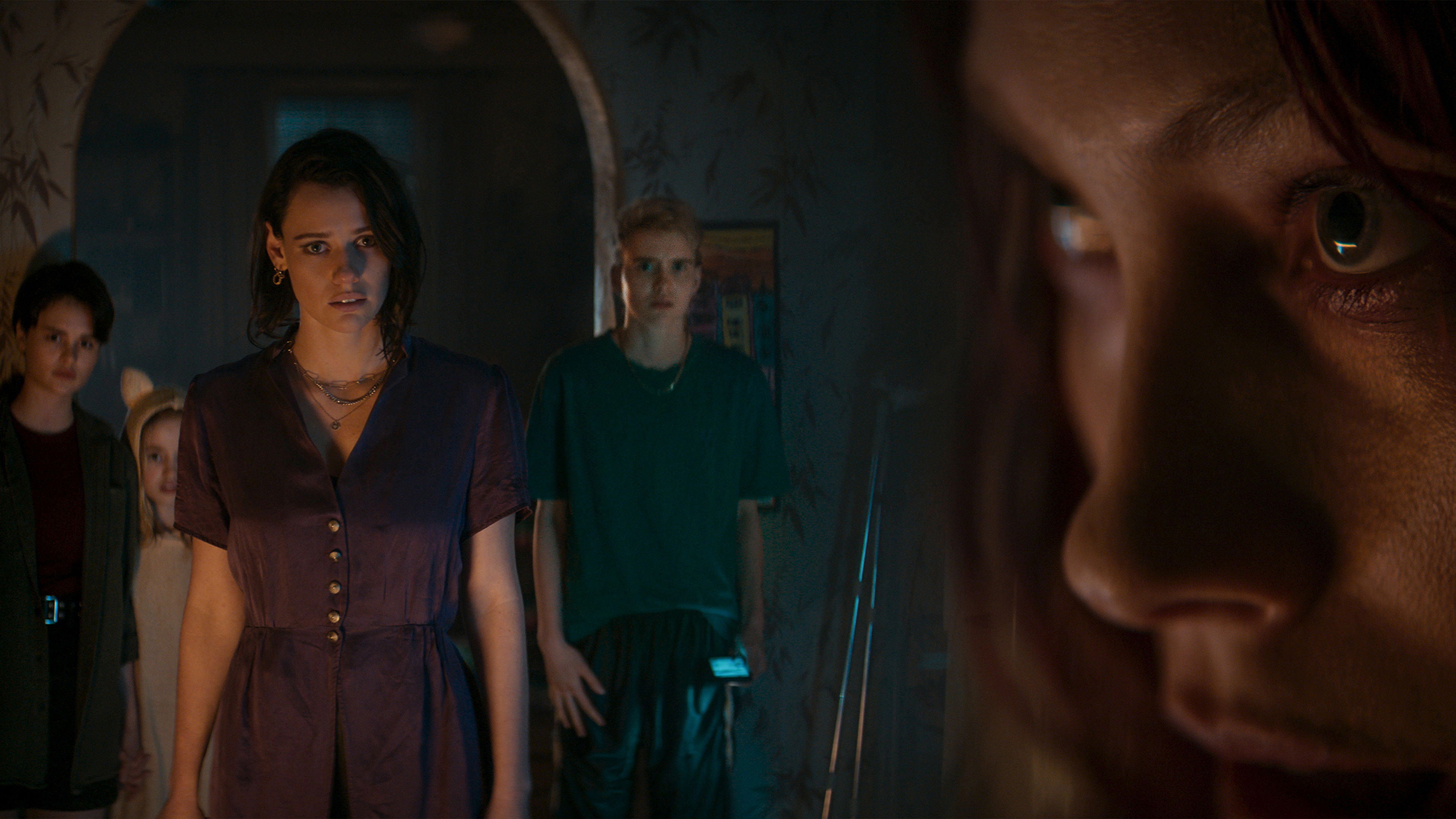
If there’s anything that saves Evil Dead Rise from total oblivion, it’s the performances. Lily Sullivan and Alyssa Sutherland do their best with a script that hands them more clichés than nuances, but they manage to convey a believable sibling chemistry. Sullivan, known for her role in Picnic at Hanging Rock (2018), brings a vulnerability to Beth that contrasts with her “don’t mess with me” attitude. Sutherland, meanwhile, steals every scene she’s in, especially when her character becomes the villain. Her portrayal of possessed Ellie is the closest thing to a homage to Bruce Campbell’s roles, blending pathos and ferocity in a way that recalls the franchise’s best moments.
The rest of the cast, however, is relegated to the background. Morgan Davies, who plays Danny, Ellie’s teenage son, has a few memorable moments, like when he tries to reason with his possessed mother as if negotiating with a difficult client. But the script doesn’t give him enough room to develop, reducing him to little more than a scream machine. Gabrielle Echols and Nell Fisher, who play Ellie’s younger daughters, have it even worse: their characters are archetypes without depth, designed solely to generate jump scares or forced moments of tenderness.
The real issue isn’t the actors—it’s the material they’ve been given. Cronin seems more interested in practical effects and diseño de producción than in giving his characters anything meaningful to do beyond running and screaming. There’s a scene where Beth and Danny try to escape through the apartment’s ventilation shafts that could’ve been thrilling, but the script resolves it with a deus ex machina that leaves the characters—and the audience—feeling like the whole thing was a waste of time.
The best
Alyssa Sutherland: The Australian actress devours the screen every time she appears, especially in her possessed form. Her Ellie is a mix of Greek tragedy and ‘80s slasher*, and she manages to make the audience feel something beyond indifference for her fate.
- The diseño de producción: The luxury apartment, with its narrow hallways and cold lighting, is a character in itself. Details like blood-scrawled messages on the walls or corpses hanging from the ceiling show someone took the franchise’s aesthetic seriously.
Practical effects: The gore is spectacular, with mutilations and possessions that hark back to Tom Savini’s best work. The chainsaw scene is a shameless homage to Evil Dead II*, but it’s executed with so much love it’s impossible not to enjoy.
- The score: Stephen McKeon composes a soundtrack that blends Gregorian chants with electronic sounds, creating an oppressive atmosphere that works especially well during possession scenes.
The worst
- The script: Cronin writes dialogue that sounds like a therapy session transcript, then expects the audience to believe these characters are fighting demons. The lack of black humor and the recycling of clichés make the film feel longer than it is.
The lack of madness: Evil Dead was always a franchise that embraced chaos and exaggeration. Evil Dead Rise is too serious, too polished, too obsessed with fitting into elevated horror* to be any fun.
The secondary characters: Danny, Bridget, and Kassie are little more than undeveloped archetypes. The script gives them generic lines and uses them as cannon fodder for jump scares*.
- The pacing: The film runs 96 minutes but feels longer because Cronin insists on dragging out scenes that add nothing. There’s too much insubstantial dialogue and too little effective terror.
The found footage attempt: A sequence where the characters film their escape on a phone is unnecessary and clashes with the rest of the film’s tone. It feels like it wandered in from a Paranormal Activity* movie and doesn’t belong.
The Verdict of Claqueta Ácida
Evil Dead Rise is what happens when elevated horror meets a franchise that never asked to be elevated. Lee Cronin proves he can handle suspense and practical effects, but the script is a Frankenstein’s monster of clichés that fails to capture the original saga’s spirit. Alyssa Sutherland saves what she can, but even her performance isn’t enough to compensate for the lack of ideas and the excess of seriousness. The film has its moments—the chainsaw scene is pure Evil Dead essence—but they’re flashes in a sea of mediocrity. If Sam Raimi had directed this, it might’ve been a masterpiece. As it stands, it’s little more than an expensive, boring remake. 💀
tweets_alternativos:
- "@LeeCronin: De The Hole in the Ground a esto. El terror elevated no te salva cuando el guion huele a rancio. ¿Dónde quedó el humor negro de la saga? #EvilDeadRise"
- "@Alyssa_Suth y @LilySullivan hacen lo que pueden con diálogos escritos por un algoritmo de Netflix. El resto del reparto merecía mejor material. #ClaquetaAcida"
- "@PacificRenaiss y @WildAtlantic: Dos productoras, un director y 96 minutos para demostrar que el dinero no compra ideas. #EvilDeadRise"
🎬 Tráiler Oficial
Abrir en YouTube
Theater Collateral Damage Report
Psychophysical impact certificate issued by Dr. Cinismo
1 amago en el tramo intermedio; pestañeo pesado en las transiciones más innecesarias.
Minuto 37 y minuto 77 (comprobando cuánto quedaba de suplicio).
1 espresso para no dejarse vencer por la mediocridad cómoda.
"A mitad del segundo acto cuando la subtrama secundaria empezó a pesar más de lo que aportaba."
💬 Community Verdict
What did you think of the film? Rate it from 0 to 10 to compare it with the editorial review.
You haven't voted yet
📢 ¿Te ha gustado el ácido?
Comparte esta crítica con tus amigos cinéfilos o desata la polémica en redes.
⚡ THE CINEMATIC VENOM YOUR INBOX CRAVES
No sugarcoated ratings, no corporate fluff. Subscribe for our uncensored weekly analysis or join the private Telegram for press previews, poll clashes, and instant alerts.
Alertas de estrenos en 1 segundo, encuestas en caliente y audios al salir de pases de prensa.
Recibe la dosis semanal en tu mail + regalo inmediato del PDF con 50 joyas ocultas de culto.
Related Reviews
Recommended autopsies for demanding film buffs.
 🔥 Fusión Nuclear8.0
**Evil Dead Rise: A Family Disaster on Fire**
⚡Hermana de saga: otro capítulo diseccionado con rigor forense.
A scathing review of the horror flick *Evil Dead Rise*—where family drama burns brighter than the demons.
 ⚡ Ácido Cítrico6.8
*The Mummy: The Mummification of Family Sanity*
⚡Del mismo director (Lee Cronin): analiza la evolución o degradación de su estilo.
Lee Cronin takes the Universal classic, strips off its golden bandages of nostalgia, and drags it through the muck of visceral body-horror and demonic possession.
 ⚡ Ácido Cítrico6.6
28 Years Later: The Rage Virus Returns... Along with the Boredom
⚡Comparten trinchera editorial en la sección de Perros Verdes.
Danny Boyle and Alex Garland attempt to resurrect post-apocalyptic terror with an iPhone 15 Pro Max. Spoiler: it doesn’t work.
Editorial Ecosystem
Cinephile connections, archive interviews and related analyses.
🎞️ In Claqueta Cinematheque1
💬 Debate Cinéfilo & Autopsia de Lectores
0 veredictos¿Discrepas con nuestra nota? ¿Es una obra maestra o veneno puro? Deja tu veredicto abajo sin necesidad de registro.

Aún nadie ha dejado su veredicto para esta película.
Sé el primero en clavarle el colmillo rellenando el formulario de arriba.