The Strangers — When Home Becomes Your Worst Nightmare (And No, It’s Not Because of IKEA)
Bryan Bertino crafts an absolute masterpiece of minimalist suspense, turning an isolated cabin into a gallows of relentless dread.

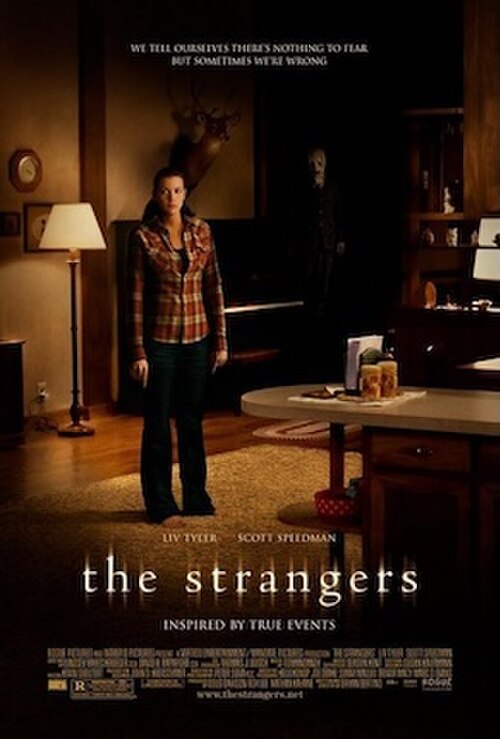


The Strangers: When Home Becomes Your Worst Nightmare (And No, It’s Not Because of IKEA)
The home invasion subgenre preys on humanity’s most primal fear: the violation of the sacred. We’re not talking about gods or temples here—we’re talking about something far more mundane and, therefore, infinitely more terrifying: your own home. That space where you feel safe, where you kick off your shoes, where you stash your most ridiculous secrets (like that drawer full of cables you don’t know the purpose of), and where, in theory, no one should be able to enter without your permission. Well, The Strangers (2008), directed by Bryan Bertino, is here to remind you that walls are nothing more than cardboard sets, and at any moment, someone might decide your living room is the perfect stage for a performance of existential terror.
Bertino, a first-time filmmaker who proved he had more talent for suspense than most seasoned directors in the genre, doesn’t beat around the bush. There are no villains with complex motivations, no convoluted plot twists, not even an attempt to explain why three masked psychopaths decide to turn a failed reconciliation night into a macabre escape room. Because terror doesn’t need justification, just like a virus doesn’t need a reason to infect you. And that’s what makes The Strangers such an uncomfortable yet brilliant film: it’s the cinematic equivalent of a sucker punch when you least expect it.
finalExplicado_en: "The climax sees the masked intruders finally breaking into the isolated farmhouse, brutally stabbing and beating the young couple despite their desperate attempts to fight back or flee. In the end, the strangers toy with their victims, force them to their knees, and execute them with a shotgun at point-blank range, only to casually drive away as if nothing happened. Symbolically, the ending is a nihilistic gut-punch: there is no reason, no catharsis, no escape. The strangers represent pure, motiveless evil that can invade the safest domestic space at any moment, reminding us that home is an illusion and random cruelty is the true baseline of existence."
The Violation of Intimacy: When "Who Is It?" Becomes Your Worst Nightmare
The film begins with a scene that, in the hands of a less skilled director, would have been a mere prologue. But Bertino isn’t just any director. Kristen (Liv Tyler) and James (Scott Speedman) return to a cabin in the middle of the woods after a wedding where, spoiler alert, things didn’t go as he’d hoped. The tension between them is palpable, but not for the reasons you might expect. There are no shouts, no angry reproaches, not even a dramatic door slam. Just awkward silence, evasive glances, and that feeling that something has broken forever. And then, at 4 a.m., someone knocks on the door.
The question, "Is Tamara there?" is the spark that ignites a night destined to go down in horror cinema history. It’s not a cheap scare, not a jump scare with blaring music. It’s the confirmation that hell doesn’t need to knock twice. What follows is a masterclass in building tension without resorting to the genre’s cheap tricks. Bertino and his cinematographer, Peter Sova, treat space like another character. The camera moves with an almost unbearable slowness, revealing details the protagonists don’t see: a masked figure lurking in the shadows, a car parked in the dark, a knife glinting in the kitchen. The audience knows more than the characters, and that asymmetry of information turns every shot into a form of torture.
Bertino’s script is a masterpiece of narrative economy. There’s no superfluous dialogue, no filler scenes. Every line, every gesture, every creak of the wooden floor is calculated to heighten the claustrophobia. And the most terrifying part? The invaders aren’t supernatural monsters, traumatized killers, or even professional criminals. They’re three people in carnival masks who, for reasons we’ll never know, have decided that tonight is the night Kristen and James will suffer. And the worst part is, there’s nothing they can do to stop them.
Faceless Terror: Because Evil Doesn’t Need a Pretty Face
One of The Strangers’ most brutal successes is the absolute depersonalization of the villains. Dollface (Gemma Ward), Pin-Up Girl (Laura Margolis), and The Man in the Mask (Kip Weeks) aren’t characters—they’re forces of nature. They don’t speak more than necessary, they don’t have complex motivations, and there’s no final monologue explaining their traumas. They’re pure evil, and their sole purpose is to make the protagonists suffer. When Kristen, on the verge of collapse, asks them, "Why are you doing this to us?", Dollface’s response—"Because you were home"—is one of the most chilling lines in cinema history. There’s no justification, no logic, no comfort. It’s the equivalent of getting hit by a car and the driver saying, "Because you were on the sidewalk."
This lack of motivation is what makes The Strangers so disturbing. It’s not a film about evil; it’s about the arbitrariness of evil. There’s no charismatic villain like Hannibal Lecter, no killer with a code of honor like Michael Myers. There are three people who, for reasons we’ll never know, have decided that tonight is the night they’ll destroy two human beings. And that’s what makes the terror so real. Because in real life, evil doesn’t always have an explanation. Sometimes, it just happens.
Performances: Liv Tyler and Scott Speedman, or How to Sell Panic Without Slipping Into Caricature
One of The Strangers’ greatest achievements is the acting from Liv Tyler and Scott Speedman. They’re not action heroes, not steel-nerved survivors, not characters who rise to the occasion. They’re two ordinary people, with their fears, insecurities, and mistakes, trapped in a situation beyond anything they could have imagined. And that’s what makes them so believable.
Tyler, in particular, delivers one of the best performances of her career. Kristen isn’t a damsel in distress, but she’s not an invincible warrior either. She’s a woman trying to keep it together-la-cueva-de-los-espejos-rotos" class="text-amber-400 font-black hover:text-amber-300 transition underline decoration-amber-500/40 hover:decoration-amber-300" title="[6.5/10 ⚡ Ácido Cítrico] Lee nuestra autopsia de «Together»" data-acid-interlink="together-la-cueva-de-los-espejos-rotos">together as her world collapses, making mistakes, breaking down, pleading. There’s no glamour in her performance—just brutal realism that makes the audience suffer with her. Speedman, meanwhile, plays James as a man oscillating between despair and rage, but never slipping into cheap heroics. He’s a guy trying to protect his partner, but he’s also scared, he also makes mistakes, he also feels powerless.
And then there are the invaders, played by Gemma Ward, Laura Margolis, and Kip Weeks. They don’t need to be method actors. Their presence alone is enough to create discomfort. They don’t talk much, they don’t overact, but every time they appear on screen, the air gets heavier, more oppressive. They’re not memorable villains in the traditional sense, but they’re terrifying precisely because they’re not memorable. They’re anonymous, interchangeable—just like the evil lurking around any corner.
Direction and Atmosphere: The Art of Turning a Cabin Into a Nightmare Labyrinth
Bryan Bertino proves in The Strangers that you don’t need a massive budget to create an effective horror film. What you need is intelligence, patience, and a deep understanding of how fear works. The cabin where most of the action takes place isn’t a luxurious set or a CGI-filled stage. It’s a confined, claustrophobic space where every corner could hide a threat. And Bertino makes the most of it.
Peter Sova’s cinematography is a lesson in using light and darkness to build tension. The shots are long, almost contemplative, but each one is loaded with meaning. There’s no rush, no abrupt cuts, no blaring music. Silence is the real star, and when the scare finally comes, it’s far more effective because the audience has been waiting, holding their breath, knowing something will happen but not when.
The editing is relentless in its pacing. There are no filler scenes, no moments to catch your breath. Every minute is designed to amplify the sense of despair. And the score, by Tomandandy, is a mix of ambient sounds and minimalist notes that reinforce the oppressive atmosphere. There are no grand melodies or dramatic choirs—just the sound of creaking wood, footsteps in the dark, and the ragged breathing of the protagonists.
Cinematic Comparisons: Where Does The Strangers Stand in the Horror Pantheon?
The Strangers isn’t a film that reinvents the genre, but it is one of those rare gems that distills it down to its most essential elements. In that sense, it can be compared to classics like Halloween (1978), where terror also stems from the absence of motivation and the presence of anonymous evil. But while Carpenter plays with suspense and the slasher, Bertino focuses on psychological terror and the violation of intimacy.
There are also echoes of Funny Games (1997) by Michael Haneke, another film that explores arbitrary cruelty and the victims’ helplessness. But while Haneke uses terror as social critique, Bertino simply presents horror in its purest form. There’s no message, no moral—just raw fear.
And, of course, we can’t forget The Texas Chain Saw Massacre (1974), another film where evil has no face and violence is as arbitrary as it is terrifying. But while Hooper resorts to madness and cannibalism, Bertino sticks with something far closer and, therefore, more disturbing: the fear that someone might break into your home.
The best
- The sound design is so effective you’ll swear you hear footsteps in your hallway after watching it. Spoiler: It’s not the invaders—it’s your upstairs neighbor with insomnia.
- Bertino turns a cheap cabin into a nightmare labyrinth with just a camera and a lot of intelligence. Take notes, blockbuster directors with $200 million budgets.
The worst
Some of the protagonists’ decisions are so stupid you’ll want to scream, "Run, you idiot!" at the screen. But let’s be honest—what would you* do in their place? If you’re looking for a happy ending or a logical explanation, this isn’t your movie. The only consolation is that, at least, it’s not you* trapped in that cabin.The Verdict of Claqueta Ácida (8.9/10)
The Strangers is a masterpiece of minimalist horror, a film that proves you don’t need buckets of blood or special effects to freeze your veins. Bertino constructs a claustrophobic nightmare where the real monster isn’t the invaders—it’s the idea that, at any moment, someone might decide your life is worth less than their fun. If you watch it at night, you won’t just lock the door—you’ll unplug the doorbell, turn off your phone, and pray the mailman doesn’t knock. Because, in the end, terror doesn’t need a reason. It just needs you to be home. 🚪🔪😱🎬 Tráiler Oficial
Abrir en YouTube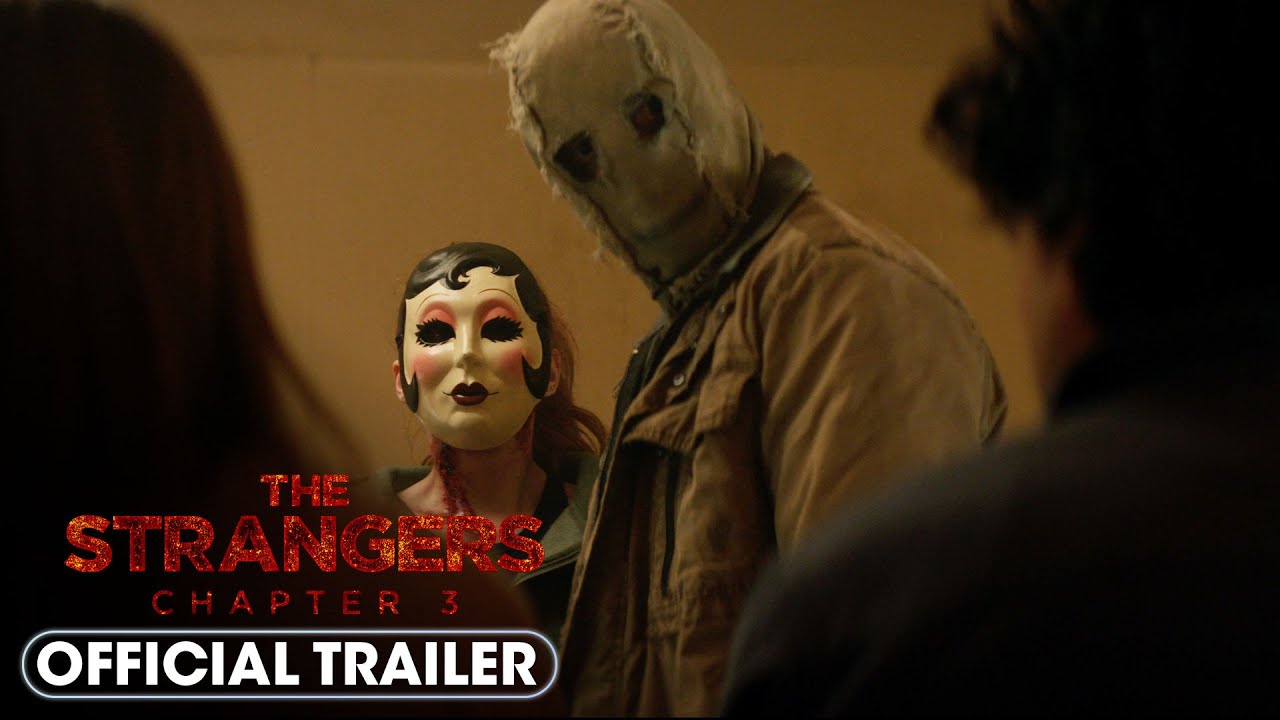
Ending Explained: The Strangers
Ficha de Daños Colaterales en Sala
Certificado de impacto psicofísico emitido por Héctor Veneno
Cero bostezos. Pupilas dilatadas y tensión mandibular constante.
El móvil permaneció en el bolsillo donde debía estar.
Ninguna. Guarda el café para la sesión siguiente.
"No aplica. La obra se sostiene sola."
💬 El Veredicto de la Comunidad
¿Qué te ha parecido la película? Deja tu nota de 0 a 10 para contrastarla con el análisis de la redacción.
Aún no has votado
📢 ¿Te ha gustado el ácido?
Comparte esta crítica con tus amigos cinéfilos o desata la polémica en redes.
⚡ THE CINEMATIC VENOM YOUR INBOX CRAVES
No sugarcoated ratings, no corporate fluff. Subscribe for our uncensored weekly analysis or join the private Telegram for press previews, poll clashes, and instant alerts.
Alertas de estrenos en 1 segundo, encuestas en caliente y audios al salir de pases de prensa.
Recibe la dosis semanal en tu mail + regalo inmediato del PDF con 50 joyas ocultas de culto.
Related Reviews
Recommended autopsies for demanding film buffs.
 🔥 Fusión Nuclear8.6
*The Dark and the Wicked: When the Devil’s the Only Friendly Neighbor in Texas*
⚡Del mismo director (Bryan Bertino): analiza la evolución o degradación de su estilo.
Bryan Bertino delivers one of the darkest, most nihilistic, and terrifying films in contemporary horror, where grief paves the way for absolute evil.
 ⚡ Ácido Cítrico7.5
*The Monster: When Motherhood Is Scarier Than Any Forest Creature*
⚡Del mismo director (Bryan Bertino): analiza la evolución o degradación de su estilo.
Bryan Bertino fuses the raw intimacy of addiction drama with classic monster horror, crafting a claustrophobic, rain-soaked, and heart-wrenching tale.
 🔥 Fusión Nuclear8.5
*Alleluia: Love as a Terminal Illness (or How to Turn Crimes of Passion into a Sweaty, Fleshy Spectacle)*
⚡Afinidad temática directa en atmósfera, estilo y fijaciones visuales.
Fabrice Du Welz reimagines the myth of the lonely hearts killers in a feverish whirlwind of jealousy, submission, and blood, led by Lola Dueñas in a performance that’s equal parts hypnotic and harrowing.
Editorial Ecosystem
Cinephile connections, archive interviews and related analyses.
🎞️ In Claqueta Cinematheque2
💬 Debate Cinéfilo & Autopsia de Lectores
0 veredictos¿Discrepas con nuestra nota? ¿Es una obra maestra o veneno puro? Deja tu veredicto abajo sin necesidad de registro.

Aún nadie ha dejado su veredicto para esta película.
Sé el primero en clavarle el colmillo rellenando el formulario de arriba.