An Angel in Our Midst — A Christmas of Second Chances (Or How to Sell Emotional Snake Oil in 90 Minutes)
An angel works overtime to melt the heart of a hardened criminal in this festive tear-jerker that proves Hollywood’s factory of miracles is still running at full capacity—sentimental defects included.

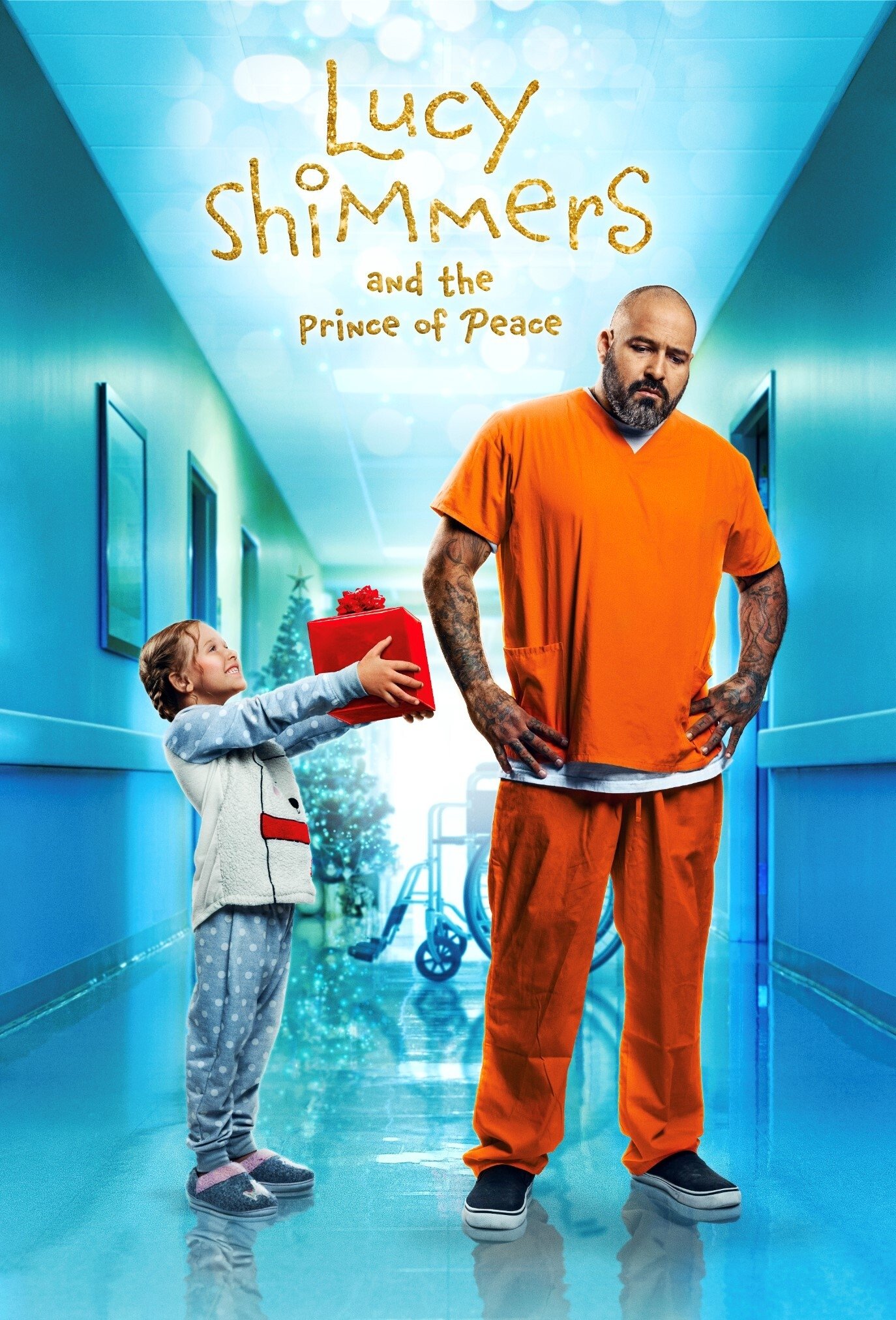
Christmas rolls around again, and with it, Hollywood’s annual reminder that if we don’t believe in miracles, we can at least believe in their ability to churn them out like factory-farmed turkeys. An Angel in Our Midst is the latest attempt by the dream factory to sell us the idea that a stone-hearted criminal can be redeemed in 90 minutes—provided a cherubic child gazes at him with eyes shiny enough to blind a cynic. Spoiler: it works. But not for the reasons they think. Deep down, we all harbor a masochistic cinephile who relishes being manipulated with surgical precision. And this film, directed by Rob Diamond—a man whose previous credits read like a Hallmark Channel bingo card—is a masterclass in emotional puppetry, leaving not a single wrinkle in its saccharine script unironed out for maximum impact.
The story is as old as fruitcake: a hardened man (here played by the ever-convincing Michael Stahl-David, an actor who seems custom-cast for the role of “guy with a troubled past”) crosses paths with Lucy Shimmers, a nine-year-old who believes in angels more than she believes in Santa. Lucy isn’t just any kid—she’s the kind of child who speaks as if she’s been reading The Alchemist since kindergarten and keeps a diary filled with gems like, “Fear is just love waiting for its turn.” Scarlett Diamond, the young actress playing her, has the uncanny ability to make these cringe-worthy lines sound almost believable. Almost. Because there’s a moment, around the 47-minute mark, when Lucy tells our protagonist, “God didn’t give you a heart so you could lock it in a safe.” And in that instant, you realize you’re watching a film that doesn’t just want to move you—it wants you to cry on cue, like a well-oiled machine calibrated in a writer’s room. It’s as if someone hacked your tear ducts and installed a countdown timer.
Rob Diamond, the director, isn’t naive. He knows he’s working with material as predictable as a Mariah Carey Christmas single, so he decides to embrace the cliché with a visual style that skirts parody without ever crossing the line. Shots of Lucy running through a snow-dusted forest, golden light filtering through the trees like God himself is her personal cinematographer, are so breathtakingly beautiful they induce secondhand embarrassment. Lars Lindstrom, the director of photography, has clearly watched Spirited Away one too many times, and it shows. Every frame looks like it was plucked from a holiday perfume ad, with warm tones that make even organized crime feel cozy. The score, composed by the ubiquitous Trevor Morris (yes, the same guy behind The Tudors and Vikings), is a festival of cloying strings and celestial choirs that sound like they’re being performed by angels with Down syndrome. It’s not bad—it’s too good, as if Morris decided subtlety was a cardinal sin.
But where the film truly earns its place in the purgatory of Christmas movies is in its performances. Michael Stahl-David does what he can with a character who’s essentially a walking archetype. His acting oscillates between the stoicism of a marine in therapy and the vulnerability of a first-time dad, and while he never fully sells it, at least he doesn’t make you laugh when he shouldn’t. There’s a moment when his character, Jack, tells Lucy, “I don’t believe in angels,” and she replies, “That’s because you’ve never looked in the mirror.” Stahl-David delivers the line with such deadpan seriousness it almost makes the pill go down. Almost.
Scarlett Diamond, on the other hand, is the real revelation. At just nine years old, the girl has a screen presence most adult actors would kill for. It’s not just that she’s good—it’s that she gets what she’s doing. There’s a single take where Lucy explains to Jack why angels always have white wings, and Diamond pulls it off with a naturalness that leaves you breathless. It’s not a child’s performance—it’s a performance of a child, but with a maturity that disarms. The problem? The script isn’t always up to her level. More than once, Lucy spouts lines that sound like they were written by a Hallmark algorithm, like when she tells Jack, “Forgiveness is like snow: it covers all the ugly and makes the world look new.” It’s the kind of line that would make a The Wire writer leap out a window, but Diamond delivers it with such conviction it almost makes you forget it sounds like a Paulo Coelho tweet.
The rest of the cast does its job, though none stand out. Lucy’s mother, played by the ever-reliable Sarah Carter, has a couple of emotional scenes, but her character is so secondary she feels like a prop in the holiday set dressing. The same goes for the angel who pops up occasionally to remind us that, yes, this is a redemption story, and no, we won’t question why a celestial being is wasting time on a guy who, until five minutes ago, was trafficking weapons. The angel, by the way, is played by an actor whose name doesn’t appear in the opening credits, but who has the facial expression of someone who just realized his contract includes “appearing in scenes with divine light effects.” His performance is limited to beatific smiles and hand movements that look like he’s swatting invisible flies. In a word: angelic.
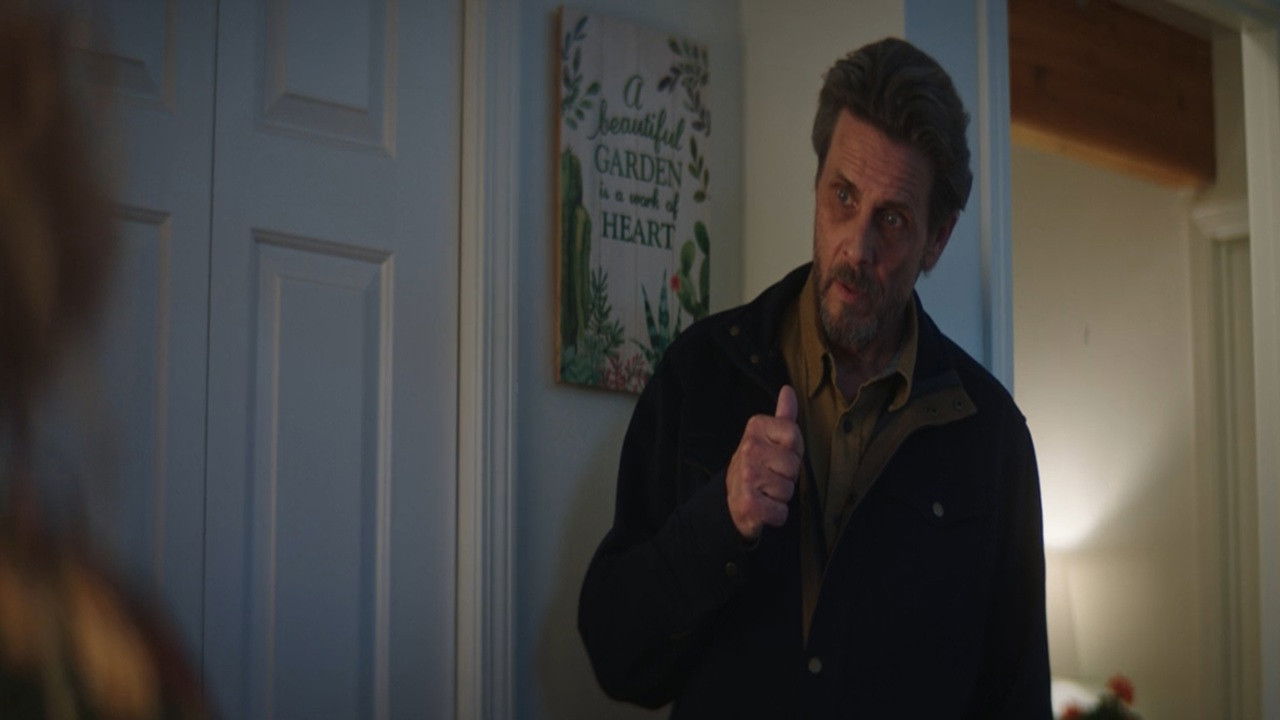
Direction and Mise-en-scène: The Art of Selling Smoke with Style
Rob Diamond isn’t a director who cares about subtlety. His plan is clear: if you’re making a Christmas movie, go big or go home. And he succeeds. Every frame of An Angel in Our Midst looks designed for Instagram, with saturated colors that make snow look like cotton candy and the actors’ faces glow like they’ve been slathered in baby oil. Diamond has a clinical eye for symmetrical compositions, and there’s a particular scene—where Lucy and Jack decorate a Christmas tree in an abandoned cabin—that looks like it was lifted from a Norman Rockwell painting. The problem? Sometimes all that visual perfection is exhausting. It’s as if the director decided that if the story can’t surprise you, at least the packaging will.
His direction of actors is another strong point. Diamond knows how to get the best out of his cast, especially Scarlett Diamond, whom he guides with unusual patience for a project like this. There’s a moment when Lucy cries because her father (who, of course, is in prison) won’t be home for Christmas, and Diamond films her in such a tight close-up you can see her eyes well up before the first tear falls. It’s a brutal shot, one that reminds you why cinema is still an art—even when the script is trash. But then, five minutes later, Lucy smiles like nothing happened and drops another pearl of childlike wisdom, and you realize Diamond is playing you. He’s saying, “Yes, this is manipulative, but isn’t it beautifully painful?”
The editing, handled by veteran Susan E. Morse (who worked with Woody Allen in his prime), is flawless. She knows exactly when to cut to maximize emotional impact, and there’s a sequence where Jack remembers his childhood through flashbacks that’s edited with surgical precision. The problem? In her eagerness to keep the pace tight, Morse sometimes trims scenes that could’ve given the characters more depth. For example, there’s a subplot about Jack’s friend dying in a shootout, but it’s resolved in two scenes and a fade to black. It’s as if the studio said, “We’ve got 90 minutes, and 20 of them are for credits.”
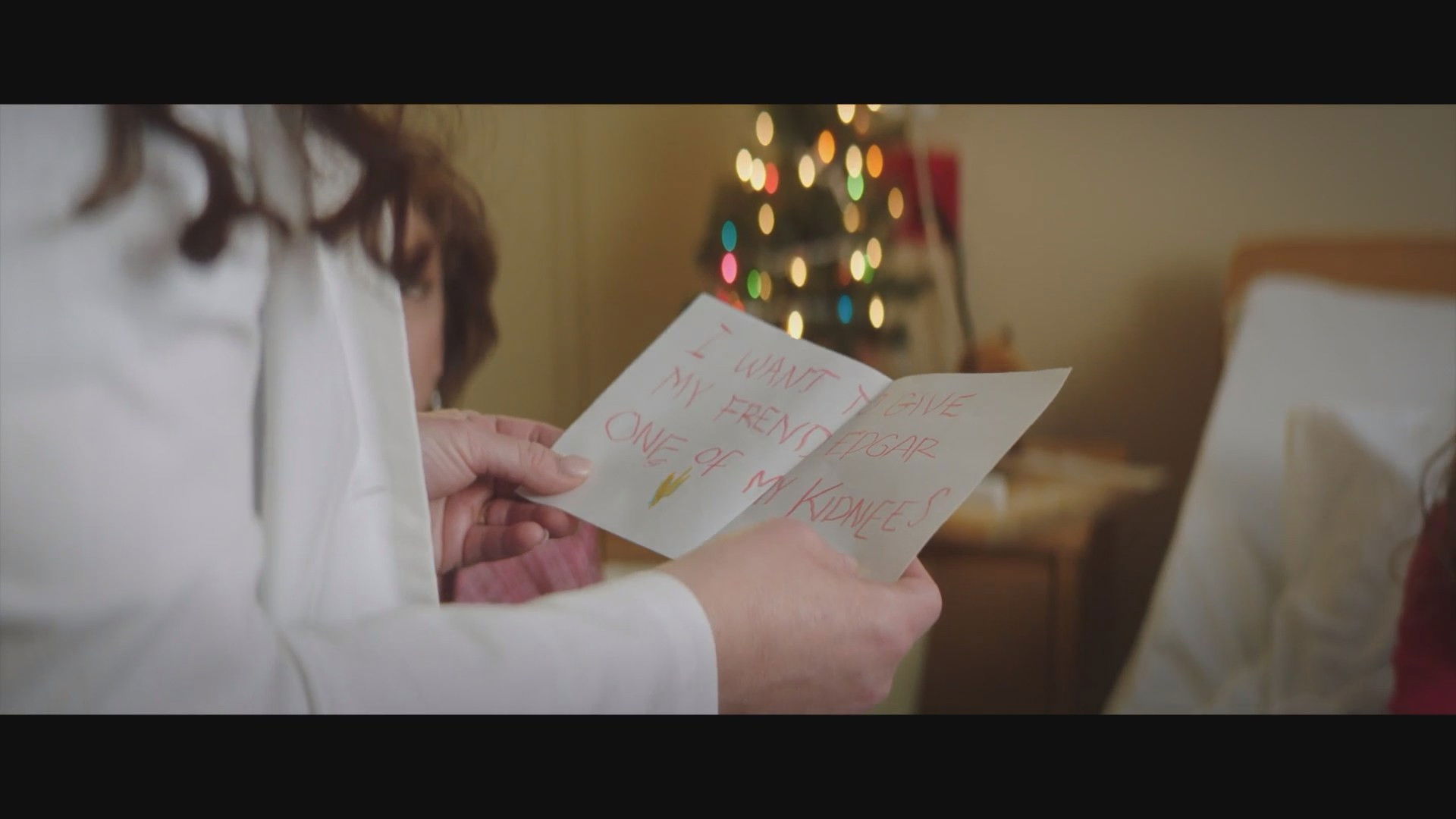
Performances: When Talent Collides with Cliché
Michael Stahl-David deserves better than this. It’s not that his performance is bad—in fact, it’s the only thing saving his character from being a walking stereotype—but he’s clearly working with material that gives him little room to maneuver. Jack, his character, is the quintessential “tough guy with a tragic past,” and Stahl-David does what he can to humanize him. There’s a moment when Jack tells Lucy his father used to beat him, and Stahl-David delivers the line with such a broken voice it almost makes you forget that, five minutes earlier, the same guy was threatening someone with a gun. Almost.
But if Stahl-David is good, Scarlett Diamond is outstanding. The girl has a charisma no acting school can teach, and an ability to convey complex emotions with a single look. There’s a shot where Lucy sits on a park bench eating ice cream, and Diamond films her from behind, the camera at her eye level. She doesn’t say a word, but the way she hunches her shoulders, as if carrying the weight of the world, breaks your heart. It’s the kind of performance that makes you wonder what this kid will be doing in ten years. Probably winning an Oscar. Or, at the very least, starring in a Netflix series.
The rest of the cast is functional, but that’s about it. Sarah Carter, playing Lucy’s mother, has a couple of emotional scenes, but her character is so generic she feels like she was plucked from a “single moms with problems” catalog. The angel, played by an actor whose name doesn’t appear in the credits (is he a real angel?), is the kind of character who only exists to move the plot forward. His performance is limited to smiling and saying things like, “God has a plan for you,” and more than once, you’ll want to scream, “Well, tell us what it is, damn it!”
Technical Aspects: When Pretty Isn’t Enough
Lars Lindstrom’s cinematography is, simply put, spectacular. The man knows how to use light to create atmosphere, and every scene looks bathed in a golden glow that makes even the cheesiest moments feel poetic. There’s a shot where Lucy and Jack walk across a snow-covered bridge, and Lindstrom uses the sunset light to create a backlit effect that makes the characters look like figures from a fairy tale. It’s the kind of image that makes you sigh—even if it’s for all the wrong reasons.
Trevor Morris’s score, on the other hand, is the musical equivalent of a bear hug. Morris, who’s composed music for shows like Vikings and The Tudors, knows how to craft epic melodies, but here he goes overboard. Every time a character has an emotional moment, Morris underlines it with a crescendo of strings that sounds like it was composed by a Spotify algorithm. It’s music for crying, sure, but it’s also music for crying on command. It’s not subtle, but it works. Or at least, it works if you don’t mind being manipulated like a marionette.
The production design, handled by veteran Patricia Field (yes, the same woman behind Sex and the City’s iconic looks), is another strong point. Field knows how to create cozy environments, and the cabin where Lucy and her mother live is the kind of place that makes you wonder why you don’t live in a wooden house in the middle of the woods. The details are meticulous: from the Christmas decorations to the furniture, everything looks like it was plucked from an IKEA catalog for hipsters. But again, all that perfection ends up feeling suffocating. It’s as if the production team decided that if the story couldn’t be original, at least the set design would be.
The best
Scarlett Diamond’s performance: The young actress doesn’t just steal every scene she’s in—she makes you forget you’re watching a by-the-numbers Christmas movie. Her Lucy Shimmers is sweet without being cloying, wise without being preachy, and has an ability to convey complex emotions that most adult actors would envy. There’s a moment when she cries because her father won’t be home for Christmas, and Diamond does it with a naturalness that takes your breath away. It’s not a child’s performance—it’s a performance of* a child, and that’s something you don’t see every day.- Lars Lindstrom’s cinematography: Lindstrom turns every frame into a Christmas postcard, but with a touch of realism that keeps the film from veering into pure schmaltz. The warm tones, backlighting, and symmetrical compositions make even the most predictable scenes feel poetic. It’s the kind of cinematography that makes you want to move to a cabin in the woods and never leave.
- The chemistry between the actors: Though the script doesn’t always help, the relationship between Michael Stahl-David and Scarlett Diamond is believable and moving. There’s a scene where Jack teaches Lucy how to skip a stone across a river, and the way they interact—her with her innocence, him with his skepticism—is one of the few moments the film feels real. It’s not love, or even friendship, but it’s something close.
- Rob Diamond’s direction: Diamond knows exactly what he’s doing, and though the film is manipulative to its core, at least he does it with style. His mise-en-scène is impeccable, and he has a clinical eye for emotional moments. He’s not a revolutionary director, but he knows how to tell a story without boring the audience.
The worst
The plot’s predictability: If you’ve seen more than three Christmas movies in your life, you’ll know exactly how An Angel in Our Midst* ends. There are no twists, no surprises—just a straight path to the protagonist’s redemption. It’s like watching an emotional freight train: you know where it’s going, but you can’t look away.- The lack of development for secondary characters: Lucy’s mother, the angel, Jack’s friend who dies in a shootout—all of them are characters who could’ve had more depth, but they’re reduced to mere plot devices. It’s as if the screenwriter decided that if the protagonist has enough drama, everyone else can be window dressing.
The Verdict of Claqueta Ácida
An Angel in Our Midst isn’t a bad movie. In fact, it’s a very well-made Christmas film, one that fulfills its mission: making you feel things, even if they’re cheap. Rob Diamond knows what he’s doing, and though the script is as predictable as a Mariah Carey Christmas single, at least he executes it with style. Scarlett Diamond is a revelation, and her performance as Lucy Shimmers is the only reason this film is worth watching. But let’s not kid ourselves: this isn’t cinema—it’s low-cost emotional therapy. If you’re looking for a movie that’ll make you cry at the 67-minute mark and smile by the 89th, here it is. If you’re looking for something with a shred of originality, keep searching. Because in the end, An Angel in Our Midst is like a Christmas present: pretty on the outside, empty on the inside. And that, dear readers, earns it a 7.5. But only because Scarlett Diamond deserves it. 💀 tweets_alternativos:🎬 Tráiler Oficial
Abrir en YouTube
Ficha de Daños Colaterales en Sala
Certificado de impacto psicofísico emitido por Lúa Ácida
Ni un solo parpadeo voluntario. El asiento, inusualmente cómodo.
Ni una sola mirada al móvil.
Ninguna. Guarda el café para la sesión siguiente.
"No aplica. La obra se sostiene sola."
💬 El Veredicto de la Comunidad
¿Qué te ha parecido la película? Deja tu nota de 0 a 10 para contrastarla con el análisis de la redacción.
Aún no has votado
📢 ¿Te ha gustado el ácido?
Comparte esta crítica con tus amigos cinéfilos o desata la polémica en redes.
⚡ THE CINEMATIC VENOM YOUR INBOX CRAVES
No sugarcoated ratings, no corporate fluff. Subscribe for our uncensored weekly analysis or join the private Telegram for press previews, poll clashes, and instant alerts.
Alertas de estrenos en 1 segundo, encuestas en caliente y audios al salir de pases de prensa.
Recibe la dosis semanal en tu mail + regalo inmediato del PDF con 50 joyas ocultas de culto.
Related Reviews
Recommended autopsies for demanding film buffs.
 🔥 Fusión Nuclear9.5
*2001: A Space Odyssey – A Monkey, a Monolith, and Two Hours of Cosmic Pretentiousness*
⚡Afinidad temática directa en atmósfera, estilo y fijaciones visuales.
We dissect Stanley Kubrick’s magnum opus. A visual feast of minimalism and space hypnosis that cemented "serious" sci-fi—and bored half of humanity to tears.
 🔥 Fusión Nuclear9.3
2001: A Space Odyssey — The Day Kubrick Left Us Speechless (and Oxygenless)
⚡Afinidad temática directa en atmósfera, estilo y fijaciones visuales.
Kubrick turned science fiction into pure art: 149 minutes of eloquent silence, bone-wielding apes, and a psychopathic computer. Masterpiece or pretentious fraud? Here’s the verdict.
 🔥 Fusión Nuclear8.5
*A Clockwork Orange: The Sweet, Rusty Aftertaste of Violent Haute Couture*
⚡Afinidad temática directa en atmósfera, estilo y fijaciones visuales.
A scathing review of Kubrick’s masterpiece, where ultraviolence meets 60s fashion in a twisted pas de deux.
Editorial Ecosystem
Cinephile connections, archive interviews and related analyses.
💬 Debate Cinéfilo & Autopsia de Lectores
0 veredictos¿Discrepas con nuestra nota? ¿Es una obra maestra o veneno puro? Deja tu veredicto abajo sin necesidad de registro.

Aún nadie ha dejado su veredicto para esta película.
Sé el primero en clavarle el colmillo rellenando el formulario de arriba.