A Whisper Summoned My Name — When Terror Smells Like Mold and a Recycled Script
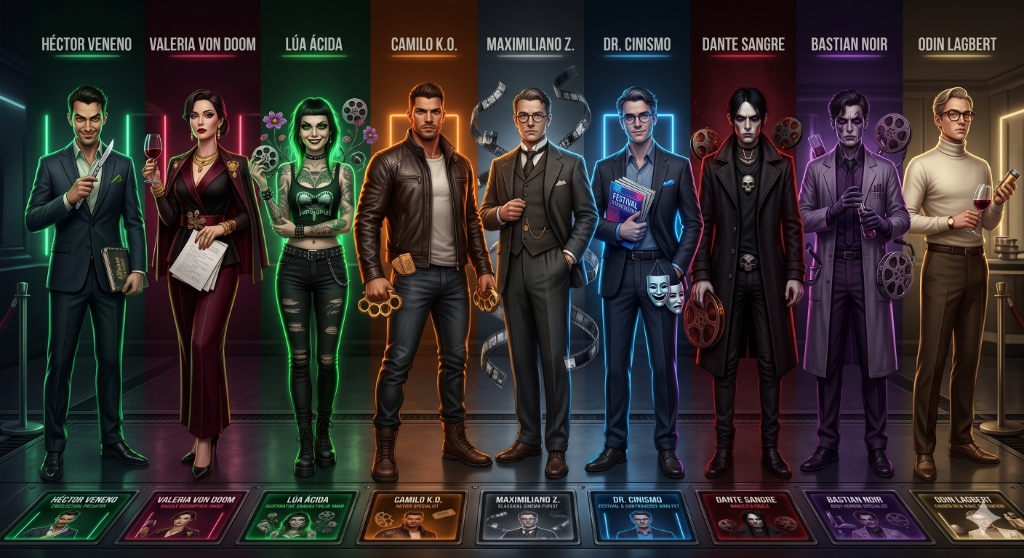
85 minutes of Argentine Gothic atmosphere that promises more than it delivers. Bastian Noir dissects this horror ritual with a scalpel and sarcasm.


A Whisper Summoned My Name: full review
The scent of dampness and melting wax hit me before the lights even dimmed. It wasn’t the theater—it was the movie. A Whisper Summoned My Name arrives in 2025 like a ghost no one asked for, yet somehow, we all decided to conjure it anyway. Directed by the duo of John Mathis—whose indie horror shorts promised more than they delivered—and Emilia Cotella—making her feature debut with a script that reeks of a college writing workshop—the film presents itself as a Gothic ritual in the Argentine mountains. But is it an exorcism or just a bad trip on a shoestring budget?
The context doesn’t help. In the era of elevated horror, where the supernatural disguises itself as family drama and scares are as predictable as the twists in Hereditary, A Whisper... bets on the analog: candles, blood, possessions, and a village straight out of a Lovecraft story scribbled on bar napkins. The official synopsis—a young woman returns to her hometown to discover the forces that killed her friend still haunt her—sounds like The Craft meets Pan’s Labyrinth, but with less budget and more pretension. The worst part? At some point, it almost works. Almost.
The film opens with a tracking shot stolen straight from The Witch: Clara Kovacic, as Carla, walks through gnarled trees as fog slithers around her legs like invisible hands. Samuel Fife’s cinematography is, without a doubt, the film’s greatest success. The chiaroscuro is so stark it looks carved with a knife, and the interiors—rotting wooden houses, makeshift altars with black candles—have a texture that borders on the tactile. But here’s the first problem: the atmosphere is so dense it suffocates. This isn’t a critique of slowness—Gothic horror needs time to fester—but of the lack of purpose behind every frame. Why this shot? Why this silence? It seems Mathis and Cotella mistook ambiance for filler.
The script, penned by Cotella, is where the film bleeds out. The dialogue sounds like lines plucked from a How to Write Horror in 10 Steps manual: “Evil never dies, it just waits,” “She didn’t leave, she just changed form,” “The whisper is the voice of those who are no longer here.” Every line feels designed to be tweeted by a Gothic aesthetic account, not spoken by characters who should feel something beyond generic fear. The flashbacks—occupying nearly a third of the runtime—are especially painful. We see young Carla (Bianca Mitnik) playing with her friend María (Mia Cavo) in a forest that looks like it was filtered through Instagram, whispering about rituals that are never fully explained. The transition between past and present is so jarring it feels like a editing mistake, not a narrative choice.
The best
- Samuel Fife’s cinematography: A chiaroscuro exercise that borders on the tactile. The interiors bathe in a sickly golden light that seems to seep through the characters’ skin.
- Sound design: No traditional score, but the silence is packed with terrifying details. The creak of floorboards, the wind, the whispers… it’s the film’s most effective element.
- Clara Kovacic: She conveys the weight of a trauma that isn’t entirely hers with a gaze that aches. The only thing saving Carla from being a generic character.
- The hidden altar: A moment of production design that promises more than the film delivers, but has an unsettling, real texture.
The worst
- Emilia Cotella’s script: Dialogue that sounds like Gothic Tumblr quotes, unnecessary flashbacks, and exposition that ruins any mystery. Feels like it was written on a faulty Ouija board.
- Cheap jump scares: Every time the film builds tension, a cat leaps or a character screams. It’s as if the directors didn’t trust their ability to scare without tricks.
- The flashbacks: They take up too much runtime and add nothing new. The transitions are so abrupt they look like editing errors.
- The supporting cast: Wasted actors in roles with no depth. Cristian Cavo, María José Sorbello, and Antonio Kassab deserved better than being “the guy who knows things” or “the woman who screams a lot.”
Direction: Between Chiaroscuro and Cliché
John Mathis and Emilia Cotella prove they know how to create powerful images, but not what to do with them. There’s a moment where Carla discovers a hidden altar in her childhood home. The shot is gorgeous: flickering candles, rusted objects, a rag doll with stitched eyes. But instead of letting the scene breathe, the directors opt for a cheap jump scare—a cat leaping out of nowhere—that shatters all the built-up tension. It’s as if someone told them modern horror needs scares, even if they ruin the atmosphere. Worse, the film falls into the trap of over-explaining. Instead of letting the mystery fester in the viewer’s mind, Cotella writes an exposition scene where a secondary character (Cristian Cavo as Raúl) delivers a monologue about the town’s history and its rituals. It’s like The Babadook ending with a history lesson about the monster.
The editing, meanwhile, is functional but uninspired. Transitions between scenes are abrupt, as if someone cut the footage with rusty scissors. There’s a moment where Carla has a nightmare—blood, shadows, a distorted face—that could’ve been impactful, but the effect is ruined because the next scene shows her waking up exactly like in bad horror movies: sitting up in bed, sweating, breathing heavily. It’s as if the directors didn’t trust their ability to scare without resorting to the oldest tricks in the book.
Acting: Clara Kovacic Saves the Furniture (But Not the House)
Clara Kovacic is, without a doubt, the best thing about A Whisper Summoned My Name. Her Carla is a broken character, but not in a generic way. Kovacic conveys the weight of a trauma that isn’t entirely hers—her dead friend’s, the cursed town’s—with a gaze that looks like it’s been rotting for decades. There’s a moment where Carla finds an old photo of her friend María, and the way Kovacic touches the paper, as if afraid it’ll crumble between her fingers, is more terrifying than any jump scare in the film. The problem? The script doesn’t give her enough to work with. Her lines are flat, her reactions predictable, and her emotional arc boils down to “I’m scared” → “I’m more scared” → “Why am I so scared?”
The rest of the cast fares no better. Bianca Mitnik, as young Carla, has moments of tenderness in the flashbacks, but her performance is weighed down by a script that forces her to say lines like “The forest is calling us” with the gravitas of someone who thinks they’re in The Lord of the Rings. Mia Cavo, as María, has an unsettling presence, but her character vanishes too soon. The supporting actors—Cristian Cavo, María José Sorbello, Antonio Kassab—seem lost in a script that gives them nothing to do beyond being “the guy who knows things” or “the woman who screams a lot.”
The Technical: When the Sound Is Scarier Than the Story
Samuel Fife’s cinematography, as mentioned, is the film’s strong suit. Fife uses natural light in a way that recalls classic Gothic horror—think Nosferatu or Vampyr—but with a modern twist. The interiors are bathed in a sickly golden light, as if the sun is filtering through rotting curtains, and the exteriors have a fog that feels alive. The problem? Sometimes Fife over-stylizes. There are shots—like Carla walking toward her childhood home—that look like they’re from a Lana Del Rey music video, not a horror film. It’s pretty, but distracting.
The sound design, however, is where the film truly shines. There’s no traditional score—something that initially seems like a mistake—but the silence is packed with details: the creak of floorboards, the wind howling through the trees, the whisper of voices that aren’t there. There’s a scene where Carla is in bed and we hear what sounds like someone crawling down the hallway. We don’t see anything, but the sound is so real that the viewer fills in the blanks with their imagination. It’s terrifying. Too bad the film doesn’t trust this kind of approach enough and keeps opting for the visually explicit instead.
The production design, meanwhile, is competent but unoriginal. The village houses have that “cheap horror movie set” vibe—antique furniture, peeling walls, religious objects everywhere—but nothing we haven’t seen before. The altar Carla discovers in her childhood home is the only standout element: it’s filled with objects that seem to have a history—bones, candles, symbols carved into wood—but the film doesn’t bother exploring their meaning. It’s as if the directors wanted to create a mystery but forgot to give it depth.
The Verdict of Claqueta Ácida
A Whisper Summoned My Name is like a ritual gone wrong: it had all the ingredients to be something memorable—a dense atmosphere, hypnotic cinematography, a fierce lead—but the script ruins everything. It’s a film that smells like mold and missed opportunities, like an abandoned house that promises secrets but only hides dust. Clara Kovacic deserved a better vehicle for her talent, and Argentine Gothic horror deserved more than a pastiche of clichés. It’s not bad, but it’s so predictable it hurts. In the end, the only whisper I heard was that of my own disappointment. 💀
🎬 Tráiler Oficial
Abrir en YouTube
A Whisper Summoned My Name: frequently asked questions
- What is the rating of "A Whisper Summoned My Name" on Claqueta Ácida?
- "A Whisper Summoned My Name" scored 5.8/10 on Claqueta Ácida in the review by Bastian Noir.
- Is "A Whisper Summoned My Name" worth watching?
- With reservations. We gave it 5.8/10 (Citric Acid), our rating for uneven films with something worth saving.
- Who directed "A Whisper Summoned My Name"?
- "A Whisper Summoned My Name" was directed by John Mathis, Emilia Cotella.
Theater Collateral Damage Report
Psychophysical impact certificate issued by Bastian Noir
2 amagos en el tramo intermedio; pestañeo pesado en las transiciones más innecesarias.
Alguna consulta furtiva al móvil en el segundo acto. Nada que no se perdone.
1 espressos para no dejarse vencer por la mediocridad cómoda.
"A mitad del segundo acto cuando la subtrama secundaria empezó a pesar más de lo que aportaba."
💬 Community Verdict
What did you think of the film? Rate it from 0 to 10 to compare it with the editorial review.
You haven't voted yet
📢 ¿Te ha gustado el ácido?
Comparte esta crítica con tus amigos cinéfilos o desata la polémica en redes.
⚡ THE CINEMATIC VENOM YOUR INBOX CRAVES
No sugarcoated ratings, no corporate fluff. Subscribe for our uncensored weekly analysis or join the private Telegram for press previews, poll clashes, and instant alerts.
Alertas de estrenos en 1 segundo, encuestas en caliente y audios al salir de pases de prensa.
Recibe la dosis semanal en tu mail + regalo inmediato del PDF con 50 joyas ocultas de culto.
Related Reviews
Recommended autopsies for demanding film buffs.
 ⚡ Ácido Cítrico 6.0
Adolescence, Sex, and Death at Camp Miasma: The Slasher That Reeks of Teen Sweat and a Recycled Script
⚡ Hermana de saga: otro capítulo diseccionado con rigor forense.
Jane Schoenbrun turns a summer camp into a dumpster fire of hormones and clichés. Art or autopsy of a dying subgenre?
 ⚡ Ácido Cítrico 5.0
*Chime: The Japanese Whisper No One Asked For (And Everyone Deserved to Ignore)*
⚡ Hermana de saga: otro capítulo diseccionado con rigor forense.
*The Japanese Whisper No One Asked For (And Everyone Deserved to Ignore). Kiyoshi Kurosawa dives into domestic horror with *Chime*, a series that whispers more than it screams and bores more than it terrifies. Art or visual nap time?*
 ⚡ Ácido Cítrico 6.0
The Platform: The Prison We Deserve (And the Hunger We Dare Not Name)
⚡ Hermana de saga: otro capítulo diseccionado con rigor forense.
A social allegory that moves like a broken elevator: powerful at first, then circling the same floors until you’re bored of your own despair.
Editorial Ecosystem
Cinephile connections, archive interviews and related analyses.
💬 Debate Cinéfilo & Autopsia de Lectores
0 veredictos¿Discrepas con nuestra nota? ¿Es una obra maestra o veneno puro? Deja tu veredicto abajo sin necesidad de registro.

Aún nadie ha dejado su veredicto para esta película.
Sé el primero en clavarle el colmillo rellenando el formulario de arriba.