Le Corbeau (The Raven, 1943) — The Masterpiece That United Nazis and Communists in Hating Clouzot
A corrosive analysis of Le Corbeau (1943), Henri-Georges Clouzot’s psychological thriller that dissects the poison of denunciation in occupied France.

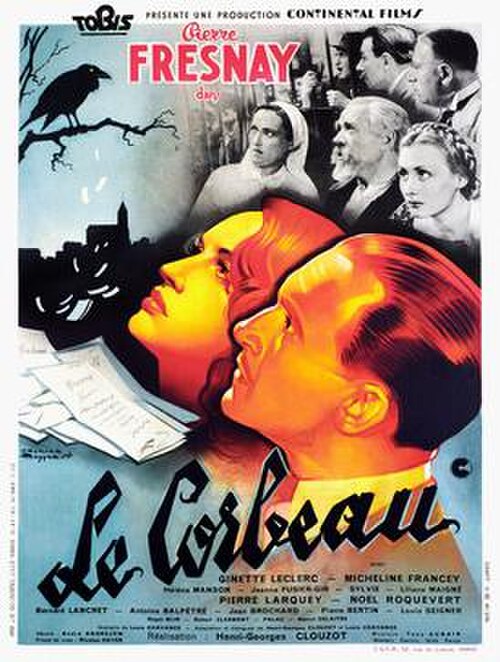
Le Corbeau (The Raven, 1943): When Cinema Becomes a Scalpel to Slice Through Human Hypocrisy
Few films in cinema history can boast of being banned with equal enthusiasm by the Nazis, the Catholic Church, and the French Communist Resistance. Henri-Georges Clouzot didn’t just achieve this feat in 1943 with Le Corbeau—he also managed to get himself permanently blacklisted from the industry (fortunately lifted two years later, because cinema without his misanthropy would be like a scalpel without an edge: useless and disappointing). Shooting a psychological thriller about poison-pen letters and systematic denunciation in the heart of occupied France, and financed by the German production company Continental Films, wasn’t just the pinnacle of artistic audacity—it was an act of cultural sabotage disguised as entertainment. At Claqueta Ácida, we can only bow before such a display of cynicism and sheer gall, because Clouzot didn’t make a movie: he forged a shattered mirror and smashed it into the face of a Europe that would rather burn books than look into them.
finalExplicado: "En el clímax, el verdadero Cuervo es la propia Denise (Ginette Leclerc), la coja sensual y resentida, quien confiesa sus cartas ante el pueblo reunido. Sin embargo, la multitud enfurecida lincha a la inocente Laura (Micheline Francey), la esposa del doctor, que se suicida arrojándose por una ventana. El doctor Germain, convertido en paria, decide quedarse en el pueblo para seguir ejerciendo, sabiendo que nada ha cambiado. Simbólicamente, el desenlace es demoledor: la delación no tiene un solo autor, es un veneno colectivo que habita en todos. El linchamiento de la inocente y la impunidad final demuestran que la hipocresía burguesa y la cobardía moral sobreviven a cualquier purga. Clouzot no ofrece catarsis, solo un espejo sucio: la Francia ocupada se devora a sí misma sin necesidad de invasor."
The Social Autopsy Without Anesthesia: Clouzot as the Pathologist of Bourgeois Morality
Clouzot didn’t film a conventional mystery; he wasn’t interested in the whodunit or narrative twists in service of a satisfying ending. What he did was perform a social autopsy without anesthesia, where the corpse is the respectability of a provincial French town and the scalpel is collective paranoia. The plot is deceptively simple: in an idyllic, sleepy corner of the French countryside, a mysterious sender nicknamed "The Raven" begins mailing anonymous letters that expose dirty laundry—infidelities, clandestine abortions, and corruption. The main target is Dr. Germain (Pierre Fresnay), a gynecologist with a pathological moral rigidity, whose aloofness and reserve make him the perfect scapegoat. But the real fascination isn’t who is writing the letters, but how the community unravels under suspicion, like a body infected by a virus that doesn’t kill but rots everything in its path.
Clouzot’s direction is a masterclass in claustrophobic tension, where every frame seems designed to suffocate the viewer. The cinematography by Nicolas Hayer, grimy and expressionist, with chiaroscuro lighting reminiscent of the best American film noir (though without its romanticism), reinforces the sense that we’re in a world where light only serves to reveal rot. There are no heroes in Le Corbeau, only victims and executioners who swap roles with chilling ease. Clouzot, who would later direct Les Diaboliques (1955) and The Wages of Fear (1953), already demonstrated here his knack for crafting oppressive atmospheres where evil isn’t an external force but a product of human cowardice and envy.
Collective Hysteria as a National Sport: When the Town Becomes a Nest of Vipers
Clouzot’s true genius lies in how he transforms a simple epistolary mystery into a choreography of paranoia. The town, initially presented as a provincial haven of peace, becomes a cauldron of suspicion where every neighbor is a potential informant. The anonymous letters act as a catalyst, but the poison was already there, latent, waiting for an excuse to surface. Clouzot satirizes the hypocrisy of the rural bourgeoisie with exquisite cruelty—this middle class that feigns shock at others’ sins while locking away their own under seven keys. There’s no ideology in Le Corbeau, just a merciless X-ray of human nature: when it comes to pointing fingers, we’re all fascists.
The film’s most celebrated sequence—and rightfully so—is the lamp swing scene, where psychiatrist Vorzet (Pierre Larquey, in a performance that oscillates between the sinister and the tragically comic) debates good and evil with Dr. Germain. As the light swings, alternately illuminating the characters’ faces, Clouzot doesn’t just play with the symbolism of human duality; he anticipates the cinéma vérité of later decades. It’s a scene that encapsulates the film’s entire philosophy: in the dark, we’re all the same; light only serves to expose our contradictions.
But Clouzot isn’t all cerebral. There’s also room for the blackest of black humor, like when the townsfolk, at a funeral no less, scrutinize each other’s faces for guilt while the priest sermonizes about Christian charity. The irony is so thick you could cut it with a knife: in a town where everyone spies on everyone else, morality is a luxury no one can afford.
Ginette Leclerc: The Femme Fatale Who Spat in the Face of Vichy’s Puritanism
If there’s one element that elevates Le Corbeau above the cinema of its time—and many films since—it’s the electrifying presence of Ginette Leclerc as Denise, Dr. Germain’s lame mistress. Leclerc doesn’t play a conventional femme fatale; her Denise is a force of nature, a hypersexualized, cynical, and rebellious woman who openly mocks Victorian morality and the puritanism that Vichy’s regime tried to impose under the slogan "Work, Family, Fatherland." Her limp isn’t a flaw but a symbol: in a world where everyone limps morally, she’s the only one who walks with pride, even if it’s on one leg.
The relationship between Denise and Germain is one of twisted, perverse magnetism, far removed from Hollywood romance. There’s no passion, just an attraction based on mutual contempt and complicity in transgression. When Denise tells Germain, "You and I are the same: we like evil," she’s not flirting—she’s diagnosing. Leclerc, with her defiant gaze and mocking smile, devours the screen every time she appears, and her character becomes the perfect counterpoint to Fresnay’s moral rigidity. While the other characters crumble under guilt, Denise stands firm, as if she knows that hypocrisy is the true original sin.
The historical irony of Le Corbeau is so delicious it hurts: the Germans, who financed the film, thought they were portraying the French as a bunch of hysterical, corrupt snitches; the French Resistance, after liberation, saw it as collaborationist propaganda. But Clouzot wasn’t on anyone’s side. His film is a gothic, unfiltered mirror of human nature, and like all good mirrors, what it reflects isn’t pretty. Le Corbeau isn’t a right-wing or left-wing film: it’s a film about cowardice, envy, and how easily humans turn into monsters when given the chance.
The Legacy of Le Corbeau: From Censorship to Immortality
The scandal surrounding Le Corbeau after its release wasn’t accidental. In the heart of occupied France, a film depicting systematic denunciation and moral rot was, at the very least, uncomfortable. The Nazis banned it for being "too French" (i.e., too cynical); the Catholic Church condemned it for its portrayal of religious hypocrisy; and the Communist Resistance labeled it collaborationist propaganda. Clouzot, who had worked for Continental Films (the German-run production company controlling French cinema during the occupation), found himself in the eye of the storm. His blacklisting from the industry was an attempt to silence a voice that, ironically, only grew louder with time.
Today, Le Corbeau is considered one of the peaks of French film noir and a key influence on directors like Alfred Hitchcock (who acknowledged his debt to Clouzot) and Roman Polanski (whose Repulsion (1965) borrows directly from this film’s oppressive atmosphere). But beyond its cinematic impact, Le Corbeau remains radically relevant in an era of digital witch hunts and cancel culture, where social media has turned anonymous denunciation into a global sport. Clouzot didn’t just predict the future—he dissected it with surgical precision.
The Best
- Clouzot’s ruthless direction, which turns a simple thriller into a social autopsy so precise it hurts. Every frame is a scalpel.
- The funeral scene, a choreography of suspicion and rural paranoia unmatched in cinema. Even the priest looks like an accomplice.
- Ginette Leclerc, an organic, limping, utterly unforgettable femme fatale. Her Denise is the only thing that shines in a town of shadows.
The Worst
- French censorship, which deprived the world of Clouzot for two years for not understanding that cinema isn’t propaganda—it’s a mirror. And mirrors sometimes reflect uncomfortable truths.
- Some narrative ellipses in the second act, which rush the revelation of secondary suspicions a bit too abruptly. Clouzot was in a hurry to get to hell.
The Verdict of Claqueta Ácida (9.5/10)
Le Corbeau isn’t just a film: it’s a monument to psychological suspense and one of the most uncomfortable, perfect sociological dissections ever filmed. Clouzot proved that the real cinematic monster isn’t a vampire or a mad scientist—it’s your neighbor, the one who smiles while writing an anonymous letter with carbon paper and a postage stamp. An absolute masterpiece, cynical, black as the feathers of its protagonist, and as relevant today as it was in 1943. If cinema is the art of showing truth through lies, Le Corbeau is its most corrosive proof: a lie that stings because, deep down, we all know it’s true.🎬 Tráiler Oficial
Abrir en YouTube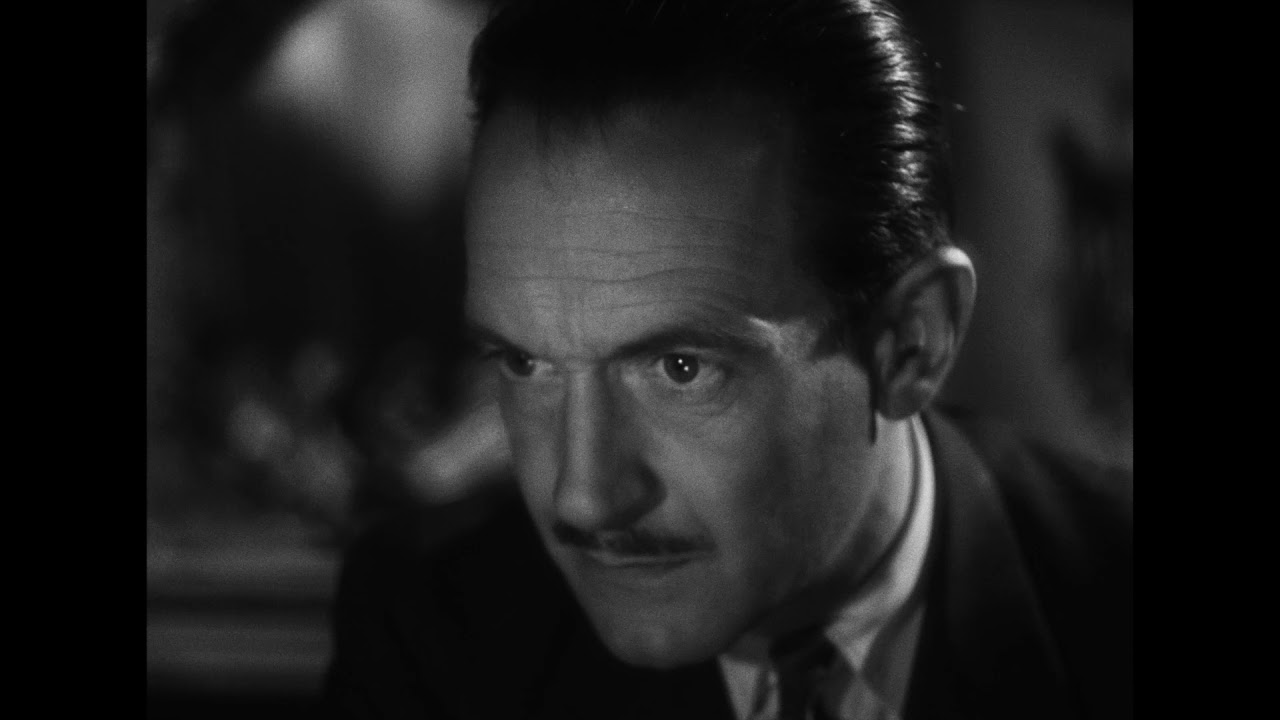
Ending Explained: Le Corbeau (The Raven, 1943)
Ficha de Daños Colaterales en Sala
Certificado de impacto psicofísico emitido por Dante Sangre
Ni un solo parpadeo voluntario. El asiento, inusualmente cómodo.
Ni una sola mirada al móvil.
Ninguna: la adrenalina cinematográfica es suficiente.
"No aplica. La obra se sostiene sola."
💬 El Veredicto de la Comunidad
¿Qué te ha parecido la película? Deja tu nota de 0 a 10 para contrastarla con el análisis de la redacción.
Aún no has votado
📢 ¿Te ha gustado el ácido?
Comparte esta crítica con tus amigos cinéfilos o desata la polémica en redes.
⚡ THE CINEMATIC VENOM YOUR INBOX CRAVES
No sugarcoated ratings, no corporate fluff. Subscribe for our uncensored weekly analysis or join the private Telegram for press previews, poll clashes, and instant alerts.
Alertas de estrenos en 1 segundo, encuestas en caliente y audios al salir de pases de prensa.
Recibe la dosis semanal en tu mail + regalo inmediato del PDF con 50 joyas ocultas de culto.
Related Reviews
Recommended autopsies for demanding film buffs.
 🔥 Fusión Nuclear9.5
*2001: A Space Odyssey – A Monkey, a Monolith, and Two Hours of Cosmic Pretentiousness*
⚡Afinidad temática directa en atmósfera, estilo y fijaciones visuales.
We dissect Stanley Kubrick’s magnum opus. A visual feast of minimalism and space hypnosis that cemented "serious" sci-fi—and bored half of humanity to tears.
 🔥 Fusión Nuclear9.3
2001: A Space Odyssey — The Day Kubrick Left Us Speechless (and Oxygenless)
⚡Afinidad temática directa en atmósfera, estilo y fijaciones visuales.
Kubrick turned science fiction into pure art: 149 minutes of eloquent silence, bone-wielding apes, and a psychopathic computer. Masterpiece or pretentious fraud? Here’s the verdict.
 🔥 Fusión Nuclear8.5
*A Clockwork Orange: The Sweet, Rusty Aftertaste of Violent Haute Couture*
⚡Afinidad temática directa en atmósfera, estilo y fijaciones visuales.
A scathing review of Kubrick’s masterpiece, where ultraviolence meets 60s fashion in a twisted pas de deux.
Editorial Ecosystem
Cinephile connections, archive interviews and related analyses.
💬 Debate Cinéfilo & Autopsia de Lectores
0 veredictos¿Discrepas con nuestra nota? ¿Es una obra maestra o veneno puro? Deja tu veredicto abajo sin necesidad de registro.


Aún nadie ha dejado su veredicto para esta película.
Sé el primero en clavarle el colmillo rellenando el formulario de arriba.