Ghostland — Or How Pascal Laugier Turned a Home Invasion Flick Into a Psychological Survival Manual (With Porcelain Dolls)
Pascal Laugier returns with a suffocating, unsettling, and razor-sharp hall of mirrors about mental escapism, violence, and the scars of childhood abuse.

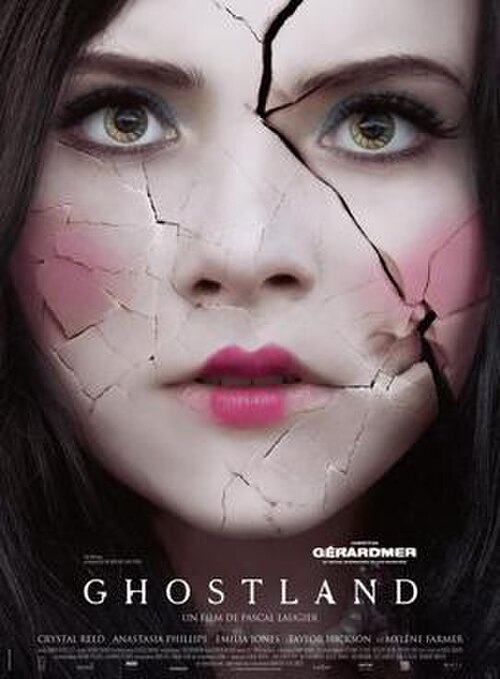

Ghostland (or How Pascal Laugier Turned a Home Invasion Into a Psychological Survival Guide—Complete with Porcelain Dolls)
A decade after Martyrs (2008) left half the world clutching their stomachs and the other half hailing Pascal Laugier as the new messiah of extreme horror, the French filmmaker is back with Ghostland (or Incident in a Ghostland for Anglophone markets still clinging to the delusion that slapping "incident" in the title lends it intellectual thriller cachet). And, of course, he does it with his signature sadistic elegance: taking a subgenre as tired as the home invasion trope—where everything from The Strangers to Funny Games has set up shop—and twisting it into a clinical treatise on traumatic dissociation, gift-wrapped in gothic horror cellophane and tied with a bow of decapitated dolls.
The premise, on the surface, is so straightforward it reeks of a trap: Colleen (Mylène Farmer, French pop icon turned stoic mother with the emotional range of a Zara mannequin), moves with her two teenage daughters, Beth (Emilia Jones) and Vera (Taylor Hickson), into a rural house inherited from an aunt so eccentric her legacy seems plucked from an American Horror Story catalog: narrow hallways, furniture draped in white sheets like shrouds, and a collection of porcelain dolls that stare at you with more humanity than most The Walking Dead characters. That very night, two intruders—a hulking man-child with the mentality of a five-year-old and a trans woman with the thousand-yard stare of someone who’s binged too much True Detective and didn’t like it—break in to turn the move into a nightmare of gratuitous violence, domestic sadism, and torture choreography that would make Eli Roth blush.
finalExplicado: "En el clímax, Beth despierta de su elaborada alucinación neoyorquina y regresa a la realidad del sótano, donde sigue siendo la prisionera adulta que ha sido violada y torturada durante años. En un último arrebato de lucidez, mata brutalmente a sus captores, pero el daño es irreversible: su mente ya está destruida. Simbólicamente, el desenlace revela que el escapismo creativo no salva, solo prolonga la agonía. Beth no es una superviviente que transforma el trauma en arte; es una víctima que se ha convertido en muñeca rota de su propio relato. El “éxito literario” era la última y más cruel jaula: una anestesia mental que la mantuvo consciente mientras su cuerpo era destruido. El horror final no es la muerte de los verdugos, sino la constatación de que nunca salió de aquella casa."
Trauma as Literary Material: When Reality Is Too Ugly to Write About
The real masterstroke of Ghostland arrives midway through, when Laugier dismantles the narrative with the same brutality his villains inflict on their victims. Suddenly, we discover that Beth (now played by Crystal Reed, whose Colgate-commercial smile clashes violently with the horror surrounding her) isn’t the survivor we thought she was, but a bestselling author who’s turned her trauma into a hit novel titled, ironically, Incident in a Ghostland. Her life in New York—the minimalist loft, the perfect husband, the publisher meetings where they tell her things like "your pain sells"—is nothing more than a defensive hallucination, a survival mechanism so elaborate she’s started to believe it herself. Meanwhile, in the basement of that cursed house, her real self is still being raped, tortured, and turned into a broken doll by her captors.
This is where Laugier proves he’s not just a craftsman of torture porn, but a surgeon of psychological terror. The film becomes a study in dissociation, but also a scathing critique of the romanticization of artistic suffering. How many writers, musicians, or filmmakers have turned their pain into consumer products? How many masterpieces are born from the need to exorcise demons, and how many are just band-aids over wounds that never heal? Beth isn’t a hero; she’s an accomplice to her own imprisonment: she’s found a way to monetize her trauma, but at the cost of burying the truth under layers of fiction. And the price, as she discovers upon returning to the house, is her sanity.
The sequence where Beth "wakes up" from her fantasy is one of the most devastating in recent horror cinema. There are no jump scares, no blaring music—just the uncomfortable silence of someone realizing they’ve been living a lie. Laugier films this moment with almost Hitchcockian coldness, letting Crystal Reed’s face—shifting from complacent smile to cornered-animal terror—tell the story. It’s a twist that recalls The Sixth Sense in its rawness, but with one crucial difference: there’s no redemption here, just the crushing realization that hell has no exit.
The Villains: When Cliché Dresses Up as Depth (and Fails)
If there’s one aspect where Ghostland stumbles slightly, it’s in its antagonists. The two psychopaths—the hulking brute (played by Rob Archer) and the trans woman (played by Anastasia Phillips in a dual role that edges into schizophrenic territory)—are, at best, archetypes straight out of an ‘80s slasher handbook, and at worst, caricatures bordering on offensive.
The giant is the typical thug with an intellectual disability, trotted out when screenwriters want to add a touch of "perverse innocence" to their killers. His behavior—talking like a child, getting excited over toys, crying when ignored—is so clichéd you half-expect him to pull out a teddy bear and whisper, "I’m gonna give you a hug." The woman, meanwhile, is a distorted version of the "evil woman" trope in horror: cold, calculating, with an ambiguous sexuality straight out of a bargain-bin psychoanalysis textbook. Her motivation—or lack thereof—is the film’s biggest weak spot. While Martyrs’ torturers had an almost mystical obsession with pain, here the villains lack depth beyond a bloodstain.
That said, Laugier knows how to weaponize these clichés. The dynamic between the two aggressors—him, a overgrown child; her, a sadistic surrogate mother—makes their interactions feel almost domestic, like they’re playing house with their victims. There’s a scene where they dress and makeup the sisters like porcelain dolls that’s so disturbing it makes the audience complicit in the humiliation. It’s no accident Laugier chooses dolls as a recurring symbol: they’re inanimate objects that somehow seem more alive than the characters themselves. The entire house is a museum of childhood horrors, a place where innocence and macabre hold hands.
The Laugier Style: When Terror Becomes Architecture
Pascal Laugier isn’t a director who hides behind the camera. His style is as unmistakable as a blood signature on a wall: claustrophobic framing, expressionist lighting that turns every corner into a potential threat, and a score (by Todd Bryanton) that oscillates between oppressive silence and string crescendos straight out of a Bernard Herrmann nightmare.
The house in Ghostland isn’t just a set—it’s a character in its own right. Laugier designs it like a gothic labyrinth, where every door, hallway, and doll on the shelf hides a psychological trap. The overhead shots—those that show the sisters huddled in a corner like rats in a cage—reinforce the sense of both physical and mental entrapment. And when the camera lingers on the actresses’ faces, it does so with almost documentary rawness, as if we’re watching a reality show of horror.
The editing, meanwhile, is relentless. Laugier gives us no quarter: from the first attack to the final twist, the film doesn’t breathe, doesn’t let us blink. There are sequences—like the initial home invasion—that are filmed with such precise choreography they feel like a death ballet. And when the film pivots, the editing becomes even more frenetic, as if Laugier himself is desperate to shake us and scream, "Wake up, this isn’t what you think!"
The Performances: When Suffering Becomes Art
If there’s one thing that saves Ghostland from being a mere stylistic exercise, it’s the acting. Emilia Jones and Taylor Hickson, as the teenage sisters, carry the film’s emotional weight on their shoulders, delivering physical and psychological performances that border on the heroic. Hickson, in particular, has a scene where she screams herself hoarse as her character unravels, and it’s so real it hurts. This isn’t awards-bait acting—it’s acting to survive.
Crystal Reed, meanwhile, proves she’s more than just the girl from Teen Wolf. Her Beth is a mix of fragility and strength, a woman who’s built a house of cards around her pain and, when it collapses, has nowhere to run. Her performance is subtle, almost minimalist, but when the film demands she scream, cry, or crawl, she does so with a conviction that leaves you breathless.
And then there’s Mylène Farmer, the French pop star who here plays the mother with the same intensity she brings to her gothic ballads. Her Colleen is a broken woman, a mother who can’t protect her daughters and, in a moment of clarity, chooses the most cowardly path. Farmer doesn’t have many lines, but her presence fills the screen: she’s the ghost haunting the film, a reminder that sometimes, love just isn’t enough.
Ghostland vs. Modern Horror: Why This Film Hurts More
In an era where horror has become increasingly reliant on jump scares, remakes, and endless franchises, Ghostland stands out like a poisoned dagger in a sea of junk food. It’s not a film for everyone: it’s slow, cruel, uncomfortable, and at times unbearable. But it’s precisely that rawness that makes it one of the most important horror films of the last decade.
Compared to other genre standouts, Ghostland doesn’t resemble anything else. It’s not the existential dread of Hereditary, the poetic gore of The Sadness, or the meta-slasher of Scream. It’s a beast of its own, a hybrid of Black Swan’s psychological drama and A Serbian Film’s visceral horror, but with Laugier’s unmistakable stamp: an almost clinical obsession with pain as the engine of artistic creation.
If Martyrs was a film about pain as a path to enlightenment, Ghostland is its dark mirror: a film about pain as a prison. And in that sense, it’s far more honest. Because while Martyrs offered a glimmer of transcendence, here there’s no redemption, no hope—just the realization that sometimes, the only way to survive is to invent a parallel reality.
The best
- The twist that leaves you breathless (and with no excuse not to rewatch it): Laugier doesn’t just trick you once; he makes you question every frame, every line, every fake smile from Beth. It’s the kind of twist that forces you to rewatch the film with new eyes, like suddenly seeing a puzzle’s true picture when you didn’t want to.
- The house as a character (and the dolls as silent witnesses): Every corner of that house breathes malice, every doll seems to judge you, and every overhead shot reminds you there’s no escape. It’s production design elevated to macabre art.
The worst
The villains, or how to waste disturbing potential: The giant and the trans woman are so archetypal they feel like they’re from an American Horror Story* fanfic. Laugier deserved better than two by-the-numbers psychopaths. Suffering so relentless it borders on unbearable: Ghostland* isn’t a film that lets you breathe. It’s one punch after another, no pause, no mercy, and while that’s part of its genius, it can also be exhausting even for hardened horror fans.The Verdict of Claqueta Ácida (8.6/10)
Pascal Laugier has once again proven that French horror isn’t for the faint of heart, and that he is, without a doubt, one of its most lucid and merciless executioners. Ghostland is a film that grabs you by the throat, drags you into the basement, and forces you to watch as it dismantles your certainties about trauma, art, and survival. It’s not a flawless masterpiece—its villains are its Achilles’ heel, and its pacing can feel suffocating—but it’s one of those films that lodges in your memory like a rusted knife and refuses to let go. If you think horror can’t surprise you anymore, Ghostland is here to remind you that sometimes, the worst nightmare isn’t out there—it’s the one you carry inside. And no matter how much you write about it, you can never escape.🎬 Tráiler Oficial
Abrir en YouTube
Ending Explained: Ghostland
Ficha de Daños Colaterales en Sala
Certificado de impacto psicofísico emitido por Odin Lagbert
Cero bostezos. Pupilas dilatadas y tensión mandibular constante.
El móvil permaneció en el bolsillo donde debía estar.
Ninguna. Esta obra no necesita muletas estimulantes.
"Inexistente: pulso de hierro hasta los créditos finales."
💬 El Veredicto de la Comunidad
¿Qué te ha parecido la película? Deja tu nota de 0 a 10 para contrastarla con el análisis de la redacción.
Aún no has votado
📢 ¿Te ha gustado el ácido?
Comparte esta crítica con tus amigos cinéfilos o desata la polémica en redes.
⚡ THE CINEMATIC VENOM YOUR INBOX CRAVES
No sugarcoated ratings, no corporate fluff. Subscribe for our uncensored weekly analysis or join the private Telegram for press previews, poll clashes, and instant alerts.
Alertas de estrenos en 1 segundo, encuestas en caliente y audios al salir de pases de prensa.
Recibe la dosis semanal en tu mail + regalo inmediato del PDF con 50 joyas ocultas de culto.
Related Reviews
Recommended autopsies for demanding film buffs.
 🔥 Fusión Nuclear9.2
*Martyrs*: The Unbearable Calvary of Transcendence
⚡Del mismo director (Pascal Laugier): analiza la evolución o degradación de su estilo.
Pascal Laugier delivers the magnum opus of the New French Extremity: a devastating plunge into systematic violence and the mystical quest for the great beyond.
 🔥 Fusión Nuclear8.5
*Alleluia: Love as a Terminal Illness (or How to Turn Crimes of Passion into a Sweaty, Fleshy Spectacle)*
⚡Afinidad temática directa en atmósfera, estilo y fijaciones visuales.
Fabrice Du Welz reimagines the myth of the lonely hearts killers in a feverish whirlwind of jealousy, submission, and blood, led by Lola Dueñas in a performance that’s equal parts hypnotic and harrowing.
 🔥 Fusión Nuclear8.5
*High Tension (Haute Tension): The Brutal Birth of the New French Extremism – Or How to Turn Flesh into Poetry with a Machete*
⚡Afinidad temática directa en atmósfera, estilo y fijaciones visuales.
Alexandre Aja shocked global screens with a relentless rural bloodbath, redefined by breakneck pacing and a divisive twist that splits serious cinephiles right down the middle.
Editorial Ecosystem
Cinephile connections, archive interviews and related analyses.
🎞️ In Claqueta Cinematheque1
💬 Debate Cinéfilo & Autopsia de Lectores
0 veredictos¿Discrepas con nuestra nota? ¿Es una obra maestra o veneno puro? Deja tu veredicto abajo sin necesidad de registro.

Aún nadie ha dejado su veredicto para esta película.
Sé el primero en clavarle el colmillo rellenando el formulario de arriba.