The Fog — When John Carpenter Took a Stroll Through the Limbo Between Gothic Terror and Unintentional Camp
John Carpenter weaves a fog that wavers between atmospheric suspense and unintentional ridiculousness. A gothic horror masterpiece or an unofficial prequel to Scooby-Doo?

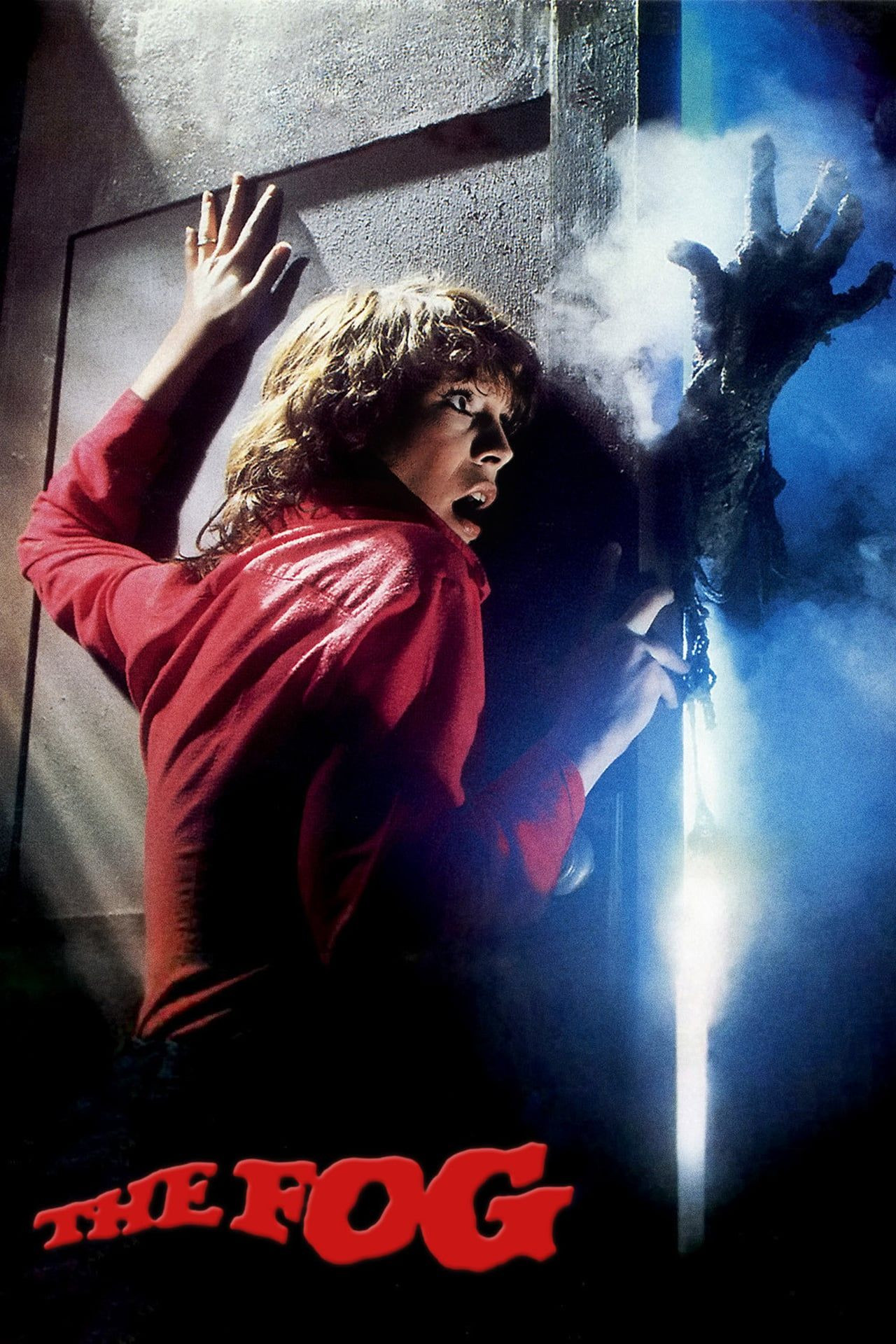

Celluloid tangles itself in a thick mist, the kind only masters of terror know how to weave with the precision of a surgeon and the patience of a Benedictine monk. John Carpenter, that enfant terrible of genre cinema who had already spat in the face of the system with Halloween (1978), decided it was time to play with the elements. Not fire, nor earth, but something far more ethereal and treacherous: the fog. Yes, that gaseous substance which, in nature, only serves to ruin landscape photos but in cinema can become the perfect vehicle for cosmic horror. Or, at worst, the setting for an especially dumb episode of Ghostbusters. The Fog (1980) was born at a time when American horror was mutating, like a virus, from the shadows of Italian giallo and the gore of Herschell Gordon Lewis toward something more atmospheric, more B-movie with A-movie pretensions. Carpenter, who had already proven himself an apt pupil of Howard Hawks and Hitchcockian suspense, embarked on this project with a tight budget—as always—and a premise that smacked of recycled urban legend: a killer fog hiding the original sin of a coastal town. Antonio Bay, that picturesque California hamlet, hides more skeletons in its closet than an episode of Dexter, and Carpenter knows it. But here’s the first problem: the director seems more interested in aesthetics than substance. Not that this is inherently bad—God knows cinema is, above all, a visual art—but when the fog becomes the only character with any personality, one begins to suspect that the script by Debra Hill (Carpenter’s frequent collaborator and, by the way, one of the few women in classic horror with a voice of her own) is emptier than a politician’s campaign speech. The plot, in essence, is a rehash of The Birds (1963) with fog instead of birds and a dash of The Thing (1982) before The Thing even existed. But while Hitchcock turned terror into a ballet of suspense and paranoia, Carpenter here seems more concerned with ensuring the fog effects—achieved with smoke machines and a budget that couldn’t cover much else—don’t look too cheap. Spoiler: they do. And that’s not necessarily a flaw—the charm of B-movies lies precisely in their imperfection—but when the fog starts moving as if it had a life of its own, one can’t help but think of those Star Trek effects from the ‘60s where aliens looked like they were made of cardboard and glitter. The historical context, on the other hand, is fascinating. We’re in 1980, a year when American horror was in full effervescence: Friday the 13th (1980) had just premiered, The Shining (1980) was about to sweep the scene, and Carpenter was already a cult figure thanks to Halloween. The Fog hit theaters in February, as if the director wanted to remind the world he wasn’t a one-hit wonder. But here’s the paradox: while Halloween was a masterclass in minimalist suspense, The Fog feels like a stylistic exercise that can’t decide whether it wants to be a gothic horror film or an extended episode of The Twilight Zone. And that, dear readers, is both its greatest virtue and its worst sin. Because isn’t that what makes Carpenter’s cinema great? His ability to straddle the thin line between the sublime and the ridiculous, the poetic and the kitsch. Dean Cundey, that wizard of cinematography who would later illuminate Back to the Future (1985) and Jurassic Park (1993), faces an almost impossible challenge here: making fog terrifying. And, against all odds, he pulls it off in some moments. But when the fog dissipates—quite literally—what remains is a script that seems written in haste, characters who are little more than walking archetypes, and an ending that, while satisfying, reeks of deus ex machina with a whiff of brine and rotten seaweed.
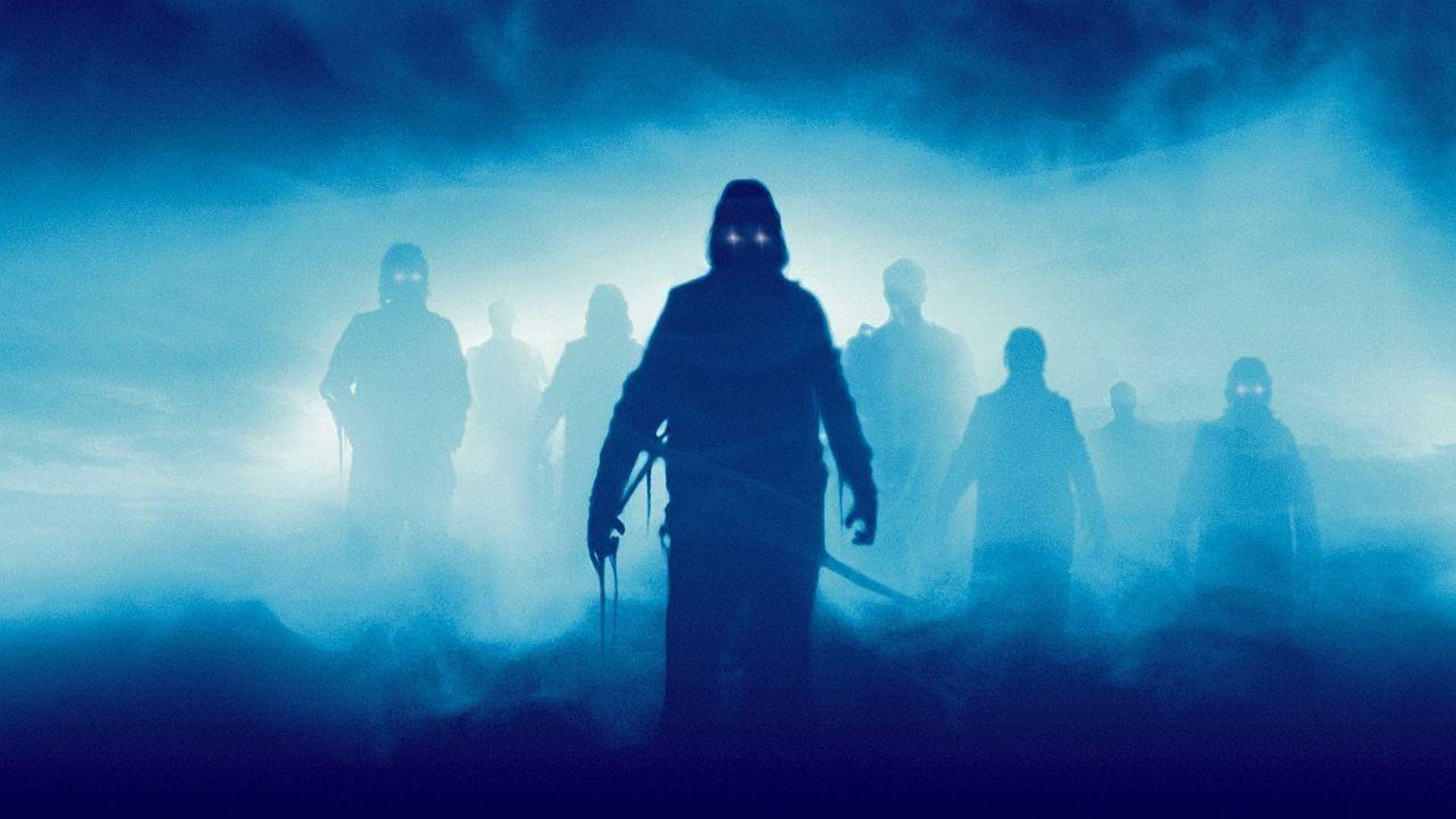
The Direction: When Carpenter Plays at Being Hitchcock (and Almost Pulls It Off)
John Carpenter is a director who has always known how to navigate two waters: pure, hard genre cinema and that more atmospheric, psychological terror that drinks directly from the classics. In The Fog, he seems to want to emulate Alfred Hitchcock, but with a budget that wouldn’t even cover the master’s coffee. And yet, there are moments when he succeeds. The opening sequence, for example, is a lesson in how to build tension with almost nothing: a lighthouse keeper telling a ghost story to a child, a clock striking midnight, and a fog creeping in like a predator. It’s pure Carpenter, pure suspense, pure cinema. But then, the film deflates like a punctured balloon. The characters—especially those played by Jamie Lee Curtis and Tom Atkins—seem plucked from a 1970s TV movie, and their dialogue sounds as natural as a telenovela script. Carpenter, who in Halloween proved himself a master at making the mundane sinister, here seems more interested in aesthetics than in the psychology of his characters. And that, in a horror film, is a cardinal sin. Because what’s the point of a killer fog if no one cares? The pacing, on the other hand, is erratic. There are moments when the film drifts like a rudderless ship, and others when it feels like a rollercoaster without brakes. Carpenter plays with time, stretching some scenes to the limit of the viewer’s patience and compressing others as if he were in a hurry to reach the end. And yet, there’s something fascinating about that irregularity. The Fog isn’t a perfect film, not by a long shot, but it’s a living film, with a narrative pulse that oscillates between the sublime and the laughable. As if Carpenter, in a fit of genius, had decided that terror didn’t have to be coherent, just sensory. And in that, he hits the mark dead center.
The Performances: Between Cardboard and Unintentional Camp
The cast of The Fog is, at best, uneven. At worst, it looks like a Dallas casting call with a B-movie budget. Adrienne Barbeau, who plays radio host Stevie Wayne, is, by far, the best of the bunch. Barbeau has that quality only great actors possess: the ability to make even the most absurd dialogue sound believable. Her character, a strong and determined woman who becomes the voice of reason amid the chaos, is one of the few with anything resembling personality. The rest, however, seem lost in the fog. Jamie Lee Curtis, in one of her earliest roles, is so over-the-top one can’t help but wonder if she wasn’t rehearsing for her future role in Scream Queens. Her character, Elizabeth Solley, is little more than a final girl archetype, but without the depth Curtis would later demonstrate in films like True Lies (1994). Tom Atkins, meanwhile, plays Nick Castle, a character who seems plucked from a 1950s western. Atkins has charisma, that much must be admitted, but his performance is so exaggerated that one can’t help but laugh at the most inopportune moments. And then there’s Hal Holbrook, who plays Father Malone, a priest with a dark secret. Holbrook, a theater actor with an imposing presence, seems lost in this sea of mediocrity. His character is interesting, but the script doesn’t give him enough material to work with, and his performance ends up being little more than an exercise in gothic overacting. Janet Leigh, for her part, has such a small role that one wonders why she bothered showing up. Leigh, who had already proven herself a talented actress in films like Psycho (1960), seems to be on vacation here. Her character, Kathy Williams, is little more than a decoration, and her performance adds nothing to the film. In short: the cast of The Fog is a perfect example of how a good director can be weighed down by a mediocre script and uneven performances. Carpenter, who in Halloween proved himself a master at directing actors, here seems more interested in atmosphere than in performances. And that, in a horror film, is a colossal mistake.
The Technical Aspect: When the Fog Covers Everything (Including Coherence)
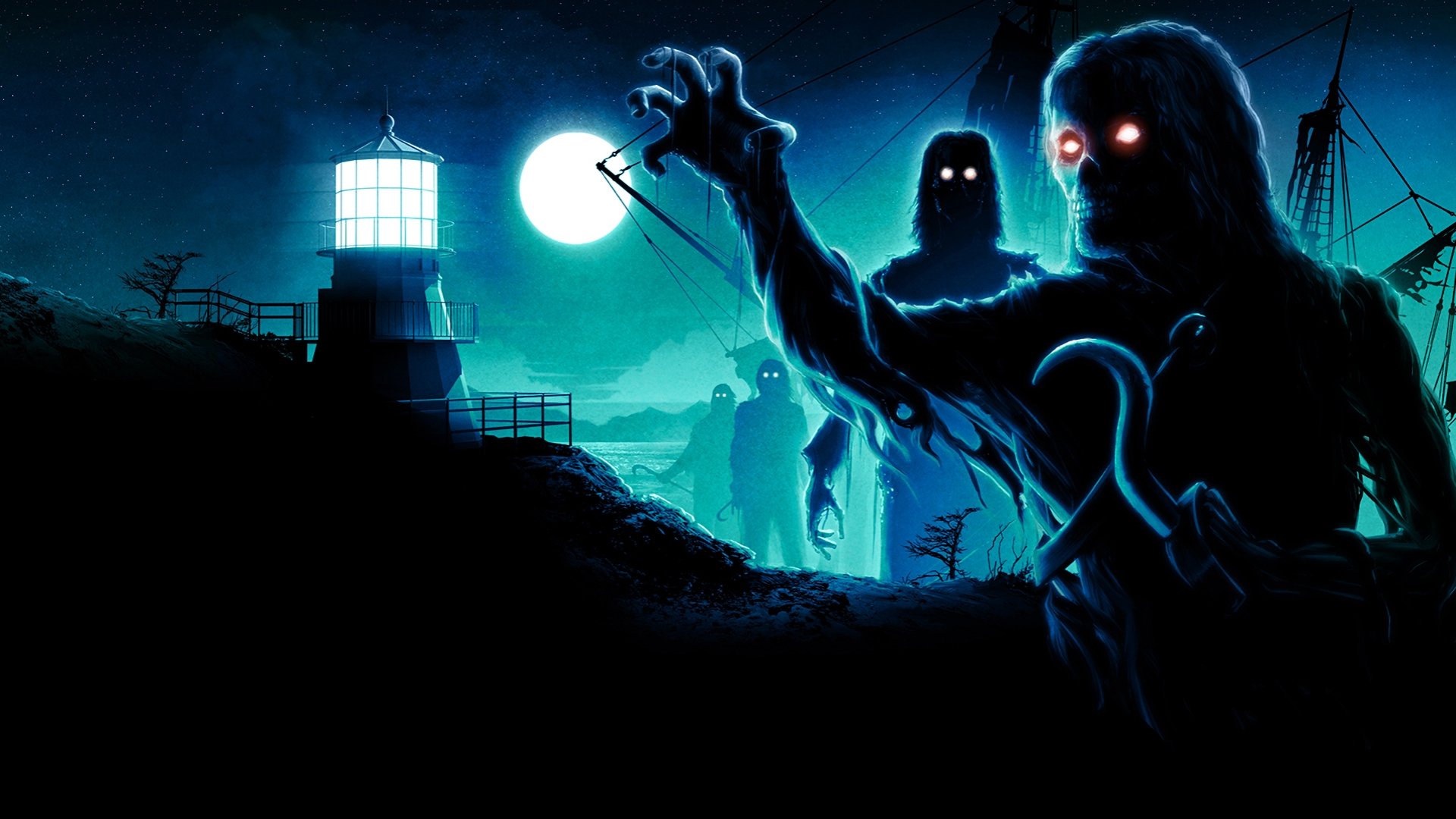
If there’s anything that saves The Fog from oblivion, it’s its technical aspects. Dean Cundey, the cinematographer, works wonders with a limited budget and shooting conditions that seem lifted from a World War II documentary. The fog, that omnipresent character, is filmed with an elegance that borders on the poetic. Cundey plays with light and shadow, creating an oppressive atmosphere that recalls the best moments of Nosferatu (1922). But when the fog lifts, what remains is a script that seems scribbled on a bar napkin. John Carpenter and Debra Hill sign the screenplay, but one can’t help but wonder if they wrote it between drinks. The dialogue is flat, the characters seem plucked from a manual of archetypes, and the plot progresses with the coherence of a fever dream. There are moments when the film feels like an unintentional parody of itself, like when the ghosts emerge from the fog with a slowness that borders on the comical. But then, Carpenter gifts us a sequence like the one at the lighthouse, where the tension is so thick you could cut it with a knife and the fog becomes a character in its own right. It’s in those moments that one remembers why Carpenter is one of the greats. The score, composed by Carpenter himself, is another of the film’s strong points. The main theme, with its ominous synthesizer and hypnotic rhythm, is one of the director’s best compositions. But even here, there are moments when the music feels too grandiose for a film that, at its core, is little more than a ghost story elevated to cinema. The editing, on the other hand, is uneven. Some scenes flow like a river, while others seem hacked apart with an axe. Carpenter, who in Halloween proved himself a master of pacing, here seems more interested in aesthetics than narrative. And that, in a horror film, is a mistake that comes at a high cost. Because, in the end, what remains is a film that oscillates between the sublime and the laughable, between gothic terror and unintentional camp. A film that, like the fog, covers everything, but when it dissipates, leaves a lingering taste of missed opportunity.
The best
- Dean Cundey’s cinematography: A visual elegance that turns the fog into a character in its own right, playing with light and shadow as if we were looking at a Rembrandt painting.
- John Carpenter’s score: Hypnotic, ominous, and perfectly synchronized with the film’s rhythm. A main theme that sticks in the memory like a knife in the fog.
- The atmosphere: Carpenter manages to create a sense of oppression and mystery that few horror films have matched. The fog isn’t just a special effect; it’s a state of mind.
- The prologue: An opening sequence that’s pure cinematic magic, proving Carpenter knows how to hook the viewer from the first frame.
The worst
- The script: A hodgepodge of poorly stitched-together ideas, flat dialogue, and characters plucked from a manual of archetypes. Carpenter and Hill should have spent more time in the writing workshop.
- The performances: With the exception of Barbeau, the rest of the cast seems lost in the fog, overacting as if they were in a 1950s melodrama.
- The pacing: Erratic as a sick heart, with scenes that drag on to the point of boredom and others that fly by without leaving a trace.
- The special effects: The fog, in theory the star of the show, sometimes looks like cheap smoke machine output. And the ghosts... well, best not to talk about the ghosts.
The Verdict of Claqueta Ácida
The Fog is one of those films that oscillates between the sublime and the laughable, between gothic terror and unintentional camp. John Carpenter, in a fit of genius and madness, decided that fog could be the perfect vehicle for cosmic horror. And, in some moments, he pulls it off. But when the fog dissipates, what remains is a mediocre script, uneven performances, and a pacing that feels like it was lifted from a fever dream. It’s not a bad film, not by a long shot, but it’s an incomplete film, as if Carpenter had a brilliant idea and didn’t know how to develop it to its fullest potential. That said, when it hits the mark, it hits it squarely: Dean Cundey’s cinematography is a marvel, the score is hypnotic, and the atmosphere is so oppressive that one can’t help but glance out the window to make sure there’s no fog outside. But those hits aren’t enough to save a film that, in the end, feels more like a stylistic exercise than a horror masterpiece. The Fog is, in short, a film that must be seen, but not a film that must be loved. Like the fog itself, it’s ephemeral, ethereal, and when it dissipates, it leaves a lingering taste of missed opportunity. 💀
🎬 Tráiler Oficial
Abrir en YouTube
Ending Explained: The Fog
Ficha de Daños Colaterales en Sala
Certificado de impacto psicofísico emitido por Odin Lagbert
2 amagos en el tramo intermedio; pestañeo pesado en las transiciones más innecesarias.
Minuto 45 y minuto 73 (comprobando cuánto quedaba de suplicio).
1 espressos para no dejarse vencer por la mediocridad cómoda.
"A mitad del segundo acto cuando la subtrama secundaria empezó a pesar más de lo que aportaba."
💬 El Veredicto de la Comunidad
¿Qué te ha parecido la película? Deja tu nota de 0 a 10 para contrastarla con el análisis de la redacción.
Aún no has votado
📢 ¿Te ha gustado el ácido?
Comparte esta crítica con tus amigos cinéfilos o desata la polémica en redes.
⚡ THE CINEMATIC VENOM YOUR INBOX CRAVES
No sugarcoated ratings, no corporate fluff. Subscribe for our uncensored weekly analysis or join the private Telegram for press previews, poll clashes, and instant alerts.
Alertas de estrenos en 1 segundo, encuestas en caliente y audios al salir de pases de prensa.
Recibe la dosis semanal en tu mail + regalo inmediato del PDF con 50 joyas ocultas de culto.
Related Reviews
Recommended autopsies for demanding film buffs.
 🔥 Fusión Nuclear8.2
*Christine*: The Most Toxic and Brilliant Mechanical Romance in Cinema History
⚡Del mismo director (John Carpenter): analiza la evolución o degradación de su estilo.
John Carpenter takes Stephen King’s eponymous novel and soups it up to deliver a staggering fable about teenage obsession, rock ‘n’ roll, and a 1958 Plymouth Fury with the jealous rage of a scorned lover.
 🔥 Fusión Nuclear8.5
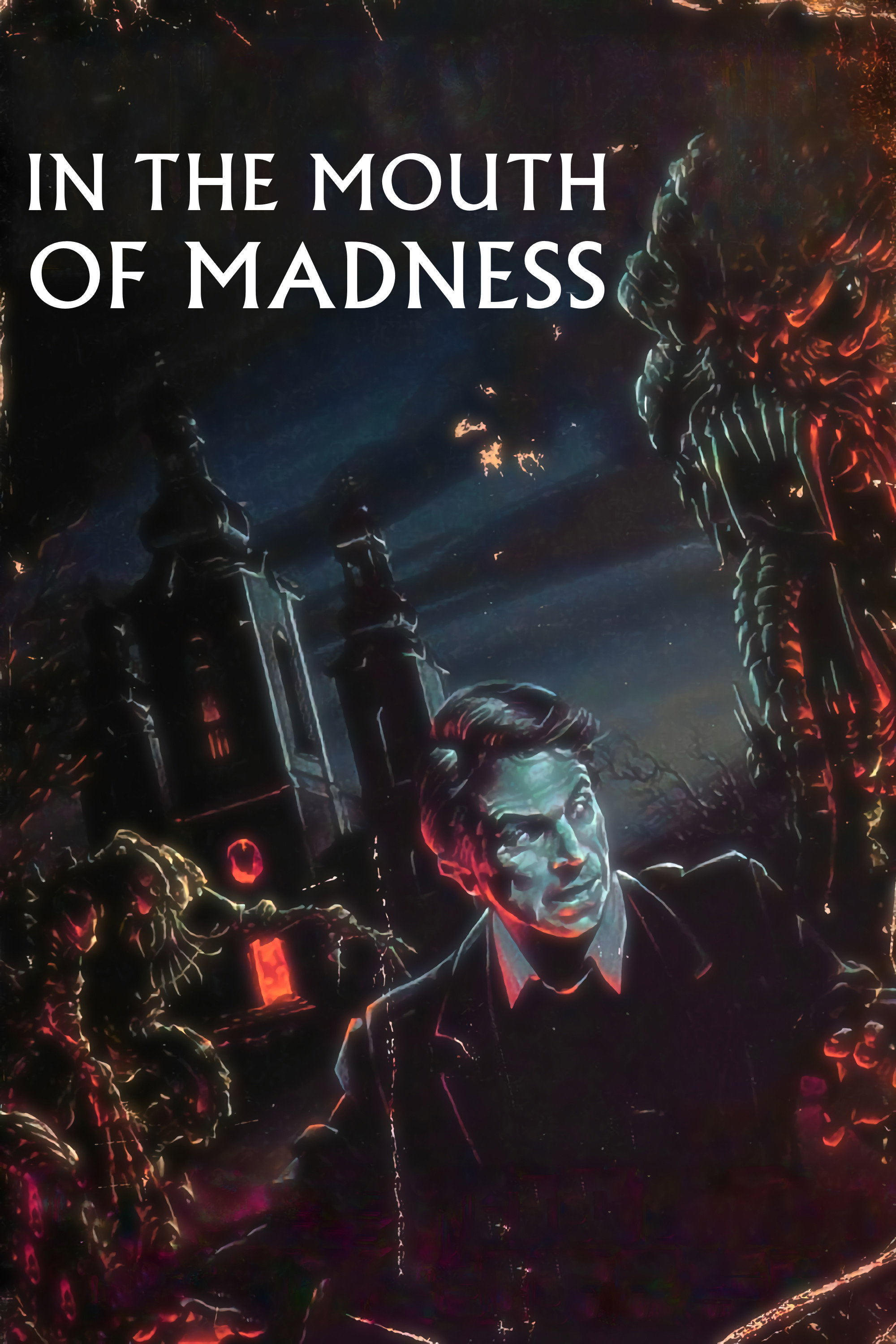
In the Mouth of Madness: When John Carpenter Swallowed Lovecraft (And Spat Out Our Sanity)
⚡Del mismo director (John Carpenter): analiza la evolución o degradación de su estilo.
John Carpenter delivers a Lovecraftian nightmare with Sam Neill teetering on the edge of the abyss. A masterpiece of cosmic horror or a self-parody with literary pretensions? Here’s the autopsy.
 🔥 Fusión Nuclear8.5
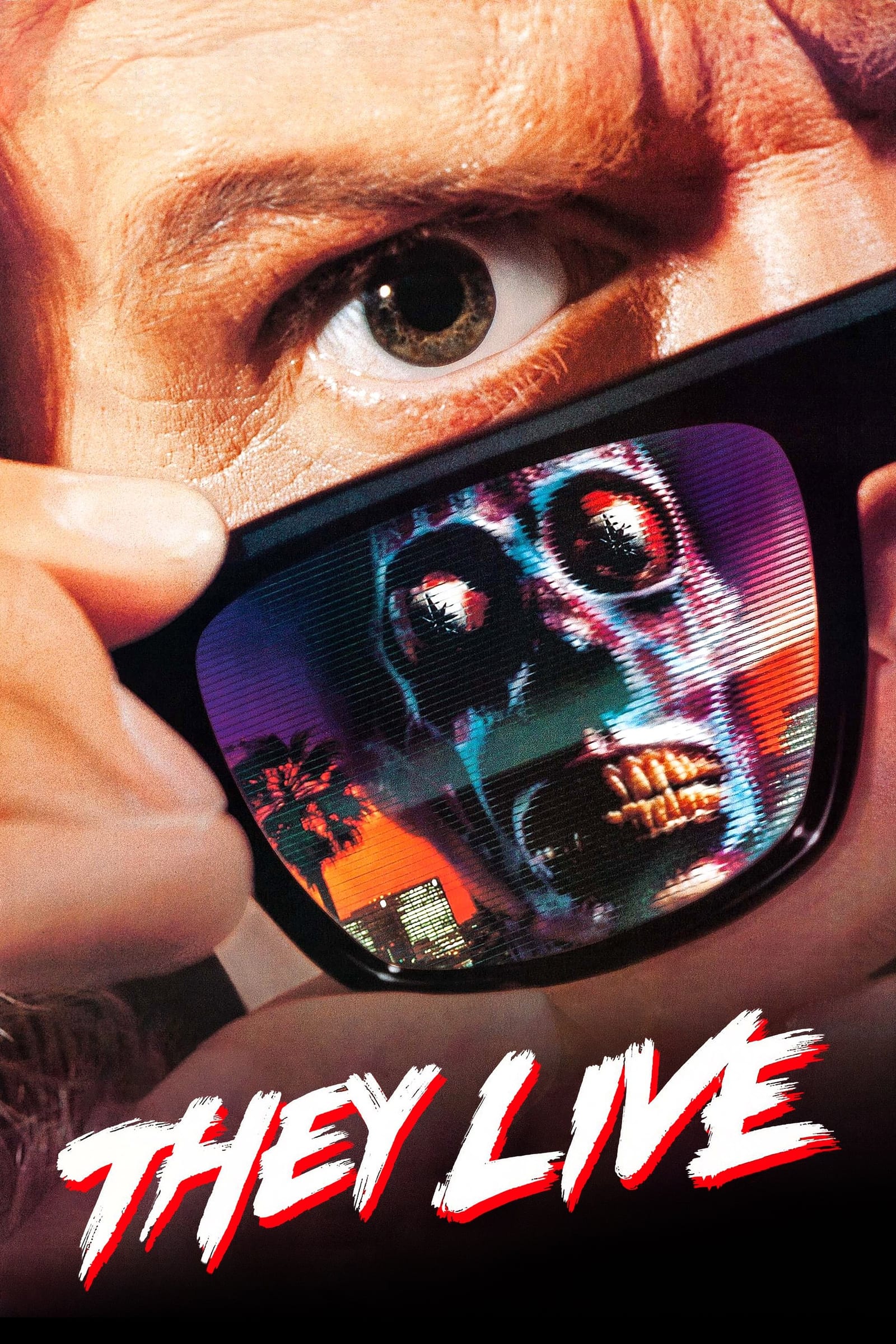
"They Live: The Satire Capitalism Would’ve Buried Alive (If It Hadn’t Already Sold It as Merch)"
⚡Del mismo director (John Carpenter): analiza la evolución o degradación de su estilo.
In 1988, John Carpenter handed us a shattered mirror of alienating consumerism. Today, it’s a meme with legs—but its acid still burns hotter than a Monopoly bill on Wall Street.
Editorial Ecosystem
Cinephile connections, archive interviews and related analyses.
💬 Debate Cinéfilo & Autopsia de Lectores
0 veredictos¿Discrepas con nuestra nota? ¿Es una obra maestra o veneno puro? Deja tu veredicto abajo sin necesidad de registro.

Aún nadie ha dejado su veredicto para esta película.
Sé el primero en clavarle el colmillo rellenando el formulario de arriba.