Poor Things — Lanthimos’ Frankenstein Blows Up the Myth with Sex, Color, and Victorian Cynicism
Yorgos Lanthimos delivers a dazzling, operatic, and hypersexualized steampunk fever dream about the wildest and most entertaining female emancipation in contemporary cinema.

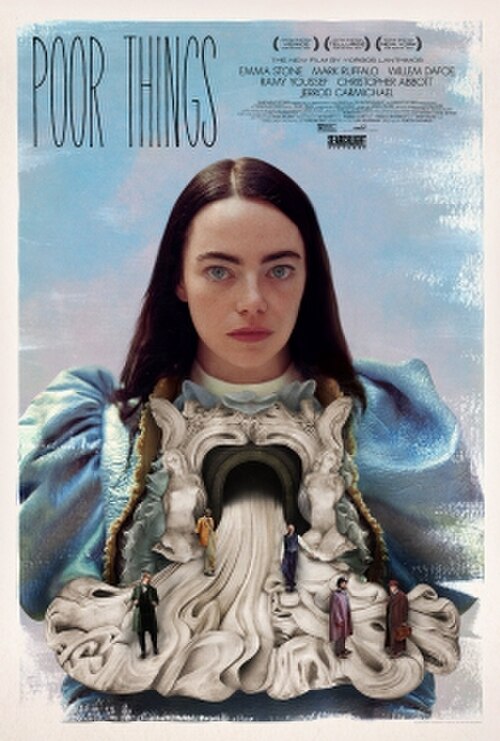

Poor Things: Lanthimos’ Frankenstein, or How to Turn Victorian Misogyny into a Psychedelic Freakshow
Here at the esteemed offices of Claqueta Ácida, where we’ve dissected everything from the most solemn adaptations of Frankenstein to the softcore gothic myths Hollywood vomits out every Halloween, Poor Things (2023) by Yorgos Lanthimos doesn’t arrive like a reverent whisper—it’s an elephant crashing through a Victorian china shop, tripping on LSD, and armed with an anarchist’s manifesto. This isn’t an homage, a reinterpretation, or even a parody: it’s a merciless autopsy of bourgeois morality, served on a silver platter with absinthe sauce and a twist of black humor so corrosive it’d melt Queen Victoria’s corset. With Tony McNamara (The Favourite) as his partner in crime, Lanthimos doesn’t just dynamite period drama conventions—he buries them under a mountain of unicorn shit, waters them with champagne, and watches them bloom into an orgy of color, sex, and cynicism.
The film kicks off in a London seemingly designed by an architect who mistook steampunk for a bad opium trip: streets twisted like intestines, buildings leaning like drunks, and a sky perpetually stained a bilious green, as if God had puked all over the city. In this cardboard hellscape, Dr. Godwin Baxter (Willem Dafoe, oscillating between the grotesque and the sublime) rescues the corpse of a pregnant woman who decided the Thames was a better option than continuing to live in this shithole of a world. But Godwin—who calls himself "God" with the humility of a five-year-old—doesn’t settle for a dignified funeral. He decides to play modern Prometheus and transplants the unborn fetus’s brain into the mother’s skull, giving birth—quite literally—to Bella Baxter (Emma Stone), a creature with the body of an adult woman and the mind of a baby. Or, as Lanthimos would put it: "The perfect experiment to prove humanity is garbage, but curiosity is our only saving grace."
Bella Baxter: The Postmodern Eve Who Ate the Apple (and Then the Whole Tree)
What follows is the wildest, funniest, and most visually stunning coming-of-age journey in recent cinema, an existential road movie that takes Bella from the arms of her "father" Godwin to those of Duncan Wedderburn (Mark Ruffalo), a libertine lawyer whose idea of female emancipation involves taking her on a cruise to fuck her in every port while reading aloud from On the Origin of Species. But Bella, bless her biologically naive heart, isn’t a damsel in distress, a victim, or even a heroine: she’s a force of pure instinct, a natural disaster who devours the world with the same voracity she devours oysters, books, and penises.
McNamara’s script is a wrecking ball aimed at Victorian dogma, but also a celebration of freedom in its rawest form. Bella has no filters, no prejudices, no prudishness Hollywood usually slaps onto its female leads. She talks about sex with the same ease she talks about politics or philosophy, and her intellectual evolution is so accelerated that within months, she goes from babbling like a baby to debating socialism with the same passion she once reserved for public masturbation. Lanthimos films this awakening with a freedom that borders on the pornographic (in the best sense), avoiding the trap of moralizing or judging. Bella isn’t a victim of the patriarchy; she’s its worst nightmare: a woman who doesn’t need permission to exist.
Bella’s journey across Europe—from Lisbon to Alexandria, via Paris—is a series of surreal postcards plucked from the fever dream of a syphilitic 19th-century dandy. Robbie Ryan, the cinematographer, turns every frame into a living painting, using fisheye lenses to distort reality as if we’re seeing the world through the eyes of a newborn (or a drunk). The colors are so saturated they look like they’ve escaped from a Moebius comic, with retina-searing reds, electric blues, and poisonous greens that make you feel like you’ve ingested hallucinogenic mushrooms. The cities aren’t real places but theaters of cruelty where every building, ship, and brothel seems designed to underscore the artificiality of human morality.
The Freakshow: Dafoe, Ruffalo, and the Circus of Misfits
If Bella is the heart of Poor Things, the rest of the cast is the chorus of lunatics accompanying her in this bacchanal of absurdity and genius. Willem Dafoe, his face stitched together-la-cueva-de-los-espejos-rotos" class="text-amber-400 font-black hover:text-amber-300 transition underline decoration-amber-500/40 hover:decoration-amber-300" title="[6.5/10 ⚡ Ácido Cítrico] Lee nuestra autopsia de «Together»" data-acid-interlink="together-la-cueva-de-los-espejos-rotos">together like a patchwork of scars and his smile that of a benevolent predator, steals every scene he’s in. Godwin Baxter isn’t your typical mad scientist: he’s an overprotective father, a failed god, and an Oedipal monster, all in one. Dafoe gives the character a heartbreaking humanity, and his chemistry with Emma Stone is as toxic as it is endearing, like if Norman Bates and his mother had decided to raise a daughter together in a lab.
Mark Ruffalo, meanwhile, devours the scenery as Duncan Wedderburn, the libertine lawyer who believes seducing Bella is his divine right. Ruffalo, usually Hollywood’s "nice guy," here transforms into a pathetic yet charming buffoon, a bargain-bin Don Juan who crumbles under Bella’s indifference like a house of cards in a hurricane. His physical and moral decline over the course of the journey is one of the film’s most hilarious and tragic subplots, a reminder that misogyny isn’t just oppressive—it’s laughably fragile.
And then there’s the rest of the cast, a parade of supporting characters so eccentric they seem plucked from a Dickens novel rewritten by David Lynch. From Ramy Youssef as Max McCandles, Godwin’s martyr-complex assistant, to Christopher Abbott as General Alfie Blessington, a villain so grotesque he looks like a cross between Baron Harkonnen and a ventriloquist’s dummy, every actor adds their own grain of madness to this Victorian freakshow.
The Soundtrack: When the Music Sounds Like a Migraine (and That’s a Good Thing)
Jerskin Fendrix’s score is as deliberately grating as the rest of the film. Composed with a mix of out-of-tune strings, distorted operatic choirs, and percussion that sounds like someone banging a fork against a tin can, the music doesn’t accompany the action—it sabotages it with glee. It’s as if Bernard Herrmann scored Eraserhead after a bender. It’s not pretty, it’s not soothing, but it’s perfect: because Poor Things isn’t a film that wants to caress you—it wants to slap you with a velvet glove.
The Editing: A Nightmare Collage That Refuses to Bore You (Though It Sometimes Succeeds)
Yorgos Mavropsaridis’s editing is as chaotic as Bella’s developing brain. The film leaps from one visual style to another with the same carefree abandon Bella shows in jumping from lover to lover: long takes that feel like ballet choreography, abrupt cuts that leave you disoriented, and a narrative structure that refuses to play by the rules of conventional drama. There are moments when the film feels like a documentary about human evolution directed by a lunatic, and others where it plays like a romantic comedy written by the Marquis de Sade.
The problem is, like all excesses, it sometimes overdoes it. The final act, set in General Alfie Blessington’s mansion, loses steam and gets tangled in a revenge plot that, while visually striking, pales next to Bella’s libertine journey. It’s as if Lanthimos, after burning all his ships, ran out of ideas and decided to stretch the film out of sheer inertia. It’s not a disaster, but a reminder that even geniuses have lazy moments.
Film Buff Comparisons: Is Poor Things the Barry Lyndon of Freaks?
If there’s one film Poor Things can (and should) be compared to, it’s Stanley Kubrick’s Barry Lyndon (1975). Both are visual epics that reinvent period drama, both use cinematography as a character, and both demythologize the morality of their time with an irony as subtle as a hatchet blow. But where Kubrick was cold and calculating, Lanthimos is hot and chaotic; where Barry Lyndon was a Greek tragedy filmed with Swiss precision, Poor Things is a Shakespearean farce directed by a maniac with a toy camera.
There are also echoes of Luis Buñuel’s surrealism (especially in the dining scenes, where characters devour food as if it’s the last meal before the apocalypse) and Todd Solondz’s dark humor (in how the film treats themes like abuse, oppression, and sexuality with a smirk). But ultimately, Poor Things doesn’t resemble anything you’ve seen before, and in a cinematic landscape dominated by franchises and reboots, that’s a miracle in itself.
finalExplicado: "Bella regresa a la mansión de su creador-esposo, Alfie Blessington, quien la había lobotomizado para convertirla en una esposa dócil. Allí descubre su propio cadáver reanimado y, en un acto de rebeldía final, electrocuta a Alfie hasta la muerte junto a su padre Godwin. El desenlace muestra a Bella, ahora plenamente dueña de su cuerpo y su mente, viviendo en una comuna utópica con sus amantes, su hijo y su “padre” reeducado. Simbólicamente, el clímax dinamita el mito de Frankenstein: la criatura no solo supera a su creador, sino que lo destruye y reescribe la historia como una fábula de emancipación sexual, intelectual y social radical, donde la mujer se convierte en dios de su propia existencia."
The best
- Emma Stone devours the screen (and, while she’s at it, the script, the costumes, and Mark Ruffalo): Her transformation from a baby in a woman’s body to a libertine philosopher is the acting masterclass of the year—a mix of mime, method acting, and force of nature that makes Meryl Streep look like an amateur.
The worst
- The final act gets tangled like a poorly laced corset: The stay at Alfie Blessington’s mansion slows the pace like the film decided to take tea and biscuits mid-orgy. It doesn’t ruin the experience, but it makes you check your watch with the same impatience Bella reserves for boring men.
The Verdict of Claqueta Ácida (9.2/10)
Poor Things is the cinematic equivalent of being slapped with a filet mignon while Baudelaire whispers verses in your ear: it hurts, it’s excessive, but you leave the theater feeling like you’ve experienced something unique. Yorgos Lanthimos has pulled off the impossible: a big-budget studio film that reeks of indie rebellion, transgression, and pure spite. It’s not a film for everyone (in fact, it’s a film for almost no one, and that’s its greatest virtue), but if you have the stomach for chaos, color, and women who don’t ask for permission to exist, this is as close as you’ll get to cinema as degenerate art. Frankenstein never looked this fun, nor feminism this punk. 🎪🔪🎬 Tráiler Oficial
Abrir en YouTube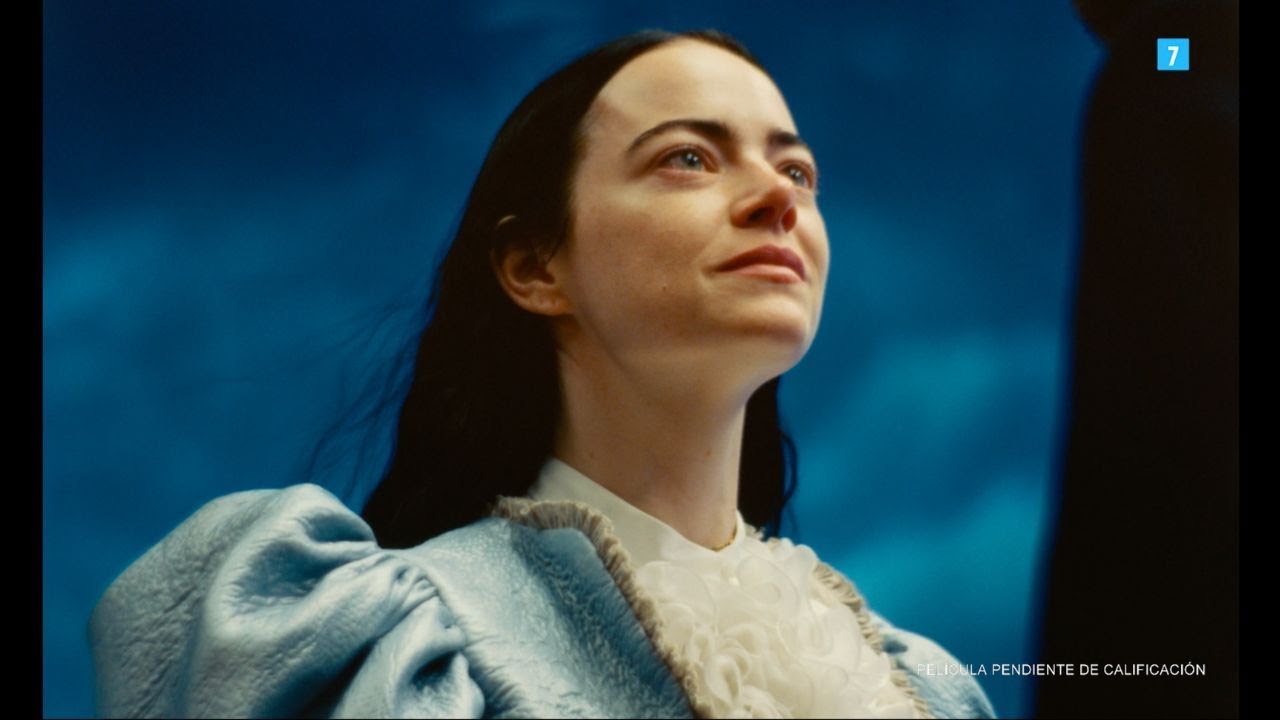
Ending Explained: Poor Things
Ficha de Daños Colaterales en Sala
Certificado de impacto psicofísico emitido por Lúa Ácida
Ni un solo parpadeo voluntario. El asiento, inusualmente cómodo.
Ninguna comprobación del tiempo. Se agradece la rareza.
Ninguna. Guarda el café para la sesión siguiente.
"No hubo. La coherencia se mantuvo hasta el último fotograma."
💬 El Veredicto de la Comunidad
¿Qué te ha parecido la película? Deja tu nota de 0 a 10 para contrastarla con el análisis de la redacción.
Aún no has votado
📢 ¿Te ha gustado el ácido?
Comparte esta crítica con tus amigos cinéfilos o desata la polémica en redes.
⚡ THE CINEMATIC VENOM YOUR INBOX CRAVES
No sugarcoated ratings, no corporate fluff. Subscribe for our uncensored weekly analysis or join the private Telegram for press previews, poll clashes, and instant alerts.
Alertas de estrenos en 1 segundo, encuestas en caliente y audios al salir de pases de prensa.
Recibe la dosis semanal en tu mail + regalo inmediato del PDF con 50 joyas ocultas de culto.
Related Reviews
Recommended autopsies for demanding film buffs.
 🔥 Fusión Nuclear9.0
*Dogtooth (2009): The Instruction Manual for Turning Your Kids Into Lifetime-Guaranteed Automatons*
⚡Del mismo director (Yorgos Lanthimos): analiza la evolución o degradación de su estilo.
Yorgos Lanthimos bursts onto the global cinema scene with a psychological horror satire about a father who keeps his three children isolated from the world using made-up words.
 🔥 Fusión Nuclear8.9
*The Killing of a Sacred Deer: Quantum Greek Tragedy Served on a Sterile Hospital Platter*
⚡Del mismo director (Yorgos Lanthimos): analiza la evolución o degradación de su estilo.
Yorgos Lanthimos takes Euripides' classic myth and injects it with an unrelenting clinical nightmare, where a surgeon’s guilt unleashes an unbearable physical curse.
 🔥 Fusión Nuclear8.6
*The Lobster: The Ultimate Dystopia on Forced Pairing and Mutant Love*
⚡Del mismo director (Yorgos Lanthimos): analiza la evolución o degradación de su estilo.
Yorgos Lanthimos makes his English-language debut with a razor-sharp black comedy satire about a fascist hotel where singles must find a partner in 45 days—or be turned into animals.
Editorial Ecosystem
Cinephile connections, archive interviews and related analyses.
🎞️ In Claqueta Cinematheque1
💬 Debate Cinéfilo & Autopsia de Lectores
0 veredictos¿Discrepas con nuestra nota? ¿Es una obra maestra o veneno puro? Deja tu veredicto abajo sin necesidad de registro.


Aún nadie ha dejado su veredicto para esta película.
Sé el primero en clavarle el colmillo rellenando el formulario de arriba.