Dogtooth (2009) — The Instruction Manual for Turning Your Kids Into Lifetime-Guaranteed Automatons
Yorgos Lanthimos bursts onto the global cinema scene with a psychological horror satire about a father who keeps his three children isolated from the world using made-up words.

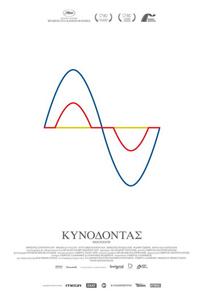

Dogtooth (2009): The Instruction Manual for Turning Your Kids Into Lifetime-Guaranteed Automatons
In the grand tradition of Claqueta Ácida, where we’ve dissected everything from Jim Jones cults to Texas families who mistake love for a chainsaw, comes Dogtooth, the magnum opus of Yorgos Lanthimos—a director who doesn’t make films but rather operant conditioning experiments with humans as test subjects. If you thought the worst family hell was Thanksgiving with your drunk uncles, brace yourself to discover that, by comparison, your childhood was a paradise of freedom and human rights. Here, the only right that exists is the father’s right to rewrite reality with linguistic sledgehammers.
The premise is as simple as it is terrifying: a patriarch (Christos Stergioglou, in a role that should’ve earned him an Oscar… or an international restraining order) decides the outside world is so dangerous that the best solution is to lock his three teenage children in a luxury villa with a pool, garden, and a hedge serving as a psychological Berlin Wall. The kids—two sisters (Angeliki Papoulia and Mary Tsoni) and a brother (Hristos Passalis)—have grown up believing that planes flying overhead are toys that fall if they scream loud enough, that cats are bloodthirsty beasts, and that freedom is earned only when a canine tooth falls out (hence the title, Dogtooth, because nothing says "maturity" like losing a tooth in a coming-of-age ritual designed by a madman).
But Lanthimos doesn’t settle for a simple confinement thriller. No, the real horror here isn’t in the invisible bars—it’s in the language. The father and mother (Michele Valley, a woman who plays submission with the natural ease of someone who’s practiced servility since the womb) have redefined the family dictionary: the "sea" is a leather chair, the "highway" is a strong wind, and a "zombie" is a small, adorable vase. Deprived of any external references, the children accept these definitions with the same Pavlovian credulity as a dog salivating at the sound of a bell. Language, that supposedly liberating tool, becomes the most effective instrument of control. Lanthimos doesn’t just show us a dysfunctional family; he forces us to witness the construction of an alternate reality from scratch, with the precision of a Swiss watchmaker and the ethics of a Nazi scientist.
finalExplicado: "El clímax ocurre cuando la hija mayor, tras haber sido golpeada y humillada por el padre, se arranca con unas tijeras de cocina su propio colmillo (canine tooth) para cumplir la condición impuesta por sus padres: solo quien pierda un colmillo puede abandonar la casa y salir al mundo exterior. Simbólicamente, el desenlace es devastador: la “libertad” solo se obtiene mediante la autoinmolación literal y absurda. El colmillo representa la última barrera impuesta por el lenguaje y el control paterno; arrancárselo no es rebelión heroica, sino la aceptación final de que para escapar de un sistema enfermo hay que destruirse a uno mismo según sus reglas. No hay triunfo, solo mutilación consentida. El plano final, con ella sangrando en el maletero del coche, sella que la salida del terrario solo es posible convertida en otra cosa rota."
Behavioral Surgery Without Anesthesia (or Compassion)
What elevates Dogtooth from a mere psychological horror exercise to a masterpiece of auteur cinema is its clinical, ruthless, and mathematically calculated staging. Thimios Bakatakis, Lanthimos’ cinematographer and accomplice in this visual torture, captures the confinement with natural lighting so harsh it seems filtered through the sun of a nuclear desert. The shots are static, symmetrical, and deliberately dispassionate, as if we’re watching a documentary about insects in a terrarium. The characters’ heads are cropped by the frame with the same indifference as a butcher separating a rib from a loin; there’s no room for intimacy, conventional drama, or catharsis. This isn’t cinema—it’s a real-time autopsy of the human psyche.
The actors’ tone is flat, robotic, stripped of any emotion beyond obedience or fear. Angeliki Papoulia, as the eldest daughter, conveys a mix of repressed curiosity and contained desperation that’s more unsettling than any hysterical scream. When, in a pivotal moment, she self-mutilates a canine tooth with kitchen scissors to "earn" her freedom, she doesn’t do it with drama but with the cold determination of an office worker signing a mortgage. It’s an iconic scene, not for its graphic violence, but for its existential horror: freedom isn’t won through heroism but through an act of self-destruction as absurd as it is necessary.
The script, co-written by Lanthimos and Efthymis Filippou, moves forward with the relentlessness of a runaway train. There are no subplots, no conventional comic relief, no secondary characters to humanize the story. Everything is monotonous, repetitive, and claustrophobic, just like the protagonists’ lives. Family games involve seeing who can keep their finger in boiling water the longest (a pastime that makes Monopoly look like an extreme sport), and "lessons" about the outside world are so ridiculous they border on the surreal. At one point, the father explains that "zombies" (those aforementioned vases) can only be defeated by shouting the word "zombie" three times. It’s as if Kafka and the Farrelly brothers had an illegitimate child and raised it in an absurdist lab.
But where Dogtooth truly shines is in its destructive dark humor. Lanthimos doesn’t laugh at his characters; he laughs with them, in the sense that the audience is complicit in their grotesque situation. There’s a scene where the eldest daughter, after being "rewarded" with a night of sex with a security guard (played by an unflappable Passalis), receives lessons on female pleasure from her own mother. It’s so uncomfortable, so ridiculous, and so tragic that you don’t know whether to laugh, cry, or call child protective services. The humor here isn’t relief—it’s a dagger twisting deeper into the wound.
Incest, Violence, and Other Forms of "Family Love"
Lanthimos shows no mercy to his audience. If you expected a conventional dramatic arc, redemption, or even a shred of empathy, Dogtooth will spit in your face and remind you that cinema isn’t a place for cowards. Violence erupts suddenly, sharply, and physically, like a whip crack in the monotony. In one scene, the eldest son beats his sister with a ping-pong paddle until she’s unconscious—not out of sadism, but because it’s what’s expected of him in that moment. There’s no swelling music, no dramatic close-ups; just the sound of the paddle hitting flesh and the ensuing silence, more eloquent than any dialogue.
And then there’s the incest. Yes, you read that right. In an environment where the only sexual references are the parents and the occasional security guard, the siblings turn to the oldest taboo to satisfy their biological urges. But Lanthimos doesn’t film it with voyeurism or sensationalism; he presents it with the same naturalism as a BBC nature documentary showing lions mating. There’s no moral judgment, no condemnation, just the cold observation of how human nature asserts itself even in the most unnatural conditions. It’s as if the director is telling us: "Look, this is what happens when people are deprived of all contact with the outside world. They don’t become saints—they become animals… or something worse."
Cinematic Comparisons: Where Does Dogtooth Fit in the Pantheon of Psychological Horror?
If Dogtooth were a dish, it’d be a psychological haggis: disgusting, fascinating, and impossible to forget. But where does it fit among other films? It’s not a conventional thriller like The Silence of the Lambs (though it shares its obsession with control and manipulation), nor a family drama like American Beauty (though both dismantle the myth of the perfect family). It’s closer to Michael Haneke’s cinema, particularly Funny Games (1997), in its ability to discomfort the audience to unbearable limits, but with an added layer of absurdity reminiscent of the best Buñuel.
There are also echoes of the coldest, most cerebral dystopian sci-fi, like George Lucas’ THX 1138 (1971), where characters live in a world so controlled that freedom is an abstract concept. But while Lucas opts for a futuristic aesthetic, Lanthimos sticks to the domestic, the everyday—and that’s where his genius lies. He doesn’t need spaceships or robots to create a dystopia; a pool, a garden, and a god-complex father are enough.
And, of course, there’s the influence of the Greek Weird Wave, that cinematic movement that emerged in the 2000s in response to the country’s economic and social crisis. Films like Attenberg (2010) by Athina Rachel Tsangari (producer of Dogtooth) or Lanthimos’ own Alps (2011) share that mix of dark humor, surrealism, and social critique. But Dogtooth is, without a doubt, the pinnacle of the genre—the cinematic equivalent of a silk-gloved punch to the gut.
The best
The clinical, dehumanizing staging: Every frame is a reminder that we’re watching an experiment, not a story. The desaturated color palette and static shots turn the film into a PowerPoint* of everyday horror.- The script as a weapon of mass destruction: Lanthimos and Filippou don’t write dialogue—they sculpt linguistic cages. Every word is designed to control, confuse, or destroy.
The worst
Expert-level moral discomfort: If you have a sensitive stomach, Dogtooth* will churn it like a shot of bleach. Incest, violence, and self-mutilation aren’t garnishes—they’re the main course. Deliberately flat and repetitive narrative: This isn’t Breaking Bad*. There are no plot twists, no charismatic characters, no hope. If you’re looking for entertainment, go watch a rom-com and leave auteur cinema to the masochists.The Verdict of Claqueta Ácida (9/10)
Dogtooth isn’t a film—it’s a fogged mirror forcing you to confront your own submission disguised as freedom. Lanthimos builds a domestic dystopia where language is the last bastion of control, and he does it with surgical precision bordering on sadism. If you’ve ever thought your parents were strict, this masterpiece will remind you that, by comparison, yours was a hippie anarchist. It’s not cinema to watch; it’s cinema to suffer, reflect, and possibly seek therapy afterward. But, rest assured, you’ll never forget it. And isn’t that the true purpose of art? 🩸🎬 Tráiler Oficial
Abrir en YouTube
Ending Explained: Dogtooth (2009)
Ficha de Daños Colaterales en Sala
Certificado de impacto psicofísico emitido por Lúa Ácida
Cero bostezos. Pupilas dilatadas y tensión mandibular constante.
Ni una sola mirada al móvil.
Ninguna: la adrenalina cinematográfica es suficiente.
"No aplica. La obra se sostiene sola."
💬 El Veredicto de la Comunidad
¿Qué te ha parecido la película? Deja tu nota de 0 a 10 para contrastarla con el análisis de la redacción.
Aún no has votado
📢 ¿Te ha gustado el ácido?
Comparte esta crítica con tus amigos cinéfilos o desata la polémica en redes.
⚡ THE CINEMATIC VENOM YOUR INBOX CRAVES
No sugarcoated ratings, no corporate fluff. Subscribe for our uncensored weekly analysis or join the private Telegram for press previews, poll clashes, and instant alerts.
Alertas de estrenos en 1 segundo, encuestas en caliente y audios al salir de pases de prensa.
Recibe la dosis semanal en tu mail + regalo inmediato del PDF con 50 joyas ocultas de culto.
Related Reviews
Recommended autopsies for demanding film buffs.
 🔥 Fusión Nuclear8.9
*The Killing of a Sacred Deer: Quantum Greek Tragedy Served on a Sterile Hospital Platter*
⚡Del mismo director (Yorgos Lanthimos): analiza la evolución o degradación de su estilo.
Yorgos Lanthimos takes Euripides' classic myth and injects it with an unrelenting clinical nightmare, where a surgeon’s guilt unleashes an unbearable physical curse.
 🔥 Fusión Nuclear9.2
*Poor Things*: Lanthimos’ Frankenstein Blows Up the Myth with Sex, Color, and Victorian Cynicism
⚡Del mismo director (Yorgos Lanthimos): analiza la evolución o degradación de su estilo.
Yorgos Lanthimos delivers a dazzling, operatic, and hypersexualized steampunk fever dream about the wildest and most entertaining female emancipation in contemporary cinema.
 🔥 Fusión Nuclear8.6
*The Lobster: The Ultimate Dystopia on Forced Pairing and Mutant Love*
⚡Del mismo director (Yorgos Lanthimos): analiza la evolución o degradación de su estilo.
Yorgos Lanthimos makes his English-language debut with a razor-sharp black comedy satire about a fascist hotel where singles must find a partner in 45 days—or be turned into animals.
Editorial Ecosystem
Cinephile connections, archive interviews and related analyses.
🎞️ In Claqueta Cinematheque1
💬 Debate Cinéfilo & Autopsia de Lectores
0 veredictos¿Discrepas con nuestra nota? ¿Es una obra maestra o veneno puro? Deja tu veredicto abajo sin necesidad de registro.


Aún nadie ha dejado su veredicto para esta película.
Sé el primero en clavarle el colmillo rellenando el formulario de arriba.