Never Let Go — Survival Ropes, Forest Paranoia, and the Family Trauma You Can’t Untangle
Alexandre Aja takes a break from his usual gore-fest to trap us in a psychological horror thriller where the only thing between you and the end of the world is a rope—and your sanity.

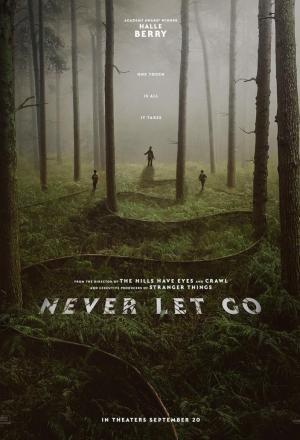

Here at Claqueta Ácida, we’ve survived every kind of cabin-in-the-woods horror imaginable—from the Vachon brothers’ cabins to M. Night Shyamalan’s cute little cabins, where the twist ending always tastes like poisoned candy with cheap artificial sweetener. But the wooden mousetrap Alexandre Aja sets in Never Let Go (2024) stands out for its suffocating austerity and its ability to plant existential doubt in the viewer’s mind with the same efficiency a reality show sows hatred among dysfunctional families. The French filmmaker, known for his love of hungry crocodiles (Crawl), playful gore (High Tension), and that chic slaughterhouse aesthetic that midnight festivals adore, decides to shelve the visceral spectacle here to craft a dark, minimalist fairy tale about inherited family trauma. And he pulls it off—though not without tripping over his own metaphorical ropes along the way.
The premise clings to a literal lifeline with the grace of a castaway hugging a gasoline drum: a courageous mother, Angela (Halle Berry, in a role seemingly written to prove she can carry more weight than her Oscar), and her two young sons, Samuel (Percy Daggs IV, the kid who stares with that mix of innocence and resignation only horror-movie children seem to master) and Nolan (Anthony B. Jenkins, the rebellious teen who reeks of testosterone and skepticism), live isolated in a modest cabin deep in a dense, wild forest. According to Angela, the outside world has been ravaged by a malevolent force, an amorphous, viscous entity she simply calls "The Evil." This Evil, which in another kind of movie would be an H.R. Giger-designed alien or a latex-masked demon, here manifests as warped visions, guttural whispers, and the nagging feeling that if you blink too long, something’s going to grab your ankle. The only way to stay safe is to remain tied to the house’s foundation with thick ropes—never letting go. Yes, like dogs in a luxury kennel, but with more paranoia and fewer treats.
The problem—or the genius, depending on how you look at it—is that as resources dwindle and hunger tightens its grip like a 1990s encyclopedia salesman, Nolan starts questioning whether "The Evil" is real or just the schizophrenic delusion of a mother who’s watched one too many horror movies while breastfeeding. This is where Never Let Go becomes a hall of distorting mirrors, a psychological chess match where the viewer is the pawn who never knows if they’re about to be sacrificed or crowned. Aja, no stranger to playing with ambiguity (just recall The Hills Have Eyes and its ability to turn a desert into a horror theme park), deftly navigates the tension between reality and imagination, between maternal protective instinct and the madness seeping into the cabin’s walls like damp.
finalExplicado: "En el clímax, la madre (Halle Berry) descubre que la “maldición” que les obliga a permanecer atados no es un ente externo, sino una manifestación de su propia locura y del trauma que ella misma ha transmitido a sus hijos. En un arrebato final, intenta matar al niño que aún cree en la bruja, y el otro hijo, para sobrevivir, se ve obligado a cortarla con un hacha, rompiendo literalmente y simbólicamente la cuerda que los unía. El desenlace significa que el verdadero monstruo nunca estuvo en el bosque: era el vínculo tóxico, la paranoia y el abuso disfrazado de protección materna. Al cortar la cuerda, el superviviente elige la realidad dolorosa frente a la ilusión protectora, liberándose de un trauma generacional que convertía el amor en una cadena mortal."
The Forest as a Labyrinth of Distrust: When Nature is Your Worst Enemy
What works exceptionally well in Never Let Go is its exquisite handling of space and, above all, Maxime Alexandre’s cinematography (Aja’s frequent collaborator, responsible for that color palette oscillating between rotten green and sepia brown, as if the world had been filtered through a 1970s Instagram with bad reception). The Vancouver forest, which in other hands would be an idyllic setting for an organic yogurt commercial, here becomes a Gothic labyrinth teeming with threatening shadows, branches that look like witch claws, and a clammy fog that devours the children’s silhouettes like a Lovecraftian monster with overdue hunger. Alexandre composes shots that are true postcards of rural horror: twisted trees resembling agonizing human figures, roots emerging from the ground like a corpse’s veins, and that sickly light filtering through the leaves as if the sun had gone on an indefinite strike.
But where the film truly shines is in its use of ropes as a narrative and visual element. These aren’t just survival props; they obsessively structure the framing, forcing the shots to constantly play with the physical tension of the taut cable. There are moments when the camera gets so close to the ropes you can almost feel their rough texture on your own hands, as if the viewer were also tied to that claustrophobic fate. Aja and Alexandre turn the off-screen into another character: what isn’t seen—what lurks beyond the rope’s limits—is just as important as what is. It’s a masterclass in how terror can arise from suggestion, not cheap scares. Though, it must be said, there are a couple of jump scares that feel contractually obligated, as if the studio demanded a minimum of startles to keep investors from panicking.
Aja’s direction is, in this regard, flawless. The Frenchman proves he knows how to handle suspense and moral ambiguity like few others, forcing the viewer to share Nolan’s desperation and wonder, alongside him, whether Angela’s disturbing visions (like her dead mother with a serpent’s tongue, a detail straight out of a Zdzisław Beksiński painting) are real or the product of mental confinement and hunger. There’s one scene in particular—where Angela sees her son Samuel momentarily transform into a nightmarish creature—that’s as unsettling as it is heartbreaking. It’s not just a practical effects trick (though those are well-executed) but a visual metaphor for how trauma distorts reality. Aja doesn’t just want to scare; he wants you to feel the weight of doubt, the corrosion of distrust, and he achieves it with an economy of means that’s admirable in an era where horror is often confused with CGI excess and 5.1 screams.
The Cabin as a Prison: When Home is a Trap
However, Never Let Go isn’t without its problems, the most glaring being its narrative fatigue in the second act. For eighty central minutes, the film settles into a repetitive dynamic that, while effective in building atmosphere, eventually exhausts the viewer. The cabin scenes—where Angela drills her children on survival rules, where Nolan questions those rules, where Samuel obeys like an automaton—unfold with a liturgical cadence. It’s as if Aja decided terror doesn’t need action, just ritual, and in his quest to create a sense of oppressive monotony, the film loses steam. It’s not that the pacing is slow (it is), but it becomes predictable in its structure: every trip into the woods is an ordeal, every return to the cabin is a shallow breath, and every family argument is a déjà vu that makes you glance at the clock, hoping time will speed up.
This repetition wouldn’t be so problematic if Never Let Go didn’t, in its eagerness to maintain ambiguity, forget to develop elements that could have enriched the plot. For instance, what about the father? It’s mentioned in passing that Angela killed him in a fit of madness (or protection, depending on perspective), but this detail, which could be key to understanding the protagonist’s psyche, is relegated to the background. The lack of exploration of The Evil itself is also frustrating: we know it’s a corrupting force that feeds on fear and can mimic voices and faces, but we never learn its origin or purpose. In this sense, the film drinks directly from The Babadook (2014), where the monster was a manifestation of unresolved grief, but while Jennifer Kent made the audience empathize with her protagonist’s anguish, Aja stops halfway, leaving more questions than answers.
And then there’s the ending, that moment when all psychological horror films decide whether they’ll be remembered as masterpieces or pretentious stylistic exercises. Never Let Go opts for a poetic, ambiguous finale that, for many, will be deeply frustrating. Without spoilers, let’s just say the resolution plays with the idea that the real horror isn’t what lurks in the woods but what we carry inside. It’s a commendable message, no doubt, but also a bit overdone in contemporary horror (see Hereditary, The Witch, or It Comes at Night). Those cinephiles expecting logical explanations, tidy conclusions, or at least a shred of narrative coherence will leave the theater scratching their heads, wondering if what they just saw was a psychological horror masterpiece or a particularly cryptic episode of The Twilight Zone. The answer, as almost always in Aja’s cinema, lies somewhere in between.
Performances: When Suffering Becomes Art
If anything saves Never Let Go from the pit of tedium, it’s undoubtedly its trio of leads. Halle Berry delivers a colossal physical and emotional performance, proving once again she’s one of her generation’s most underrated actresses. Angela is a complex character, a woman oscillating between maternal tenderness and absolute paranoia, and Berry conveys that duality with an intensity that borders on uncomfortable. There are scenes where her gaze seems to hold all the world’s pain, and others where her voice cracks with a fragility that breaks your heart. It’s not an easy role: Angela could have easily fallen into the stereotype of the hysterical mother, but Berry gives her nuances, humanizing her even in her darkest moments.
Alongside her, the young Anthony B. Jenkins (Nolan) and Percy Daggs IV (Samuel) rise to the occasion. Jenkins, in particular, shines as the rebellious teen questioning his mother’s imposed reality. His performance is naturalistic, avoiding the overacting that sometimes plagues young actors in horror films. Nolan is the audience’s mirror: his skepticism, frustration, and fear are ours, and Jenkins conveys that vulnerability without slipping into melodrama. Meanwhile, Daggs IV portrays Samuel as a child trapped in a limbo between innocence and trauma, a character that constantly reminds us what’s at stake.
Soundtrack and Sound Design: Silence as a Lethal Weapon
One of Never Let Go’s most underrated aspects is its sound design and Robin Coudert’s score. Aja and his team understand that in a film where terror arises from what isn’t seen, sound is just as important as the image. The soundtrack is minimalist, almost skeletal, with dissonant strings and percussion that sound like a heart on the verge of a heart attack. But where it truly excels is in its use of silence. There are entire scenes where the only sounds are the creaking of branches, the whisper of the wind, or the characters’ ragged breathing. It’s an oppressive silence, charged with tension, that forces you to strain your ears and wonder what the hell is happening off-screen.
The sound design also plays a crucial role in creating the atmosphere. Distorted whispers, muffled screams, and those guttural noises that seem to come from the earth’s bowels are so well integrated that, more than once, you’ll glance over your shoulder to make sure nothing’s lurking in your living room. It’s a reminder that sometimes the most effective terror isn’t the kind that makes you jump out of your seat but the kind that lodges in your mind like a splinter.
Film Buff Comparisons: Where Does Never Let Go Fit in the Horror Pantheon?
Never Let Go doesn’t exist in a vacuum, and it would be unfair not to place it within the context of contemporary psychological horror. In many ways, the film draws from the same well as Robert Eggers’ The Witch (2015), particularly in its use of folklore and religion as a backdrop for a story of family paranoia. However, while Eggers dives into 17th-century Puritanism with almost anthropological rigor, Aja opts for a more intuitive approach, less concerned with historical verisimilitude and more interested in the sensory experience of terror.
There are also echoes of The Babadook in how the monster manifests as a projection of the protagonist’s inner fears, though Aja avoids Kent’s explicit symbolism in favor of a more poetic ambiguity. And, of course, there’s the influence of It Comes at Night (2017), Trey Edward Shults’ portrayal of an isolated family disintegrating under the weight of distrust. But while Shults focuses on family dynamics with an almost theatrical approach, Aja prefers visual suspense, the terror of what lurks beyond the door.
If Never Let Go has a close relative in its director’s filmography, it’s The Hills Have Eyes (2006), but with a key difference: while that film’s horror stemmed from explicit violence and cannibalism, here the terror is subtler, more intimate. It’s as if Aja took his remake’s premise and filtered it through Bergman, leaving only the essence of existential dread.
Conclusion: A Film That Clings to You (But Not Always Tightly Enough)
Never Let Go is a thoroughly respectable psychological horror thriller and an interesting detour in Alexandre Aja’s filmography—a director who’s proven he’s much more than the king of brainless gore. The film stands out for its formal solidity, the rawness of its setting, and, above all, a ferocious Halle Berry who holds the family suspense on her tormented shoulders like Atlas bearing the weight of the world. It’s a film that grips you, makes you doubt, forces you to question what you see and feel. Yet it’s also a film that stumbles over its own limitations, gets lost in its labyrinth of ambiguity, and, in its eagerness to be poetic, sometimes forgets that horror also needs a minimum of coherence to work.
It’s not a masterpiece, but neither is it a failure. At its best, it’s a stimulating cinematic experience—one that leaves you with more questions than answers and makes you eye the climbing ropes in your garage with metaphysical suspicion before heading into the woods. Is The Evil real? Or just a product of our sick minds? Never Let Go won’t give you an answer, but it will leave you with the unsettling feeling that sometimes the only thing saving us is not letting go of the rope. Though, of course, you can always wonder: what if the rope is the trap?
The best
- The atmospheric staging: Maxime Alexandre turns Vancouver’s forest into a Zdzisław Beksiński painting with fog and ropes, proving that terror doesn’t need digital effects to be effective.
- The lead trio: Halle Berry delivers one of those performances that leaves you exhausted, as if you’ve run an emotional marathon, and the kids aren’t far behind—especially Anthony B. Jenkins, who steals scenes with the gaze of a teen who’s seen too much.
The worst
Mid-film pacing slump: Eighty minutes of repetitive family dynamics might make even the most patient viewer wonder if "The Evil"* isn’t actually the screenwriter.- Frustrating resolution: If you were hoping for an ending that ties up all the loose ends, prepare to leave the theater with more doubts than when you walked in.
The Verdict of Claqueta Ácida
Never Let Go is a film that clings to you like a rope around your wrist—sometimes too tight, sometimes too loose, but never letting you forget it’s there. Aja trades his usual gore for psychological terror and, for the most part, succeeds, though he occasionally gets tangled in his own metaphors. Halle Berry’s performance alone is worth the price of admission, but don’t expect a tidy resolution. This is a film for those who like their horror with a side of existential dread and a sprinkle of frustration. 6.5/10—a solid, if uneven, entry in the "cabin-in-the-woods" subgenre that proves Aja can do more than just splatter. Just don’t let go of your expectations… or you might end up disappointed.🎬 Tráiler Oficial
Abrir en YouTube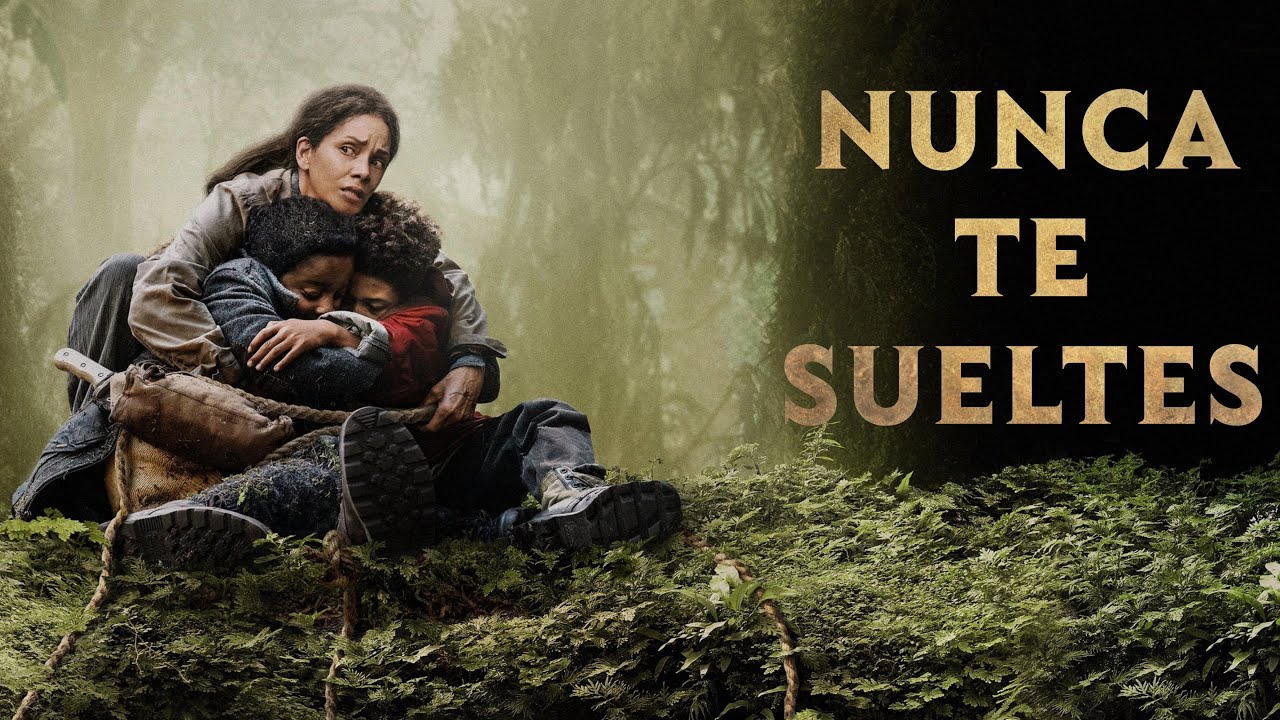
Ending Explained: Never Let Go
Ficha de Daños Colaterales en Sala
Certificado de impacto psicofísico emitido por Lúa Ácida
3 amagos en el tramo intermedio; pestañeo pesado en las transiciones más innecesarias.
Minuto 55 y minuto 82 (comprobando cuánto quedaba de suplicio).
1 espressos para no dejarse vencer por la mediocridad cómoda.
"A mitad del segundo acto cuando la subtrama secundaria empezó a pesar más de lo que aportaba."
💬 El Veredicto de la Comunidad
¿Qué te ha parecido la película? Deja tu nota de 0 a 10 para contrastarla con el análisis de la redacción.
Aún no has votado
📢 ¿Te ha gustado el ácido?
Comparte esta crítica con tus amigos cinéfilos o desata la polémica en redes.
⚡ THE CINEMATIC VENOM YOUR INBOX CRAVES
No sugarcoated ratings, no corporate fluff. Subscribe for our uncensored weekly analysis or join the private Telegram for press previews, poll clashes, and instant alerts.
Alertas de estrenos en 1 segundo, encuestas en caliente y audios al salir de pases de prensa.
Recibe la dosis semanal en tu mail + regalo inmediato del PDF con 50 joyas ocultas de culto.
Related Reviews
Recommended autopsies for demanding film buffs.
 🔥 Fusión Nuclear8.5
*High Tension (Haute Tension): The Brutal Birth of the New French Extremism – Or How to Turn Flesh into Poetry with a Machete*
⚡Del mismo director (Alexandre Aja): analiza la evolución o degradación de su estilo.
Alexandre Aja shocked global screens with a relentless rural bloodbath, redefined by breakneck pacing and a divisive twist that splits serious cinephiles right down the middle.
 🔥 Fusión Nuclear8.0
*Crawl (2019): Giant Gators, Claustrophobic Floods, and a Lean, Mean Survival Machine*
⚡Del mismo director (Alexandre Aja): analiza la evolución o degradación de su estilo.
Alexandre Aja delivers a flawless B-movie rollercoaster about a swimmer trapped in a flooded basement during a Category 5 hurricane—with Florida’s oversized gators as the cherry on top.
 🔥 Fusión Nuclear8.8
*The Hills Have Eyes: The Miracle of a Remake That Outshone the Classic with Radioactive Rage*
⚡Del mismo director (Alexandre Aja): analiza la evolución o degradación de su estilo.
Alexandre Aja takes Wes Craven’s classic and transforms it into a savage, blood-soaked, and unbearable nightmare of desert survival and mutant cannibalism.
Editorial Ecosystem
Cinephile connections, archive interviews and related analyses.
💬 Debate Cinéfilo & Autopsia de Lectores
0 veredictos¿Discrepas con nuestra nota? ¿Es una obra maestra o veneno puro? Deja tu veredicto abajo sin necesidad de registro.

Aún nadie ha dejado su veredicto para esta película.
Sé el primero en clavarle el colmillo rellenando el formulario de arriba.