Vox Lux — The Price of Fame – The Glamour’s Dark Backstage
A pop star’s rise to fame in Vox Lux: The Price of Fame. But at what cost?


I left the theater feeling like Brady Corbet had tried to strangle me with a Britney Spears cassette tape. No metaphor. Vox Lux isn’t a movie—it’s a botched exorcism where the director seems convinced that screaming “fame!” while Natalie Portman writhes onstage is enough to snag an Oscar. Spoiler: it isn’t. Corbet, that wunderkind who morphed from Mysterious Skin actor to helming pretentious duds like The Childhood of a Leader, stumbles into the same trap again: mistaking solemnity for depth. The result? A A Star Is Born and Black Swan mashup, minus Bradley Cooper’s charm or Darren Aronofsky’s genius. Just a heap of murky scenes, a script that thinks it’s smarter than it is, and Natalie Portman—who, yet again, proves she’ll do anything… except save this mess.
The premise is tantalizing: pop star Celeste, whose life is scarred by national tragedy (a school shooting, because in American auteur cinema, trauma is non-negotiable). The film ping-pongs between her childhood, adolescence, and adulthood, as if Corbet binged Moonlight and Bohemian Rhapsody in one weekend and decided he could Frankenstein them together-la-cueva-de-los-espejos-rotos" class="text-amber-400 font-black hover:text-amber-300 transition underline decoration-amber-500/40 hover:decoration-amber-300" title="[6.5/10 ⚡ Ácido Cítrico] Lee nuestra autopsia de «Together»" data-acid-interlink="together-la-cueva-de-los-espejos-rotos">together. The problem? While Barry Jenkins wields time like an emotional river and Bryan Singer (yes, that Bryan Singer) at least knew how to stage a concert, Corbet hacks between scenes with all the finesse of a lumberjack. One moment, young Celeste (Raffey Cassidy, an actress who deserves better) sings at a funeral with angelic purity, then—smash cut—adult Celeste (Portman) snorts coke like it’s powdered sugar. The message? Fame corrupts. Groundbreaking. If Corbet had to pay royalties for every showbiz cliché he regurgitates, this film would’ve cost $200 million.
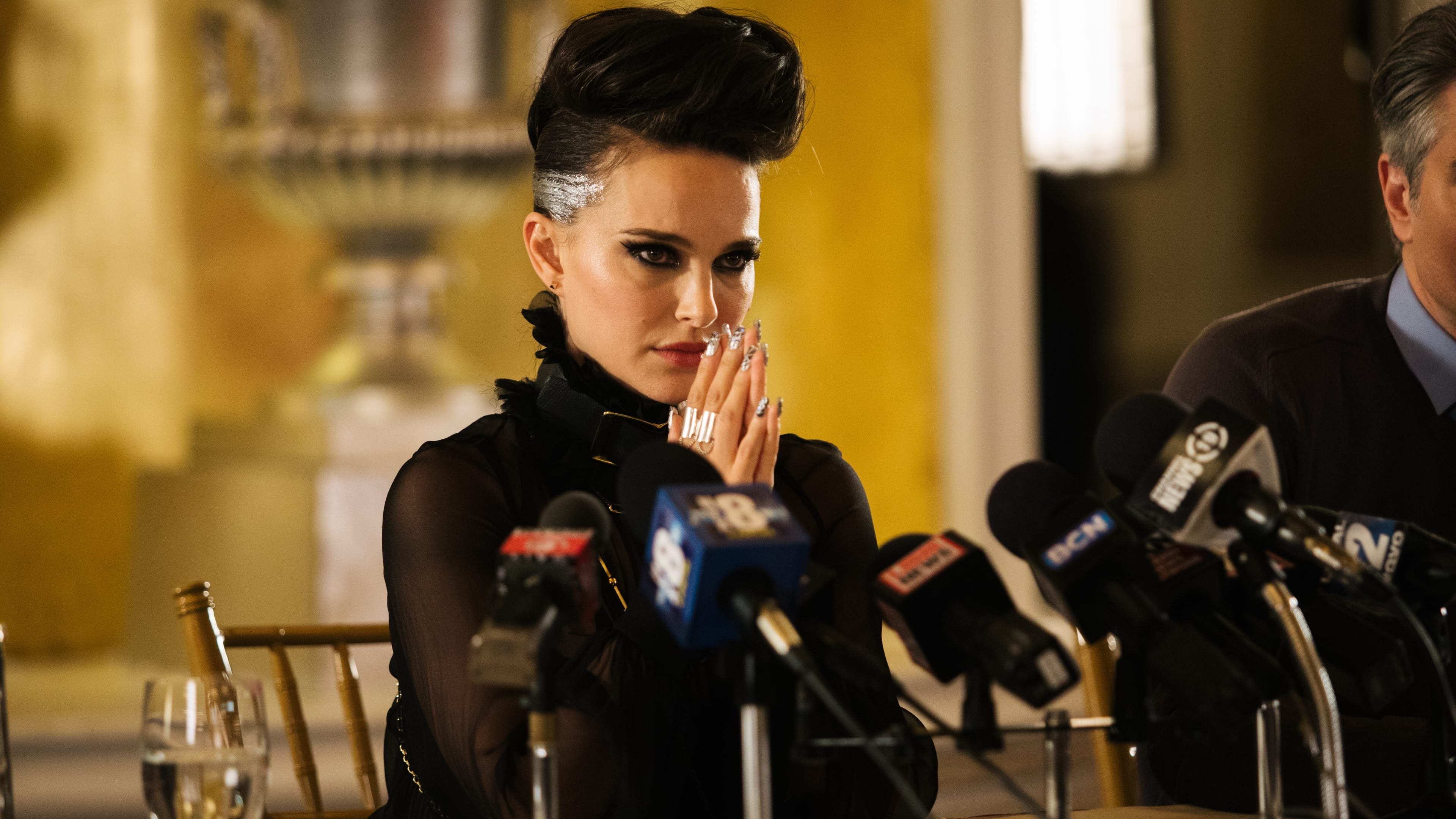
But let’s talk about Natalie Portman, because she’s the only thing keeping Vox Lux from being an extended Behind the Music episode. The woman has spent years proving she can play a neurotic ballerina (Black Swan), a child assassin (Léon), or a scientist in Annihilation. Here, she devours the screen (literally, in a scene where she chews gum like it’s her final act of defiance). Her Celeste is a cocktail of vulnerability and ferocity—a woman who built an empire on pain but remains, at heart, that little girl singing at a funeral. There’s a single-take shot where Portman stalks down a hotel hallway, the camera trailing her like a BBC documentary, and for a second, the movie almost works. Almost. Because then Corbet forces her to belt a ludicrous Sia-penned pop song (yes, that Sia) that sounds like Lady Gaga and Lana Del Rey’s lovechild birthed in a lab of depressive synths. The disconnect between Portman’s performance and the music is so jarring it feels like an inside joke between Corbet and his therapist.

Direction and Mise-en-Scène: The Art of Making Pretentious Look Profound
Brady Corbet directs Vox Lux like he’s solving a Rubik’s Cube blindfolded. Every frame screams, “Look how artsy I am!” but ends up whispering, “Look how little I understand pacing.” There’s a scene where the camera spins 360 degrees around Celeste mid-song, as if Corbet watched Enter the Void once and decided that was “auteur cinema.” The issue? While Gaspar Noé used that trick to plunge you into a psychedelic trip, Corbet deploys it to keep you awake during interminable monologues about the music industry. Lol Crawley’s cinematography—supposed to be the film’s saving grace—oscillates between breathtaking and insufferable. Some shots are drenched in shadows, evoking Roger Deakins at his best, then—bam—you’re hit with neon-lit scenes straight out of a 2000s music video, like a Tron remake gone wrong. It’s as if Corbet and Crawley couldn’t decide whether they wanted to make The Neon Demon or Manchester by the Sea.
The editing is another disaster. The film leaps between three timelines (Celeste’s childhood, teens, and adulthood) with zero logic, like Corbet’s playing Memory with scenes, forgetting he already showed that part. Then there’s Willem Dafoe’s narration, delivered like he’s reading a term paper on fame. “Fame is a monster that devours its children,” he intones, and you’re left thinking, Yes, Willem, but why do you sound like you’re reciting a vegan restaurant menu? Dafoe, an actor who’s brought some of cinema’s most iconic characters to life (The Lighthouse, Spider-Man), here feels like a bored lit professor. His narration adds nothing—just hammers the obvious with all the subtlety of a sledgehammer.
Performances: Natalie Portman Saves the Furniture (and Little Else)
Natalie Portman is why Vox Lux doesn’t sink like the Titanic. Her performance is raw, visceral, and at times, excruciating to watch. There’s a scene where Celeste—drunk, high, and seething—argues with her sister (Stacy Martin, doing her best with a plot device character), and Portman channels so much pain and rage you almost forget you’re watching a movie about a pop star. Almost. Because then the film reminds you—oh right, this is a movie about a pop star—and hits you with a musical number straight out of Glee directed by David Lynch. Raffey Cassidy, as young Celeste, is also stellar. She nails a scene singing Wrapped Up (yes, that song that sounds like Sia wrote a lullaby for a serial killer) with an innocence that clashes brilliantly with the lyrics’ darkness. It’s the only moment the film seems to know what it’s doing.
The rest of the cast? Forgettable at best. Stacy Martin, who’s dazzled in films like Nymphomaniac, here follows the script like a robot. Jude Law, in a supporting role as Celeste’s manager, seems to be in a different movie entirely. His performance is so flat you wonder if Corbet paid him in Bitcoin and regretted it halfway through. And Jennifer Ehle, playing Celeste’s mother, is so generic you could swap her for a mannequin and no one would notice. Corbet’s script (co-written with Mona Fastvold) has the emotional depth of a Donald Trump tweet: it repeats the same themes ad nauseam (fame is bad, art is suffering, family is messy) without adding anything new. It’s like Corbet binged All About Eve and The Devil Wears Prada and decided he knew everything about showbiz.
Technical Aspects: When Style Can’t Save the Substance
Lol Crawley’s cinematography is, without doubt, Vox Lux’s highlight. Some shots are pure visual poetry: young Celeste singing at a candlelit funeral; adult Celeste in a dressing room, neon bleeding through the curtains; that moment the camera pulls back from Portman mid-concert, as if the world pauses to listen. Crawley captures fame’s duality—beauty and ugliness, light and dark. But even his work is undermined by Corbet’s visual inconsistency. Scenes feel cribbed from a psychological thriller, an indie drama, or a 90s music video. It’s like Corbet tossed all his favorite styles into a blender and served the mess unstrained.
The music, by Sia and Scott Walker (yes, that Scott Walker), is another sore spot. Sia’s songs sound exactly like what they are: generic pop written for a movie. They lack the spark or originality of, say, A Star Is Born’s tracks. Then there’s Walker’s score, which sounds like a broken fridge recorded and mixed with Gregorian chants. At times, the music competes with dialogue, as if Corbet couldn’t decide between a musical and a drama. The sound design, however, is flawless. The whistle of bullets in the shooting scene, the echo of concerts, Celeste’s ragged breathing in intimate moments—it’s all designed to immerse you. Shame the world it builds is so muddled.
Amy Silver’s production design deserves a nod. From Celeste’s apartment to her stadium stages, every set drips with details reflecting her psyche: abstract art, minimalist furniture, outfits that scream Paris Fashion Week. But—again—coherence is MIA. Scenes feel plucked from an Amy Winehouse biopic, a 70s drama, or an episode of Euphoria. It’s as if Corbet wanted to make a film about every facet of fame but couldn’t pick one.
The best
Natalie Portman’s performance: It’s not just that Portman slips into Celeste’s skin—she seems to live* inside her. There’s a scene where she’s drunk and furious, arguing with her sister, and the rage she channels feels so real it hurts. This is the kind of acting that makes you forget you’re watching a movie.- Lol Crawley’s cinematography: Crawley captures fame’s essence in images—light and dark, beauty and decay. Some shots are pure visual poetry, like that moment the camera pulls back from Celeste mid-concert, as if the world stops to listen.
- The chemistry between Natalie Portman and Raffey Cassidy: The bond between adult and young Celeste is palpable. Cassidy, in particular, shines as the innocent version of Celeste, and her funeral singing scene is one of the film’s most moving moments.
- The sound design: While the music falters, the sound design is impeccable. Concert echoes, bullet whistles, Celeste’s breathing—it all pulls you into the film’s world.
The worst
- The script by Brady Corbet and Mona Fastvold: Pretentious, repetitive, and shallow. Corbet acts like screaming “fame!” repeatedly makes a film deep, but it just proves he has nothing new to say.
- Willem Dafoe’s narrator: Dafoe is a phenomenal actor, but here his narration sounds like a college essay. It adds nothing, just underlines the obvious with all the subtlety of a sledgehammer.
- Sia’s songs: They’re generic, like Sia wrote pop music for a movie without bothering to tailor it to Celeste. They lack the spark or originality to elevate the musical scenes.
- The supporting cast: Flat, generic, and in some cases, utterly forgettable. Stacy Martin, Jude Law, and Jennifer Ehle do their best, but the script gives them nothing to work with.
- The visual inconsistency: Corbet doesn’t seem to know what kind of film he’s making. Scenes feel cribbed from a psychological thriller, an indie drama, or a 90s music video. The result is a fragmented, confusing mess.
The Verdict of Claqueta Ácida
Vox Lux: The Price of Fame is like a gourmet cake that tastes like cardboard: it looks impressive at first glance, but the moment you bite in, you realize something’s off. Brady Corbet has ambition, sure, but ambition without direction is like a car without a steering wheel—you’re speeding, but you’ve got no idea where you’re headed. Natalie Portman salvages what she can with a performance bordering on obsessive, and Lol Crawley proves once again he’s one of this generation’s most talented cinematographers. But the script is a pretentious disaster, the pacing is erratic, and Sia’s songs sound like they were composed in a beginner’s pop workshop. If you’re looking for a fame flick that isn’t A Star Is Born, maybe Vox Lux will pique your interest. If you’re after real cinema, keep searching. 💀 tweets_alternativos:- "La música es el reflejo del alma. Pero, ¿qué sucede cuando el alma se vuelve oscura? Descubre en 'Vox Lux: El precio de la fama'. @BradyCorbet"
- "Natalie Portman brilla en 'Vox Lux: El precio de la fama', una historia de ascenso y caída en el mundo del pop. @NataliePortman"
- "La fama tiene un precio. A veces, es demasiado alto. 'Vox Lux: El precio de la fama' te muestra el lado menos glamoroso de la gloria. @AndrewLaurenProd"
🎬 Tráiler Oficial
Abrir en YouTube
Theater Collateral Damage Report
Psychophysical impact certificate issued by Héctor Veneno
3 amagos en el tramo intermedio; pestañeo pesado en las transiciones más innecesarias.
Minuto 51 y minuto 80 (comprobando cuánto quedaba de suplicio).
2 espresso para no dejarse vencer por la mediocridad cómoda.
"A mitad del segundo acto cuando la subtrama secundaria empezó a pesar más de lo que aportaba."
💬 Community Verdict
What did you think of the film? Rate it from 0 to 10 to compare it with the editorial review.
You haven't voted yet
📢 ¿Te ha gustado el ácido?
Comparte esta crítica con tus amigos cinéfilos o desata la polémica en redes.
⚡ THE CINEMATIC VENOM YOUR INBOX CRAVES
No sugarcoated ratings, no corporate fluff. Subscribe for our uncensored weekly analysis or join the private Telegram for press previews, poll clashes, and instant alerts.
Alertas de estrenos en 1 segundo, encuestas en caliente y audios al salir de pases de prensa.
Recibe la dosis semanal en tu mail + regalo inmediato del PDF con 50 joyas ocultas de culto.
Related Reviews
Recommended autopsies for demanding film buffs.
 🔥 Fusión Nuclear8.2
*The Rest Return in Peace (2024): When the Dead Come Back to Remind Us Hell Isn’t Them—It’s Our Inability to Let Go*
⚡Hermana de saga: otro capítulo diseccionado con rigor forense.
Thea Hvistendahl delivers a stunning, melancholic, and agonizing reimagining of the zombie myth, centered on grief and the existential torment of loss.
 ⚡ Ácido Cítrico7.5
*The Divide: A Luxury Cruise Straight to the Sewer of the Human Soul*
⚡Hermana de saga: otro capítulo diseccionado con rigor forense.
Xavier Gens locks us in a post-apocalyptic bunker to deliver a suffocating, toxic, and painfully nihilistic psychological study.
 🔥 Fusión Nuclear9.0
A Poet: The Miracle No One Saw Coming (But We All Deserved)
⚡Hermana de saga: otro capítulo diseccionado con rigor forense.
Simón Mesa Soto delivers an unsettling masterpiece about poetry, aging, and failure. Painfully beautiful. 9.0/10.
Editorial Ecosystem
Cinephile connections, archive interviews and related analyses.
💬 Debate Cinéfilo & Autopsia de Lectores
0 veredictos¿Discrepas con nuestra nota? ¿Es una obra maestra o veneno puro? Deja tu veredicto abajo sin necesidad de registro.


Aún nadie ha dejado su veredicto para esta película.
Sé el primero en clavarle el colmillo rellenando el formulario de arriba.