Pretty and Deadly — When the Tutu Becomes a Murder Weapon
A troupe of ballerinas trapped in a remote inn discovers the real horror isn’t the killers—it’s their own choreography. A critique laced with venom and glitter.

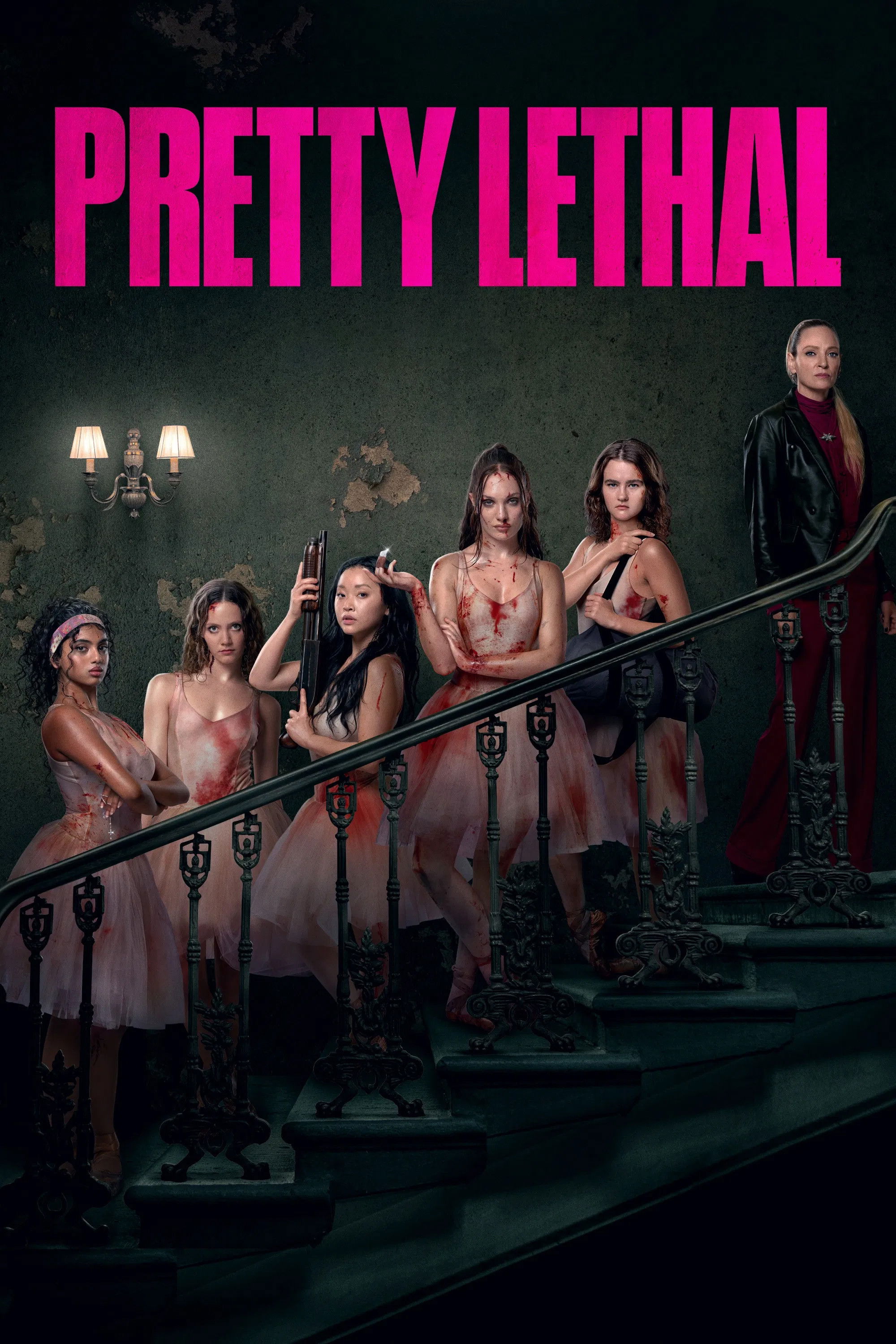

The bus breaks down in the middle of nowhere, the GPS spits out nightmare coordinates, and the ballerinas step out in their pointe shoes as if they’re heading to rehearsal, not a massacre. Pretty and Deadly arrives in 2026 with the promise of blending slasher horror with the world of ballet—a cocktail that sounds as absurd as a Saw set in a conservatory. But here it is, directed by Vicky Jewson, the same mind behind Close (2019), a spy thriller that came and went without a trace. Jewson seems obsessed with women in extreme situations, though this time she’s opted for a more camp than cerebral approach. The result is a film that doesn’t know if it wants to be an homage to ‘80s horror or an unintentional satire of itself.
The script by Kate Freund—her second feature—plays with the premise of And Then There Were None but with tutus. A group of ballerinas en route to a competition find themselves trapped in a remote inn where someone (or something) starts hunting them down one by one. The synopsis sounds like The Cabin in the Woods without the meta-commentary, but Freund tries to add depth with dialogue about competitive pressure and the sacrifices of art. The problem is these moments clash violently with clumsy chase scenes, where the ballerinas trip over their own pointe shoes instead of fleeing with grace. It’s like watching a swan trying to escape a crocodile: there’s elegance in the attempt, but the result is more comedic than terrifying.
Filming took place in Hungary, a country that’s served as the backdrop for more ambitious productions like The Witch or Blade Runner 2049. Here, however, the snowy landscapes and rustic inn interiors look like they were lifted from a Lifetime TV movie. Bridger Nielson, the cinematographer, tries to give the mise-en-scène a gothic air, but the flat lighting and predictable framing end up suffocating any atmosphere. There’s one shot in particular, where a ballerina runs down a hallway bathed in pink and blue neon lights, that looks more like a Dua Lipa music video than a horror scene. It’s pretty, yes, but also deeply ridiculous.
The cast is led by Maddie Ziegler, the former Dance Moms star and Sia’s muse, whose leap into horror cinema seemed inevitable after her role in The Book of Henry (2017). Ziegler has the physical presence of a professional ballerina—because she is one—but her acting chops are as limited as the film’s budget. Lana Condor, meanwhile, tries to lend depth to her character with a mix of determination and vulnerability, though her dialogue sometimes sounds like it was written by a fanfiction algorithm. The real discovery here is Millicent Simmonds, the deaf actress who already shone in A Quiet Place (2018). Simmonds has no lines, but her performance is pure physical expression: every gesture, every glance, conveys more terror than all the script’s dialogue combined.
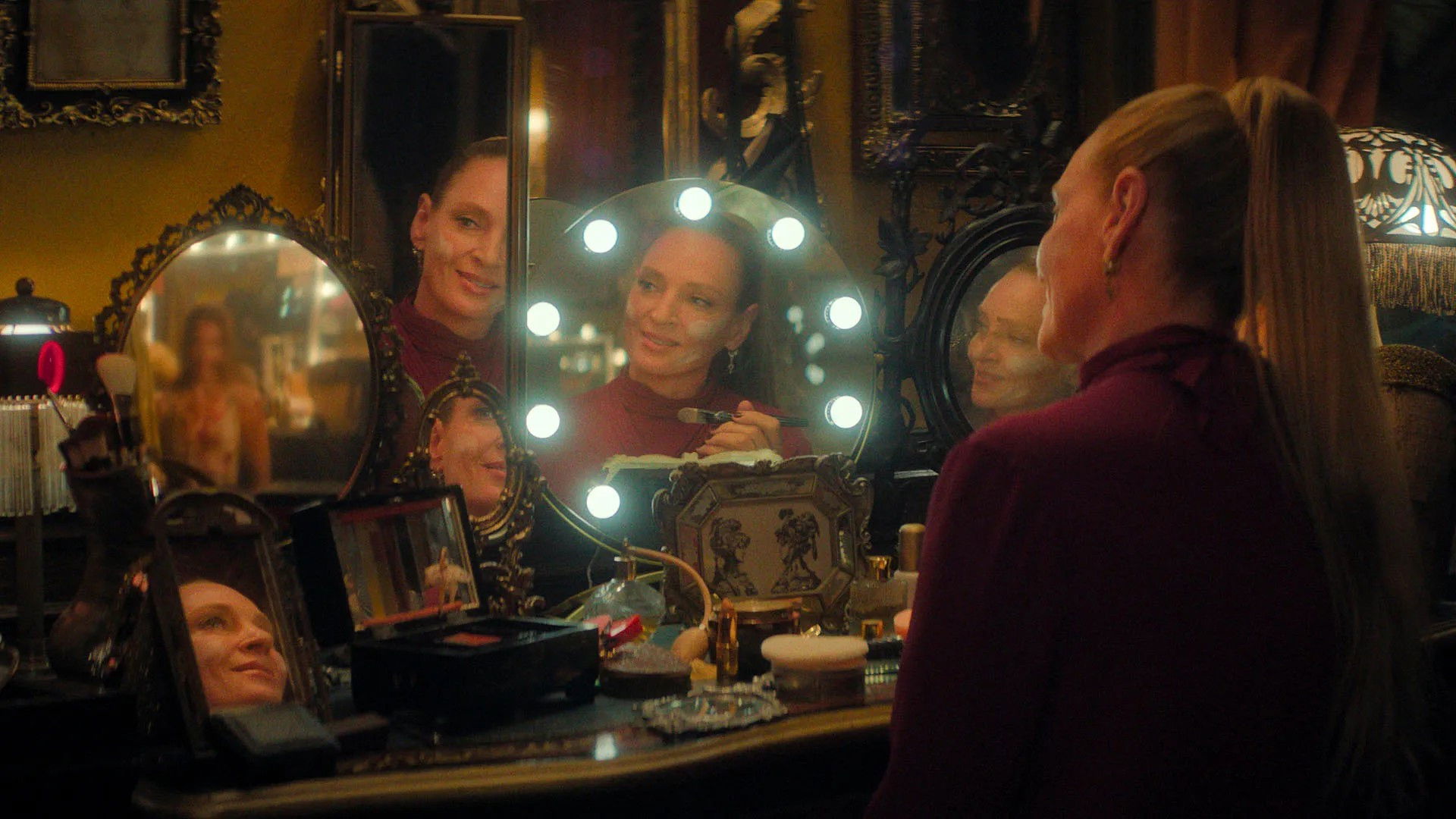
Direction and Mise-en-Scène: The Ballet of Errors
Vicky Jewson directs Pretty and Deadly as if she’s choreographing a dance number: with technical precision but no soul. Every scene seems calculated to hit the genre’s tropes—the girl who trips, the killer who appears out of nowhere, the predictable jump scare—but without the spark that makes them memorable. There’s a moment where a ballerina is attacked mid-pirouette, and the editing tries to sync the camera movement with her spin. The result is so forced it looks like a bloopers reel rather than a horror scene. Jewson seems more interested in aesthetics than substance, and it shows in every frame.
The production design is another weak point. The inn where most of the film takes place has a The Shining on a budget vibe, with narrow hallways and kitsch decor that tries to be ominous but ends up just cheap. The props—from bloodstained tutus to the killer’s masks—look like they were plucked from a Halloween store. There’s a scene where a ballerina finds a broken mirror, and instead of reflecting her image, it shows the killer’s face. It’s a moment that could’ve been iconic, but the execution is so clumsy it looks like a continuity error.
The score, composed by some guy named Alex Weston (whose previous work includes the series The Society), oscillates between atmospheric and ridiculous. There are string themes that try to evoke tension but sound like elevator music in a shopping mall. In contrast, the silent moments—especially those featuring Simmonds—are the most effective. The ambient sound, from creaking wood to whispering wind, manages to create a sense of unease that the music never achieves.
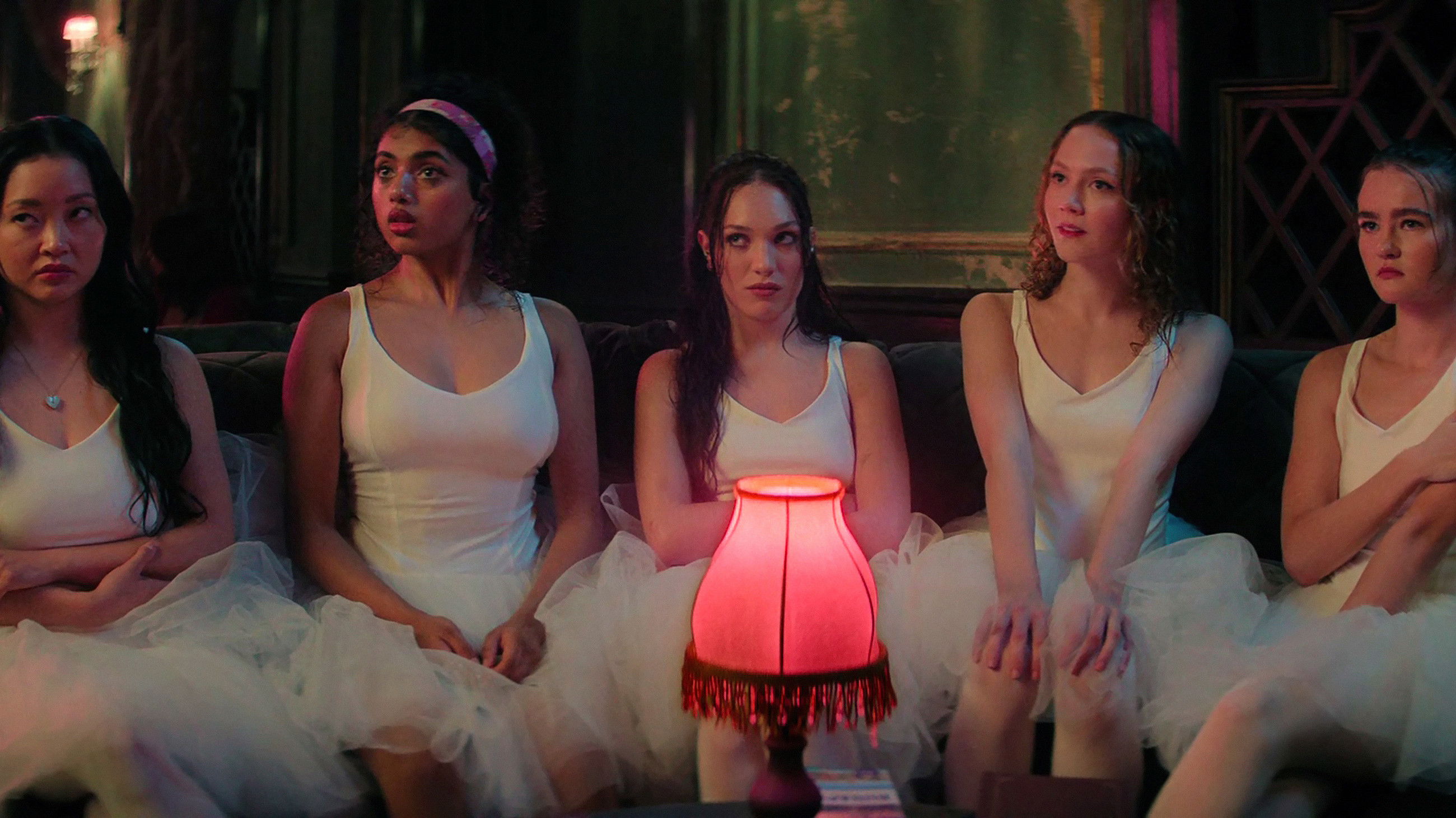
Performances: Between the Tutu and the Hatchet
The cast of Pretty and Deadly is a reminder that not all ballerinas can act, and not all actresses can dance. Maddie Ziegler, whose career has been tied to the dance world since childhood, moves with a grace that contrasts with her inability to convey complex emotions. Her character, a star ballerina with a traumatic past, is little more than an archetype: the tough girl with a vulnerable core. Ziegler plays it with the same intensity she’d bring to a Swan Lake solo, but without the depth the role demands.
Lana Condor, on the other hand, has moments where she shines. Her character, a choreographer obsessed with perfection, has dialogue that tries to explore the pressures of the ballet world, but the script reduces it to clichés. Condor does what she can with the material, though even she seems to realize she’s in a film that doesn’t quite know what it wants to be. Iris Apatow and Avantika, in supporting roles, bring a touch of teenage humor that lightens the plot, though their characters are as flat as an ironing board.
The real standout is Millicent Simmonds, whose performance is a reminder that silence can be more powerful than any dialogue. Simmonds, who is deaf in real life, uses body language and facial expressions to convey fear, determination, and pain. There’s a moment where her character hides from the killer in a closet, and the tension she generates with her held breath and terror-filled eyes is more effective than any jump scare in the film. It’s a shame the script doesn’t give her more room to shine.
The best
- Millicent Simmonds’ performance: Without dialogue, Simmonds conveys more emotion than the rest of the cast combined. Her on-screen presence is magnetic, and every frame she’s in crackles with tension. She’s the film’s beating heart, even when the script sidelines her.
The initial concept: The premise of mixing ballet with slasher horror is so absurd it becomes fascinating. There’s something deliciously camp* about seeing ballerinas in tutus fleeing a masked killer, and the film embraces that tone with a cluelessness that’s oddly refreshing.
- Some visual moments: Though the cinematography is uneven, there are shots that stand out for their composition. A lateral tracking shot following the ballerinas as they flee down a neon-lit hallway is visually striking, even if the execution is a bit clumsy.
- The ambient sound: The silent moments, especially those featuring Simmonds, are the film’s most effective. The creaking wood, whispering wind, and muffled footsteps create an atmosphere of unease that the score never matches.
The worst
The script: Kate Freund writes dialogue that tries to be profound but ends up sounding like self-help slogans for ballerinas. The plot is predictable, the characters are archetypes without nuance, and the plot twists* are so obvious you could see them coming from the first act.
- The lead performances: Maddie Ziegler and Lana Condor do what they can, but their performances are as stiff as a new tutu. Ziegler, in particular, seems more comfortable dancing than acting, and her dramatic scenes feel fake and forced.
- Jewson’s direction: Vicky Jewson seems more interested in aesthetics than substance. Every scene is choreographed like a dance number, but without the emotion it should carry. The result is a film that looks pretty but feels hollow.
The predictable jump scares: Pretty and Deadly follows the slasher formula to the letter, including the genre’s most tired jump scares*. Every scare is so telegraphed it loses all impact, and the tension evaporates before the killer even appears on screen.
- The production design: The inn where the film takes place looks like it was lifted from a ‘90s TV set. The props are cheap, the sets are tacky, and the atmosphere fails to convey the sense of danger it should.
The Verdict of Claqueta Ácida
Pretty and Deadly is like a glitter cake: pretty at first glance, but hollow inside. Vicky Jewson and her team try to blend slasher horror with the world of ballet, and the result is a film that doesn’t know if it wants to be an homage, a satire, or just another slasher. There are moments where it shines—Simmonds’ performance, some visually striking shots—but they’re flashes in a film that, overall, feels as clumsy as a ballerina with two left feet. It’s not a disaster, but it’s not memorable either. It’s the kind of movie you watch once, laugh at its mistakes, and then forget. Though, of course, you’ll always remember Simmonds. She’s the one who truly knows how to dance with terror. 💀
tweets_alternativos:
- "@VickyJewson dirige un slasher con tutús y el resultado es tan ridículo como fascinante. ¿Arte? ¿Basura? ¿Ambas? El debate está servido."
- "@LanaCondor y @MaddieZiegler demuestran que el ballet y el terror no mezclan, pero el público se lo traga igual. Actuaciones... peculiares."
- "@87NorthProd sigue su racha de películas que nadie pidió pero todos vemos. ¿El nuevo 'so bad it's good'? El tiempo lo dirá."
🎬 Tráiler Oficial
Abrir en YouTube
Theater Collateral Damage Report
Psychophysical impact certificate issued by Lúa Ácida
2 amagos en el tramo intermedio; pestañeo pesado en las transiciones más innecesarias.
Minuto 43 y minuto 88 (comprobando cuánto quedaba de suplicio).
1 espresso para no dejarse vencer por la mediocridad cómoda.
"A mitad del segundo acto cuando la subtrama secundaria empezó a pesar más de lo que aportaba."
💬 Community Verdict
What did you think of the film? Rate it from 0 to 10 to compare it with the editorial review.
You haven't voted yet
📢 ¿Te ha gustado el ácido?
Comparte esta crítica con tus amigos cinéfilos o desata la polémica en redes.
⚡ THE CINEMATIC VENOM YOUR INBOX CRAVES
No sugarcoated ratings, no corporate fluff. Subscribe for our uncensored weekly analysis or join the private Telegram for press previews, poll clashes, and instant alerts.
Alertas de estrenos en 1 segundo, encuestas en caliente y audios al salir de pases de prensa.
Recibe la dosis semanal en tu mail + regalo inmediato del PDF con 50 joyas ocultas de culto.
Related Reviews
Recommended autopsies for demanding film buffs.
 ⚡ Ácido Cítrico7.1
28 años después
⚡Afinidad temática directa en atmósfera, estilo y fijaciones visuales.
Una secuela que huele a podrido desde el primer fotograma. Garland y DaCosta intentan revivir el género, pero el resultado es un KO técnico disfrazado de obra maestra.
 ⚡ Ácido Cítrico5.8
**A Serbian Film: The Snuff That Thought It Was Art (and Ended Up a High-School Nightmare)**
⚡Afinidad temática directa en atmósfera, estilo y fijaciones visuales.
**Srđan Spasojević serves up a depravity feast swinging between gratuitous shock and social commentary. Genius or pretentious trash? Claqueta Ácida dissects it with surgical precision.**
 ⚡ Ácido Cítrico6.0
Adolescence, Sex, and Death at Camp Miasma: The Slasher That Reeks of Teen Sweat and a Recycled Script
⚡Afinidad temática directa en atmósfera, estilo y fijaciones visuales.
Jane Schoenbrun turns a summer camp into a dumpster fire of hormones and clichés. Art or autopsy of a dying subgenre?
Editorial Ecosystem
Cinephile connections, archive interviews and related analyses.
💬 Debate Cinéfilo & Autopsia de Lectores
0 veredictos¿Discrepas con nuestra nota? ¿Es una obra maestra o veneno puro? Deja tu veredicto abajo sin necesidad de registro.

Aún nadie ha dejado su veredicto para esta película.
Sé el primero en clavarle el colmillo rellenando el formulario de arriba.